Competing priorities, outsized demands and the federal government’s retreat from a threatened deadline stymied a deal last summer on how to drastically reduce water use from the parched Colorado River, emails obtained by The Associated Press show.
The documents span the June-to-August window the U.S. Bureau of Reclamation gave states to reach consensus on water cuts for a system that supplies 40 million people annually — or have the federal government force them. They largely include communication among water officials in Arizona and California, the major users in the river’s Lower Basin.
Reclamation wanted the seven U.S. states that rely on the river to decide how to cut 2 million to 4 million acre-feet of water — or up to roughly one-third — on top of already anticipated reductions. The emails, obtained through a public records request, depict a desire to reach a consensus but persistent disagreement over how much each state could or should give.
As the deadline approached without meaningful progress, one water manager warned: “We’re all headed to a very dark place.”
“The challenges we had this summer were significant challenges, they truly were,” Chris Harris, executive director of the Colorado River Board of California, said in an interview about the early negotiations. “I don’t know that anybody was to blame, I genuinely don’t. There were an awful lot of different interpretations of what was being asked and what we were trying to do.”
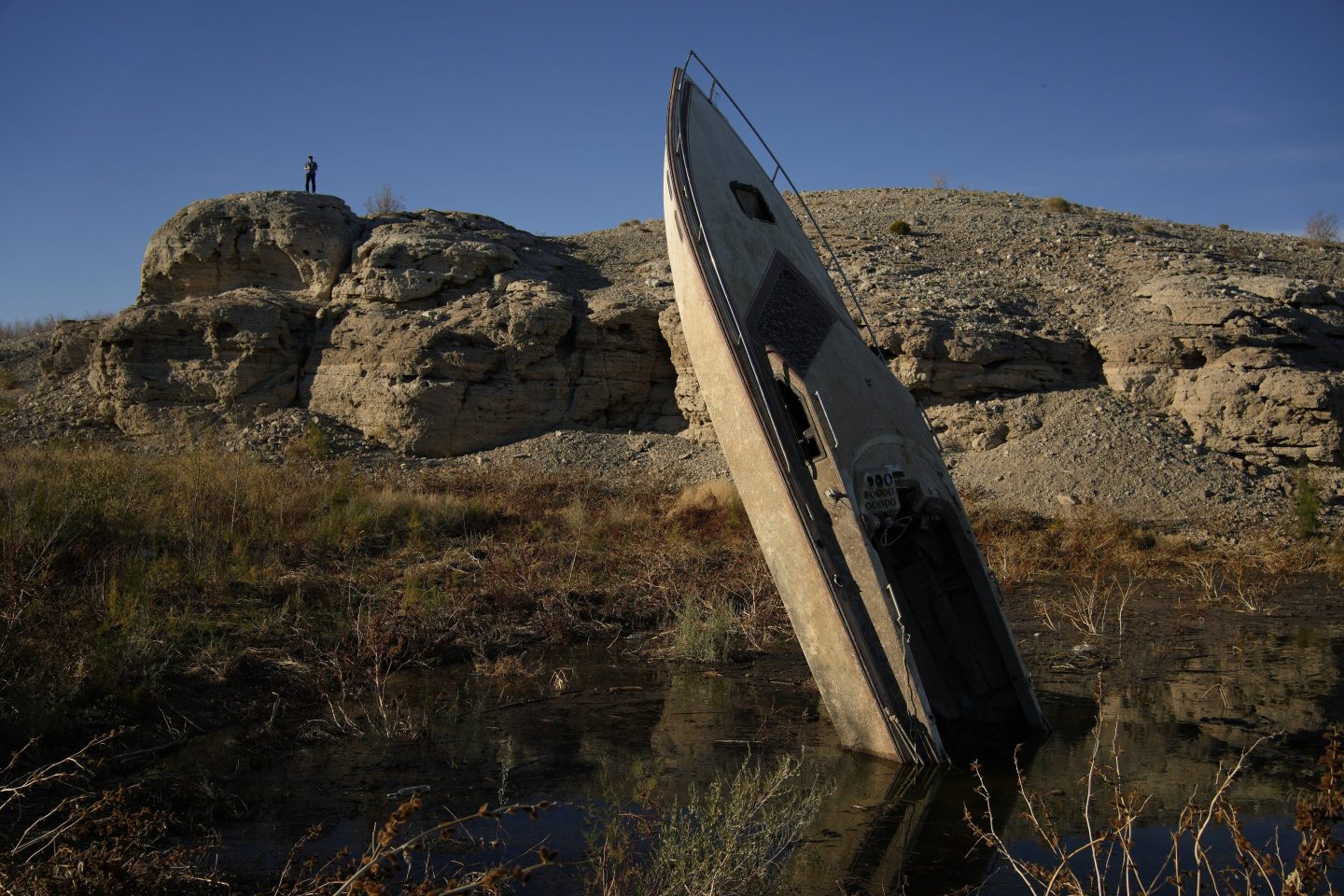
Scientists say the megadrought gripping the southwestern U.S. is the worst in 1,200 years, putting a deep strain on the Colorado River as key reservoirs dip to historically low levels. If states don’t begin taking less out of the river, the major reservoirs threaten to fall so low they can’t produce hydropower or supply any water at all to farms that grow crops for the rest of the nation and cities like Los Angeles, Las Vegas and Phoenix.
The future of the river seemed so precarious last summer that some water managers felt attempting to reach a voluntary deal was futile — only mandated cuts would stave off crisis.
“We are out of time and out of any cushion to allow for a voluntary plan,” Tom Buschatzke, director of the Arizona Department of Water Resources, told a Bureau of Reclamation official in a July 18 email.
As 2023 begins, fresh incentives make the states more likely to give up water. The federal government has put up $4 billion for drought relief, and Colorado River users have submitted proposals to get some of that money through actions like leaving fields unplanted. Some cities are ripping up thirsty decorative grass, and tribes and major water agencies have left some water in key reservoirs — either voluntarily or by mandate.
Reclamation also has agreed to spend $250 million mitigating hazards at a drying California lake bed, a condition of the state’s water users agreeing to cut their use by 400,000 acre feet in a proposal released in October.
The Interior Department is still evaluating proposals for a slice of the $4 billion and can’t say how much savings it will generate, Deputy Secretary Tommy Beaudreau said in an interview.
The states are again trying to reach a grand bargain — with a deadline of Tuesday — so that Reclamation can factor it into a larger plan to modify operations at Hoover Dam and Glen Canyon Dam, behemoth power producers on the Colorado River. Failure to do so would set up the possibility of the federal government imposing cuts — a move that could invite litigation.
Figuring out who absorbs additional water cuts has been contentious, with allegations of drought profiteering, reneging on commitments, too many negotiators in the room and an unsteady hand from the federal government, the emails and follow-up interviews showed.
California says it’s a partner willing to sacrifice, but other states see it as a reluctant participant clinging to a water priority system where it ranks near the top. Arizona and Nevada have long felt they’re unfairly forced to bear the brunt of cuts because of a water rights system developed long ago, a simmering frustration that reared its head during talks.
Reclamation Commissioner Camille Touton’s call for a massive water cut in testimony to Congress on June 14 was a public bombshell of sorts. A week earlier, with a heads-up from the federal government, the Lower Basin states talked about collectively, with Mexico, cutting up to 2 million acre-feet during a meeting in Salt Lake City, the emails and interviews showed.
But as the weeks passed and proposals were exchanged, the Lower Basin states barely reached half that amount, and the commitment was nowhere near firm, the emails showed. Adding to the difficulty was not knowing what Mexico, which also has a share of the river, might contribute.
In a series of exchanges through July, Arizona and California each proposed multiple ways to achieve cuts, building on existing agreements tied to the levels of Lake Mead, factoring in the water lost to evaporation or inefficient infrastructure, and fiercely protecting a priority system, though it was clear negotiators were becoming weary.
The states shared disdain for a proposal from farmers near Yuma and southern California to be paid $1,500 an acre foot for water they conserved. Cooke responded by suggesting the farmers make it work at one-third of the price, higher but closer to going rates.
In late July, Harris, of California, emailed a proposal to the Bureau of Reclamation outlining scenarios in the range of 1 million acre feet in cuts, saying it was imperative negotiators be able to “declare some level of victory.”
“Otherwise,” he wrote, “I genuinely believe that we are at an impasse, and we’re all headed to a very dark place.”
But ultimately, Arizona and Nevada never felt that California was willing to give enough.
“It was futile, it wasn’t enough. We did not trust that California was going to come through on their piece of it,” Cooke said in an interview.
By then, Reclamation privately told the states — but didn’t acknowledge publicly — that it backed away from the supposed mid-August deadline, officials involved in the talks said. Beaudreau, the deputy Interior secretary, said in an interview the deadline was never meant to create an ultimatum between reaching a deal and forced cuts.
But state officials said when it became clear the federal government wouldn’t act unilaterally, it created a “chilling effect” that removed the urgency from the talks because water users with higher-priority water rights were no longer at risk of harsh cuts, Arizona’s Buschatzke said in an interview.
“Without that hammer, there was a different tone of negotiations,” he said.
Today, the Interior Department’s priority remains ensuring Hoover Dam and Glen Canyon Dam have enough water in them to maintain hydropower, and the department will do whatever is necessary to ensure that, Beaudreau said.
The Upper Basin states of New Mexico, Utah, Wyoming and Colorado — which historically haven’t used their full supplies — are looking toward the Lower Basin states to do much of the work.
Reclamation is now focused on weighing the latest round of comments from states on how to save the river. Nevada wants to count water lost to evaporation and transportation in water allocations — a move that could mean the biggest volume of cuts for California — and some Arizona water managers agree, comment letters obtained by the AP show.
But disputes remain over how to determine what level of cuts are fair and legal. California’s goal remains protecting its status while other states and tribes want more than old water rights taken into account — such as whether users have access to other water sources, and the effects of cuts on disadvantaged communities and food security.
Reclamation’s goal is to get a draft of proposed cuts out by early March, then a final decision before mid-August, when Reclamation regularly announces how much — or how little — river water is available for the next year.
___
Fonseca reported from Flagstaff, Arizona. Associated Press writer Michael Phillis in St. Louis contributed.
Learn how to navigate and strengthen trust in your business with The Trust Factor, a weekly newsletter examining what leaders need to succeed. Sign up here.