• Home
  • Latest
  • Fortune 500
  • Finance
  • Tech
  • Leadership
  • Lifestyle
  • Rankings
  • Multimedia
LifestyleTaxes

Americans will do just about anything to lower their tax bills but ancient Athenians actually bragged about how much they paid

By
The Conversation
The Conversation
and
Thomas Martin
Down Arrow Button Icon
December 22, 2022, 3:38 PM ET
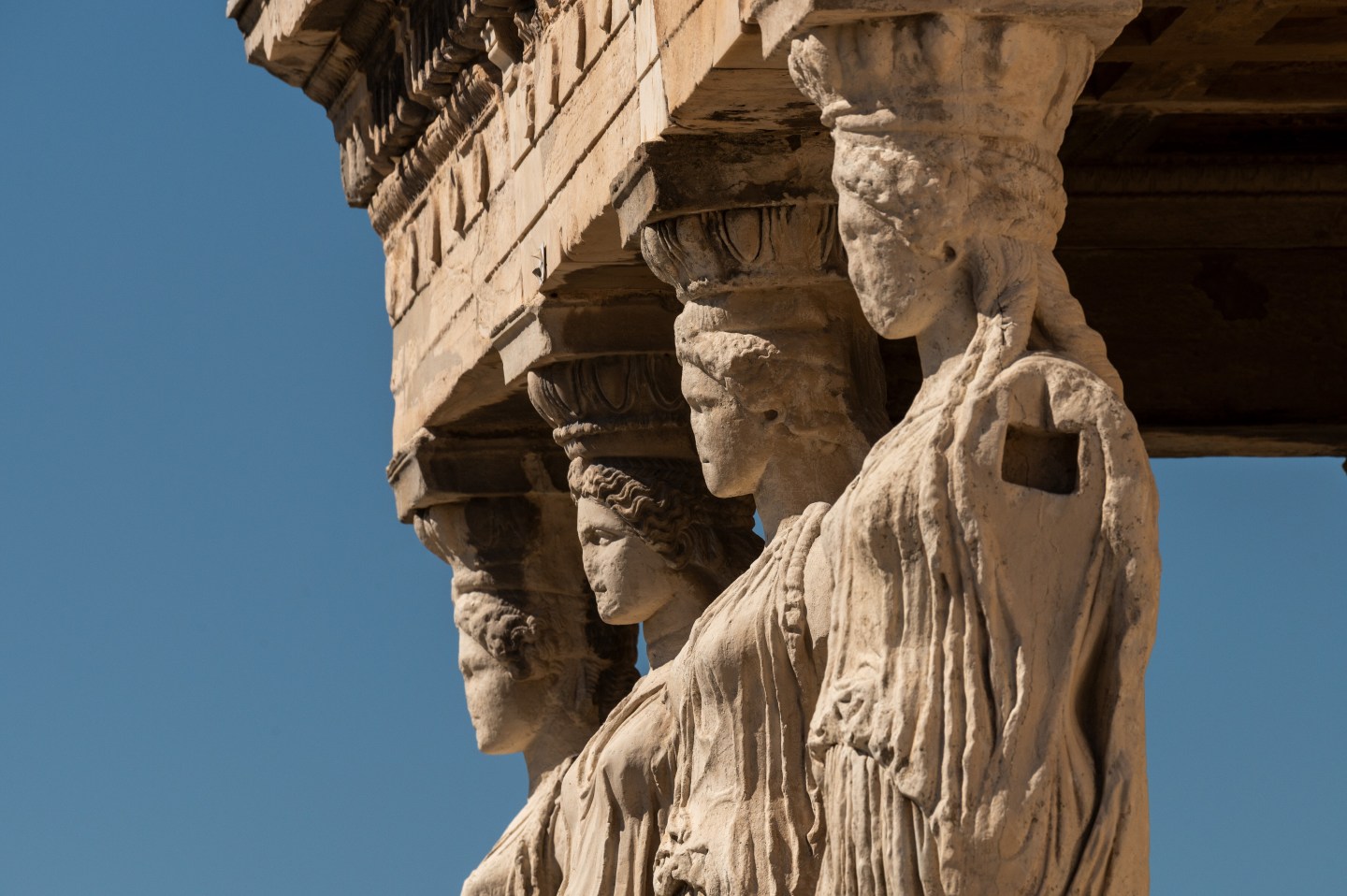
Detail of the Porch of the Maidens (or Caryatid Porch) from The Erechtheion (also known as Temple of Athena Polias) in The Acropolis of Athens.
Detail of the Porch of the Maidens (or Caryatid Porch) from The Erechtheion (also known as Temple of Athena Polias) in The Acropolis of Athens. (Photo by Marcos del Mazo/LightRocket via Getty Images)Photo by Marcos del Mazo/LightRocket — Getty Images

In ancient Athens, only the very wealthiest people paid direct taxes, and these went to fund the city-state’s most important national expenses – the navy and honors for the gods. While today it might sound astonishing, most of these top taxpayers not only paid happily, but boasted about how much they paid.

Money was just as important to the ancient Athenians as it is to most people today, so what accounts for this enthusiastic reaction to a large tax bill? The Athenian financial elite felt this way because they earned an invaluable payback: public respect from the other citizens of their democracy.

Athens in the fifth and fourth centuries B.C. had a population of free and enslaved people topping 300,000 individuals. The economy mostly focused on international trade, and Athens needed to spend large sums of money to keep things humming – from supporting national defense to the countless public fountains constantly pouring out drinking water all over the city.

Much of this income came from publicly owned farmland and silver mines that were leased to the highest bidders, but Athens also taxed imports and exports and collected fees from immigrants and prostitutes as well as fines imposed on losers in many court cases. In general, there were no direct taxes on income or wealth.

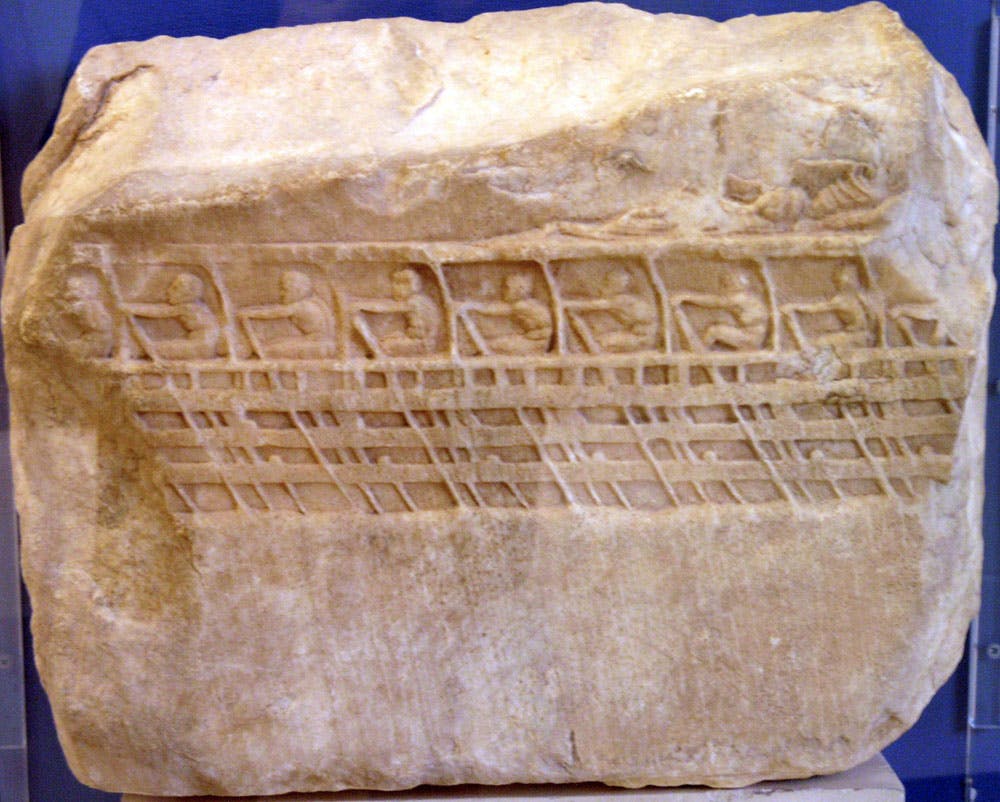
As Athens grew into an international power, it developed a large and expensive navy of several hundred state-of-the-art wooden warships called triremes – literally meaning three-rowers. Triremes cost huge amounts of money to build, equip and crew, and the Athenian financial elites were the ones that paid to make it happen.

The top 1% of male property owners supported the saving or salvation of Athens –called “soteria” – by performing a special kind of public service called “leitourgia,” or liturgy. They served as a trireme commander, or “trierarch,” who personally funded the operating costs of a trireme for an entire year and even led the crew on missions. This public service was not cheap. To fund their liturgy as a trierarch, a rich taxpayer spent what a skilled worker earned in 10 to 20 years of steady pay, but instead of dodging this responsibility, most embraced it.

Running warships was not the only responsibility the rich had to national defense. When Athens was at war – which was most of the time – the wealthy had to pay contributions in cash called “eisphorai” to finance the citizen militia. These contributions were based on the value of their property, not their income, which made them in a sense a direct tax on wealth.

To please the gods

To the ancient Athenians, physical military might was only part of the equation. They also believed that the salvation of the state from outside threats depended on a less tangible but equally crucial and costly source of defense: the favor of the gods.

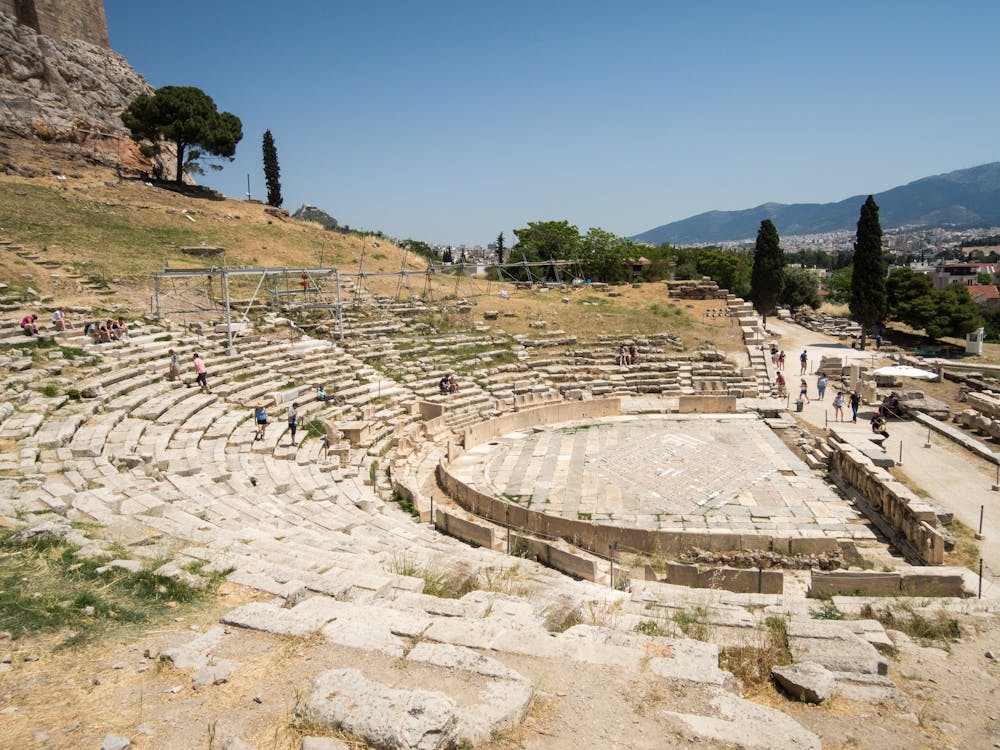
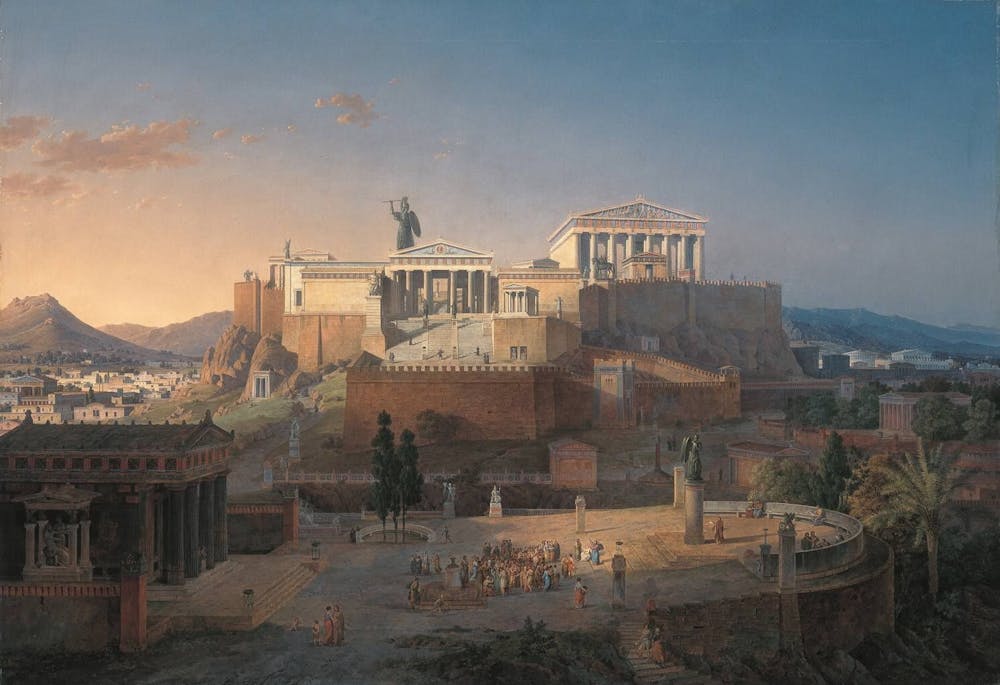
To keep these powerful but fickle divine protectors on their side, the Athenians built elaborate temples, performed large sacrifices and organized lively public religious festivals. These massive spectacles featured musical extravaganzas and theater performances that were attended by tens of thousands of people and were hugely expensive to throw.

Just as with trieremes, the richest Athenians paid for these festivals by fulfilling festival liturgies. Serving as a chorus leader, for example, meant paying for the training, costumes and living expenses for large groups of performers for months at a time.

Proud to be paying

In the U.S. today, an estimated one out of every six tax dollars is unpaid. Large corporations and rich citizens do everything they can to minimize their tax bill. The Athenians would have ridiculed such behavior.

None of the financial elite of ancient Athens prided themselves on scamming the Athenian equivalent of the IRS. Just the opposite was true: They paid, and even boasted in public – truthfully – that they often had paid more than required when serving as a trierarch or chorus leader.

Of course, not every member of the superrich at Athens behaved like a patriotic champion. Some Athenian shirkers tried to escape their liturgies by claiming other people with more property ought to shoulder the cost instead of themselves, but this attempted weaseling out of public service never became the norm.

So what was the reasoning behind this civic, taxpaying pride? Ancient Athenians weren’t only opening their wallets to promote the common good. They were counting on earning a high return in public esteem from the investments in their community that their taxes represented.

This social capital was so valuable because Athenian culture held civic duty in high regard. If a rich Athenian hoarded his wealth, he was mocked and labeled a “greedy man” who “borrows from guests staying his house” and “when he sells wine to a friend, he sells it watered!”

Social wealth, not monetary riches

The social rewards that tax payments earned the rich had long lives. A liturgist who financed the chorus of a prize-winning drama could build himself a spectacular monument in a conspicuous downtown location to announce his excellence to all comers for all time.

Above all, the Athenian rich paid their taxes because they craved the social success that came from their compatriots publicly identifying them as citizens who are good because they are useful. Earning the honorable title of a useful citizen might sound tame today, but in a letter to a Hebrew congregation in Rhode Island written in 1790, George Washington proclaimed that being “useful” was an invaluable part of the divine plan for the United States.

So, too, the Athenians infused that designation with immense power. To be a rich taxpayer who was good and useful to his fellow citizens counted even more than money in the bank. And this invaluable public service profited all Athenians by keeping their democracy alive century after century.

Thomas Martin, Professor of Classics, College of the Holy Cross

This article is republished from The Conversation under a Creative Commons license. Read the original article.

Our new weekly Impact Report newsletter examines how ESG news and trends are shaping the roles and responsibilities of today's executives. Subscribe here.


About the Authors
By The Conversation
See full bioRight Arrow Button Icon
By Thomas Martin
See full bioRight Arrow Button Icon

Latest in Lifestyle

Finance
Lorem ipsum dolor sit amet, consectetur adipiscing elit, sed do eiusmod tempor incididunt ut labore et dolore magna aliqua. Ut enim ad minim veniam
By Fortune Editors
October 20, 2025
Finance
Lorem ipsum dolor sit amet, consectetur adipiscing elit, sed do eiusmod tempor incididunt ut labore et dolore magna aliqua. Ut enim ad minim veniam
By Fortune Editors
October 20, 2025
Finance
Lorem ipsum dolor sit amet, consectetur adipiscing elit, sed do eiusmod tempor incididunt ut labore et dolore magna aliqua. Ut enim ad minim veniam
By Fortune Editors
October 20, 2025
Finance
Lorem ipsum dolor sit amet, consectetur adipiscing elit, sed do eiusmod tempor incididunt ut labore et dolore magna aliqua. Ut enim ad minim veniam
By Fortune Editors
October 20, 2025
Finance
Lorem ipsum dolor sit amet, consectetur adipiscing elit, sed do eiusmod tempor incididunt ut labore et dolore magna aliqua. Ut enim ad minim veniam
By Fortune Editors
October 20, 2025
Finance
Lorem ipsum dolor sit amet, consectetur adipiscing elit, sed do eiusmod tempor incididunt ut labore et dolore magna aliqua. Ut enim ad minim veniam
By Fortune Editors
October 20, 2025

Most Popular

Finance
Lorem ipsum dolor sit amet, consectetur adipiscing elit, sed do eiusmod tempor incididunt ut labore et dolore magna aliqua. Ut enim ad minim veniam
By Fortune Editors
October 20, 2025
Finance
Lorem ipsum dolor sit amet, consectetur adipiscing elit, sed do eiusmod tempor incididunt ut labore et dolore magna aliqua. Ut enim ad minim veniam
By Fortune Editors
October 20, 2025
Finance
Lorem ipsum dolor sit amet, consectetur adipiscing elit, sed do eiusmod tempor incididunt ut labore et dolore magna aliqua. Ut enim ad minim veniam
By Fortune Editors
October 20, 2025
Finance
Lorem ipsum dolor sit amet, consectetur adipiscing elit, sed do eiusmod tempor incididunt ut labore et dolore magna aliqua. Ut enim ad minim veniam
By Fortune Editors
October 20, 2025
Finance
Lorem ipsum dolor sit amet, consectetur adipiscing elit, sed do eiusmod tempor incididunt ut labore et dolore magna aliqua. Ut enim ad minim veniam
By Fortune Editors
October 20, 2025
Finance
Lorem ipsum dolor sit amet, consectetur adipiscing elit, sed do eiusmod tempor incididunt ut labore et dolore magna aliqua. Ut enim ad minim veniam
By Fortune Editors
October 20, 2025
Rankings
  • 100 Best Companies
  • Fortune 500
  • Global 500
  • Fortune 500 Europe
  • Most Powerful Women
  • Future 50
  • World’s Most Admired Companies
  • See All Rankings
Sections
  • Finance
  • Leadership
  • Success
  • Tech
  • Asia
  • Europe
  • Environment
  • Fortune Crypto
  • Health
  • Retail
  • Lifestyle
  • Politics
  • Newsletters
  • Magazine
  • Features
  • Commentary
  • Mpw
  • CEO Initiative
  • Conferences
  • Personal Finance
  • Education
Customer Support
  • Frequently Asked Questions
  • Customer Service Portal
  • Privacy Policy
  • Terms Of Use
  • Single Issues For Purchase
  • International Print
Commercial Services
  • Advertising
  • Fortune Brand Studio
  • Fortune Analytics
  • Fortune Conferences
  • Business Development
About Us
  • About Us
  • Editorial Calendar
  • Press Center
  • Work At Fortune
  • Diversity And Inclusion
  • Terms And Conditions
  • Site Map

© 2025 Fortune Media IP Limited. All Rights Reserved. Use of this site constitutes acceptance of our Terms of Use and Privacy Policy | CA Notice at Collection and Privacy Notice | Do Not Sell/Share My Personal Information
FORTUNE is a trademark of Fortune Media IP Limited, registered in the U.S. and other countries. FORTUNE may receive compensation for some links to products and services on this website. Offers may be subject to change without notice.


Most Popular

placeholder alt text
Personal Finance
Janet Yellen warns the $38 trillion national debt is testing a red line economists have feared for decades
By Eva RoytburgJanuary 5, 2026
2 days ago
placeholder alt text
Success
Blackstone exec says elite Ivy League degrees aren’t good enough—new analysts need to 'work harder' and be nice 
By Ashley LutzJanuary 5, 2026
2 days ago
placeholder alt text
AI
Experienced software developers assumed AI would save them a chunk of time. But in one experiment, their tasks took 20% longer
By Sasha RogelbergJanuary 5, 2026
2 days ago
placeholder alt text
Personal Finance
Current price of silver as of Monday, January 5, 2026
By Joseph HostetlerJanuary 5, 2026
2 days ago
placeholder alt text
Economy
Mark Cuban on the $38 trillion national debt and the absurdity of U.S. healthcare: we wouldn't pay for potato chips like this
By Nick LichtenbergJanuary 6, 2026
16 hours ago
placeholder alt text
Future of Work
'Employers are increasingly turning to degree and GPA' in hiring: Recruiters retreat from ‘talent is everywhere,’ double down on top colleges
By Jake AngeloJanuary 6, 2026
14 hours ago

Latest in Lifestyle

Kevin O'Leary
Arts & EntertainmentHollywood
Shark Tank’s ‘Mr. Wonderful’ Kevin O’Leary learned the hard way that movie sets don’t work like boardrooms on Marty Supreme
By Marco Quiroz-GutierrezJanuary 6, 2026
11 hours ago
Photo of MacKenzie Scott
SuccessMacKenzie Scott
MacKenzie Scott sends millions to nonprofit that supports anti-Israel and pro-Muslim groups, two of which are facing federal probes
By Sydney LakeJanuary 6, 2026
16 hours ago
DHS
LawImmigration
Hilton apologizes for Minnesota hotel that refused to let federal immigration officers stay
By Sarah Raza and The Associated PressJanuary 6, 2026
18 hours ago
Travel & Leisurework-life balance
Experts are divided on how workers should spend their 5-9: Structure is key for productivity, but can lead to burnout
By Jamie Wilde and Morning BrewJanuary 5, 2026
1 day ago
Avatar
Arts & EntertainmentBox office
‘Avatar’ notches third straight week in first place, crossing $1 billion worldwide
By Jake Coyle and The Associated PressJanuary 5, 2026
2 days ago
sprinkles
RetailBankruptcy
‘This isn’t how I thought the story would go’: Sprinkles Cupcakes founder mourns company shutdown after starting in her kitchen
By The Associated PressJanuary 3, 2026
4 days ago