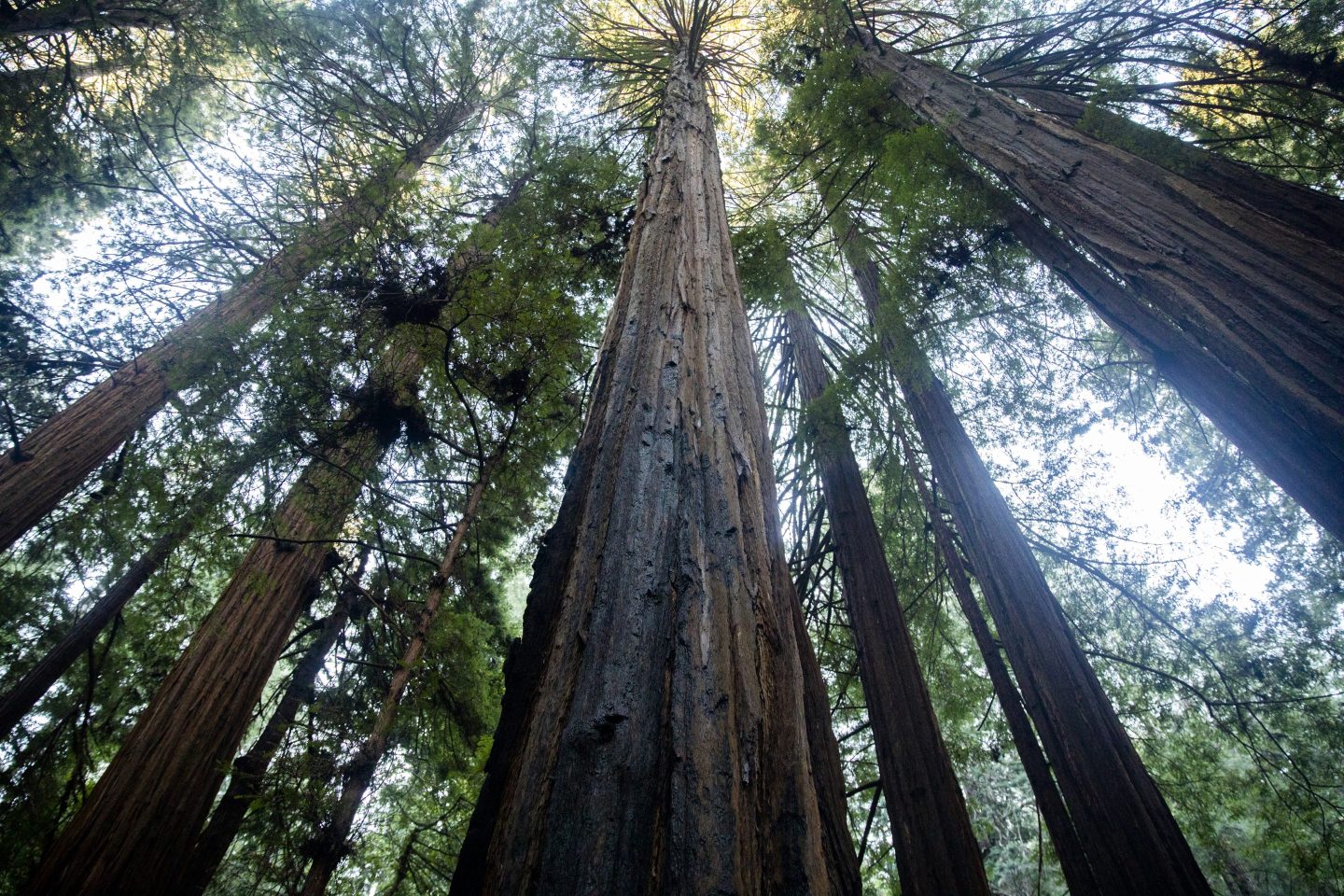
It is hard to look at a redwood and imagine that it was once a tiny seed, but it is a simple truth of nature that even our forest giants have to start small.
This forest life cycle is extremely important right now, as our nation looks to plant more trees to act against climate change and protect us from its worst impacts.
The humble tree is a magic solution to a set of colliding crises: Forests pull carbon dioxide from the air to slow climate change, provide habitat that supports biodiversity, and shelter our communities from heat waves and other extreme weather. Reforesting the full extent of suitable land in the U.S. would increase natural carbon capture in forests by more than 40% each year.
However, we’re not ready to meet this reforestation potential. To put it simply, there are not enough seeds, people to collect them, and nurseries to grow them.
Thanks to cutting-edge research from the Nature Conservancy, we know there are 133 million acres of ecologically suitable land for reforestation across America. These opportunities extend from urban areas and agroforestry-friendly farms to burned mountainsides and coastal forests devastated by windstorms.
However, American nurseries currently produce roughly 1.3 billion seedlings annually, which is only enough to plant approximately 2.5 million acres per year. Even to reforest only the highest priority lands (roughly 64 million acres) by 2040, we would need to double annual nursery production.
And with wildfires on the increase across the country, this seed supply crisis has potentially catastrophic consequences. Take California, for example. At the current pace of cone collection, it would take the state seed bank almost 200 years to collect the seeds needed to reforest just a quarter of private forest lands affected by recent wildfires. Public lands face similar scarcity and collection challenges.
If we fail to reforest these burn scars, we’re not just missing out on an opportunity to sequester carbon, we’re also putting communities at risk. Without reforestation, severely burned areas transition to other vegetation types, such as grass and shrub systems that decrease the natural water supply.
While forests are among our best natural solutions to climate change, the ability to protect our nation through reforestation will only decrease unless we intervene in this seed shortage. Here are four steps we can take together to tackle this quiet crisis:
Use the power of innovation
We need to develop a reforestation supply chain that leverages technology. We need to grow seed and seedling supply faster, develop new infrastructure for seed collection and safe storage, enhance forestry techniques used in tree nurseries, and update how we recruit and train a dramatically expanded workforce.
Deploy ready funding
We need an unprecedented wave of investment, from government grants and loan guarantees to private-sector impact investing.
We can start by quickly deploying the dollars for seeds secured by the bipartisan Infrastructure Investment and Jobs Act, which includes $200 million specifically for nursery capacity and strategy, and a REPLANT provision that increases U.S. Forest Service reforestation funding 10-fold, which the agency can use to close a 4-million-acre reforestation backlog. The newly signed Inflation Reduction Act has additional funds, including $1.5 billion to expand tree canopy in our cities.
Build a climate-smart seed collection
To regrow forests to last, we must make sure the additional seeds we collect and seedlings we grow are biologically aligned with climate-resilient reforestation plans, like the one developed by the Bureau of Land Management for the Camp Fire Burn Scar in California.
Grow partnerships to grow trees
We need to develop state and regional partnerships that integrate these capacities (science, innovation, and funding) by facilitating collaboration. The right kind of partnership can integrate all needed public and private actors, from government agencies and NGOs to nursery owners and young ecopreneurs, to work together toward specific targets in seed and seedling capacity at the state and regional levels.
Through inclusive collaboration, data and knowledge sharing, integrated finance, and strategic workforce and infrastructure investments, we can quickly multiply seed and seedling capacity where it’s most needed.
It is perhaps no surprise that this level of investment in seeds and seedlings has not happened before. After all, a tiny seed is just the hint of the tree that is to come—a tree that will be a natural climate solution, a water filter, an air purifier, a wildlife habitat, and so much more.
Our planet and our communities desperately need all of that. We must broaden our perspective and invest in every inch of the reforestation supply chain. First, let’s think “seed small” so we can go big on forest solutions.
Jad Daley is president and CEO of American Forests, the nation’s oldest forest conservation nonprofit. Yishan Wong is founder and CEO of Terraformation, a global forest accelerator. Terraformation and American Forests recently launched the Seed to Forest Alliance to scale seed supply solutions.
The opinions expressed in Fortune.com commentary pieces are solely the views of their authors and do not necessarily reflect the opinions and beliefs of Fortune.
More must-read commentary published by Fortune:
- We can finally reconcile privacy and compliance in crypto. Here are the new technologies that will protect user data and stop illicit transactions
- The inventors of ESG: ‘Critics have a point—here’s the new global reporting system that will address it’
- I got rich by betting that inequality would destroy the U.S. and U.K. I’m sorry
- America’s richest want to pay more taxes–but we won’t let them. We need a tax bracket and rate overhaul