• Home
  • Latest
  • Fortune 500
  • Finance
  • Tech
  • Leadership
  • Lifestyle
  • Rankings
  • Multimedia
CommentaryCryptocurrency

We can finally reconcile privacy and compliance in crypto. Here are the new technologies that will protect user data and stop illicit transactions

By
Shlomit Azgad-Tromer
,
Jai Ramaswamy
and
Eran Tromer
Eran Tromer
Down Arrow Button Icon
October 28, 2022, 8:25 AM ET
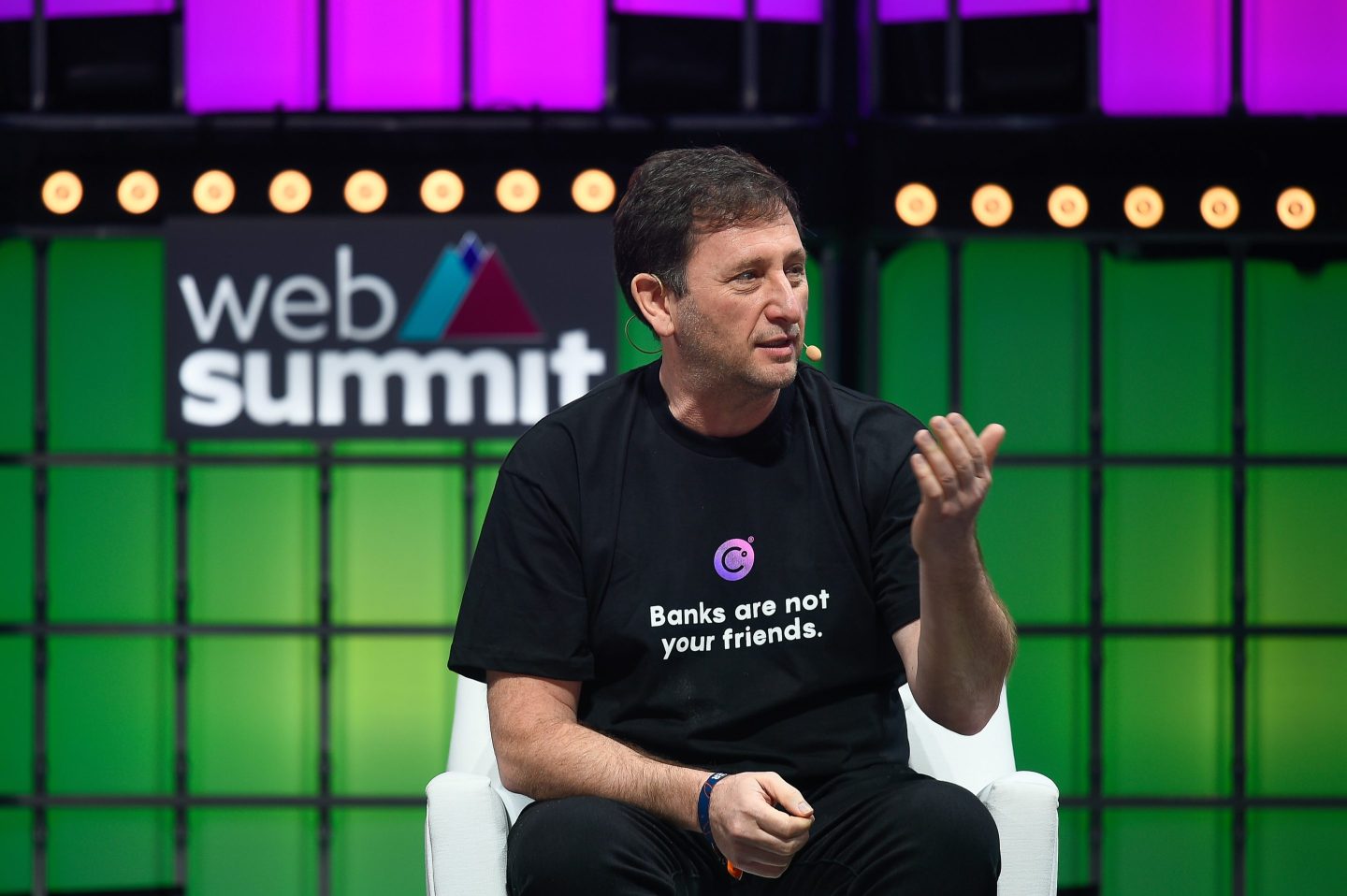
Celsius founder and CEO Alex Mashinsky stepped down on Sep. 27, months after the company filed for Chapter 11 bankruptcy.
Celsius founder and CEO Alex Mashinsky stepped down on Sep. 27, months after the company filed for Chapter 11 bankruptcy.Bruno de Carvalho—SOPA Images/LightRocket/Getty Images

A recent bankruptcy filing by digital asset lending platform Celsius has revealed the names and transaction history of nearly half a million depositors. It illustrates a risk that arises from the transparency and traceability of the blockchain.

The privacy standard in most public blockchains is based on pseudonymity, which can be easily pierced to track user activity and balance. As a result, data leaks of names and wallet addresses can harm the privacy of blockchain users, since anybody with an internet connection can easily match the on-chain activity and wallet addresses of named Celsius users disclosed in the filing with the dates and amounts of every transaction on their wallet, exposing wallet owners to the risk of theft or extortion.  

As a practical matter, such data leaks can also occur simply by transacting with another party who knows your identity. Consider for example using crypto in your payroll. Employees would be able to see the employer’s account balance and the paycheck of their team members. If you use crypto to pay, your local coffee shop could access information on how much you make and where you shopped yesterday. 

To mitigate this risk, digital asset holders employ additional privacy-enhancing technologies to protect the confidentiality of their financial information. The problem is that current techniques to manage illicit finance risk on blockchains rely on transparency and traceability in order to assess user identity. As a result, the same tools used to protect legitimate privacy interests on public blockchains can also frustrate government investigations into malicious activity. 

One widely used privacy protocol was Tornado Cash, which was sanctioned this summer by the U.S. Treasury Department’s Office of Foreign Assets Control (OFAC) on the grounds that it had been used in connection with more than $7 billion in illicit financial activity.  This puts innocent blockchain users in a bind: rely on privacy through pseudonymity–which can be pierced–or have their funds associated with criminal activity, increasing the risk that they could face penalties, have their funds blocked, or their risk profile increased, potentially limiting their freedom to transact.   

In traditional finance, the balance between privacy and legitimate government interests is achieved through financial intermediaries. In Europe and the U.S., a civil right to privacy and financial confidentiality limits the ability of intermediaries to use financial and other data for commercial or other purposes, while carving out exceptions for sharing legally required information with law enforcement and regulators.

While the assumption that financial intermediaries can effectively protect sensitive personal information has proved problematic (witness the frequency of data breaches), it’s untenable in the context of blockchain technology and decentralized finance. This raises an important question: Can illicit finance risks in virtual assets be mitigated while preserving the baseline confidentiality citizens enjoy in the traditional financial system? 

The one novel thing blockchains can do is enforce rules automatically by programming them into smart contracts, effectively a digital “if-then” statement between transacting parties. Originally, blockchains implemented rules that merely governed who owns virtual assets and when they moved around–but it is now possible to add additional rules that satisfy the need to address illicit finance and other compliance risks. Cryptographic technology, such as zero-knowledge proofs (methods that ensure the validity of a given statement without conveying unnecessary information) can address risks identified by authorities and policymakers and are currently being developed by technologists in the blockchain space. These technologies, which have been in academia for decades and are used in some existing blockchains, promise to reconcile the competing claims of privacy and compliance in a more robust way than currently possible. 

Such solutions could, for example, allow the blocking of unlawful transactions, automated reporting to government agencies, as well as selective visibility of sensitive information, with access restricted to authorized agents who have information viewing rights–while transactions and wallet balances remain private and protected against malicious actors. 

Policymakers and regulators cannot stand on the sidelines. They must adopt flexible regulatory approaches that permit and encourage these technical developments that achieve more effective outcomes than currently possible.

Through these technologies, and with the support of regulators, both compliance and financial privacy can become an integral part of the virtual asset ecosystem.

Shlomit Azgad-Tromer, P.h.D, is a co-founder and CEO of Sealance. Jai Ramaswamy is the Chief Legal Officer of Andreessen Horowitz. Eran Tromer, P.h.D, is an associate research scientist at Columbia University’s Department of Computer Science and a co-founder of Sealance.

The opinions expressed in Fortune.com commentary pieces are solely the views of their authors and do not necessarily reflect the opinions and beliefs of Fortune.

More must-read commentary published by Fortune:

  • The Fed may be running out of ammunition–but U.S. banks have never been healthier. It’s time to admit Dodd-Frank is paying off
  • The inventors of ESG: ‘Critics have a point—here’s the new global reporting system that will address it’
  • I got rich by betting that inequality would destroy the U.S. and U.K. I’m sorry
  • America’s richest want to pay more taxes–but we won’t let them. We need a tax bracket and rate overhaul

Sign up for the Fortune Features email list so you don’t miss our biggest features, exclusive interviews, and investigations.
About the Authors
By Shlomit Azgad-Tromer
See full bioRight Arrow Button Icon
By Jai Ramaswamy
See full bioRight Arrow Button Icon
By Eran Tromer
See full bioRight Arrow Button Icon

Latest in Commentary

Finance
Lorem ipsum dolor sit amet, consectetur adipiscing elit, sed do eiusmod tempor incididunt ut labore et dolore magna aliqua. Ut enim ad minim veniam
By Fortune Editors
October 20, 2025
Finance
Lorem ipsum dolor sit amet, consectetur adipiscing elit, sed do eiusmod tempor incididunt ut labore et dolore magna aliqua. Ut enim ad minim veniam
By Fortune Editors
October 20, 2025
Finance
Lorem ipsum dolor sit amet, consectetur adipiscing elit, sed do eiusmod tempor incididunt ut labore et dolore magna aliqua. Ut enim ad minim veniam
By Fortune Editors
October 20, 2025
Finance
Lorem ipsum dolor sit amet, consectetur adipiscing elit, sed do eiusmod tempor incididunt ut labore et dolore magna aliqua. Ut enim ad minim veniam
By Fortune Editors
October 20, 2025
Finance
Lorem ipsum dolor sit amet, consectetur adipiscing elit, sed do eiusmod tempor incididunt ut labore et dolore magna aliqua. Ut enim ad minim veniam
By Fortune Editors
October 20, 2025
Finance
Lorem ipsum dolor sit amet, consectetur adipiscing elit, sed do eiusmod tempor incididunt ut labore et dolore magna aliqua. Ut enim ad minim veniam
By Fortune Editors
October 20, 2025

Most Popular

Finance
Lorem ipsum dolor sit amet, consectetur adipiscing elit, sed do eiusmod tempor incididunt ut labore et dolore magna aliqua. Ut enim ad minim veniam
By Fortune Editors
October 20, 2025
Finance
Lorem ipsum dolor sit amet, consectetur adipiscing elit, sed do eiusmod tempor incididunt ut labore et dolore magna aliqua. Ut enim ad minim veniam
By Fortune Editors
October 20, 2025
Finance
Lorem ipsum dolor sit amet, consectetur adipiscing elit, sed do eiusmod tempor incididunt ut labore et dolore magna aliqua. Ut enim ad minim veniam
By Fortune Editors
October 20, 2025
Finance
Lorem ipsum dolor sit amet, consectetur adipiscing elit, sed do eiusmod tempor incididunt ut labore et dolore magna aliqua. Ut enim ad minim veniam
By Fortune Editors
October 20, 2025
Finance
Lorem ipsum dolor sit amet, consectetur adipiscing elit, sed do eiusmod tempor incididunt ut labore et dolore magna aliqua. Ut enim ad minim veniam
By Fortune Editors
October 20, 2025
Finance
Lorem ipsum dolor sit amet, consectetur adipiscing elit, sed do eiusmod tempor incididunt ut labore et dolore magna aliqua. Ut enim ad minim veniam
By Fortune Editors
October 20, 2025
Rankings
  • 100 Best Companies
  • Fortune 500
  • Global 500
  • Fortune 500 Europe
  • Most Powerful Women
  • Future 50
  • World’s Most Admired Companies
  • See All Rankings
Sections
  • Finance
  • Leadership
  • Success
  • Tech
  • Asia
  • Europe
  • Environment
  • Fortune Crypto
  • Health
  • Retail
  • Lifestyle
  • Politics
  • Newsletters
  • Magazine
  • Features
  • Commentary
  • Mpw
  • CEO Initiative
  • Conferences
  • Personal Finance
  • Education
Customer Support
  • Frequently Asked Questions
  • Customer Service Portal
  • Privacy Policy
  • Terms Of Use
  • Single Issues For Purchase
  • International Print
Commercial Services
  • Advertising
  • Fortune Brand Studio
  • Fortune Analytics
  • Fortune Conferences
  • Business Development
About Us
  • About Us
  • Editorial Calendar
  • Press Center
  • Work At Fortune
  • Diversity And Inclusion
  • Terms And Conditions
  • Site Map

© 2025 Fortune Media IP Limited. All Rights Reserved. Use of this site constitutes acceptance of our Terms of Use and Privacy Policy | CA Notice at Collection and Privacy Notice | Do Not Sell/Share My Personal Information
FORTUNE is a trademark of Fortune Media IP Limited, registered in the U.S. and other countries. FORTUNE may receive compensation for some links to products and services on this website. Offers may be subject to change without notice.


Latest in Commentary

Chris Nicholas
CommentaryLeadership
I’m the Sam’s Club CEO and I’ve got an AI leadership reality check: let purpose, not promise, guide investment
By Chris NicholasDecember 22, 2025
1 hour ago
Geoff Green
Commentarymortgages
Your mortgage likely cost $11,500 to originate—and reams of paperwork. How Salesforce Agentforce is helping improve the process
By Geoff GreenDecember 22, 2025
2 hours ago
sustainability
CommentarySustainability
2025: the year sustainability didn’t die 
By Andrew WinstonDecember 21, 2025
1 day ago
Thomas “Tom” McInerney is President, CEO and a Director of Genworth Financial
CommentaryCaregiving
I’m a CEO who’s spent nearly 40 years talking to presidents, lawmakers and leaders about our long-term care crisis. They knew this moment was coming
By Thomas McInerneyDecember 19, 2025
3 days ago
Kristin Olson
Commentaryinvesting advice
I lead Goldman Sachs’ alternatives for wealth globally. Around the world, investors want to know more 
By Kristin OlsonDecember 19, 2025
3 days ago
unemployed
CommentaryLayoffs
The AI efficiency illusion: why cutting 1.1 million jobs will stifle, not scale, your strategy
By Katica RoyDecember 18, 2025
4 days ago

Most Popular

placeholder alt text
Future of Work
Meet a 55-year-old automotive technician in Arkansas who didn’t care if his kids went to college: ‘There are options’
By Muskaan ArshadDecember 21, 2025
1 day ago
placeholder alt text
Success
Multimillionaire musician Will.i.am says work-life balance is for people 'working on someone else’s dream'—he grinds from 5-to-9 after his 9-to-5
By Orianna Rosa RoyleDecember 21, 2025
23 hours ago
placeholder alt text
Future of Work
A Walmart employee nearly doubled her pay after entering its pipeline for skilled tradespeople. 'I was able to move out of my parents' house'
By Anne D'Innocenzio and The Associated PressDecember 20, 2025
2 days ago
placeholder alt text
Economy
Even if the Supreme Court rules Trump's global tariffs are illegal, refunds are unlikely because that would be 'very complicated,' Hassett says
By Jason MaDecember 21, 2025
16 hours ago
placeholder alt text
Success
The scientist who helped create AI says it’s only ‘a matter of time’ before every single job is wiped out—even safer trade jobs like plumbing
By Orianna Rosa RoyleDecember 19, 2025
3 days ago
placeholder alt text
Future of Work
'They'll lose their humanity': Dartmouth professor says he's surprised just how scared his Gen Z students are of AI
By Nick LichtenbergDecember 20, 2025
2 days ago