• Home
  • Latest
  • Fortune 500
  • Finance
  • Tech
  • Leadership
  • Lifestyle
  • Rankings
  • Multimedia

Trendingnow

1

Egg companies made $1.22 billion in profit off a $6 carton — now they’re buying their way out of a price-fixing case with 53 million donated eggs

2

Meet the Zillennials: The luckiest micro-generation in the workforce, born between 1993 and 1998

3

Economists have found an answer to slowing cognitive decline: Avoid retiring early, study finds

1

Egg companies made $1.22 billion in profit off a $6 carton — now they’re buying their way out of a price-fixing case with 53 million donated eggs

2

Meet the Zillennials: The luckiest micro-generation in the workforce, born between 1993 and 1998

3

Economists have found an answer to slowing cognitive decline: Avoid retiring early, study finds
Environmentclimate change

Start considering the worst-case ‘mass extinction’ scenarios of climate change, warn scientists in new paper

By
Tristan Bove
Tristan Bove
Contributing Reporter
Down Arrow Button Icon
By
Tristan Bove
Tristan Bove
Contributing Reporter
Down Arrow Button Icon
August 2, 2022, 8:21 AM ET
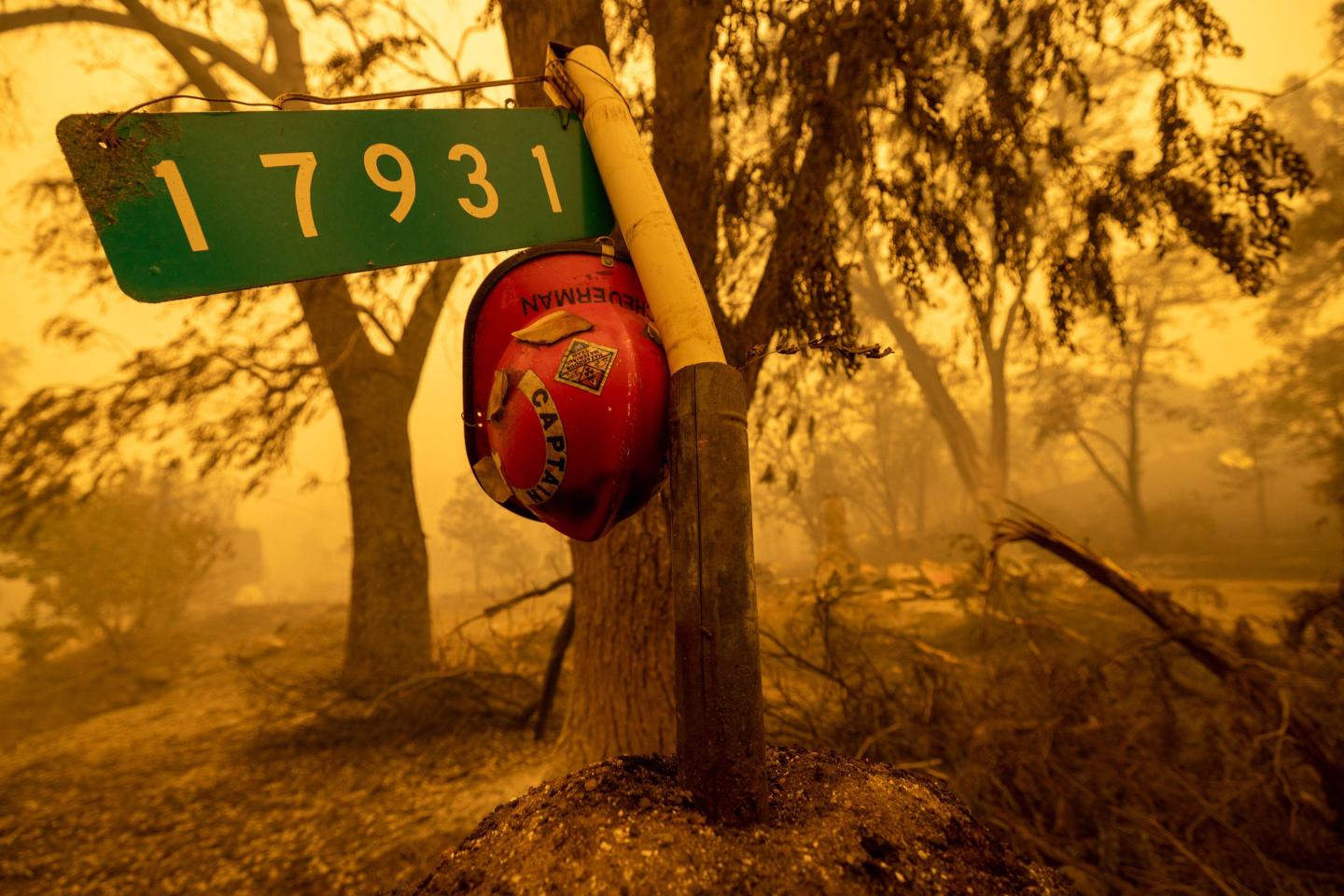
A firefighter helmet hangs at the entrance to a property
A firefighter helmet hangs at the entrance to a property in the community of Klamath River, which burned in the McKinney Fire, California, on July 31, 2022David McNew—AFP/Getty Images
Add Fortune on Google for similar content.

There is a critical gap between how the scientific community and the public conceptualize the consequences of human-caused climate change, as new research suggests we are ignoring the truly worst-case and catastrophic risks.

The consequences of climate change—from record-breaking heat waves in Europe to devastating wildfires in the U.S. this summer alone—are forcing themselves to the forefront of people’s attention. 

But as bad as things are, some scientists are warning that we might be missing the point on even bigger and more existential risks to humanity if the world doesn’t get its act together on containing human-caused planet-warming emissions.

In a new paper, researchers from institutions including the University of Cambridge and China’s Nanjing University argue that the worst-case scenarios of climate change are being “dangerously underexplored” by the scientific community.

According to the authors, the possibility of “worldwide societal collapse or even eventual human extinction” is not completely out of the question, as current rates of warming “may surpass thresholds that triggered previous mass extinctions” in the past.

Climate’s worst-case scenario

Due to planet-warming particulate emissions caused by humans since the Industrial Revolution, temperatures are now 1.1° C (1.9° F) higher than they were at the end of the 19th century, and could increase by 1.5° C (2.7° F) as early as the next decade, according to the Intergovernmental Panel on Climate Change (IPCC). 

Hitting this point will cause shifts that would “persist for centuries to millennia and will continue to cause further long-term changes in the climate system,” the IPCC has warned, including sea level rise, coastal erosion, heat waves, and climate-related risks to health and livelihoods around the world.

The climate impacts of hitting 1.5° C or even 2° C worth of temperature rise are well-documented by the IPCC, which is considered the top international authority on climate change impacts, and provides regular scientific assessments by assembling and reviewing the latest climate science studies from around the world.

But beyond that, there is a precarious lack of knowledge and perspective on the consequences of climate change on humanity, the authors of the new paper warn.

The writers note that there have been relatively few IPCC analyses and estimates of potential climate change impacts should temperature rise exceed 3° C (5.4° F), with the panel having gravitated in recent years to focus more on the consequences of temperature rise around or below 2° C.

But that is ignoring the fact that further temperature rise is still very much possible, and it is in fact the trajectory the planet is on. 

Today’s official environmental policies around the world put us on track for 2.7° C of temperature rise before the end of the century, according to independent research group Climate Action Tracker.

According to the paper’s authors, using new climate models in their research, temperatures could conceivably rise to 3.9° C before the end of the century, which would entail “catastrophic” changes to the global climate and existential repercussions for humanity.

Using a medium-high-likelihood scenario of continued greenhouse gas emissions and population growth over the next several decades, the authors concluded that as many as 2 billion people could be living in parts of the world where temperatures regularly exceed 29° C (84° F) by 2070, up from 30 million today.

Most of the countries affected by temperature rise will be relatively “fragile” states, with higher rates of poverty and more vulnerable to higher temperatures, which could quickly lead to a “belt of instability” and even “unravel societies across the globe.” Rapid temperature rise could become an amplifier of several other crises, the authors write, including international conflict, famines, and infectious disease spread.

Facing catastrophic risk

The authors argue that a persistent gap in the discussion on climate change is that labels such as “catastrophic climate change” or “existential risk”—the latter of which has been used multiple times by UN Secretary General António Guterres—have so far not been adequately defined.

In the paper, the authors called on the IPCC to sign off on a new special report—similar to what the panel produced to specifically outline risks tied to 1.5° C of temperature rise—that would provide a clear framework on what the more “catastrophic” impacts of climate change would involve.

This would improve the performance of current climate models, and inform scientists as to what new technologies and measures will be necessary.

The authors noted the risk of “fear-invoking” messaging surrounding climate, which could inspire more instances of climate doomism—a sense that the situation is beyond anyone’s control and little can be done to rectify it.

To avoid this, the researchers recommended depoliticizing climate rhetoric and ensuring that messengers are considered trustworthy by the public.

The authors lamented that the scientific community has so far avoided focusing on “catastrophic” climate impacts, and that only popular science sources have been able to capture this messaging in recent years. 

The 2019 book The Uninhabitable Earth by New York Times columnist David Wallace-Wells painted a picture of an Earth completely ravaged by worst-case scenario climate impacts, while the 2007 book Six Degrees (updated with a new version in 2020) by British journalist Mark Lynas charted the increasingly chilling known potential effects of temperature rise ranging from 1° to 6° C. 

Sign up for the Fortune Features email list so you don’t miss our biggest features, exclusive interviews, and investigations.
About the Author
By Tristan BoveContributing Reporter
LinkedIn iconTwitter icon
See full bioRight Arrow Button Icon
Add Fortune on Google for similar content.

Latest in Environment

Finance
Lorem ipsum dolor sit amet, consectetur adipiscing elit, sed do eiusmod tempor incididunt ut labore et dolore magna aliqua. Ut enim ad minim veniam
By Fortune Editors
October 20, 2025
Finance
Lorem ipsum dolor sit amet, consectetur adipiscing elit, sed do eiusmod tempor incididunt ut labore et dolore magna aliqua. Ut enim ad minim veniam
By Fortune Editors
October 20, 2025
Finance
Lorem ipsum dolor sit amet, consectetur adipiscing elit, sed do eiusmod tempor incididunt ut labore et dolore magna aliqua. Ut enim ad minim veniam
By Fortune Editors
October 20, 2025
Finance
Lorem ipsum dolor sit amet, consectetur adipiscing elit, sed do eiusmod tempor incididunt ut labore et dolore magna aliqua. Ut enim ad minim veniam
By Fortune Editors
October 20, 2025
Finance
Lorem ipsum dolor sit amet, consectetur adipiscing elit, sed do eiusmod tempor incididunt ut labore et dolore magna aliqua. Ut enim ad minim veniam
By Fortune Editors
October 20, 2025
Finance
Lorem ipsum dolor sit amet, consectetur adipiscing elit, sed do eiusmod tempor incididunt ut labore et dolore magna aliqua. Ut enim ad minim veniam
By Fortune Editors
October 20, 2025

Most Popular

Finance
Lorem ipsum dolor sit amet, consectetur adipiscing elit, sed do eiusmod tempor incididunt ut labore et dolore magna aliqua. Ut enim ad minim veniam
By Fortune Editors
October 20, 2025
Finance
Lorem ipsum dolor sit amet, consectetur adipiscing elit, sed do eiusmod tempor incididunt ut labore et dolore magna aliqua. Ut enim ad minim veniam
By Fortune Editors
October 20, 2025
Finance
Lorem ipsum dolor sit amet, consectetur adipiscing elit, sed do eiusmod tempor incididunt ut labore et dolore magna aliqua. Ut enim ad minim veniam
By Fortune Editors
October 20, 2025
Finance
Lorem ipsum dolor sit amet, consectetur adipiscing elit, sed do eiusmod tempor incididunt ut labore et dolore magna aliqua. Ut enim ad minim veniam
By Fortune Editors
October 20, 2025
Finance
Lorem ipsum dolor sit amet, consectetur adipiscing elit, sed do eiusmod tempor incididunt ut labore et dolore magna aliqua. Ut enim ad minim veniam
By Fortune Editors
October 20, 2025
Finance
Lorem ipsum dolor sit amet, consectetur adipiscing elit, sed do eiusmod tempor incididunt ut labore et dolore magna aliqua. Ut enim ad minim veniam
By Fortune Editors
October 20, 2025
Fortune Secondary Logo
Rankings
  • 100 Best Companies
  • Fortune 500
  • Global 500
  • Fortune 500 Europe
  • Most Powerful Women
  • World's Most Admired Companies
  • See All Rankings
  • Lists Calendar
Sections
  • Finance
  • Fortune Crypto
  • Features
  • Leadership
  • Health
  • Commentary
  • Success
  • Retail
  • Mpw
  • Tech
  • Lifestyle
  • CEO Initiative
  • Asia
  • Politics
  • Conferences
  • Europe
  • Newsletters
  • Personal Finance
  • Environment
  • Magazine
  • Education
Customer Support
  • Frequently Asked Questions
  • Customer Service Portal
  • Privacy Policy
  • Terms Of Use
  • Single Issues For Purchase
  • International Print
Commercial Services
  • Advertising
  • Fortune Brand Studio
  • Fortune Analytics
  • Fortune Conferences
  • Business Development
  • Group Subscriptions
About Us
  • About Us
  • Press Center
  • Work At Fortune
  • Terms And Conditions
  • Site Map
  • About Us
  • Press Center
  • Work At Fortune
  • Terms And Conditions
  • Site Map
  • Facebook icon
  • Twitter icon
  • LinkedIn icon
  • Instagram icon
  • Pinterest icon

Latest in Environment

Photo: Paris, france
Environmentclimate change
Brutal heatwave in France is killing 2,000 people per week, undertakers are overwhelmed, and health agency says there’s worse to come
By John Leicester and The Associated PressJuly 3, 2026
6 hours ago
Photo: Ivanka Trump and Jared Kushner
Environmentjared kushner
Police use tear gas and pepper spray against Albanians protesting Trump family plans to develop unspoiled island into a luxury resort
By The Associated PressJuly 3, 2026
12 hours ago
g
EnvironmentCalifornia
California bans ‘sell by’ labels to curb food waste and emissions
By Olga R. Rodriguez and The Associated PressJuly 2, 2026
1 day ago
t
PoliticsWhite House
A truck-bed coating company, a UFC birthday party, and an algae bloom: Inside Trump’s $14 million Reflecting Pool fiasco
By Nick LichtenbergJuly 2, 2026
1 day ago
t
CommentaryMedia
Netflix could turn NBC into its biggest bet yet — and this time, the math actually works
By Jeffrey Sonnenfeld and Steven TianJune 30, 2026
3 days ago
heat
EnvironmentHeat
America’s getting a heat dome for July 4th — it won’t kill you at 2pm but might at 2am
By Alexa St. John and The Associated PressJune 30, 2026
3 days ago

Most Popular

Egg companies made $1.22 billion in profit off a $6 carton — now they’re buying their way out of a price-fixing case with 53 million donated eggs
Law
Egg companies made $1.22 billion in profit off a $6 carton — now they’re buying their way out of a price-fixing case with 53 million donated eggs
By Wyatte Grantham-Philips and The Associated PressJuly 2, 2026
1 day ago
Meet the Zillennials: The luckiest micro-generation in the workforce, born between 1993 and 1998
AI
Meet the Zillennials: The luckiest micro-generation in the workforce, born between 1993 and 1998
By Nick LichtenbergJuly 3, 2026
13 hours ago
Economists have found an answer to slowing cognitive decline: Avoid retiring early, study finds
Economy
Economists have found an answer to slowing cognitive decline: Avoid retiring early, study finds
By Sasha RogelbergJuly 2, 2026
1 day ago
On Wall Street, analysts increasingly don’t believe the U.S. government’s 'misleading' job numbers
Economy
On Wall Street, analysts increasingly don’t believe the U.S. government’s 'misleading' job numbers
By Jim EdwardsJuly 3, 2026
9 hours ago
Mark Zuckerberg feeds his cows macadamia nuts and beer to create the 'highest-quality beef in the world' on his $300 million estate in Hawaii
Success
Mark Zuckerberg feeds his cows macadamia nuts and beer to create the 'highest-quality beef in the world' on his $300 million estate in Hawaii
By Sasha RogelbergJuly 2, 2026
1 day ago
Current price of oil as of July 2, 2026
Personal Finance
Current price of oil as of July 2, 2026
By Joseph HostetlerJuly 2, 2026
1 day ago

© 2026 Fortune Media IP Limited. All Rights Reserved. Use of this site constitutes acceptance of our Terms of Use and Privacy Policy | CA Notice at Collection and Privacy Notice | Do Not Sell/Share My Personal Information
FORTUNE is a trademark of Fortune Media IP Limited, registered in the U.S. and other countries. FORTUNE may receive compensation for some links to products and services on this website. Offers may be subject to change without notice.