• Home
  • Latest
  • Fortune 500
  • Finance
  • Tech
  • Leadership
  • Lifestyle
  • Rankings
  • Multimedia
CommentaryThe Biden administration

The U.S. must do what it takes to achieve national security in the age of cyber conflict

By
Vince Stewart
Vince Stewart
and
Gary Corn
Gary Corn
Down Arrow Button Icon
By
Vince Stewart
Vince Stewart
and
Gary Corn
Gary Corn
Down Arrow Button Icon
December 21, 2021, 7:19 AM ET
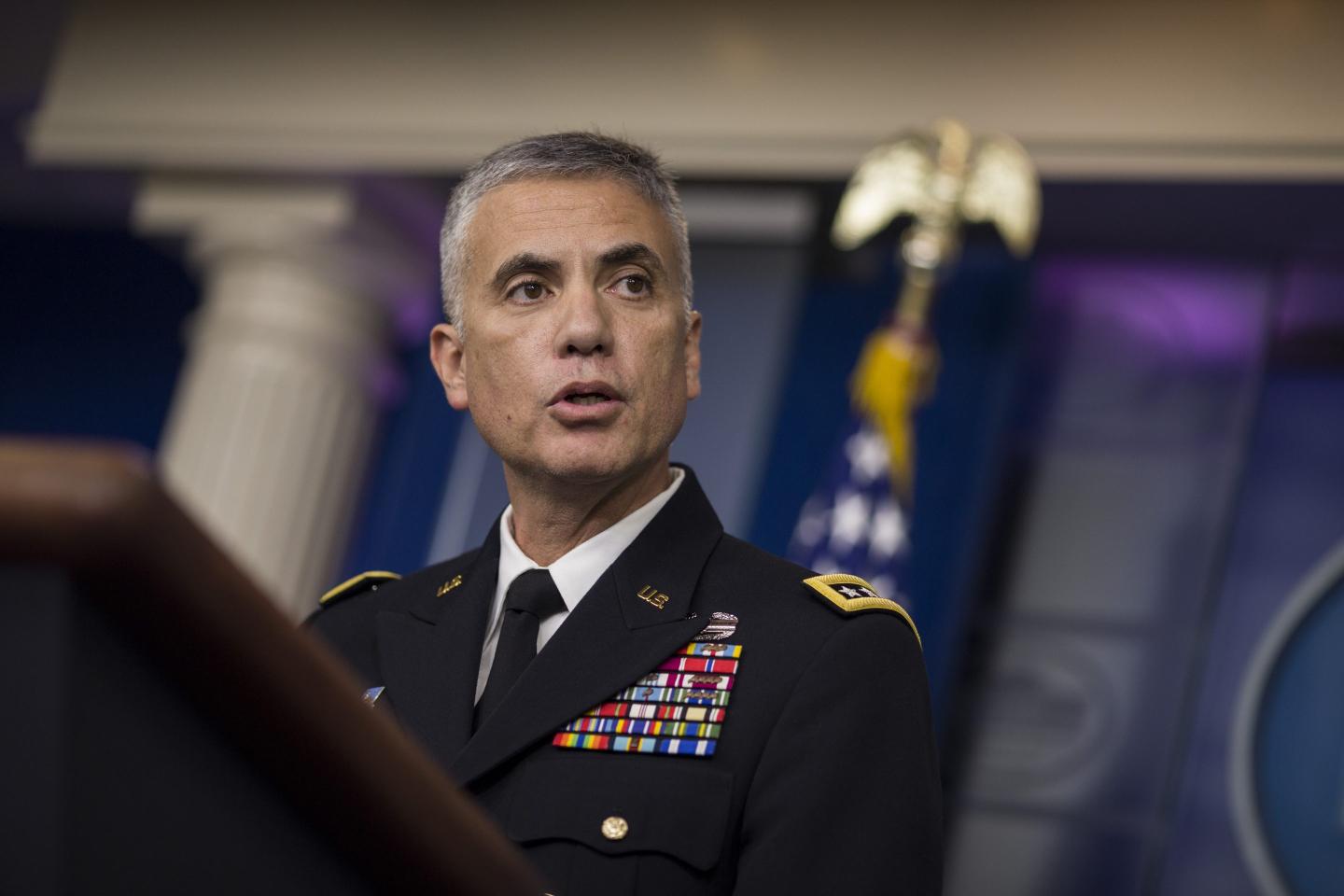
Paul Nakasone, director of the National Security Agency (NSA) and commander of the U.S. Cyber Command, recently acknowledged operations against ransomware groups.

It’s been just over a year since cybersecurity firm FireEye disclosed what turned out to be the proverbial tip of the SolarWinds iceberg. As we now know, the breach of its network turned out to be part of a much broader Russian cyber espionage operation.

Exploiting vulnerabilities in the SolarWinds platform, Russia’s intelligence services gained access to the networks of thousands of customers, including a number of key federal government clients. A far smaller number of users were subsequently compromised by follow-up hacking. Microsoft President Brad Smith described it at the time as “the largest and most sophisticated attack the world has ever seen.” 

Unfortunately, just twelve months later, the SolarWinds hack faces some stiff competition for Smith’s superlative ranking. The steady drumbeat of hostile cyber operations that have unfolded since, from China’s Microsoft Exchange Server hack to increasingly costly and harmful ransomware attacks, have given the SolarWinds breach a run for its money. They demonstrate even more clearly what some of us already knew: As a nation, we remain unacceptably vulnerable to cyber threats, a circumstance our adversaries recognize and routinely exploit to our disadvantage in strategic competition.

With the digitization and interconnection of almost every facet of our lives, not to mention our homeland security and national defense systems, national cybersecurity is, as President Biden recently described it, “the core national security challenge we are facing.” Yet too often we have failed to keep pace with this persistent and evolving threat, hitting the snooze button in the face of one “wake up call” after another.

We have failed to fully embrace the strategic reality that our adversaries are committed to constant and unrelenting hostile cyber campaigns against us. Reversing this trend requires not only a recognition of the gravity of the threat, but a related commitment at all levels of the public and private sectors to more proactively confront it.

While the Biden Administration has yet to issue a comprehensive cyber strategy, it has taken a number of steps in the right direction. It has prioritized cybersecurity through both policy and action to push a more collaborative national effort to reduce vulnerabilities, enhance resiliency and drive down risk. Mandating improved cybersecurity standards across the Federal government, leveraging the weight of the government to improve supply chain security in the private sector, enhancing partnerships, establishing improved standards and expectations for critical infrastructure security, and taking steps to remove barriers to threat information sharing between government and the private sector are just a few of the efforts underway to improve overall security and deny our adversaries the benefits of their malign efforts.

As important as these efforts are, they are incipient; and even when fully realized they will not eliminate the incentive structures that motivate our adversaries to confront us through cyberspace. More persistent, proactive measures are needed to counter our adversaries and set the overall conditions of security in cyberspace.

The administration has also made cyber diplomacy a cornerstone of its approach, continuing its leadership role in United Nations processes, engaging a smaller group of states to more actively cooperate in the fight against ransomware, and enhancing key partnerships and alliances. The value of diplomacy and the advancement of international law and norms of responsible state behavior in cyberspace should not be understated. Ceding the field to determined moves from China and Russia to reset the rules-based order to fit their authoritarian goals would be a mistake. However, diplomatic efforts are characteristically reactive and slow. They are unlikely to alter our key adversaries’ calculus, and will not provide solutions to an immediate, ongoing, and urgent problem.

It is vital for the U.S. to take a leading role in international norms-setting efforts, but we will also need to persistently engage our adversaries, employing our cyber capabilities during day-to-day competition to disrupt or halt their malicious cyber operations at the source. Disruptive counter-cyber operations must play a role in achieving cybersecurity in depth.

Recently, NSA Director and Commander of the U.S. Cyber Command Gen. Paul Nakasone acknowledged operations to disrupt ransomware groups, taken in partnership with other elements of the federal government. These actions no doubt reflect valuable lessons learned during operations to defend our elections from foreign interference and other threats to the nation. These operations were made possible by key changes in strategy, policy, and legislation in 2018 that provided for more agile and responsive coordination and approval processes to confront emerging threats. Although not offering a panacea, these operations have made a successful contribution to national security–something we should build on.    

States, non-state actors, and criminals will not abandon cyber tools as means of statecraft, conflict, and crime. Our vulnerability to these threats will remain a core national security concern for the foreseeable future. Disruptive operations are an essential component to achieving better cybersecurity and can be done consistently with our international legal obligations, commitment to norms, and our goal of ensuring a free, open, and secure internet. 

Lieutenant General (Ret). Vince Stewart is the former Deputy Commander of U.S. Cyber Command and the Chief of Inclusion and Innovation for Ankura.

Colonel (Ret.) Gary Corn is former Staff Judge Advocate to U.S. Cyber Command and program director for American University Washington College of Law’s Tech, Law & Security Program and a senior fellow for the R Street Institute.

Editor’s Note: This article has been updated to reflect the number of users affected by the Sunburst breach, according to CISA findings.

More must-read commentary published by Fortune:

  • Extreme events are forcing corporations to think like insurers
  • To deliver the infrastructure boom, construction giants must open their doors to startups
  • Meet your new A.I. best friend
  • Can a community of basketball fanatics run an NBA team as a DAO?
  • If you’re not Elon Musk: Communication and compliance for fintech CEOs
Never miss a story: Follow your favorite topics and authors to get a personalized email with the journalism that matters most to you.
About the Authors
By Vince Stewart
See full bioRight Arrow Button Icon
By Gary Corn
See full bioRight Arrow Button Icon

Latest in Commentary

Finance
Lorem ipsum dolor sit amet, consectetur adipiscing elit, sed do eiusmod tempor incididunt ut labore et dolore magna aliqua. Ut enim ad minim veniam
By Fortune Editors
October 20, 2025
Finance
Lorem ipsum dolor sit amet, consectetur adipiscing elit, sed do eiusmod tempor incididunt ut labore et dolore magna aliqua. Ut enim ad minim veniam
By Fortune Editors
October 20, 2025
Finance
Lorem ipsum dolor sit amet, consectetur adipiscing elit, sed do eiusmod tempor incididunt ut labore et dolore magna aliqua. Ut enim ad minim veniam
By Fortune Editors
October 20, 2025
Finance
Lorem ipsum dolor sit amet, consectetur adipiscing elit, sed do eiusmod tempor incididunt ut labore et dolore magna aliqua. Ut enim ad minim veniam
By Fortune Editors
October 20, 2025
Finance
Lorem ipsum dolor sit amet, consectetur adipiscing elit, sed do eiusmod tempor incididunt ut labore et dolore magna aliqua. Ut enim ad minim veniam
By Fortune Editors
October 20, 2025
Finance
Lorem ipsum dolor sit amet, consectetur adipiscing elit, sed do eiusmod tempor incididunt ut labore et dolore magna aliqua. Ut enim ad minim veniam
By Fortune Editors
October 20, 2025

Most Popular

Finance
Lorem ipsum dolor sit amet, consectetur adipiscing elit, sed do eiusmod tempor incididunt ut labore et dolore magna aliqua. Ut enim ad minim veniam
By Fortune Editors
October 20, 2025
Finance
Lorem ipsum dolor sit amet, consectetur adipiscing elit, sed do eiusmod tempor incididunt ut labore et dolore magna aliqua. Ut enim ad minim veniam
By Fortune Editors
October 20, 2025
Finance
Lorem ipsum dolor sit amet, consectetur adipiscing elit, sed do eiusmod tempor incididunt ut labore et dolore magna aliqua. Ut enim ad minim veniam
By Fortune Editors
October 20, 2025
Finance
Lorem ipsum dolor sit amet, consectetur adipiscing elit, sed do eiusmod tempor incididunt ut labore et dolore magna aliqua. Ut enim ad minim veniam
By Fortune Editors
October 20, 2025
Finance
Lorem ipsum dolor sit amet, consectetur adipiscing elit, sed do eiusmod tempor incididunt ut labore et dolore magna aliqua. Ut enim ad minim veniam
By Fortune Editors
October 20, 2025
Finance
Lorem ipsum dolor sit amet, consectetur adipiscing elit, sed do eiusmod tempor incididunt ut labore et dolore magna aliqua. Ut enim ad minim veniam
By Fortune Editors
October 20, 2025
Fortune Secondary Logo
Rankings
  • 100 Best Companies
  • Fortune 500
  • Global 500
  • Fortune 500 Europe
  • Most Powerful Women
  • World's Most Admired Companies
  • See All Rankings
  • Lists Calendar
Sections
  • Finance
  • Fortune Crypto
  • Features
  • Leadership
  • Health
  • Commentary
  • Success
  • Retail
  • Mpw
  • Tech
  • Lifestyle
  • CEO Initiative
  • Asia
  • Politics
  • Conferences
  • Europe
  • Newsletters
  • Personal Finance
  • Environment
  • Magazine
  • Education
Customer Support
  • Frequently Asked Questions
  • Customer Service Portal
  • Privacy Policy
  • Terms Of Use
  • Single Issues For Purchase
  • International Print
Commercial Services
  • Advertising
  • Fortune Brand Studio
  • Fortune Analytics
  • Fortune Conferences
  • Business Development
  • Group Subscriptions
About Us
  • About Us
  • Lists Calendar
  • Press Center
  • Work At Fortune
  • Terms And Conditions
  • Site Map
  • About Us
  • Lists Calendar
  • Press Center
  • Work At Fortune
  • Terms And Conditions
  • Site Map
  • Facebook icon
  • Twitter icon
  • LinkedIn icon
  • Instagram icon
  • Pinterest icon

Latest in Commentary

one piece
CommentaryPersonal Finance
Gen Z is doing (almost) everything right with money—and still getting burned
By Beth KoblinerApril 22, 2026
4 hours ago
beard
CommentaryEducation
Yale asked the right question. Now the rest of higher education owes an answer
By Steve BeardApril 22, 2026
4 hours ago
trump
Commentarynational debt
America’s national debt is heading to 175% of GDP. Here’s why no president—including Trump—has the will to stop it
By Steve H. Hanke and David M. WalkerApril 22, 2026
5 hours ago
edelman
CommentaryHealth
70% of people believe at least one divisive health claim. Science needs a new playbook
By Richard EdelmanApril 22, 2026
6 hours ago
gas
CommentaryMiddle class
The $100 oil shock is hitting the middle class like a margin call
By Katica RoyApril 21, 2026
1 day ago
trump
CommentarySocial Security
What happens if nothing is done to fix Social Security by 2032?
By Martha SheddenApril 21, 2026
1 day ago

Most Popular

The tables have turned: Florida and Texas are the biggest losers in the housing market as Ohio emerges a surprise winner
Real Estate
The tables have turned: Florida and Texas are the biggest losers in the housing market as Ohio emerges a surprise winner
By Sydney LakeApril 21, 2026
22 hours ago
'Something sinister could be happening': FBI looks into dead or missing nuclear and space defense scientists tied to NASA, Blue Origin, and SpaceX
Politics
'Something sinister could be happening': FBI looks into dead or missing nuclear and space defense scientists tied to NASA, Blue Origin, and SpaceX
By Catherina GioinoApril 21, 2026
21 hours ago
$166 billion in tariff refunds just became available, but small businesses may already be at a disadvantage
Law
$166 billion in tariff refunds just became available, but small businesses may already be at a disadvantage
By Sasha RogelbergApril 20, 2026
2 days ago
Jeff Bezos once gave Eva Longoria and the admiral behind Osama bin Laden's capture $100 million—but she says you don't need wealth to give back
Success
Jeff Bezos once gave Eva Longoria and the admiral behind Osama bin Laden's capture $100 million—but she says you don't need wealth to give back
By Orianna Rosa RoyleApril 21, 2026
1 day ago
John Ternus, the man stepping into Tim Cook and Steve Jobs' shoes, is a 25-year Apple veteran with zero LinkedIn posts
C-Suite
John Ternus, the man stepping into Tim Cook and Steve Jobs' shoes, is a 25-year Apple veteran with zero LinkedIn posts
By Kelvin Chan and The Associated PressApril 21, 2026
23 hours ago
‘Something sinister’: What we know about the FBI probe into dead and missing scientists linked to space and military industries
Economy
‘Something sinister’: What we know about the FBI probe into dead and missing scientists linked to space and military industries
By Jim EdwardsApril 22, 2026
6 hours ago

© 2026 Fortune Media IP Limited. All Rights Reserved. Use of this site constitutes acceptance of our Terms of Use and Privacy Policy | CA Notice at Collection and Privacy Notice | Do Not Sell/Share My Personal Information
FORTUNE is a trademark of Fortune Media IP Limited, registered in the U.S. and other countries. FORTUNE may receive compensation for some links to products and services on this website. Offers may be subject to change without notice.