• Home
  • Latest
  • Fortune 500
  • Finance
  • Tech
  • Leadership
  • Lifestyle
  • Rankings
  • Multimedia

Trendingnow

1

Jeff Bezos wants the bottom half of earners to pay zero income tax—he says nurses making just $75K should save $12K a year

2

Despite a $500 million net worth, Shaq just finished his fourth degree. He warns graduates: 'Your character will take you further than your resume'

3

Bolt CEO says he let go of his entire HR team for creating problems that didn’t exist: ‘Those problems disappeared when I let them go’ 

1

Jeff Bezos wants the bottom half of earners to pay zero income tax—he says nurses making just $75K should save $12K a year

2

Despite a $500 million net worth, Shaq just finished his fourth degree. He warns graduates: 'Your character will take you further than your resume'

3

Bolt CEO says he let go of his entire HR team for creating problems that didn’t exist: ‘Those problems disappeared when I let them go’ 
Commentary

The key to superapp success is a super wallet

By
Jixun Foo
Jixun Foo
Down Arrow Button Icon
By
Jixun Foo
Jixun Foo
Down Arrow Button Icon
October 8, 2021, 5:01 PM ET
SINGAPORE-BANKING-INTERNET
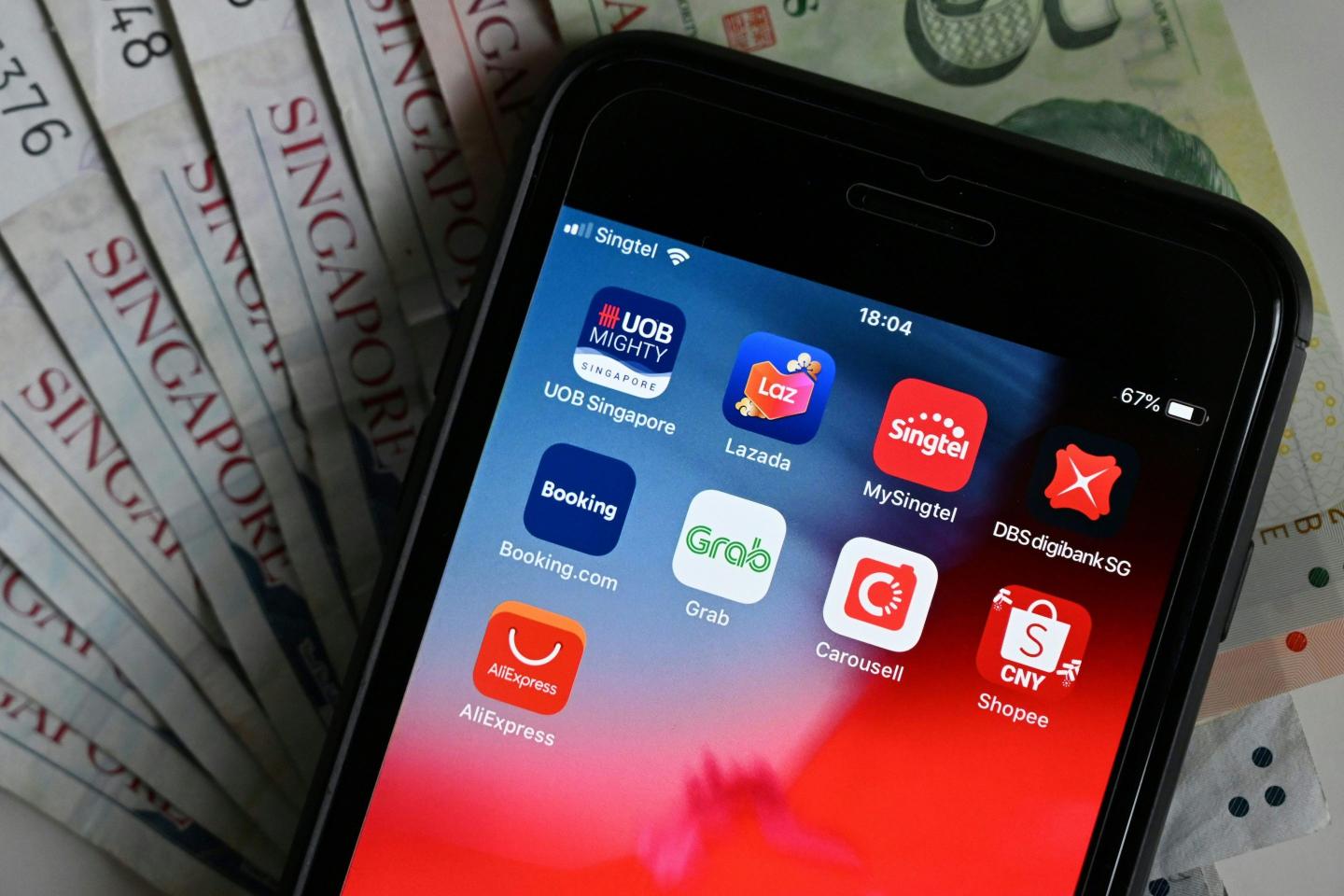
Grab and Sea have been granted digital banking licenses in Singapore.ROSLAN RAHMAN - Getty Images

Long before Sea Limited became the world’s best performing stock of 2020, superapps were anticipated as the next big growth opportunity in Southeast Asia. In what has shaped up to be a three-way race between Grab, GoTo, and Sea, the question many are asking is who will win.

While we don’t attempt to predict an ultimate champion, the history of China’s superapps gives us clues on where the Southeast Asian battlefield will focus on next: payments.

What is a superapp? 

The superapp concept was first popularized in China by Tencent’s WeChat and Ant Group’s Alipay to describe the all-in-one nature of these apps, used by consumers and merchants alike for virtually any type of service.

It wasn’t long before the emerging tech platforms in Southeast Asia caught on, driven by similar secular trends. Today, consumers across Southeast Asia use these one-stop-shop apps to handle their everyday needs: from commuting to work, ordering food and groceries, consulting with doctors, to even managing their investments.

Wherever they are, the end goal of any superapp is the same: ubiquity. This is where payments come in.

The superpower of payments

WeChat and Alipay were mobile wallets before becoming superapps. Their success is largely due to the underlying payments foundation that glues together the multitude of services available on each platform and makes it easier for users to try new ones. By extending “one-click buying” to offline stores, they helped usher in China’s cashless revolution.

Southeast Asia is on the cusp of a similar transformation. It shares many of the conditions that enabled China’s mobile wallet boom: 90% mobile internet penetration, rapid urbanization and a traditionally cash-heavy society with more than half the population lacking access to formal banking services.

The path to dominance in Southeast Asia will be determined by the following factors:

Regional scale. Payments have always been a scale play, but the largest market in Southeast Asia is less than one-fifth the size of China. Unlike China, Southeast Asia is a diverse mix of at least 10 different nations with different languages, standards of living, and market regulations.

When GrabPay (Grab’s e-wallet) launched in 2016, the company had a strategic advantage through its strong ride-hailing foothold in the top six Southeast Asian markets, giving it a head start. GoPay also launched in 2016, but has had a comparatively limited presence regionally, given its hyper-concentration in Indonesia.

Sea’s ShopeePay is the latecomer. It launched in 2018 with aggressive marketing spend and a focus on e-commerce that has helped chart the company’s phenomenal growth. Sea and Grab each operate in six countries, which makes them more likely to achieve the coveted scale.

Frequency and cross-selling. Despite the growth of these platforms, cash payments are still the most familiar and trusted form of payment. Only 17% of total transactions in Southeast Asia are cashless today. The best way to change this consumer behavior is to make cashless transactions a commodity.

This is where Grab and GoTo have the upper hand. Ride-hailing and deliveries are used on a near-daily basis. Connecting mobile wallets to these high-frequency use cases is helpful in creating repetition, which evolves into habits, and ultimately trust.

It also means more opportunities to cross-sell services to users. For example, Grab drivers can pay as little as 10 cents per ride to accumulate up to $200,000 in insurance coverage.

This is why Sea’s Shopee has entered food delivery, and GoTo is combining a portfolio of e-commerce and daily services in Indonesia through the merger of GoJek and Tokopedia.

However, the key to mobile wallet leadership lies in convincing users to use it across a multitude of e-commerce sites and in stores. Grab is counting on this. Approximately 40% of its 2020 TPV was achieved off-platform and it expects that to grow to 60% by 2023.

The super wallet’s future

The mobile wallet battle in Southeast Asia has just begun. As the payments landscape continues to grow, mobile wallets will be a launchpad for other financial services such as loans, insurance, investing, and digital banking.

Grab and Sea have already secured digital banking licenses in Singapore, paving the way for this transition. These companies can begin thinking about an end-to-end financial services journey for consumers. They can help grow users’ wealth through investing, allow them to manage their finances through loans, and protect what they value with insurance.

This is the true end game and the much larger opportunity for superapps: to permanently bring formal banking services to the next 100 million or more underbanked and underserved users. Once achieved, we foresee one of the greatest economic growth stories in history.

By Jixun Foo, Managing Partner at GGV Capital. GGV Capital is a global venture capital firm that has invested in Grab and other companies such as Affirm, Airbnb, Alibaba, Didi, HashiCorp, Peloton, Slack, Square and StockX.

Subscribe to Fortune Daily to get essential business stories straight to your inbox each morning.
About the Author
By Jixun Foo
See full bioRight Arrow Button Icon

Latest in Commentary

Finance
Lorem ipsum dolor sit amet, consectetur adipiscing elit, sed do eiusmod tempor incididunt ut labore et dolore magna aliqua. Ut enim ad minim veniam
By Fortune Editors
October 20, 2025
Finance
Lorem ipsum dolor sit amet, consectetur adipiscing elit, sed do eiusmod tempor incididunt ut labore et dolore magna aliqua. Ut enim ad minim veniam
By Fortune Editors
October 20, 2025
Finance
Lorem ipsum dolor sit amet, consectetur adipiscing elit, sed do eiusmod tempor incididunt ut labore et dolore magna aliqua. Ut enim ad minim veniam
By Fortune Editors
October 20, 2025
Finance
Lorem ipsum dolor sit amet, consectetur adipiscing elit, sed do eiusmod tempor incididunt ut labore et dolore magna aliqua. Ut enim ad minim veniam
By Fortune Editors
October 20, 2025
Finance
Lorem ipsum dolor sit amet, consectetur adipiscing elit, sed do eiusmod tempor incididunt ut labore et dolore magna aliqua. Ut enim ad minim veniam
By Fortune Editors
October 20, 2025
Finance
Lorem ipsum dolor sit amet, consectetur adipiscing elit, sed do eiusmod tempor incididunt ut labore et dolore magna aliqua. Ut enim ad minim veniam
By Fortune Editors
October 20, 2025

Most Popular

Finance
Lorem ipsum dolor sit amet, consectetur adipiscing elit, sed do eiusmod tempor incididunt ut labore et dolore magna aliqua. Ut enim ad minim veniam
By Fortune Editors
October 20, 2025
Finance
Lorem ipsum dolor sit amet, consectetur adipiscing elit, sed do eiusmod tempor incididunt ut labore et dolore magna aliqua. Ut enim ad minim veniam
By Fortune Editors
October 20, 2025
Finance
Lorem ipsum dolor sit amet, consectetur adipiscing elit, sed do eiusmod tempor incididunt ut labore et dolore magna aliqua. Ut enim ad minim veniam
By Fortune Editors
October 20, 2025
Finance
Lorem ipsum dolor sit amet, consectetur adipiscing elit, sed do eiusmod tempor incididunt ut labore et dolore magna aliqua. Ut enim ad minim veniam
By Fortune Editors
October 20, 2025
Finance
Lorem ipsum dolor sit amet, consectetur adipiscing elit, sed do eiusmod tempor incididunt ut labore et dolore magna aliqua. Ut enim ad minim veniam
By Fortune Editors
October 20, 2025
Finance
Lorem ipsum dolor sit amet, consectetur adipiscing elit, sed do eiusmod tempor incididunt ut labore et dolore magna aliqua. Ut enim ad minim veniam
By Fortune Editors
October 20, 2025
Fortune Secondary Logo
Rankings
  • 100 Best Companies
  • Fortune 500
  • Global 500
  • Fortune 500 Europe
  • Most Powerful Women
  • World's Most Admired Companies
  • See All Rankings
  • Lists Calendar
Sections
  • Finance
  • Fortune Crypto
  • Features
  • Leadership
  • Health
  • Commentary
  • Success
  • Retail
  • Mpw
  • Tech
  • Lifestyle
  • CEO Initiative
  • Asia
  • Politics
  • Conferences
  • Europe
  • Newsletters
  • Personal Finance
  • Environment
  • Magazine
  • Education
Customer Support
  • Frequently Asked Questions
  • Customer Service Portal
  • Privacy Policy
  • Terms Of Use
  • Single Issues For Purchase
  • International Print
Commercial Services
  • Advertising
  • Fortune Brand Studio
  • Fortune Analytics
  • Fortune Conferences
  • Business Development
  • Group Subscriptions
About Us
  • About Us
  • Press Center
  • Work At Fortune
  • Terms And Conditions
  • Site Map
  • About Us
  • Press Center
  • Work At Fortune
  • Terms And Conditions
  • Site Map
  • Facebook icon
  • Twitter icon
  • LinkedIn icon
  • Instagram icon
  • Pinterest icon

Latest in Commentary

brotman
CommentaryVenture Capital
I’ve spent 25 years in venture capital. Here’s how it quietly shut ordinary Americans out of the AI wealth boom—and what could fix it
By Steve BrotmanMay 22, 2026
10 hours ago
cox
CommentarySuccession
McKinsey studied 200 family business successions. The biggest problem wasn’t the heir — it was the outgoing CEO
By Acha Leke and Chaitali MukherjeeMay 22, 2026
11 hours ago
himanshu
CommentaryLayoffs
I’ve led companies through every major tech disruption. AI washing is the same mistake, every time
By Himanshu PalsuleMay 22, 2026
14 hours ago
trump
CommentaryWhite House
Trump Accounts have a bigger problem than billionaire stock donations
By Jin Huang and Stephen RollMay 21, 2026
1 day ago
brigham
CommentaryRailroads
The U.S. freight network is broken by design. One merger could start fixing it
By Brigham A. McCownMay 21, 2026
2 days ago
Elon Musk sits with his fists together, looking up.
Commentaryspace
SpaceX will be worth trillions, but the space station that made it possible is worth even more — if we don’t squander it
By Tejpaul BhatiaMay 20, 2026
2 days ago

Most Popular

Jeff Bezos wants the bottom half of earners to pay zero income tax—he says nurses making just $75K should save $12K a year
Success
Jeff Bezos wants the bottom half of earners to pay zero income tax—he says nurses making just $75K should save $12K a year
By Preston ForeMay 21, 2026
1 day ago
Despite a $500 million net worth, Shaq just finished his fourth degree. He warns graduates: 'Your character will take you further than your resume'
Success
Despite a $500 million net worth, Shaq just finished his fourth degree. He warns graduates: 'Your character will take you further than your resume'
By Preston ForeMay 20, 2026
2 days ago
Bolt CEO says he let go of his entire HR team for creating problems that didn’t exist: ‘Those problems disappeared when I let them go’ 
Workplace Culture
Bolt CEO says he let go of his entire HR team for creating problems that didn’t exist: ‘Those problems disappeared when I let them go’ 
By Preston ForeMay 19, 2026
3 days ago
Pay transparency is exposing a bigger problem: Most companies can't explain why they pay what they pay
Workplace Culture
Pay transparency is exposing a bigger problem: Most companies can't explain why they pay what they pay
By Sydney LakeMay 20, 2026
2 days ago
McKinsey partner says up to 50% of work hours could be transformed within the next 5 years
AI
McKinsey partner says up to 50% of work hours could be transformed within the next 5 years
By Emma BurleighMay 21, 2026
1 day ago
A 'proudly autistic' workplace expert says putting neurodivergent employees in a typical office is like dropping a polar bear in Austin, Texas
Conferences
A 'proudly autistic' workplace expert says putting neurodivergent employees in a typical office is like dropping a polar bear in Austin, Texas
By Tristan BoveMay 20, 2026
2 days ago

© 2026 Fortune Media IP Limited. All Rights Reserved. Use of this site constitutes acceptance of our Terms of Use and Privacy Policy | CA Notice at Collection and Privacy Notice | Do Not Sell/Share My Personal Information
FORTUNE is a trademark of Fortune Media IP Limited, registered in the U.S. and other countries. FORTUNE may receive compensation for some links to products and services on this website. Offers may be subject to change without notice.