Nearly six years ago, at the big Paris climate summit, an 11th-hour push by a group of companies—mostly the giants of insurance and reinsurance, but also European energy companies looking to the make the transition to renewables—struck an unusual alliance with delegations from vulnerable countries and environmental lobby groups, adding a few words to a defining article of what was to become the Paris Agreement.
The new language was inserted after the consensus of limiting average temperature increases to “well below 2°C” compared to pre-industrial levels, adding ten key words: “…and pursuing efforts to limit the temperature increase to 1.5°C.” Environmentalists hailed the new language as a victory.
On Monday, the Intergovernmental Panel on Climate Change (IPCC) said the ambitious 1.5°C language of the Paris treaty is almost surely out of reach.
Climate: one. Private sector: zero.
The IPCC, a United Nations body, was created to synthesize the work of thousands of scientists in nearly 200 member states. Its sixth assessment report, released Monday, featured the work of a record 234 authors. Among unequivocal conclusions: humanity is to blame for rising temperatures.
The report charts five potential scenarios, each assuming different quantities of greenhouse-gas emissions added to the estimated 2.4 trillion tons of carbon dioxide the world generated between 1850 and 2019.
Best case
In the most optimistic scenario, one that would see global emissions drop to net-zero by 2050, global temperatures will still rise by at least 1.5°C over the next 20 years. The warming of the world’s oceans experienced between 1971 and 2018 would double even under the best-case scenario, with marine life devastated by a loss of oxygen and increased acidity. Sea levels would rise by nearly a foot and ice sheets would continue to melt through the end of the century. Extreme weather will become more common and more intense.
Worst case
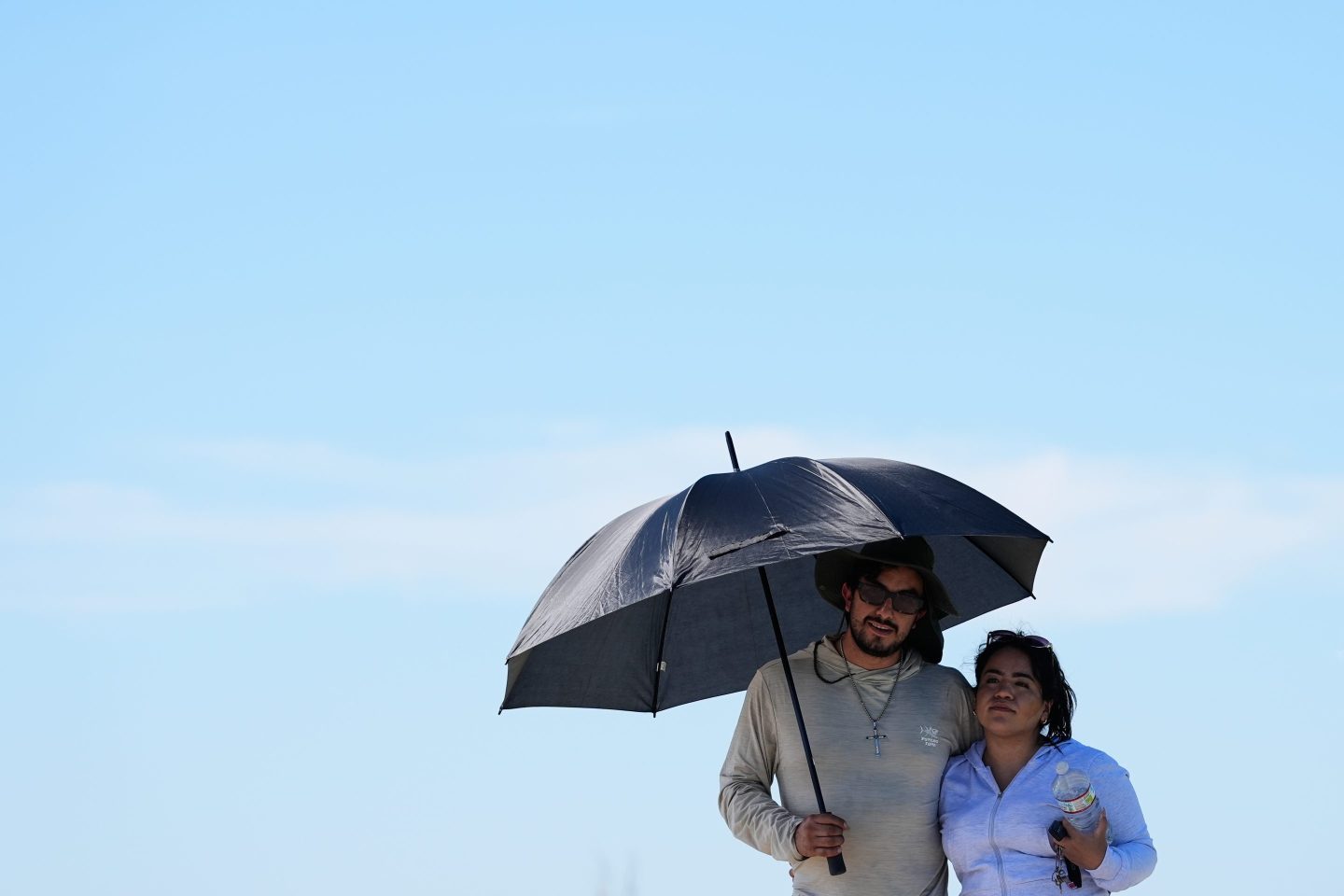
The world has already registered 1.1°C in warming since 1850, so those changes will come from an additional 0.4°C of warming over the next two decades. The worst-case scenario predicts a total increase of more than 4.5°C by 2100, and consequences that read like post-apocalyptic fiction: once-in-a-century weather events every four years, some of the world’s most densely populated areas becoming inhabitable, and severe food shortages. Coastal cities and island nations would be in particular peril. No surprise that Antonio Guterres, UN secretary-general, called Monday’s report “a code red for humanity.”
The hope among climate activists is that the dire and detailed descriptions highlighted by the IPCC will prompt strong action. There’s plenty of evidence to show the last IPCC report, released eight years ago in the lead-up to the Paris summit, did help spark a modest uptick in government, corporate, and individual action. Will this report—released during an unprecedented summer of heatwaves, drought, wildfires, and floods—spur further action?
Business is waking up
“I think that over the last few years businesses have been waking up to climate risks as the impacts show themselves at a faster rate than we expected,” Kimberly Nicholas, a sustainability scientist and author of the recently-released call to climate action Under the Sky We Make, said. “As much as any other sector, businesses benefit from a stable, predictable climate. The more we let the climate warm, the harder it is to adapt.”
Nicholas noted that the scientists who produced the IPCC report did a good job in outlining the approaching impacts of climate change. “Now it’s the time for business and other stakeholders to find a way to decarbonize what they do as quickly as possible,” she said.
Monday’s report is the first and the broadest of the three IPCC reports outlining global climate risks. The third, set to be released in March 2022, will focus on climate mitigation, the area where businesses can have the biggest impact. But it’s not hard to guess what it will say: earlier this year, the European Union estimated that more than 80 percent of the weather-related damage over a 40-year period ending in 2019 was directly or indirectly related to climate change. It even attached a price tag to that climate carnage, totaling nearly $550 billion in the European Economic Area alone. The sting in the tail: the damaging climate impacts broadly grew over time, with more than half the total losses coming in the last decade.
By the time the third report is released, the next big climate summit—the 26th UN Climate Change Conference, scheduled to get underway Oct. 31 in Scotland—will have come and gone. Advocates of climate action are hailing those talks as the last, best chance for business, government, and other stakeholders to join forces again as they did in Paris this time with action that will help limit the most terrifying scenarios.
“This upcoming conference is about certainty,” Manuel Pulgar-Vidal, a former Peruvian minister of environment who is now head of the climate and energy section for WWF, told Fortune. “We need certainty on the scale of the climate crisis and on humankind’s role in driving extreme weather events. We cannot miss this opportunity to deliver strong action. We may not get another.”
Update, August 9, 2021: This post has been corrected to clarify the IPCC’s “best-case” global temperature model.
Subscribe to Fortune Daily to get essential business stories straight to your inbox each morning.