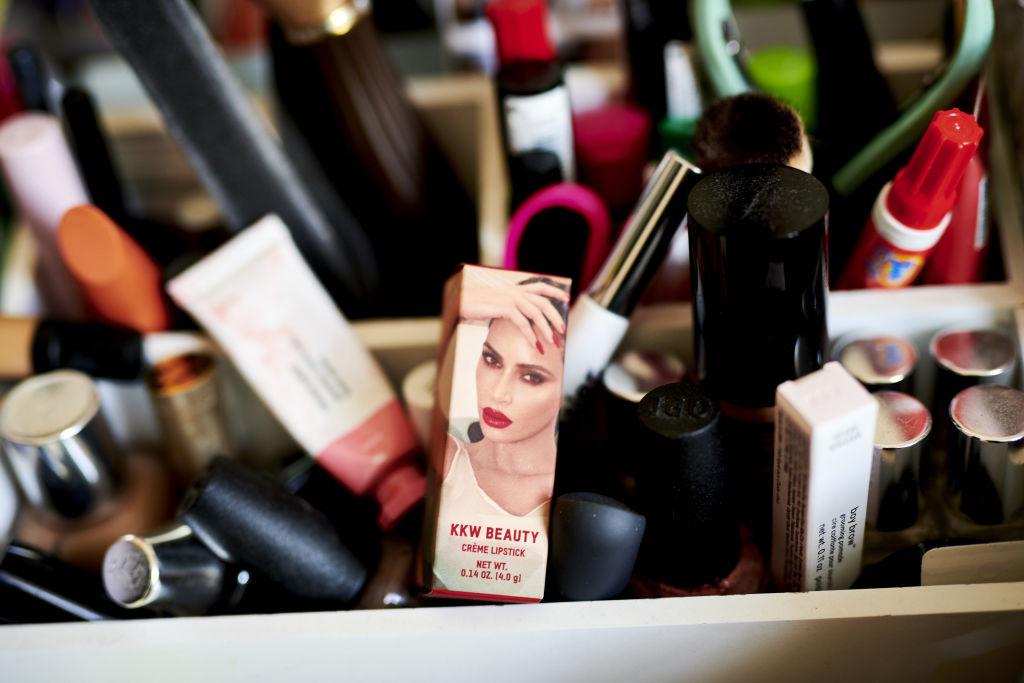
A beauty product is made to resemble a gift, so that the pleasure of unwrapping its layers of packaging is an integral part of the beauty-buying experience. But that packaging, an inherent part of the global beauty industry, generates 120 billion packaging units a year.
Packaging—including the wrapping and that of the product itself, along with sampling and shipping containers—is a huge issue plaguing the industry, and most of its bottles, wrappers, and other plastic waste are never recycled, simply because they cannot be.
Sustainability is an urgent matter across all industries, and Fortune 500 beauty conglomerates The Estée Lauder Companies and Coty are reevaluating their own supply chains to streamline single-use waste from factory to home. With a combined 63 brands that span fragrance, cosmetics, and skin care, their commitments are in place, but making fundamental changes to the entire system may be necessary to transform completely.
Where packaging starts and where it ends
Beauty packaging comes in all shapes and sizes, designed with various purposes in mind. In its 2020 sustainability report, Estée Lauder described packaging as “delivering the first high-touch moment for our consumers, providing a sense of prestige and luxury right at their fingertips,” while at the same time serving to protect the product itself.
A container or vessel safeguards quality and integrity, and provides the literal means to a product. To differentiate themselves from the competition, brands use packaging to create an allure powerful enough to influence consumers’ purchasing decisions. Think of a mascara arranged with dozens of others, each nestled in a paper and plastic carrier, flashing the benefits, shade, and function. Companies also use plastic trays and encasements to secure products in transit.
“The truth is the best packaging is no packaging. You want to have access to the product, the functionality, and the experience without having this stuff around it,” says Thierry Moliere, senior vice president of sustainability, technology, and innovation at Coty, whose brands include Gucci, CoverGirl, and Calvin Klein. Many cosmetics companies are looking to reduce, recycle, and reuse by rethinking every step of the supply chain for circularity. “The way we look at it is we want to reduce packaging to the core functionality of it. Everything extra doesn’t have a real function, and we want to reduce it,” he says.
For Coty, behind-the-scenes moves that go unnoticed by consumers reduce its overall footprint. Over the past four years, a partnership with packing company Papacks eliminated 1,800 metric tons of waste at Coty’s factory in Cologne, Germany, by swapping plastic transport packaging and trays with carriers made of scrapped cardboard and plant-based fibers. The material is reusable and can be incorporated into a circular system.
In its 2020 fiscal year, Estée Lauder began efforts to reduce the amount of tertiary packaging used across its online business in Europe, the Middle East, and Africa. Additionally, the company eliminated plastic, tape, and unnecessary paper from all new boxes. By 2025, all new packaging for Coty and Estée Lauder brands will be recyclable, refillable, reusable, recycled, or recoverable—but not compostable.. For Coty, that also includes 30% recyclable material blended into certified raw material.
The complexity of recycling beauty
At the consumer level, the nature of the industry and its continued growth depends on newness. And products intrinsically require a package, which spawns a lot of waste. “That type of fast-moving system is inherently going to create waste, just as in fast fashion. It’s made to be disposable,” explains Sasha Radovich, an expert in sustainable supply chains and the circular economy. “The design element isn’t made for long-term reuse or bulk. That’s inherent in waste production; everything from getting that product out and delivering to the consumer, to what happens after it’s used.”
As an example, in the design of a pumped lotion there are several elements to consider: There’s the bottle, a trigger pump, spring, nozzle, and potentially three or more additional materials required to dispense the substance. Given current recycling methods, the technologies are not in place to disassemble those pieces for reuse, such as a spring made from a nonmetallic substance. Another factor is the dye used to color the package. If toxic rather than natural dyes are used, it cannot be recovered and will end up in a landfill.
Innovations in industrial-level compostability and recycling are in the works, but meanwhile it’s crucial that companies design products with the end stage in mind. “[A company’s] strategy for its sustainability goals has to be integrated into the purpose of the product: with the design, what they’re trying to accomplish through sustainability, and how it lives itself out through the product,” says Kristen Kammerer, founder and CEO of Gen E, a micro-philanthropy app enabling individuals to take climate action. “It is necessary for the entire industry to fundamentally rebuild and focus on degrowth and designing circularity into their product development and supply chains, while also eliminating waste.”
Testing the environment
Samples are the third-largest driver of full-size product purchases. It’s a way to reach the consumer and provide an experience that converts into a sale. Yet it generates approximately 122 billion single-use plastics annually, none of which are recyclable owing to their size. Whether a clamshell plastic container, mini vessel, or tiny perfume spritzer, these items are simply too small for the current waste system to sort and recycle.
“We still need to engage the consumer, but we have other alternatives to do that,” says Moliere. “First of all, we need to change the material. We cannot continue having plastics spread all over just for one short experience.” Coty is updating its sampling model to eliminate single-use plastics through an overarching strategy it calls the “Beauty That Lasts Index”: Its aim is to reduce the amount of materials used and shift to alternative eco-friendly fibers. “Clearly, there is something to change around the business model of sampling. It’s not sustainable anymore,” he says.
In an effort to address the problem of sampling, beauty and skin care retailer Credo eliminated single-use sampling on June 1 of this year. Now, customers can purchase small jars in-store made of upcycled plant materials, which can be reused as future testers or travel-size containers. Despite its negative impact, however, the practice of sampling—including product trials and travel-size items—is expected to grow.
Restore and recover
Millions of dollars are spent annually on market research to drive consumer “need” for a product. Prestige brands, for one, foster high expectations and shelf appeal. Small enhancements like a box tied with a ribbon or a bottle draped in crystals tap into the immediate gratification consumers seek when purchasing luxury items.
According to market research firm Euromonitor International, proven efficacy and natural ingredients are the top two priorities for consumers. In a sector where packaging exists for fundamental reasons, shedding the extra weight can be prioritized at the beginning.
“[Corporations] need to take that leadership and not give us products with secondary packaging, especially in the luxury space,” says Kammerer, who believes these corporations must rise to the challenge of disrupting their own passé messaging of excess and instead craft new marketing narratives of substance and sustainability. “While consumer activism is beginning to force change,” she adds, “ultimately it will take true leadership from decision-makers, likely coupled with corporate incentives tied to environmental stewardship, and finally federal legislation such as Extended Producer Responsibility [EPR] to hold corporations responsible for the damage they create. To be part of the solution, beauty companies must put planet and people before profit and packaging.”
To achieve a sustainable future, the beauty industry must take a look in the mirror, examining its flaws the way consumers often do: tightening the wrinkles of an old system, cleansing itself of environmental burdens, and maintaining a cleaner foundation so that it, too, can have beauty that lasts.
“Sustainability is about sustainable development: how we sustain the food, clothes, housing, beauty, profit, and the very fibers our society has evolved to need,” says Radovich. “How do you sustain the fact that we only have limited resources, despite having more and more people in the world who want a quality of life where they can afford and have these things? At the very core, industries in their current state are not sustainable.”