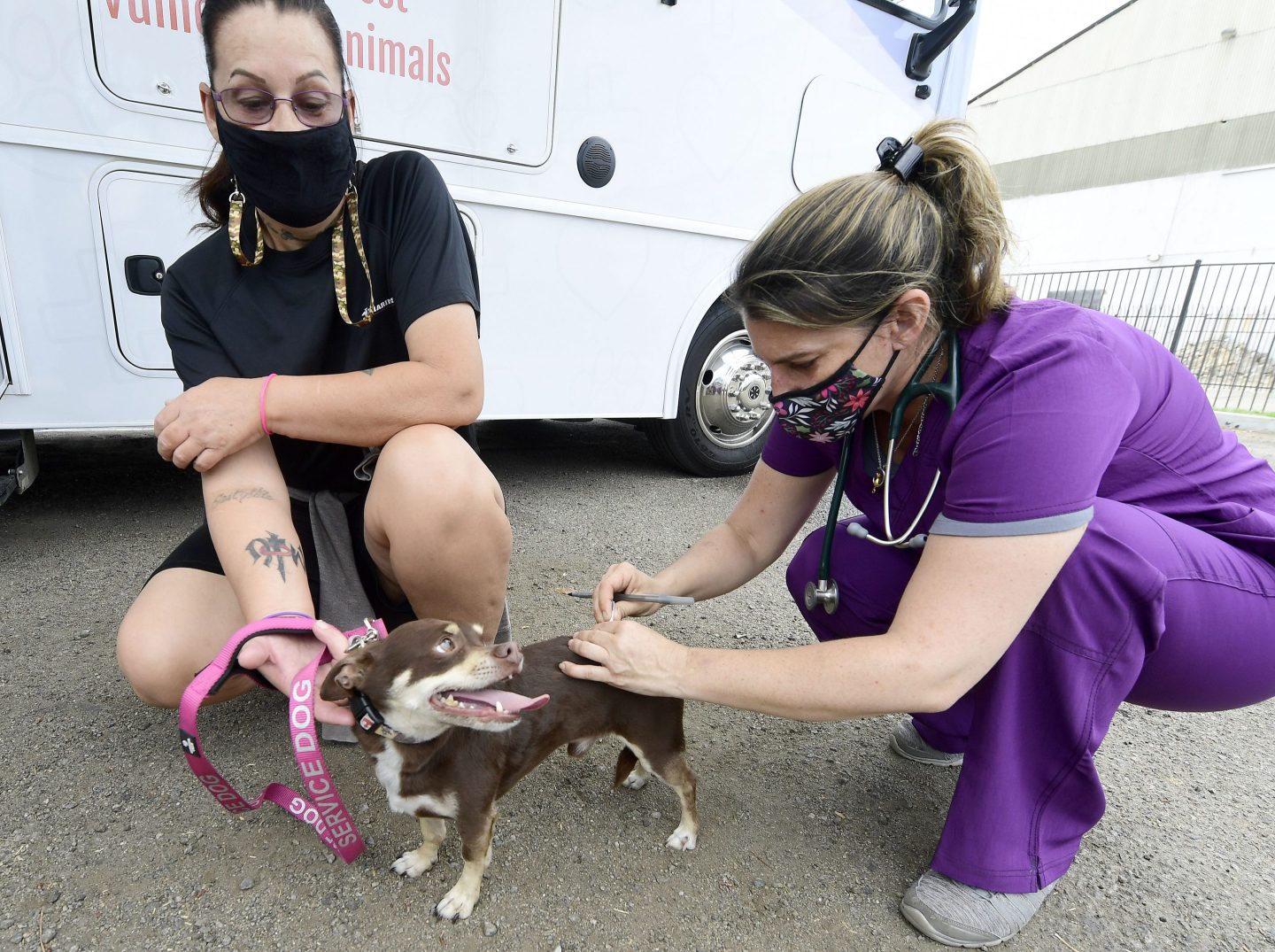
My dogs Poppy and Sky have always been a source of strength and comfort, but never have I needed them more than during the pandemic. I so looked forward to our end-of-day walks to clear my head. So when my Labrador mix, Poppy, needed testing for a kidney infection during the COVID lockdown, I could not have been more grateful for my veterinarian. He brought portable equipment to my home for a socially distanced house call in our garage. Thanks to his care and quick diagnosis, Poppy was back on the trail in the woods in no time.
The experience made me think about how the pandemic has further cemented the bond we have with our pets. It also has increased our reliance on quality veterinary care, especially as more Americans have brought pets into their families.
But here’s a problem many people aren’t aware of: The veterinary profession is rife with challenges that have gotten particularly daunting in recent years. And those challenges could lead to a future shortage of these critical health providers and caregivers if we don’t take steps to make veterinary medicine a more sustainable, accessible career.
For Zoetis, veterinarians remain at the center of everything we do. As the world’s largest manufacturer of animal health medicines, vaccines, diagnostics, and devices, we see the incredible impact vets have on our pets. But we also see firsthand the mounting struggles that get in the way of doing what they love.
Here are three of the biggest challenges:
The burden of debt
According to data from the 2020 American Veterinary Medical Association Senior Survey, the mean debt accumulated during veterinary school is about $160,000. Even more disturbing, the AVMA reports that student educational debt is growing 4.5 times as fast as income for new veterinary graduates. And a 2020 Merck Animal Health Veterinary Wellbeing Study cited high student debt as a leading concern among veterinarians and the top reason they would not recommend the profession to others.
The toll on mental wellness
Veterinarians are at much higher risk of suicide than the general population, according to a study in the Journal of the American Veterinary Medical Association. Long hours, work overload, major student loan debt, high client expectations, euthanasia procedures, and poor work/life balance all take a toll on veterinarians’ mental health.
A lack of diversity
U.S. veterinary students are overwhelmingly white (71%), and so is the percentage of practicing veterinarians (91%). Meanwhile, Black Americans have never made up more than 3% of the veterinary profession, according to the National Association for Black Veterinarians. That lack of representation creates a disconnect with the population of pet owners: A recent pet ownership report shows that 61.4% of Latino/Hispanic households and 36.9% of Black households have pets.
This lack of diversity is a big problem in the veterinary profession. And ethnic diversity isn’t the only diversity that’s lacking: There has also been a decline in the number of young men coming into the profession. According to the AVMA, women account for 63% of the nation’s active veterinary workforce. And that’s expected to increase: The latest data from the American Association of Veterinary Medical Colleges (AAVMC) shows that women represent the vast majority, 81.6%, of enrolled students in U.S. veterinary colleges, while male enrollments make up just 18.2%.
Ultimately, we want all people to feel they have a place in veterinary medicine, because as research shows, diversity mobilizes creativity, better decision making, and improved financial performance.
Rallying services and support
The list of challenges facing veterinarians goes on. With pet adoption surging during the pandemic, trained professionals are needed more than ever. But the reality is we may not have enough to handle the workload. One study estimates that by 2030, 75 million pets in the U.S. may not have access to the care they need because of a critical shortage of veterinarians.
At the same time, veterinarians face the tension between the increasing pressures of managing a business and pet care itself, including a shift toward customers purchasing medicines online instead of at a clinic. Many vets also lack access to digital technologies and data-driven insights that could help improve clinic efficiency and strengthen vet-client connections.
As more people adopt pets and rely on animals for comfort, we need to build a broader pipeline of veterinary professionals and provide them with much-needed services and support to ensure continuous access to care.
To get there, a lot has to change—and fortunately, some organizations are taking steps in the right direction.
Veterinary business, institutional, and association leaders are proactively addressing mental well-being in hope to develop solutions for individuals and organizations that support overall well-being. These organizations and initiatives include Not One More Vet (NOMV), the American Veterinary Medical Association’s Wellbeing Initiative, and American Association of Veterinary Medical Colleges (AAVMC) resources for veterinary medical faculty, students, and staff. Together these options provide a range of support to help the veterinary profession thrive and flourish.
We also need to stand with diversity efforts, like the Diversify Veterinary Medicine Coalition (DVMC); the Commission for a Diverse, Equitable, and Inclusive Veterinary Profession, jointly led by the AVMA and the AAVMC; and Pawsibilities Vet Med—organizations that aim to increase and retain diverse representation across the profession. It will take a cross-collaborative movement to build a richly diverse veterinary profession in the U.S. that reflects all clients served.
At Zoetis, we have the deepest respect and appreciation for veterinarians. We are always looking for new ways to help them care for their practices, their well-being, and the companion animals that complete our families. To further demonstrate our support, we have created the Zoetis Foundation and committed $35 million over five years to improve opportunities for veterinarians to thrive in the U.S. and around the world.
Initially, the Foundation will support scholarships, wellness, and diversity initiatives in the U.S. to help drive an inclusive veterinary community. In 2022, the Foundation will expand to additional countries and address veterinary debt relief, mental wellness, and livelihoods.
The challenges facing the veterinary profession are complex, but the bottom line is simple: To take care of our animal family members, we must take care of the veterinary profession.
Kristin Peck is the CEO of Zoetis.
Subscribe to Fortune Daily to get essential business stories straight to your inbox each morning.