• Home
  • Latest
  • Fortune 500
  • Finance
  • Tech
  • Leadership
  • Lifestyle
  • Rankings
  • Multimedia
Commentaryconscious capitalism

Who’s afraid of stakeholder capitalism?

By
Vivian Hunt
Vivian Hunt
Down Arrow Button Icon
By
Vivian Hunt
Vivian Hunt
Down Arrow Button Icon
May 16, 2021, 9:00 AM ET
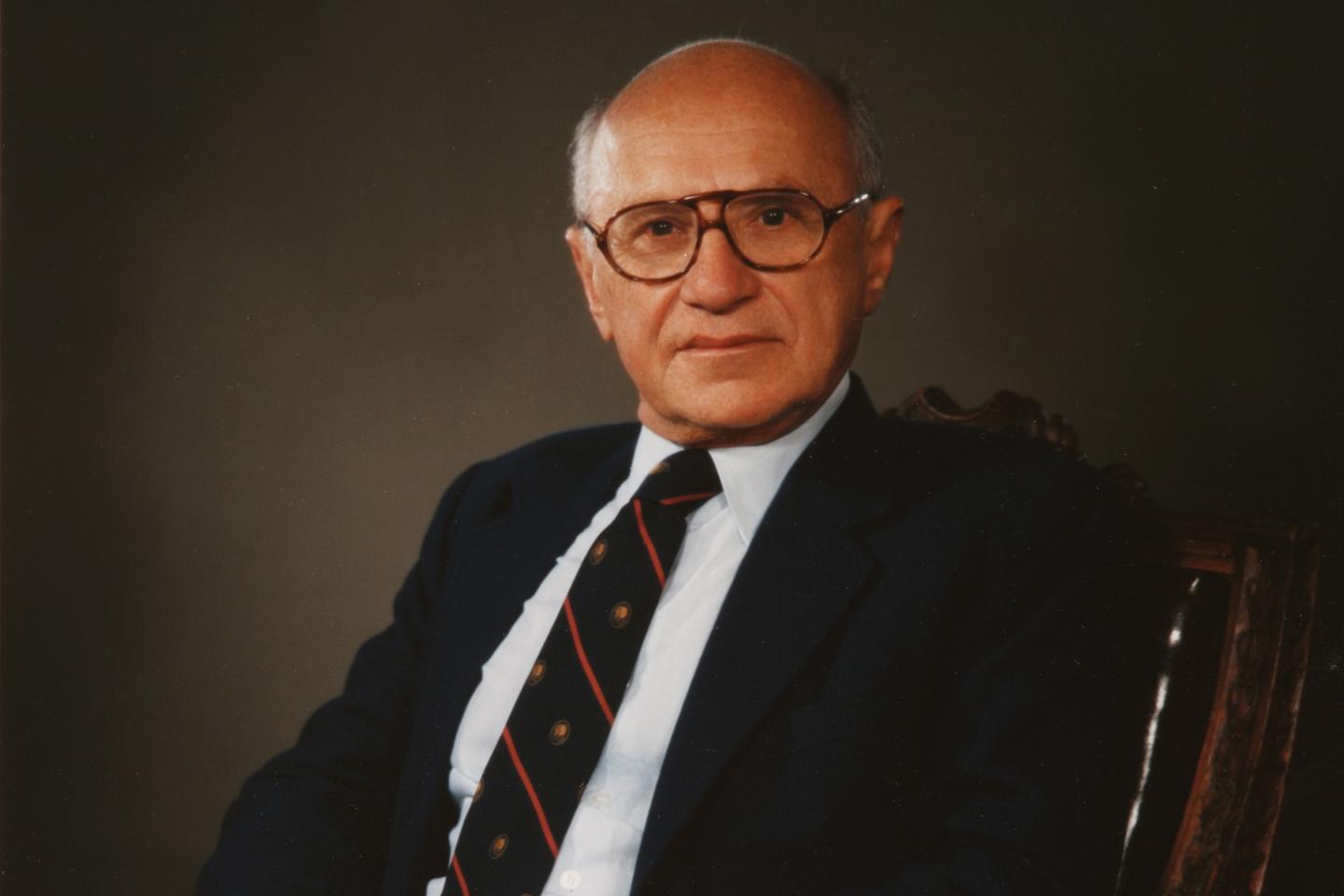
A portrait of economist Milton Friedman in 1986.
A portrait of economist Milton Friedman in 1986.Bachrach—Getty Images

These days, it would be a rare corporate leader who would say out loud: No, thanks, my company does not have to serve society, and doesn’t want to. In this sense, the concept of stakeholder capitalism—considering the needs of consumers, employees, and communities as well as shareholders—needs no introduction.

Nor should it be controversial. Except for the fringes, there is broad agreement about how companies should act. In 2019, when the Business Roundtable (BRT) changed its statement of purpose to emphasize serving all stakeholders, many critics contrasted this with Milton Friedman’s 1970 dictum that the only social responsibility of business is to make money—the more the better.

In fact, while there are substantive differences between the two approaches, there are also important things in common. Both the BRT and Friedman agree on the centrality of profit; leading members of the BRT later clarified: “The statement is not a repudiation of shareholder interests in favor of political and social goals.” 

Neither believes that it is justifiable to pursue profit by  mistreating workers, diddling suppliers, or deceiving customers. Friedman notes that it is essential for companies to obey the rules of society, “both those embodied in law and those embodied in ethical custom.” The second part of that phrase is not a million miles from where the BRT landed, if only because ethical custom has changed since 1970. 

And both agree that stock prices are important, but not everything. “In the short term, the stock market is far from efficient,” argued Friedman in 2007. “Stock prices are full of noise.”

Yes, there are differences of emphasis—I suspect that Friedman would consider the BRT’s statement dangerously squishy—but the commonalities are real and substantial. That is why companies do not need to fear stakeholder capitalism: It’s what the best ones already do—and bad ones never will. (As a management consulting firm, McKinsey advises clients on a wide range of issues, including stakeholder capitalism.)

That said, I believe there are strong arguments for all companies to do more—to actively embrace the idea, making it central to strategic decision-making and corporate values.

First, the business case. Pursuing stakeholder capitalism requires taking a long-term view—something that is associated with creating value. A McKinsey Global Institute study that looked at 615 large- and midcap U.S. publicly listed companies found that those with a long-term view outperformed the rest in earnings, revenue, investment, and job growth. To the extent that inculcating an ethos of stakeholder capitalism requires taking a long-term view—and it certainly does—the evidence is that doing so is positive for shareholder value, too.

The same is true for those companies that have an explicit focus on economic, social, and governance (ESG) indicators, all important elements in stakeholder capitalism. Taking ESG into account not only addresses risk, it also creates healthy returns.

In 2020, most ESG funds studied outperformed the S&P 500—surely an indicator of resiliency. That result was not an outlier. A study last July of European ESG funds found that, on the whole, they had outperformed non-ESG ones over one, three, five, and 10 years. The same pattern holds true in terms of employees. A London Business School study found that companies with high employee satisfaction outperformed their peers by 2.3% to 3.8% a year over 28 years. So, happy workers perform better: Is anyone surprised by this?

It’s also worth noting where corporate value comes from. When Friedman was writing, more than 80% was in the form of tangible assets like inventory and equipment. Now at least 80% (and maybe more) consists of intangible assets like brand equity, intellectual property, data, and goodwill. 

In this context, having a good reputation, for example, is not just about avoiding bad publicity; it is essential to hiring the talent that is at the heart of these intangibles. Notes Hubert Joly, the former CEO of Best Buy, “You always write down goodwill, but you never write it up.” While these values are not as readily measured as Generally Accepted Accounting Principles (GAAP), they exist.  

Second, there is an ethical case. Stakeholder capitalism is really an argument for decency—something that cannot be legislated, but can be expected. Business operates on a social license; it is not wrong to ask that this be earned and renewed. Capitalism’s more strident critics tend to caricature the relationship between business and society as a struggle between “them” and “us.” Stakeholder capitalism sees business as part of “us.”  

Third, there is self-interest. As of March, 45% of the FTSE 100 are linking executive pay to environmental, social, or governance metrics. Since 2018, the number of companies that include environmental or social considerations in executive pay has doubled. Between initiatives like these and the already strong (and growing) public perception that business should be a player in addressing important issues, executives might not have a choice but to adopt elements of stakeholder capitalism.  

And finally, why not? Good companies know that they need to treat their customers and employees like the assets they are, so there is little downside to stating publicly that this is a priority. Developing specific, measurable, and achievable goals can foster a sense of accountability that might otherwise be lacking. It is also important to engage with suppliers; stakeholder capitalism is a team sport. 

If this sounds too easy, I acknowledge that it isn’t. Many companies, McKinsey included, don’t always get it right. But the way to start is to start.

Vivian Hunt, DBE, is a senior partner at McKinsey and Co.’s London office.

Our mission to make business better is fueled by readers like you. To enjoy unlimited access to our journalism, subscribe today.
About the Author
By Vivian Hunt
See full bioRight Arrow Button Icon

Latest in Commentary

Finance
Lorem ipsum dolor sit amet, consectetur adipiscing elit, sed do eiusmod tempor incididunt ut labore et dolore magna aliqua. Ut enim ad minim veniam
By Fortune Editors
October 20, 2025
Finance
Lorem ipsum dolor sit amet, consectetur adipiscing elit, sed do eiusmod tempor incididunt ut labore et dolore magna aliqua. Ut enim ad minim veniam
By Fortune Editors
October 20, 2025
Finance
Lorem ipsum dolor sit amet, consectetur adipiscing elit, sed do eiusmod tempor incididunt ut labore et dolore magna aliqua. Ut enim ad minim veniam
By Fortune Editors
October 20, 2025
Finance
Lorem ipsum dolor sit amet, consectetur adipiscing elit, sed do eiusmod tempor incididunt ut labore et dolore magna aliqua. Ut enim ad minim veniam
By Fortune Editors
October 20, 2025
Finance
Lorem ipsum dolor sit amet, consectetur adipiscing elit, sed do eiusmod tempor incididunt ut labore et dolore magna aliqua. Ut enim ad minim veniam
By Fortune Editors
October 20, 2025
Finance
Lorem ipsum dolor sit amet, consectetur adipiscing elit, sed do eiusmod tempor incididunt ut labore et dolore magna aliqua. Ut enim ad minim veniam
By Fortune Editors
October 20, 2025

Most Popular

Finance
Lorem ipsum dolor sit amet, consectetur adipiscing elit, sed do eiusmod tempor incididunt ut labore et dolore magna aliqua. Ut enim ad minim veniam
By Fortune Editors
October 20, 2025
Finance
Lorem ipsum dolor sit amet, consectetur adipiscing elit, sed do eiusmod tempor incididunt ut labore et dolore magna aliqua. Ut enim ad minim veniam
By Fortune Editors
October 20, 2025
Finance
Lorem ipsum dolor sit amet, consectetur adipiscing elit, sed do eiusmod tempor incididunt ut labore et dolore magna aliqua. Ut enim ad minim veniam
By Fortune Editors
October 20, 2025
Finance
Lorem ipsum dolor sit amet, consectetur adipiscing elit, sed do eiusmod tempor incididunt ut labore et dolore magna aliqua. Ut enim ad minim veniam
By Fortune Editors
October 20, 2025
Finance
Lorem ipsum dolor sit amet, consectetur adipiscing elit, sed do eiusmod tempor incididunt ut labore et dolore magna aliqua. Ut enim ad minim veniam
By Fortune Editors
October 20, 2025
Finance
Lorem ipsum dolor sit amet, consectetur adipiscing elit, sed do eiusmod tempor incididunt ut labore et dolore magna aliqua. Ut enim ad minim veniam
By Fortune Editors
October 20, 2025
Fortune Secondary Logo
Rankings
  • 100 Best Companies
  • Fortune 500
  • Global 500
  • Fortune 500 Europe
  • Most Powerful Women
  • World's Most Admired Companies
  • See All Rankings
  • Lists Calendar
Sections
  • Finance
  • Fortune Crypto
  • Features
  • Leadership
  • Health
  • Commentary
  • Success
  • Retail
  • Mpw
  • Tech
  • Lifestyle
  • CEO Initiative
  • Asia
  • Politics
  • Conferences
  • Europe
  • Newsletters
  • Personal Finance
  • Environment
  • Magazine
  • Education
Customer Support
  • Frequently Asked Questions
  • Customer Service Portal
  • Privacy Policy
  • Terms Of Use
  • Single Issues For Purchase
  • International Print
Commercial Services
  • Advertising
  • Fortune Brand Studio
  • Fortune Analytics
  • Fortune Conferences
  • Business Development
  • Group Subscriptions
About Us
  • About Us
  • Press Center
  • Work At Fortune
  • Terms And Conditions
  • Site Map
  • About Us
  • Press Center
  • Work At Fortune
  • Terms And Conditions
  • Site Map
  • Facebook icon
  • Twitter icon
  • LinkedIn icon
  • Instagram icon
  • Pinterest icon

Latest in Commentary

hegseth
CommentaryMilitary
America shot its arsenal empty in 2 wars. Now it needs Beijing’s permission to reload
By Steve H. Hanke and Jeffrey WengApril 30, 2026
10 hours ago
Duncan Tait, CEO of Inchcape
Europecar manufacturing
“Competition is good for the industry”. Inchcape CEO’s case for optimism in automotive’s next chapter
By Duncan TaitApril 30, 2026
13 hours ago
agentic
CommentaryAI agents
Why your data infrastructure — not your AI model — will determine whether Agentic AI scales
By Jeffrey Sonnenfeld, Stephen Henriques, Catherine Dai and Zander JeinthanuttkanontApril 30, 2026
16 hours ago
hoskins
Commentaryoffices
Gensler Co-Chair: Hot-desking was supposed to save money. It may be costing you your culture
By Diane HoskinsApril 30, 2026
17 hours ago
tillis
CommentaryCongress
Thom Tillis: Free markets built American prosperity. Government intervention puts it at risk
By Thom Tillis and John StanfordApril 30, 2026
19 hours ago
iran
CommentaryIran
The Strait of Hormuz is a data problem, not just a military one
By Erik Bethel and Ami DanielApril 30, 2026
19 hours ago

Most Popular

Apple cofounder Ronald Wayne—whose stake would be worth up to $400 billion had he not sold it in 1976—says that at 91, he has no regrets
Success
Apple cofounder Ronald Wayne—whose stake would be worth up to $400 billion had he not sold it in 1976—says that at 91, he has no regrets
By Preston ForeApril 27, 2026
4 days ago
Google Cloud revenue is now 18% of Alphabet's business. Is this the beginning of the end of Google's search identity?
Big Tech
Google Cloud revenue is now 18% of Alphabet's business. Is this the beginning of the end of Google's search identity?
By Alexei OreskovicApril 29, 2026
1 day ago
‘The cost of compute is far beyond the costs of the employees’: Nvidia executive says right now AI is more expensive than paying human workers
AI
‘The cost of compute is far beyond the costs of the employees’: Nvidia executive says right now AI is more expensive than paying human workers
By Sasha RogelbergApril 28, 2026
3 days ago
With no end in sight, Trump considers new options in Iran war—including the ‘Dark Eagle’ hypersonic missile
Big Tech
With no end in sight, Trump considers new options in Iran war—including the ‘Dark Eagle’ hypersonic missile
By Jim EdwardsApril 30, 2026
18 hours ago
China dominates the world's lithium supply. The U.S. just found 328 years' worth in its own backyard
North America
China dominates the world's lithium supply. The U.S. just found 328 years' worth in its own backyard
By Jake AngeloApril 30, 2026
9 hours ago
No, tariffs are not strengthening the economy
Commentary
No, tariffs are not strengthening the economy
By Alex DuranteApril 29, 2026
2 days ago

© 2026 Fortune Media IP Limited. All Rights Reserved. Use of this site constitutes acceptance of our Terms of Use and Privacy Policy | CA Notice at Collection and Privacy Notice | Do Not Sell/Share My Personal Information
FORTUNE is a trademark of Fortune Media IP Limited, registered in the U.S. and other countries. FORTUNE may receive compensation for some links to products and services on this website. Offers may be subject to change without notice.