• Home
  • Latest
  • Fortune 500
  • Finance
  • Tech
  • Leadership
  • Lifestyle
  • Rankings
  • Multimedia
Commentary

To end the pandemic, every business leader must put worker health and equity first

By
Darren Walker
Darren Walker
and
Chuck Robbins
Chuck Robbins
Down Arrow Button Icon
By
Darren Walker
Darren Walker
and
Chuck Robbins
Chuck Robbins
Down Arrow Button Icon
February 23, 2021, 5:30 AM ET
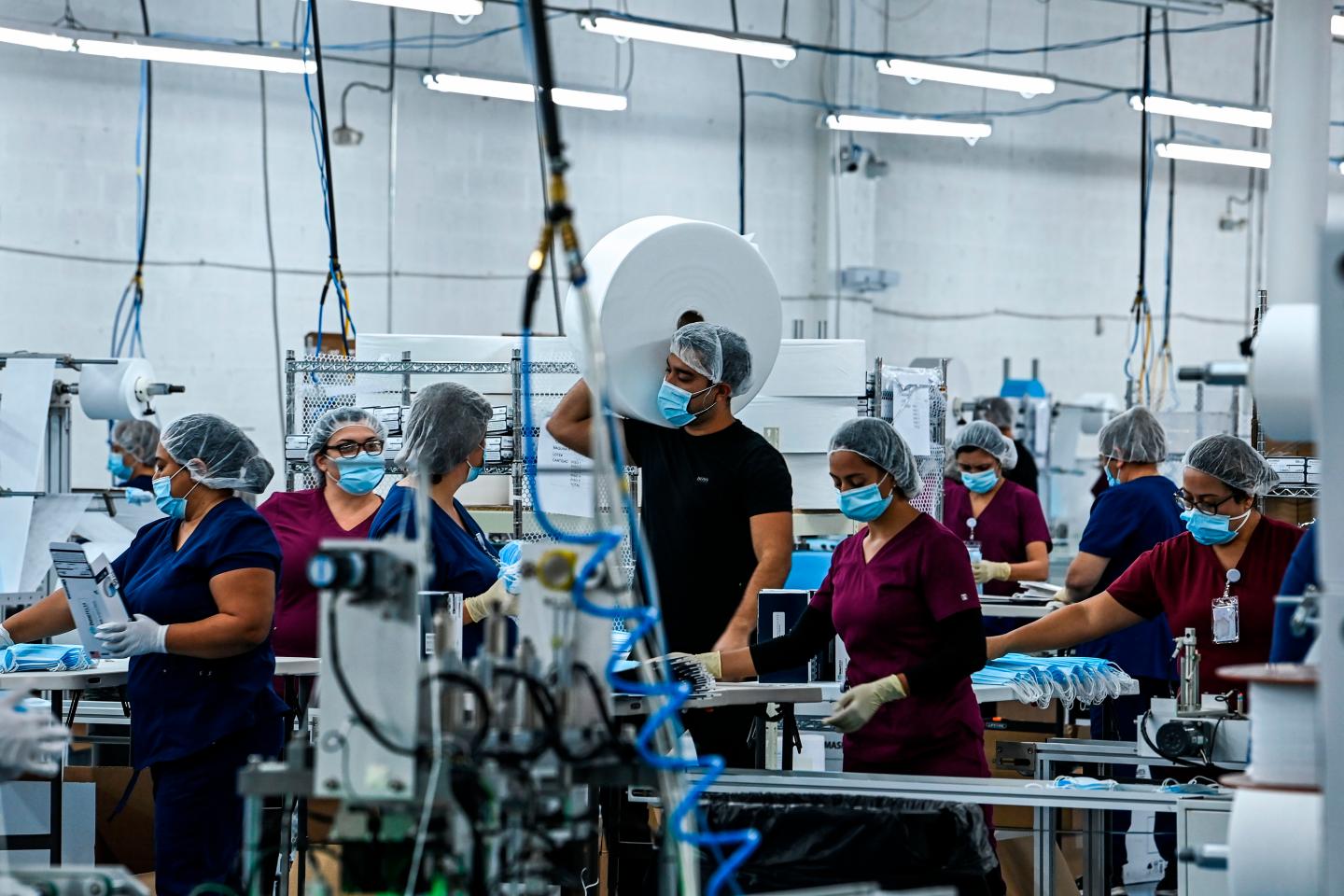
Employees at work in a medical equipment factory in North Miami, Fla. “When we look back on this pandemic,” the authors write, “history will ask how business leaders rethought their approach to employees and protected them.”
Employees at work in a medical equipment factory in North Miami, Fla. “When we look back on this pandemic,” the authors write, “history will ask how business leaders rethought their approach to employees and protected them.”CHANDAN KHANNA—AFP/Getty Images

COVID-19 has upended every part of society. But now that we are a year into the pandemic, we have come to better understand how it spreads, and the incredible risk and sacrifice so many employees are taking to keep our shelves stocked, our health care institutions staffed, our children educated, and our communities moving.

It’s noteworthy that among President Biden’s first actions to take hold of the pandemic was an executive order calling on the Occupational Safety and Health Administration (OSHA) to revise existing safety guidelines, ramp up enforcement, and use its resources to protect America’s most vulnerable and hardest-hit workers. With that directive, the new President made clear what we all know to be true: America’s workers are on the front lines of this pandemic, and they must have the protection and support they deserve from their employers. 

We have witnessed how workplace transmission is contributing to the country’s mounting case count. Inequality has also exacerbated the spread of the virus. President Biden’s order points to the social, racial, health, and economic inequities that frontline workers are experiencing today, and this is a clear signal that every business must not only root out inequality by reshaping leadership strategies—businesses must also have clear frameworks for understanding and addressing how certain groups are disproportionately impacted. 

So, facing these multiple crises—a pandemic, a needed economic recovery, a reckoning with racial inequality—what is the role of employers, and how do leaders need to change? In our view, businesses must focus on their people, placing their voices, their health (both physical and mental), their safety, and equity at the top of business priorities. Thinking about employees shouldn’t be a function of human resources—it’s a competitive differentiator, and it’s needed now more than ever. 

Cisco, for example, has been guided by its social justice principles to examine and, where possible, strengthen employee health benefits through a racial equity lens. Employee-focused initiatives in mental health, workplace safety and privacy, and childcare all sit at the same level as business strategy to ensure that issues of inequity can be elevated to leadership. 

By advocating for internal safety measures, effective policy, and racial equity, companies can put purpose-driven leadership into practice to protect their workers and fuel an inclusive recovery. For many businesses, this will mean changing the way they view their people strategies—applying the same rigor, creativity, and care they used to pivot and keep their business strong during this crisis. For every business, this will mean listening to and protecting those most at risk. As we continue to distribute vaccines, a process that will still take time, business leaders can use their ingenuity, energy, and resources to place the well-being of workers at the forefront.

Black and Latinx workers account for 36% of employees in frontline jobs, with many lacking access to the paid sick days and quality health insurance needed to care for themselves and their families. Black frontline workers are also more likely to report experiencing retaliation by managers for raising concerns about the coronavirus. With Black Americans losing their lives to the pandemic at more than twice the rate of white people, businesses must double down on commitments they renewed in the wake of last summer’s racial reckoning and widespread protests by making worker safety a key part of their social justice efforts.

First, businesses can reduce spread by offering paid sick days to all workers, whether they are full-time, part-time, or contractors. Over a quarter of people know someone who has gone to work sick during the pandemic because of financial stresses, thereby risking the health of customers and staff. Now, companies can make clear that economic security and public health are not options workers have to choose between, but two sides of the same coin.

Second, we must provide essential protections for workers, including supplying and mandating personal protective equipment, enforcing social distancing protocols and the use of face coverings, immediately notifying employees of exposure or infections, and implementing workplace contact tracing.

Next, while many companies have already embraced these measures, it’s crucial to ensure they are consistently implemented and that organizations can rapidly course-correct when something goes wrong. To do that, companies must give their employees a voice in designing and managing workplace health and safety. Workers know the problems best and often have a unique, early window into where efforts may be falling short.

This pandemic has made clear that taking deliberate steps can be the difference between being part of the problem or part of the solution. Our country relies on working people to keep the economy functioning, and communities safe. So, when we look back on this pandemic, history will ask how business leaders rethought their approach to employees and protected them. The choice is clear, and there’s no time to waste. Together, we can build an inclusive future that ensures all workers are safe, healthy, and thriving. With everything connected, and everything at stake, we must build that future today.

Darren Walker is president of the Ford Foundation. Chuck Robbins is the chairman and chief executive officer of Cisco Systems and a member of the Ford Foundation’s board of trustees.

About the Authors
By Darren Walker
See full bioRight Arrow Button Icon
By Chuck Robbins
See full bioRight Arrow Button Icon

Latest in Commentary

Finance
Lorem ipsum dolor sit amet, consectetur adipiscing elit, sed do eiusmod tempor incididunt ut labore et dolore magna aliqua. Ut enim ad minim veniam
By Fortune Editors
October 20, 2025
Finance
Lorem ipsum dolor sit amet, consectetur adipiscing elit, sed do eiusmod tempor incididunt ut labore et dolore magna aliqua. Ut enim ad minim veniam
By Fortune Editors
October 20, 2025
Finance
Lorem ipsum dolor sit amet, consectetur adipiscing elit, sed do eiusmod tempor incididunt ut labore et dolore magna aliqua. Ut enim ad minim veniam
By Fortune Editors
October 20, 2025
Finance
Lorem ipsum dolor sit amet, consectetur adipiscing elit, sed do eiusmod tempor incididunt ut labore et dolore magna aliqua. Ut enim ad minim veniam
By Fortune Editors
October 20, 2025
Finance
Lorem ipsum dolor sit amet, consectetur adipiscing elit, sed do eiusmod tempor incididunt ut labore et dolore magna aliqua. Ut enim ad minim veniam
By Fortune Editors
October 20, 2025
Finance
Lorem ipsum dolor sit amet, consectetur adipiscing elit, sed do eiusmod tempor incididunt ut labore et dolore magna aliqua. Ut enim ad minim veniam
By Fortune Editors
October 20, 2025

Most Popular

Finance
Lorem ipsum dolor sit amet, consectetur adipiscing elit, sed do eiusmod tempor incididunt ut labore et dolore magna aliqua. Ut enim ad minim veniam
By Fortune Editors
October 20, 2025
Finance
Lorem ipsum dolor sit amet, consectetur adipiscing elit, sed do eiusmod tempor incididunt ut labore et dolore magna aliqua. Ut enim ad minim veniam
By Fortune Editors
October 20, 2025
Finance
Lorem ipsum dolor sit amet, consectetur adipiscing elit, sed do eiusmod tempor incididunt ut labore et dolore magna aliqua. Ut enim ad minim veniam
By Fortune Editors
October 20, 2025
Finance
Lorem ipsum dolor sit amet, consectetur adipiscing elit, sed do eiusmod tempor incididunt ut labore et dolore magna aliqua. Ut enim ad minim veniam
By Fortune Editors
October 20, 2025
Finance
Lorem ipsum dolor sit amet, consectetur adipiscing elit, sed do eiusmod tempor incididunt ut labore et dolore magna aliqua. Ut enim ad minim veniam
By Fortune Editors
October 20, 2025
Finance
Lorem ipsum dolor sit amet, consectetur adipiscing elit, sed do eiusmod tempor incididunt ut labore et dolore magna aliqua. Ut enim ad minim veniam
By Fortune Editors
October 20, 2025
Fortune Secondary Logo
Rankings
  • 100 Best Companies
  • Fortune 500
  • Global 500
  • Fortune 500 Europe
  • Most Powerful Women
  • Future 50
  • World’s Most Admired Companies
  • See All Rankings
Sections
  • Finance
  • Fortune Crypto
  • Features
  • Leadership
  • Health
  • Commentary
  • Success
  • Retail
  • Mpw
  • Tech
  • Lifestyle
  • CEO Initiative
  • Asia
  • Politics
  • Conferences
  • Europe
  • Newsletters
  • Personal Finance
  • Environment
  • Magazine
  • Education
Customer Support
  • Frequently Asked Questions
  • Customer Service Portal
  • Privacy Policy
  • Terms Of Use
  • Single Issues For Purchase
  • International Print
Commercial Services
  • Advertising
  • Fortune Brand Studio
  • Fortune Analytics
  • Fortune Conferences
  • Business Development
  • Group Subscriptions
About Us
  • About Us
  • Editorial Calendar
  • Press Center
  • Work At Fortune
  • Diversity And Inclusion
  • Terms And Conditions
  • Site Map
  • About Us
  • Editorial Calendar
  • Press Center
  • Work At Fortune
  • Diversity And Inclusion
  • Terms And Conditions
  • Site Map
  • Facebook icon
  • Twitter icon
  • LinkedIn icon
  • Instagram icon
  • Pinterest icon

Latest in Commentary

crowell
CommentaryRetirement
Retirees are facing a $345,000 bill they never saw coming — and most aren’t prepared
By Andrew CrowellApril 14, 2026
2 hours ago
AI agents are acting like employees, but company structures still treat them like software
CommentaryOkta
AI agents are acting like employees, but company structures still treat them like software
By Dan MountstephenApril 13, 2026
15 hours ago
trump
CommentaryWhite House
The futility of Trump’s grandiose personal branding of public assets, from ballrooms and bills to ships and planes
By Jeffrey Sonnenfeld and Steven TianApril 13, 2026
18 hours ago
mueller
CommentaryEntrepreneurship
I grew up in a family of entrepreneurs. Here’s what I had to unlearn to build a $1 billion business
By Samuel MuellerApril 12, 2026
2 days ago
boomer
CommentaryLongevity
America is not ready for its own longevity crisis — and 2026 is the wake-up call
By Aimee DeCamillo and Diane TyApril 12, 2026
2 days ago
layoff
CommentaryManagement
The middle manager cuts saving you millions today will cost you everything in 2028
By Kristien TurnerApril 12, 2026
2 days ago

Most Popular

Billionaire philanthropist MacKenzie Scott has donated again—a week after gifting millions to a college, she's just given $70 million to Meals on Wheels America
Success
Billionaire philanthropist MacKenzie Scott has donated again—a week after gifting millions to a college, she's just given $70 million to Meals on Wheels America
By Fortune EditorsApril 13, 2026
21 hours ago
'People are trying to be creative': Tariff-battered American companies are so cash-starved they are using refund claims as collateral for loans
Economy
'People are trying to be creative': Tariff-battered American companies are so cash-starved they are using refund claims as collateral for loans
By Fortune EditorsApril 12, 2026
2 days ago
'This is the last warning.' Iran threatens U.S. warships after they throw down the gauntlet for winner-take-all Strait of Hormuz
Politics
'This is the last warning.' Iran threatens U.S. warships after they throw down the gauntlet for winner-take-all Strait of Hormuz
By Fortune EditorsApril 11, 2026
3 days ago
Current price of oil as of April 13, 2026
Personal Finance
Current price of oil as of April 13, 2026
By Fortune EditorsApril 13, 2026
23 hours ago
Current price of gold as of April 13, 2026
Personal Finance
Current price of gold as of April 13, 2026
By Fortune EditorsApril 13, 2026
23 hours ago
U.S. naval blockade on Iran will trigger a currency devaluation spiral and hyperinflation, potentially ending the war more quickly, analyst says
Economy
U.S. naval blockade on Iran will trigger a currency devaluation spiral and hyperinflation, potentially ending the war more quickly, analyst says
By Fortune EditorsApril 13, 2026
20 hours ago

© 2026 Fortune Media IP Limited. All Rights Reserved. Use of this site constitutes acceptance of our Terms of Use and Privacy Policy | CA Notice at Collection and Privacy Notice | Do Not Sell/Share My Personal Information
FORTUNE is a trademark of Fortune Media IP Limited, registered in the U.S. and other countries. FORTUNE may receive compensation for some links to products and services on this website. Offers may be subject to change without notice.