• Home
  • Latest
  • Fortune 500
  • Finance
  • Tech
  • Leadership
  • Lifestyle
  • Rankings
  • Multimedia

Trendingnow

1

Jeff Bezos wants the bottom half of earners to pay zero income tax—he says nurses making just $75K should save $12K a year

2

Indeed chief economist says we’re entering an era of ‘great mismatch’ thanks to a generational imbalance of workers

3

Microsoft reports are exposing AI's real cost problem: Using the tech is more expensive than paying human employees

1

Jeff Bezos wants the bottom half of earners to pay zero income tax—he says nurses making just $75K should save $12K a year

2

Indeed chief economist says we’re entering an era of ‘great mismatch’ thanks to a generational imbalance of workers

3

Microsoft reports are exposing AI's real cost problem: Using the tech is more expensive than paying human employees
PoliticsPolling

How a data scientist beat the polls by nailing the Georgia senate race

Shawn Tully
By
Shawn Tully
Shawn Tully
Senior Editor-at-Large
Down Arrow Button Icon
Shawn Tully
By
Shawn Tully
Shawn Tully
Senior Editor-at-Large
Down Arrow Button Icon
January 9, 2021, 10:18 AM ET
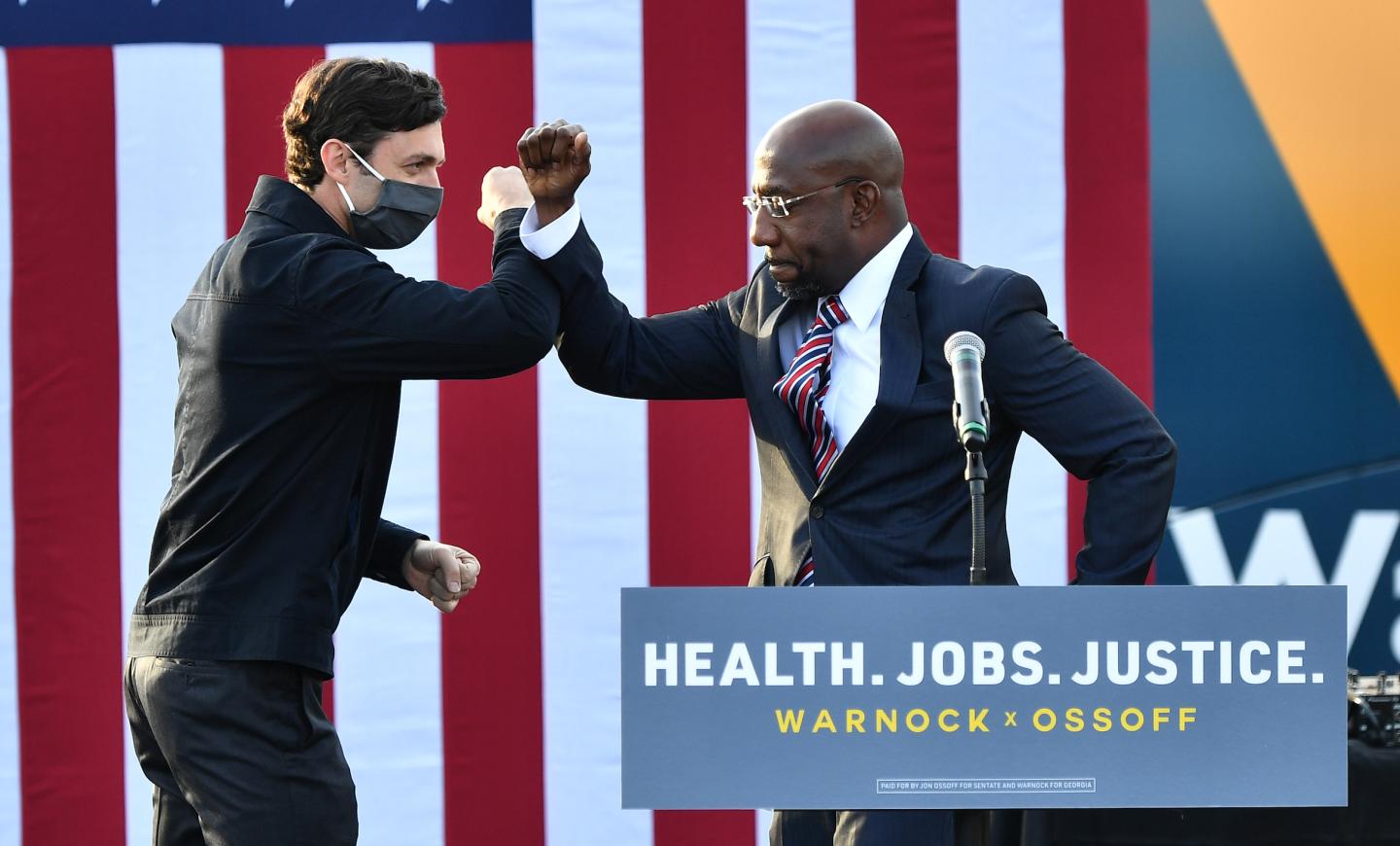
(Photo by Paras Griffin/Getty Images)

The week of the Georgia senatorial elections, I’ve been following the forecasts by Northwestern University data scientist Tom Miller, who bested most of the polls in the presidential race by missing the margin of Joe Biden’s victory by just 12 electoral college votes. In fact, Miller’s only major wrong call was forecasting a Trump win in Georgia. This time, Miller learned from his misreading of the Peach State and the nailed the outcomes of the two senatorial races. Just after midnight on January 5, Miller predicted Democratic challengers Raphael Warnock and Jon Ossoff would sweep both races, defeating Senators would Kelly Loeffler and David Perdue by 2% and 1% respectively.

In the final count, Warnock prevailed 50.9% to 49.1%, a margin of 1.8 points, while Ossoff won 50.5% to 49.5%, or by 1 point. Miller was just .2% off on Warnock vs Loeffler, and hit the precise mark on Ossoff-Perdue. Miller’s coup was showing a sudden shift towards the two Democrats in the final days of the election that lifted both from underdogs to moderate favorites. Polling was light in Georgia, but the few surveys didn’t perceive the strength of that shift as accurately as Miller. The last Fox5/InsiderAdvantage reading had both races a tie, and final Trafalgar Group poll called Ossoff-Perdue dead heat, and showed Warnock trailing by two points.

Miller says that it was original analytics he developed specifically for the Georgia runoffs that yielded 100% accuracy in the Ossoff race, and 90% in the Warnock win. “I was attempting to fix what’s broken in election forecasting,” Miller told Fortune. “The predictions as reported in the media are broken.” The problem, he says, is that forecasting comes in two main categories, and both suffer from substantial drawbacks. The first type are the polls that canvas carefully-chosen samples of probable voters. “Those surveys have two problems,” says Miller. “First, one pollster’s sample is different from another’s, even though both are trying to choose the most representative populations. Second, polls tend to lean Democratic. Pollsters then need to adjust the results for that political bias, and also tweak the numbers for example, if they don’t get enough Hispanic voters in their latest survey.” For Miller, those differing adjustments cause lots of variability both across different polls, and even in the same surveys over time, rendering them highly unreliable guides to which candidates lead or trail by what margin.

The second category encompasses the modelers. The two most influential practitioners are the Economist and Nate Silver’s FiveThirtyEight. “The modelers start with everything they know about previous elections, and then incorporate a single number from each of the polls showing where the candidates stood on the day of the survey,” as Miller. The rub, he says, is that the modeling in largely based on polling done by somebody else. “They use one summary number from each poll––one candidate’s leading 51% to 49%, say––but that’s the only data they get from the polls. That limits what they can do with their models.”

Miller’s goal was to combine polling and modeling under one roof into a single system incorporating far more data than either deploy individually. In the past, he’d relied on betting odds instead of either polls or models, specifically the prices posted on the single major venue available in the U.S., Predictit.org. “The betting odds are much more accurate predictors than surveys or models, but they’re dominated by higher-income folks who are mainly male, and often bet on sports. So they have a Republican bias.” The gambling sites were mostly right-on in predicting a much narrower Biden win than the polls, but got Georgia wrong because of that GOP tilt. It was an over-reliance on those odds that caused Miller’s misfire on the Peach State in the presidential race.

Miller created a new methodology where he first conducted a conventional poll to ask whom voters expected to back, and what variables, notably race, sex and where they lived, influenced their preference. That’s the polling part. Then, he united that survey with a model that incorporated an element of political gaming, but at the same time eliminated the Republican bias. Here’s how his “magic beans” operated. To organize the survey, Miller partnered with polling specialists Isometric Solutions, Panel Consulting Group, and Prodege LLC. In the six days from December 30 to January 4, he canvassed 1,200 potential voters. Once again, his questions fell into two categories, first for the regular poll, called the Preference Survey, and second for the model designed to generate a more accurate, final result, tagged as the Prediction Survey.

In Preference Survey, Miller included only people who’d lived in Georgia at least a year, and who said they were likely to vote. “That’s really asking whom they hope will win, which candidate they’re big fans of,” he says. In the Prediction survey, he posed a different question: Which candidate do you expect to win? He added a financial carrot. Respondents were paid $1.50 for participating, but they’d get an additional $1.50 after the election for each race they called correctly, or $4.50 instead of $1.50 if they got both contests right. “That’s a small amount, but it worked,” says Miller. “The incentives turned folks into bettors. Only they weren’t the same mainly male sports bettors as on the gaming sites. That removed the GOP bias, while at the same time encouraging them to think hard about their choice.” In the Prediction Survey, Miller also included Georgians who didn’t intend to vote. His view was that everyone had lived in Georgia at least a year, so even the non-voters saw the brewing trends in their communities and counties. Including everyone, he reckoned, would provide a more complete picture of how Georgians on-the-ground were thinking.

Over the six day window, the Preference and Prediction Surveys showed a widening gulf. The former, the regular poll, had Ossoff and Warnock winning by commanding margins of over 5%, while the Prediction survey that incorporated the payments also showed a steady trend towards the Democrats, but much more competitive races. Miller was banking that the model, the Prediction Survey, was the best guide. “My view was that across all black male voters or white female voters, for example, their overall bets on which candidate would win were a better indicator of how that group would actually vote than their answer to the question, ‘to whom do you intend to vote for,” he says. “We learned more by asking, ‘Whom do you expect to win.'”

The results from the Prediction Survey told Miller how each of four groups, non-white men and women, and white men and women, were most likely to vote. But getting the final estimate required one last step. “I had to estimate another crucial factor, the size of the turnout,” he says. Miller predicted the total numbers who’d vote early or on Election Day would fall halfway between the presidential race of 2016 and the mid-term contest of 2018. He already knew the probabilities of how the four groups would vote from the Prediction Survey. He then forecast how many people in each of the categories would cast ballots in every one of Georgia’s 159 counties. “That’s a total of 636 separate forecasts,” he says.

On the eve of the election, Miller worked until past midnight combining his estimates of how many people in each group would vote with the likelihood of whom they’d vote for, once again taken from his model. Just hours before the polls opened, he posted his forecast that Ossoff and Warnock would notch one and two point victories respectively. The Miller model needs more testing, but its remarkable performance in Georgia may mean that he’s charting a whole new direction through the fog of forecasting elections.

About the Author
Shawn Tully
By Shawn TullySenior Editor-at-Large

Shawn Tully is a senior editor-at-large at Fortune, covering the biggest trends in business, aviation, politics, and leadership.

See full bioRight Arrow Button Icon

Latest in Politics

Finance
Lorem ipsum dolor sit amet, consectetur adipiscing elit, sed do eiusmod tempor incididunt ut labore et dolore magna aliqua. Ut enim ad minim veniam
By Fortune Editors
October 20, 2025
Finance
Lorem ipsum dolor sit amet, consectetur adipiscing elit, sed do eiusmod tempor incididunt ut labore et dolore magna aliqua. Ut enim ad minim veniam
By Fortune Editors
October 20, 2025
Finance
Lorem ipsum dolor sit amet, consectetur adipiscing elit, sed do eiusmod tempor incididunt ut labore et dolore magna aliqua. Ut enim ad minim veniam
By Fortune Editors
October 20, 2025
Finance
Lorem ipsum dolor sit amet, consectetur adipiscing elit, sed do eiusmod tempor incididunt ut labore et dolore magna aliqua. Ut enim ad minim veniam
By Fortune Editors
October 20, 2025
Finance
Lorem ipsum dolor sit amet, consectetur adipiscing elit, sed do eiusmod tempor incididunt ut labore et dolore magna aliqua. Ut enim ad minim veniam
By Fortune Editors
October 20, 2025
Finance
Lorem ipsum dolor sit amet, consectetur adipiscing elit, sed do eiusmod tempor incididunt ut labore et dolore magna aliqua. Ut enim ad minim veniam
By Fortune Editors
October 20, 2025

Most Popular

Finance
Lorem ipsum dolor sit amet, consectetur adipiscing elit, sed do eiusmod tempor incididunt ut labore et dolore magna aliqua. Ut enim ad minim veniam
By Fortune Editors
October 20, 2025
Finance
Lorem ipsum dolor sit amet, consectetur adipiscing elit, sed do eiusmod tempor incididunt ut labore et dolore magna aliqua. Ut enim ad minim veniam
By Fortune Editors
October 20, 2025
Finance
Lorem ipsum dolor sit amet, consectetur adipiscing elit, sed do eiusmod tempor incididunt ut labore et dolore magna aliqua. Ut enim ad minim veniam
By Fortune Editors
October 20, 2025
Finance
Lorem ipsum dolor sit amet, consectetur adipiscing elit, sed do eiusmod tempor incididunt ut labore et dolore magna aliqua. Ut enim ad minim veniam
By Fortune Editors
October 20, 2025
Finance
Lorem ipsum dolor sit amet, consectetur adipiscing elit, sed do eiusmod tempor incididunt ut labore et dolore magna aliqua. Ut enim ad minim veniam
By Fortune Editors
October 20, 2025
Finance
Lorem ipsum dolor sit amet, consectetur adipiscing elit, sed do eiusmod tempor incididunt ut labore et dolore magna aliqua. Ut enim ad minim veniam
By Fortune Editors
October 20, 2025
Fortune Secondary Logo
Rankings
  • 100 Best Companies
  • Fortune 500
  • Global 500
  • Fortune 500 Europe
  • Most Powerful Women
  • World's Most Admired Companies
  • See All Rankings
  • Lists Calendar
Sections
  • Finance
  • Fortune Crypto
  • Features
  • Leadership
  • Health
  • Commentary
  • Success
  • Retail
  • Mpw
  • Tech
  • Lifestyle
  • CEO Initiative
  • Asia
  • Politics
  • Conferences
  • Europe
  • Newsletters
  • Personal Finance
  • Environment
  • Magazine
  • Education
Customer Support
  • Frequently Asked Questions
  • Customer Service Portal
  • Privacy Policy
  • Terms Of Use
  • Single Issues For Purchase
  • International Print
Commercial Services
  • Advertising
  • Fortune Brand Studio
  • Fortune Analytics
  • Fortune Conferences
  • Business Development
  • Group Subscriptions
About Us
  • About Us
  • Press Center
  • Work At Fortune
  • Terms And Conditions
  • Site Map
  • About Us
  • Press Center
  • Work At Fortune
  • Terms And Conditions
  • Site Map
  • Facebook icon
  • Twitter icon
  • LinkedIn icon
  • Instagram icon
  • Pinterest icon

Latest in Politics

trump
North AmericaWhite House
4 ways Trump is following the Venezuela playbook with Cuba, and one where he isn’t
By Ben Finley, Matthew Lee, Farnoush Amiri, Konstantin Toropin and The Associated PressMay 23, 2026
1 minute ago
w
BankingFederal Reserve
Trump on new Fed Chair Kevin Warsh: ‘Do your own thing’ but don’t lose your way like Jerome Powell did
By Will Weissert, Michelle L. Price and The Associated PressMay 23, 2026
7 minutes ago
rabb
PoliticsElections
How a ‘proud troublemaker’ Democratic socialist beat the system in Philadelphia by 15 points
By Marc Levy and The Associated PressMay 23, 2026
10 minutes ago
Trump to force foreigners to apply for a green card abroad—but those who provide ‘economic benefit’ or serve ‘national interest’ may be able to stay
PoliticsImmigration
Trump to force foreigners to apply for a green card abroad—but those who provide ‘economic benefit’ or serve ‘national interest’ may be able to stay
By Rebecca Santana, Gisela Salomon and The Associated PressMay 23, 2026
44 minutes ago
Trump AI and crpto czar David Sacks sits next to Meta CEO Mark Zuckerberg at a dinner table in the White House as Zuckerberg turns to Sacks and says something.
AIAmerican Politics
Tech billionaires convinced Trump to back off an AI executive order. But much of MAGA favors AI regulation
By Jeremy KahnMay 22, 2026
18 hours ago
f
PoliticsCongress
‘You kind of ruined it with your trans obsession’: House points fingers as Smithsonian Women’s museum funding fails
By Lisa Mascaro and The Associated PressMay 22, 2026
24 hours ago

Most Popular

Jeff Bezos wants the bottom half of earners to pay zero income tax—he says nurses making just $75K should save $12K a year
Success
Jeff Bezos wants the bottom half of earners to pay zero income tax—he says nurses making just $75K should save $12K a year
By Preston ForeMay 21, 2026
2 days ago
Indeed chief economist says we’re entering an era of ‘great mismatch’ thanks to a generational imbalance of workers
Success
Indeed chief economist says we’re entering an era of ‘great mismatch’ thanks to a generational imbalance of workers
By Emma BurleighMay 22, 2026
23 hours ago
Microsoft reports are exposing AI's real cost problem: Using the tech is more expensive than paying human employees
AI
Microsoft reports are exposing AI's real cost problem: Using the tech is more expensive than paying human employees
By Jake AngeloMay 22, 2026
22 hours ago
Despite a $500 million net worth, Shaq just finished his fourth degree. He warns graduates: 'Your character will take you further than your resume'
Success
Despite a $500 million net worth, Shaq just finished his fourth degree. He warns graduates: 'Your character will take you further than your resume'
By Preston ForeMay 20, 2026
3 days ago
Apple’s Steve Wozniak says he cofounded the tech giant after 5 rejections from HP—not to ‘make money.’ For years, his paycheck was just $50
Success
Apple’s Steve Wozniak says he cofounded the tech giant after 5 rejections from HP—not to ‘make money.’ For years, his paycheck was just $50
By Preston ForeMay 22, 2026
24 hours ago
Bolt CEO says he let go of his entire HR team for creating problems that didn’t exist: ‘Those problems disappeared when I let them go’ 
Workplace Culture
Bolt CEO says he let go of his entire HR team for creating problems that didn’t exist: ‘Those problems disappeared when I let them go’ 
By Preston ForeMay 19, 2026
4 days ago

© 2026 Fortune Media IP Limited. All Rights Reserved. Use of this site constitutes acceptance of our Terms of Use and Privacy Policy | CA Notice at Collection and Privacy Notice | Do Not Sell/Share My Personal Information
FORTUNE is a trademark of Fortune Media IP Limited, registered in the U.S. and other countries. FORTUNE may receive compensation for some links to products and services on this website. Offers may be subject to change without notice.