One of the economic side effects of the coronavirus pandemic is the crumbling traditional boundaries between markets and governments. In the U.S., the federal government’s Coronavirus Aid, Relief, and Economic Security (CARES) Act of March 2020 earmarked an unprecedented 10% of GDP to support private commerce; and in the U.K., by June 2020, more than one-quarter of all workers were on state-supported furloughs.
This radical commingling of public and private comes on the heels of growing political momentum to “reform capitalism” away from profit-seeking and toward social objectives. Groups as diverse as the U.S. Business Roundtable and the U.K. Labour Party are pushing us today to reimagine the role of business in society.
If we are on the cusp of structural transformation of society toward a new era of state capitalism—where the distinctions between private enterprise and public mission are blurred—now seems like a good moment to recall two simple observations about how markets and government work.
The first is that while deregulation is a myth, regulation often becomes captured by private interests. The second is that both privatization and nationalization disappoint, because both processes are frequently marred by expropriation.
These observations matter because they temper the rhetoric on reforming capitalism. That project has been attempted before, from both the left and the right, in the U.S., the U.K., and many other countries. Over the decades, the pendulum has swung back and forth between more decentralized and more coordinated models of the economy, each time expecting a different result.
True, there are serious problems with capitalism today, but the inherent limitations to how both the public and private sectors work should ground our expectations of any reform efforts.
Neither deregulation nor regulation really work as promised
The cornerstone of modern capitalism is limited liability, the legal notion that investors are responsible for losses of a corporation only to the extent of their own initial investments. For instance, if you own a share of Amazon, and the company goes bust, then you are not liable beyond the loss of your own share’s value.
Without limited liability, we would not have anything close to our current capital market system that allows entrepreneurs to raise funds from ordinary investors, driving innovation and commerce; we could not even have anything more than basic, direct trading relationships. The promise of limited liability is that it will structure markets to generate economic scale, which in turn can enable greater human flourishing.
Limited liability is the most basic type of regulation: It is the collectivization of risk for the good of the whole. Of course, regulation can serve other objectives as well, such as fraud prevention, environmental goals, minimum wage goals, and so on. The inseparability of limited liability regulation from capitalism impairs the case for unrestrained deregulation, as an economy without limited liability would be considerably smaller and simpler.
There’s a flip side to this essential idea of risk collectivization through regulation, though: Once you introduce it, the basic instinct of every entrepreneur is to seek ever more downside protection. If, as an entrepreneur, I am entitled to some degree of risk collectivization through limited liability, why stop there? Why not seek other ways in which I can build a regulatory strategy of “heads I win, tails you lose”?
Before long, you’re in a state of “regulatory capture,” in which capitalists shape regulations to meet their private needs. In this case, the risk-reward balance that is inherent to well-functioning capitalism is thrown off-kilter as the taxpaying public increasingly picks up the costs of private economic failure. The more the regulation, the greater the opportunities for capture.
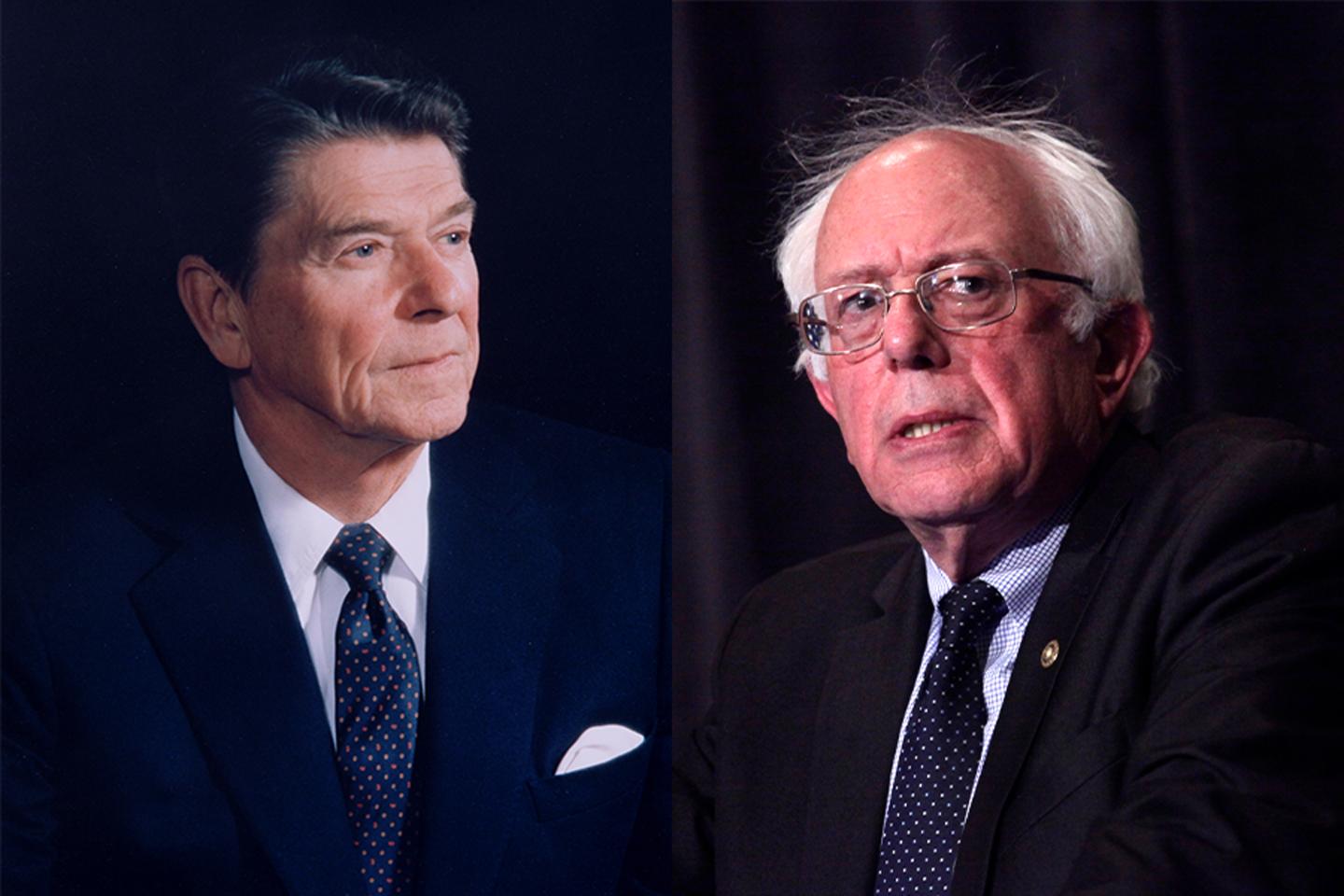
Forty years ago, the highly regulated nature of the Anglo-American economies was seen as stifling free enterprise. Corporate insiders, plush on regulated profits, were thought to be ill-adapted to change and losing out to overseas competitors from Japan. Politicians like Ronald Reagan and Margaret Thatcher swept to power to fix this with the promise of deregulation.
But perhaps we overdid deregulation, as even Alan Greenspan acknowledged to the U.S. Congress during the 2008 financial crisis when he conceded that he had “found a flaw” in the deregulatory economic ideology. Today, those clamoring as a result to reinvent capitalism with more regulation are well-warned to avoid condemning us to relive this history.
Both privatization and nationalization disappoint
There are really only two good reasons to privatize: to let market forces—which can bring greater operational efficiency to an organization—drive decisions within a previously public organization, or to bring in external capital that the government cannot otherwise raise through taxation.
The tricky bit is that these two reasons for privatization are at odds with each other. For market forces to work, private players must experience competition, or else they will become fat and happy just like nationalized players. But if the government is seeking external capital through privatization, it will yield more such capital when competition is lower, as private players will pay more for monopoly rights.
In other words, with privatization there is always a trade-off between capital raised and efficiency gained. The trouble is politicians do not always figure this out, and, when they do, they often exploit it for private benefit. The 1990s deregulation of Russia’s energy industry, in the wake of the Soviet Union’s collapse, is a case in point, as it transformed a handful of apparatchiks into oligarchs.
Naturally then, the public sours on privatization. The alternative, in such cases, is (re)nationalization. As with privatization, there are two good reasons to produce in the public sector: because private sector competition is infeasible, as with natural monopolies like many utilities, and because the outcomes yielded by market forces are morally undesirable, as would be the case if human organs were bought and sold.
To make nationalization work, we need to be as clear as possible about organizational objectives—for instance, we need to specify whether this organization should be prioritizing access, quality, timeliness, or other objectives. Politicians loathe to prioritize as such, not just because it is difficult to do so but also because it deprives them of power.
When an organization faces multiple, competing objectives with unclear priorities, it is an invitation for political interference—the sort that allows politicians to build grace-and-favor courts. In India, for instance, nationalized banks have been used by politicians across the aisles to finance their pet projects. In effect, the public’s disappointment with outcomes under privatization will persist in another form.
In the 1980s, along with the deregulatory wave came a privatization wave. As with deregulation, this went too far. In the U.K., for instance, even water services were privatized; some of these companies are now effectively private monopolies mooching off of citizens. The COVID-19 crisis response has reversed the dynamic and brought thousands of private companies under public control through emergency capital infusions.
Already, various special interest groups are looking at ways to use this newfound control over private commerce to “fix” market outcomes they dislike, such as by insisting on stricter environmental protection practices or improved worker pay. But in doing so, they risk swinging the pendulum right back to the state of morass and inefficiency from where we were prompted into radical privatizations.
Achieving public-private balance
The ecosystem of both public- and private-sector bodies is such that neither can really deliver on traditional left versus right ideological performance myths. Both markets and governments have their flaws, and it is through a nuanced management of these flaws that we strike a sustainable balance between them.
The sobering reality is that there isn’t a single model of economic organization that will allow us to do so, and we must beware of rhetoric for another grand redesign of capitalism. These tend to be profoundly costly and replace one problem for another.
Worrisomely, in our current age of anxiety and populist upheaval, such a message of restraint is easily drowned in the din of polarized outrage.
Karthik Ramanna is professor of business and public policy at the University of Oxford’s Blavatnik School of Government.