• Home
  • Latest
  • Fortune 500
  • Finance
  • Tech
  • Leadership
  • Lifestyle
  • Rankings
  • Multimedia
CommentaryCoronavirus

Once a COVID-19 vaccine is discovered, the hard part begins

By
Ben Hubbard
Ben Hubbard
Down Arrow Button Icon
By
Ben Hubbard
Ben Hubbard
Down Arrow Button Icon
September 17, 2020, 7:00 PM ET
Once a COVID-19 vaccine is discovered, the hard part begins
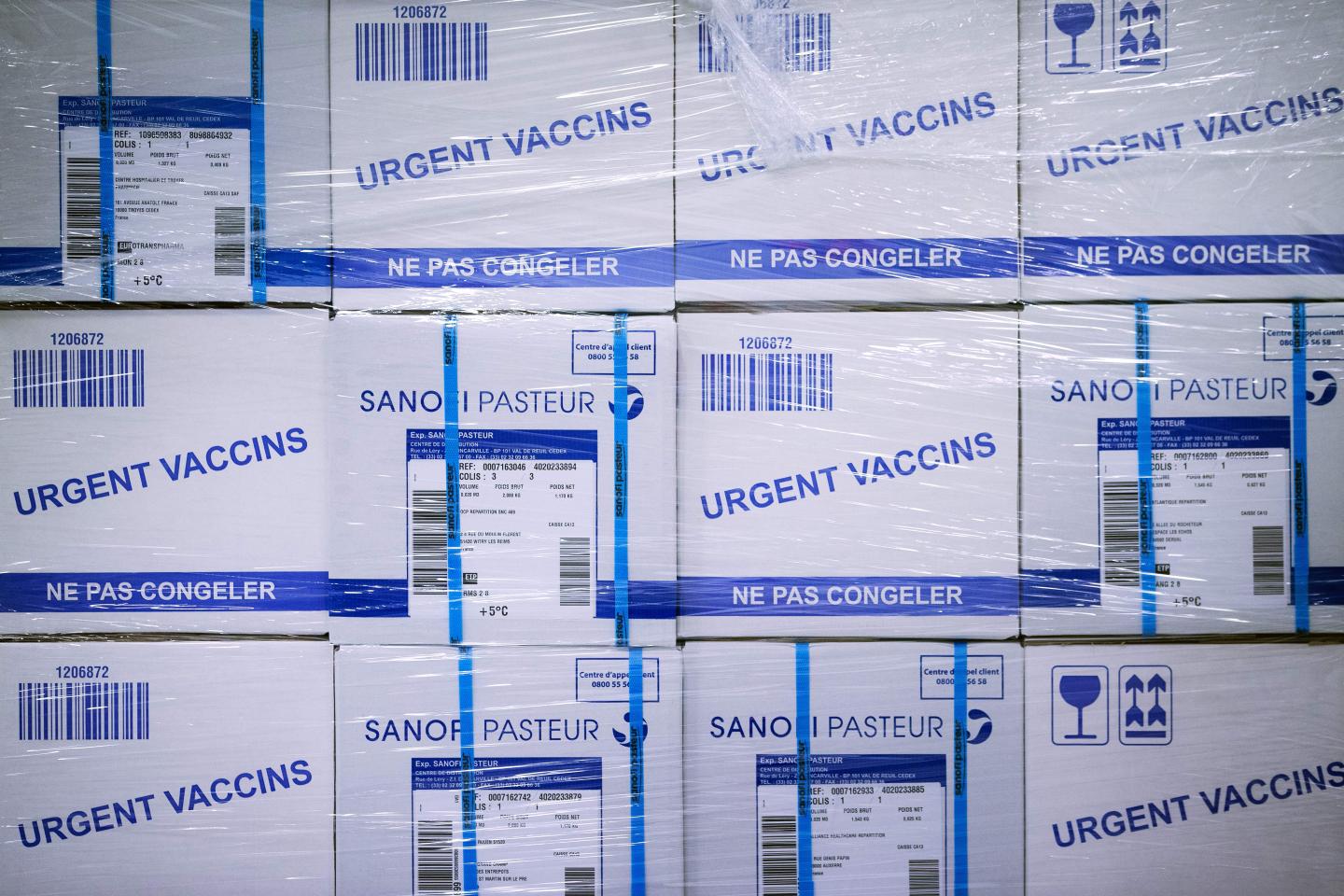
Vaccines in cold storage at Sanofi's global distribution center in Val-de-Reuil, France, on July 10, 2020. If we're going to properly distribute COVID-19 vaccines, we need to focus on cold chain management, writes Ben Hubbard.Joel Saget—AFP/Getty Images

In the global sprint to find a COVID-19 vaccine, we’ve seen the world embrace approaches that would have previously been considered unthinkable, from spending billions on untested technologies to compressing clinical trials from years to months. 

These bold steps may be exactly what the world needs to find a vaccine even one day sooner. But unless we bring the same kind of urgency, inventiveness, and investment to vaccine distribution as we have to vaccine development, our attempts to end the COVID-19 pandemic will fail.

Why does delivering the one thing everyone in the world needs merit such an audacious approach? Because vaccines are delicate things; they require near-perfection in our ability to deliver them. 

The COVID-19 vaccine, like most vaccines, will need to be kept cold, fixed within a precise temperature range from the moment it leaves the manufacturer to the moment it’s administered. 

This is hard even in rich countries with strong supply chains. In countries with underdeveloped infrastructure, a vaccine’s journey can be perilous. If there’s any break in the cold chain as a vaccine moves across thousands of miles and changes dozens of hands on its way to a hospital in Dakar, Senegal, a rural health facility in Bihar, India, or a remote clinic in the eastern Democratic Republic of the Congo, it’s all for naught; the vaccine will lose its potency. 

Where you’re born shouldn’t determine whether you get a vaccine, but if we stay on our current course, it may determine whether it works. 

Breaks in the cold chain aren’t a new problem, but they’ve mostly been ignored. Over the past two decades, wealthy governments and pharmaceutical companies have laudably partnered to make vaccines available at lower prices for developing countries. But once these precious commodities reach the port of entry, attention to them often fades. There’s a cynical term of art for this approach: ship and pray.

“In God we trust,” the saying goes, “all others must bring data.” That’s exactly what companies like Parsyl are beginning to do. For the past two years, we’ve partnered with Gavi, the global vaccine alliance, to ship vaccines with sensors that can detect breaks in the cold chain before they lead to irreversible damage.

What those sensors have taught us is remarkable. 

You might assume that the biggest threat to vaccines in the cold chain is heat. In fact, the opposite is true; our data show that freezing temperatures from ice-cooled vaccine carriers and faulty refrigerators pose a far greater risk. In one country, vaccines had a nearly one-in-four chance of spoiling due to freezing temperatures. 

But dig deeper into this data and some good news emerges: Most of that freeze damage comes from just 5% of fridges. In this case, fixing just the worst fridges would cut vaccine damage in half and save lives for pennies on the dollar. 

By including sensors in all vaccine shipments, companies like Parsyl will benefit. But we can also enable targeted interventions—like identifying and replacing the tens of thousands of old fridges destroying vaccines right now—that are only possible with more precise data. Gavi has already created an initiative to replace cold chain equipment around the world; better data will help it target these urgently needed upgrades and improvements more effectively.

Shipment-level data also allows for innovative ways to manage and transfer risk. Under the ship-and-pray model, insuring vaccine stockpiles in developing countries is prohibitively expensive because underwriters are flying blind. But with a sensor that can monitor and beam temperature information to the cloud, health workers on the ground will have the insights they need to prevent losses from occurring, and underwriters can accurately model risk. This is the idea behind the Global Health Risk Facility we announced last week with Lloyd’s of London, which will insure COVID-19 vaccine delivery to developing countries.

But perhaps the biggest surprise in our data was what could happen if we could simply deliver vaccines faster. If we’re able to cut the time vaccines spend in the cold chain, especially in the so-called last mile, we could reduce spoilage by nearly 40%.

One effective but underutilized way to speed up the supply chain is to enlist local logistics firms to deliver the goods. When vaccine distribution in three Ugandan districts serving over 3 million people was handed over to an East African logistics company, Freight in Time (which uses Parsyl’s sensors), stockouts ended and the lead time needed for new vaccine shipments was cut from one month to five days. As a result, Freight in Time increased monthly vaccine distribution by 100,000 doses while cutting the number of wasted vials.  

Embracing these bold approaches—better data, targeted interventions, smarter risk management, more trust in local partners—can mean the difference between billions of people receiving potent vaccines or a COVID-19 crisis that lives on long after a vaccine is discovered. Unless we care as much about the delivery as we do about the cure, we will never be free of COVID-19. 

Ben Hubbard is cofounder and CEO of Parsyl, an insurance technology company and Lloyd’s Lab alumni.

About the Author
By Ben Hubbard
See full bioRight Arrow Button Icon

Latest in Commentary

Finance
Lorem ipsum dolor sit amet, consectetur adipiscing elit, sed do eiusmod tempor incididunt ut labore et dolore magna aliqua. Ut enim ad minim veniam
By Fortune Editors
October 20, 2025
Finance
Lorem ipsum dolor sit amet, consectetur adipiscing elit, sed do eiusmod tempor incididunt ut labore et dolore magna aliqua. Ut enim ad minim veniam
By Fortune Editors
October 20, 2025
Finance
Lorem ipsum dolor sit amet, consectetur adipiscing elit, sed do eiusmod tempor incididunt ut labore et dolore magna aliqua. Ut enim ad minim veniam
By Fortune Editors
October 20, 2025
Finance
Lorem ipsum dolor sit amet, consectetur adipiscing elit, sed do eiusmod tempor incididunt ut labore et dolore magna aliqua. Ut enim ad minim veniam
By Fortune Editors
October 20, 2025
Finance
Lorem ipsum dolor sit amet, consectetur adipiscing elit, sed do eiusmod tempor incididunt ut labore et dolore magna aliqua. Ut enim ad minim veniam
By Fortune Editors
October 20, 2025
Finance
Lorem ipsum dolor sit amet, consectetur adipiscing elit, sed do eiusmod tempor incididunt ut labore et dolore magna aliqua. Ut enim ad minim veniam
By Fortune Editors
October 20, 2025

Most Popular

Finance
Lorem ipsum dolor sit amet, consectetur adipiscing elit, sed do eiusmod tempor incididunt ut labore et dolore magna aliqua. Ut enim ad minim veniam
By Fortune Editors
October 20, 2025
Finance
Lorem ipsum dolor sit amet, consectetur adipiscing elit, sed do eiusmod tempor incididunt ut labore et dolore magna aliqua. Ut enim ad minim veniam
By Fortune Editors
October 20, 2025
Finance
Lorem ipsum dolor sit amet, consectetur adipiscing elit, sed do eiusmod tempor incididunt ut labore et dolore magna aliqua. Ut enim ad minim veniam
By Fortune Editors
October 20, 2025
Finance
Lorem ipsum dolor sit amet, consectetur adipiscing elit, sed do eiusmod tempor incididunt ut labore et dolore magna aliqua. Ut enim ad minim veniam
By Fortune Editors
October 20, 2025
Finance
Lorem ipsum dolor sit amet, consectetur adipiscing elit, sed do eiusmod tempor incididunt ut labore et dolore magna aliqua. Ut enim ad minim veniam
By Fortune Editors
October 20, 2025
Finance
Lorem ipsum dolor sit amet, consectetur adipiscing elit, sed do eiusmod tempor incididunt ut labore et dolore magna aliqua. Ut enim ad minim veniam
By Fortune Editors
October 20, 2025
Fortune Secondary Logo
Rankings
  • 100 Best Companies
  • Fortune 500
  • Global 500
  • Fortune 500 Europe
  • Most Powerful Women
  • World's Most Admired Companies
  • See All Rankings
  • Lists Calendar
Sections
  • Finance
  • Fortune Crypto
  • Features
  • Leadership
  • Health
  • Commentary
  • Success
  • Retail
  • Mpw
  • Tech
  • Lifestyle
  • CEO Initiative
  • Asia
  • Politics
  • Conferences
  • Europe
  • Newsletters
  • Personal Finance
  • Environment
  • Magazine
  • Education
Customer Support
  • Frequently Asked Questions
  • Customer Service Portal
  • Privacy Policy
  • Terms Of Use
  • Single Issues For Purchase
  • International Print
Commercial Services
  • Advertising
  • Fortune Brand Studio
  • Fortune Analytics
  • Fortune Conferences
  • Business Development
  • Group Subscriptions
About Us
  • About Us
  • Lists Calendar
  • Press Center
  • Work At Fortune
  • Terms And Conditions
  • Site Map
  • About Us
  • Lists Calendar
  • Press Center
  • Work At Fortune
  • Terms And Conditions
  • Site Map
  • Facebook icon
  • Twitter icon
  • LinkedIn icon
  • Instagram icon
  • Pinterest icon

Latest in Commentary

ken
Commentary250 Years of Innovation
The longevity revolution is here. Our systems still think we die at 65
By Ken DychtwaldApril 23, 2026
11 hours ago
tenzin
Commentaryclean energy
The Iran War just made the clean energy transition non-negotiable
By Tenzin SeldonApril 23, 2026
19 hours ago
Software developers discussing programming code and planning how to create innovative software at co-working office. Two software developers checking programming code on computer screen. working through a coding problem together.
Commentaryregulation
Inflated AI claims are under fire—and the regulatory reckoning is coming
By Perrie M. WeinerApril 23, 2026
20 hours ago
Kemba Walden served as Acting National Cyber Director of the United States and is President of the Paladin Global Institute.
CommentaryHacking
Former national cyber director: Anthropic’s ‘Mythos’ AI can hack nearly anything and we aren’t ready
By Kemba WaldenApril 23, 2026
21 hours ago
frank
CommentaryVisa
Visa CMO: AI agents are your new customers — here’s how to sell to them
By Frank Cooper IIIApril 22, 2026
2 days ago
shlomit
Commentarycyber
The Mythos meeting focused on the wrong AI risk to banks. Here’s the one nobody is talking about
By Shlomit WagmanApril 22, 2026
2 days ago

Most Popular

When interest on national debt overtook military spending, it triggered a limit where the U.S. may ‘cease to be a great power,’ warns Hoover historian
Economy
When interest on national debt overtook military spending, it triggered a limit where the U.S. may ‘cease to be a great power,’ warns Hoover historian
By Eleanor PringleApril 23, 2026
20 hours ago
Despite nearing their 60s, nearly four in 10 Americans heading towards the end of their careers don’t even have a retirement account
Success
Despite nearing their 60s, nearly four in 10 Americans heading towards the end of their careers don’t even have a retirement account
By Emma BurleighApril 23, 2026
16 hours ago
Officials will flush 50,000 toilets to flood a Utah lake in order to generate electricity
Environment
Officials will flush 50,000 toilets to flood a Utah lake in order to generate electricity
By Mead Gruver, Dorany Pineda and The Associated PressApril 22, 2026
1 day ago
Cursor’s 25-year-old CEO is a former Google intern who just inked a $60 billion deal with SpaceX
AI
Cursor’s 25-year-old CEO is a former Google intern who just inked a $60 billion deal with SpaceX
By Marco Quiroz-GutierrezApril 22, 2026
1 day ago
Craving work-life balance is a huge red flag, says Fortune 500 Europe CEO—and like Barack Obama, he happily works through weekends
Success
Craving work-life balance is a huge red flag, says Fortune 500 Europe CEO—and like Barack Obama, he happily works through weekends
By Orianna Rosa RoyleApril 22, 2026
2 days ago
The Iran war is pushing Southeast Asia to debate the once unthinkable: Whether ships will need to pay to transit the Strait of Malacca
Economy
The Iran war is pushing Southeast Asia to debate the once unthinkable: Whether ships will need to pay to transit the Strait of Malacca
By Angelica AngApril 23, 2026
20 hours ago

© 2026 Fortune Media IP Limited. All Rights Reserved. Use of this site constitutes acceptance of our Terms of Use and Privacy Policy | CA Notice at Collection and Privacy Notice | Do Not Sell/Share My Personal Information
FORTUNE is a trademark of Fortune Media IP Limited, registered in the U.S. and other countries. FORTUNE may receive compensation for some links to products and services on this website. Offers may be subject to change without notice.