• Home
  • Latest
  • Fortune 500
  • Finance
  • Tech
  • Leadership
  • Lifestyle
  • Rankings
  • Multimedia
CommentaryLogistics

COVID-19 and climate change expose the dangers of unstable supply chains

By
Kevin Sneader
Kevin Sneader
and
Susan Lund
Susan Lund
Down Arrow Button Icon
By
Kevin Sneader
Kevin Sneader
and
Susan Lund
Susan Lund
Down Arrow Button Icon
August 27, 2020, 12:01 PM ET
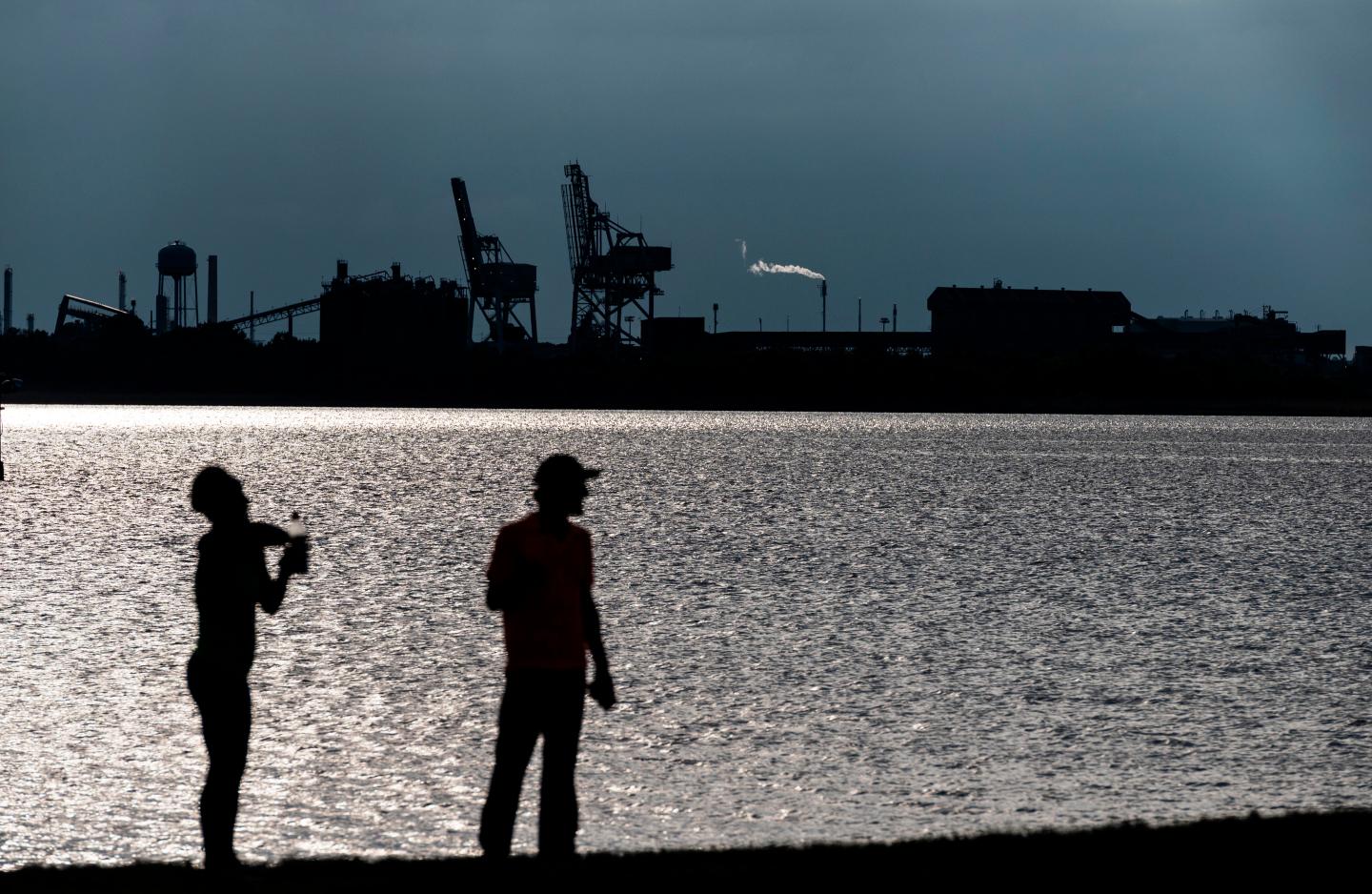
(Photo by ANDREW CABALLERO-REYNOLDS/AFP via Getty Images)

When a high-rise goes up, it is designed to withstand everything from gale-force winds to earthquakes and fires. But few multinational companies have applied the same kind of pre-emptive stress testing to their supply chains. Manufacturers have built intricate production networks to deliver efficiency but have left little margin for error. The COVID-19 pandemic has revealed how fragile lengthy, complex supply chains can be—and how much society has riding on their continued smooth functioning.  

In recent decades, global supply chains have evolved in ways that leave them more exposed to shocks. Some industries, including communication equipment, computers, and textiles, have grown two to three times more geographically concentrated over this period. Some 80% of world trade now flows through countries with declining political stability scores, as measured by the World Bank. More global production happens in areas that are highly vulnerable to climate change. And the world has grown more interconnected: When disaster strikes in one region, flows of goods, finance, people, and data quickly transmit ripple effects far and wide—as Hurricane Laura is demonstrating this week. 

Even before the pandemic, companies were facing mounting losses from periodic supply chain bottlenecks and shutdowns. Those costs aren’t “unforeseeable” anymore. In fact, our research found that shutdown lasting a month or more occur every 3.7 years on average. Manufacturers in some industries can expect unexpected events to erase the majority of a year’s profits over the course of a decade—and that’s just the baseline, accounting for probabilities like recurring storms and shipping snafus. Extreme one-off events can be far more damaging for companies and societies at large. 

Given that the world is undergoing its second “once-in-a-generation” disruption in 12 years, a reappraisal is in order. Building a more resilient form of globalization will require action by both CEOs and policymakers.

A growing awareness of risk may cause some companies to restructure and regionalize their supply chains—at least where there’s a solid business case. Governments, too, may take action to boost domestic production of goods that are deemed essential or important to national competitiveness, reshaping industries in ways that market forces alone would not. All told, we estimate that up to a quarter of global goods exports, worth up to $4.5 trillion annually, could shift to different countries in the next five years or so. 

But that leaves three-quarters or more of export flows fairly entrenched where they are at present. Luckily, companies have many other strategies for hedging against disruptions. Most large companies have little visibility beyond the suppliers they deal with directly, but they need to understand vulnerabilities in the deeper tiers of the network. Firms can also engage redundant suppliers for critical inputs, reduce product complexity for more flexible manufacturing, or hold more inventory and cash, just for a start. 

A lot of this is well-established conventional wisdom. So why haven’t more companies acted on it? Short-termism is one reason. Many were unwilling to bear the present-day cost of preparing for future hypotheticals. But today technology offers opportunities to be more resilient and more productive. In an increasingly volatile world, insuring against disruptions can pay off quickly. 

CEOs are rapidly awakening to this new reality. Supply chain operations were rarely on their radar; now for more and more it’s at the top of their agenda. 

The empty supermarket shelves and shortages of medical supplies of recent months have driven home the fact that supply chain stability is not just a business issue. It’s also about protecting the public interest. Policymakers have a role to play and can actively shape the likelihood and severity of supply chain shocks. Governments have capabilities at their discretion to manage risk that individual companies do not, such as building infrastructure to mitigate flooding and other climate risks, investing in early warning capabilities, and maintaining cutting-edge emergency management capabilities.  Countries that want to build robust supply chains will require a long-term commitment to adopting advanced manufacturing technologies, developing workforce skills that align with industry needs, and building robust digital and physical infrastructure.

For more than two decades, global supply chains have pushed the boundaries of distance and efficiency. Now the pandemic has delivered a wake-up call that some are stretched too thin—and it’s time to build more safeguards and resilience into the system. 

Kevin Sneader is the global managing partner of McKinsey & Company. Susan Lund is a partner at the McKinsey Global Institute, the firm’s business and economics research arm.

Subscribe to Fortune Daily to get essential business stories straight to your inbox each morning.

About the Authors
By Kevin Sneader
See full bioRight Arrow Button Icon
By Susan Lund
See full bioRight Arrow Button Icon

Latest in Commentary

Finance
Lorem ipsum dolor sit amet, consectetur adipiscing elit, sed do eiusmod tempor incididunt ut labore et dolore magna aliqua. Ut enim ad minim veniam
By Fortune Editors
October 20, 2025
Finance
Lorem ipsum dolor sit amet, consectetur adipiscing elit, sed do eiusmod tempor incididunt ut labore et dolore magna aliqua. Ut enim ad minim veniam
By Fortune Editors
October 20, 2025
Finance
Lorem ipsum dolor sit amet, consectetur adipiscing elit, sed do eiusmod tempor incididunt ut labore et dolore magna aliqua. Ut enim ad minim veniam
By Fortune Editors
October 20, 2025
Finance
Lorem ipsum dolor sit amet, consectetur adipiscing elit, sed do eiusmod tempor incididunt ut labore et dolore magna aliqua. Ut enim ad minim veniam
By Fortune Editors
October 20, 2025
Finance
Lorem ipsum dolor sit amet, consectetur adipiscing elit, sed do eiusmod tempor incididunt ut labore et dolore magna aliqua. Ut enim ad minim veniam
By Fortune Editors
October 20, 2025
Finance
Lorem ipsum dolor sit amet, consectetur adipiscing elit, sed do eiusmod tempor incididunt ut labore et dolore magna aliqua. Ut enim ad minim veniam
By Fortune Editors
October 20, 2025

Most Popular

Finance
Lorem ipsum dolor sit amet, consectetur adipiscing elit, sed do eiusmod tempor incididunt ut labore et dolore magna aliqua. Ut enim ad minim veniam
By Fortune Editors
October 20, 2025
Finance
Lorem ipsum dolor sit amet, consectetur adipiscing elit, sed do eiusmod tempor incididunt ut labore et dolore magna aliqua. Ut enim ad minim veniam
By Fortune Editors
October 20, 2025
Finance
Lorem ipsum dolor sit amet, consectetur adipiscing elit, sed do eiusmod tempor incididunt ut labore et dolore magna aliqua. Ut enim ad minim veniam
By Fortune Editors
October 20, 2025
Finance
Lorem ipsum dolor sit amet, consectetur adipiscing elit, sed do eiusmod tempor incididunt ut labore et dolore magna aliqua. Ut enim ad minim veniam
By Fortune Editors
October 20, 2025
Finance
Lorem ipsum dolor sit amet, consectetur adipiscing elit, sed do eiusmod tempor incididunt ut labore et dolore magna aliqua. Ut enim ad minim veniam
By Fortune Editors
October 20, 2025
Finance
Lorem ipsum dolor sit amet, consectetur adipiscing elit, sed do eiusmod tempor incididunt ut labore et dolore magna aliqua. Ut enim ad minim veniam
By Fortune Editors
October 20, 2025
Fortune Secondary Logo
Rankings
  • 100 Best Companies
  • Fortune 500
  • Global 500
  • Fortune 500 Europe
  • Most Powerful Women
  • World's Most Admired Companies
  • See All Rankings
  • Lists Calendar
Sections
  • Finance
  • Fortune Crypto
  • Features
  • Leadership
  • Health
  • Commentary
  • Success
  • Retail
  • Mpw
  • Tech
  • Lifestyle
  • CEO Initiative
  • Asia
  • Politics
  • Conferences
  • Europe
  • Newsletters
  • Personal Finance
  • Environment
  • Magazine
  • Education
Customer Support
  • Frequently Asked Questions
  • Customer Service Portal
  • Privacy Policy
  • Terms Of Use
  • Single Issues For Purchase
  • International Print
Commercial Services
  • Advertising
  • Fortune Brand Studio
  • Fortune Analytics
  • Fortune Conferences
  • Business Development
  • Group Subscriptions
About Us
  • About Us
  • Press Center
  • Work At Fortune
  • Terms And Conditions
  • Site Map
  • About Us
  • Press Center
  • Work At Fortune
  • Terms And Conditions
  • Site Map
  • Facebook icon
  • Twitter icon
  • LinkedIn icon
  • Instagram icon
  • Pinterest icon

Latest in Commentary

Duncan Tait, CEO of Inchcape
Europecar manufacturing
“Competition is good for the industry”. Inchcape CEO’s case for optimism in automotive’s next chapter
By Duncan TaitApril 30, 2026
31 minutes ago
agentic
CommentaryAI agents
Why your data infrastructure — not your AI model — will determine whether Agentic AI scales
By Jeffrey Sonnenfeld, Stephen Henriques, Catherine Dai and Zander JeinthanuttkanontApril 30, 2026
3 hours ago
hoskins
Commentaryoffices
Gensler Co-Chair: Hot-desking was supposed to save money. It may be costing you your culture
By Diane HoskinsApril 30, 2026
5 hours ago
tillis
CommentaryCongress
Thom Tillis: Free markets built American prosperity. Government intervention puts it at risk
By Thom Tillis and John StanfordApril 30, 2026
6 hours ago
iran
CommentaryIran
The Strait of Hormuz is a data problem, not just a military one
By Erik Bethel and Ami DanielApril 30, 2026
7 hours ago
hollywood
CommentaryMarketing
I spent 20 years learning to navigate an industry. Then I built a campaign for the man who’s dismantling it
By Matti YahavApril 29, 2026
1 day ago

Most Popular

Apple cofounder Ronald Wayne—whose stake would be worth up to $400 billion had he not sold it in 1976—says that at 91, he has no regrets
Success
Apple cofounder Ronald Wayne—whose stake would be worth up to $400 billion had he not sold it in 1976—says that at 91, he has no regrets
By Preston ForeApril 27, 2026
3 days ago
Jamie Dimon gets candid about national debt: ‘There will be a bond crisis, and then we’ll have to deal with it’
Economy
Jamie Dimon gets candid about national debt: ‘There will be a bond crisis, and then we’ll have to deal with it’
By Eleanor PringleApril 29, 2026
1 day ago
‘They left me no choice’: Powell isn’t going anywhere—blocking Trump from another Fed appointee
Banking
‘They left me no choice’: Powell isn’t going anywhere—blocking Trump from another Fed appointee
By Eva RoytburgApril 29, 2026
20 hours ago
‘The cost of compute is far beyond the costs of the employees’: Nvidia executive says right now AI is more expensive than paying human workers
AI
‘The cost of compute is far beyond the costs of the employees’: Nvidia executive says right now AI is more expensive than paying human workers
By Sasha RogelbergApril 28, 2026
2 days ago
‘Take the money and run’: Johns Hopkins economist Steve Hanke on why the UAE quit OPEC
Energy
‘Take the money and run’: Johns Hopkins economist Steve Hanke on why the UAE quit OPEC
By Shawn TullyApril 29, 2026
1 day ago
Google Cloud revenue is now 18% of Alphabet's business. Is this the beginning of the end of Google's search identity?
Big Tech
Google Cloud revenue is now 18% of Alphabet's business. Is this the beginning of the end of Google's search identity?
By Alexei OreskovicApril 29, 2026
13 hours ago

© 2026 Fortune Media IP Limited. All Rights Reserved. Use of this site constitutes acceptance of our Terms of Use and Privacy Policy | CA Notice at Collection and Privacy Notice | Do Not Sell/Share My Personal Information
FORTUNE is a trademark of Fortune Media IP Limited, registered in the U.S. and other countries. FORTUNE may receive compensation for some links to products and services on this website. Offers may be subject to change without notice.