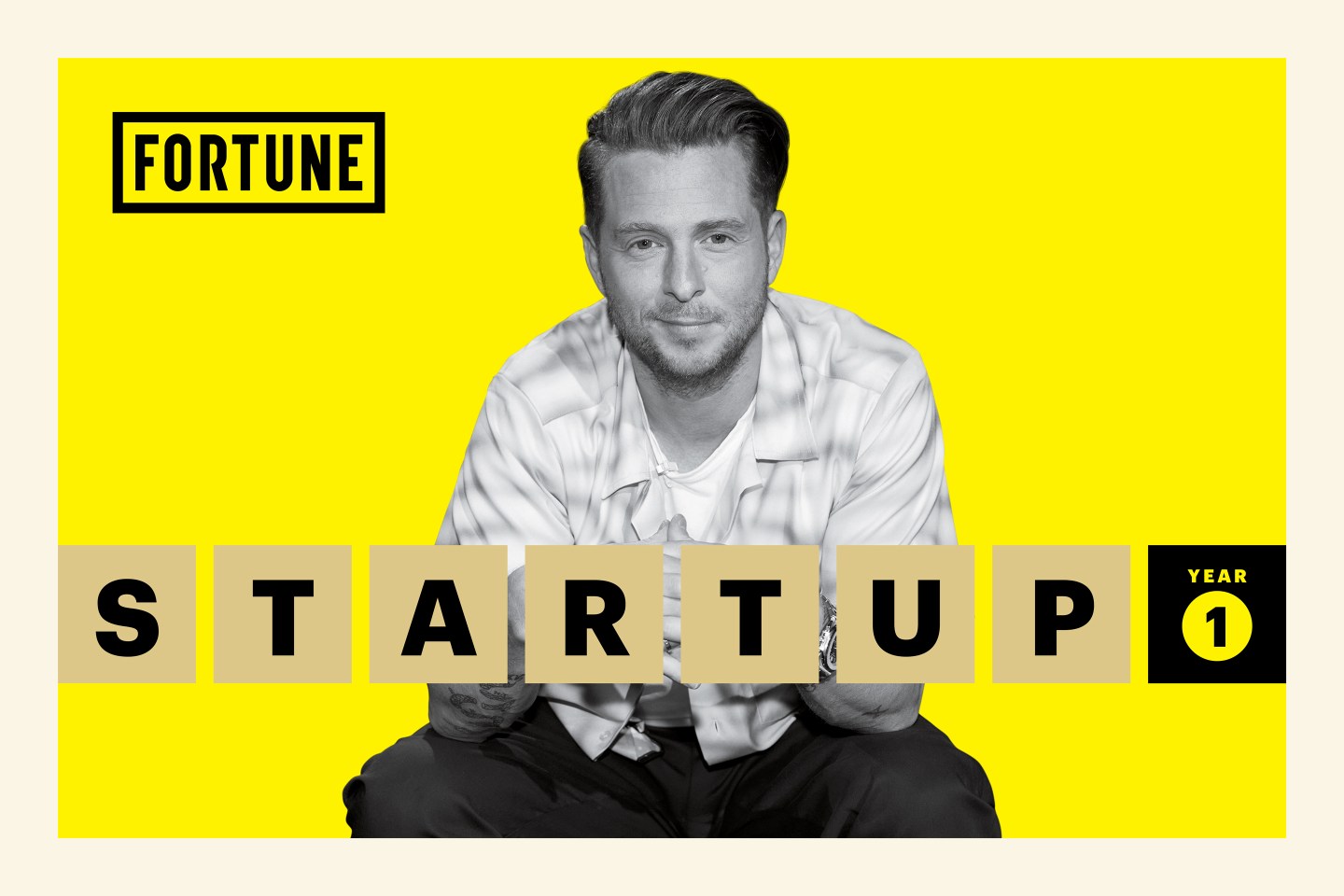
This is an installment of Startup Year One, a special series of interviews with startup founders about the major lessons they have learned in the immediate aftermath of their businesses’ first year of operation.
Ryan Tedder says his business background is about as different from the “beverage” industry as one could imagine. Previously, he had been writing and producing songs professionally since 2001. And you might have heard of his band, OneRepublic, which has been in its current iteration since 2007.
Aside from music, Tedder has quietly been an early-stage investor in a number of different companies ranging from tech to food and beverage to a commercial real estate firm, which he and his wife have been involved with since 2008.
Fortune recently spoke with Tedder to learn more about his new business venture, the lessons learned, the hurdles overcome, and plans for the next year.
The following interview has been condensed and lightly edited for clarity.
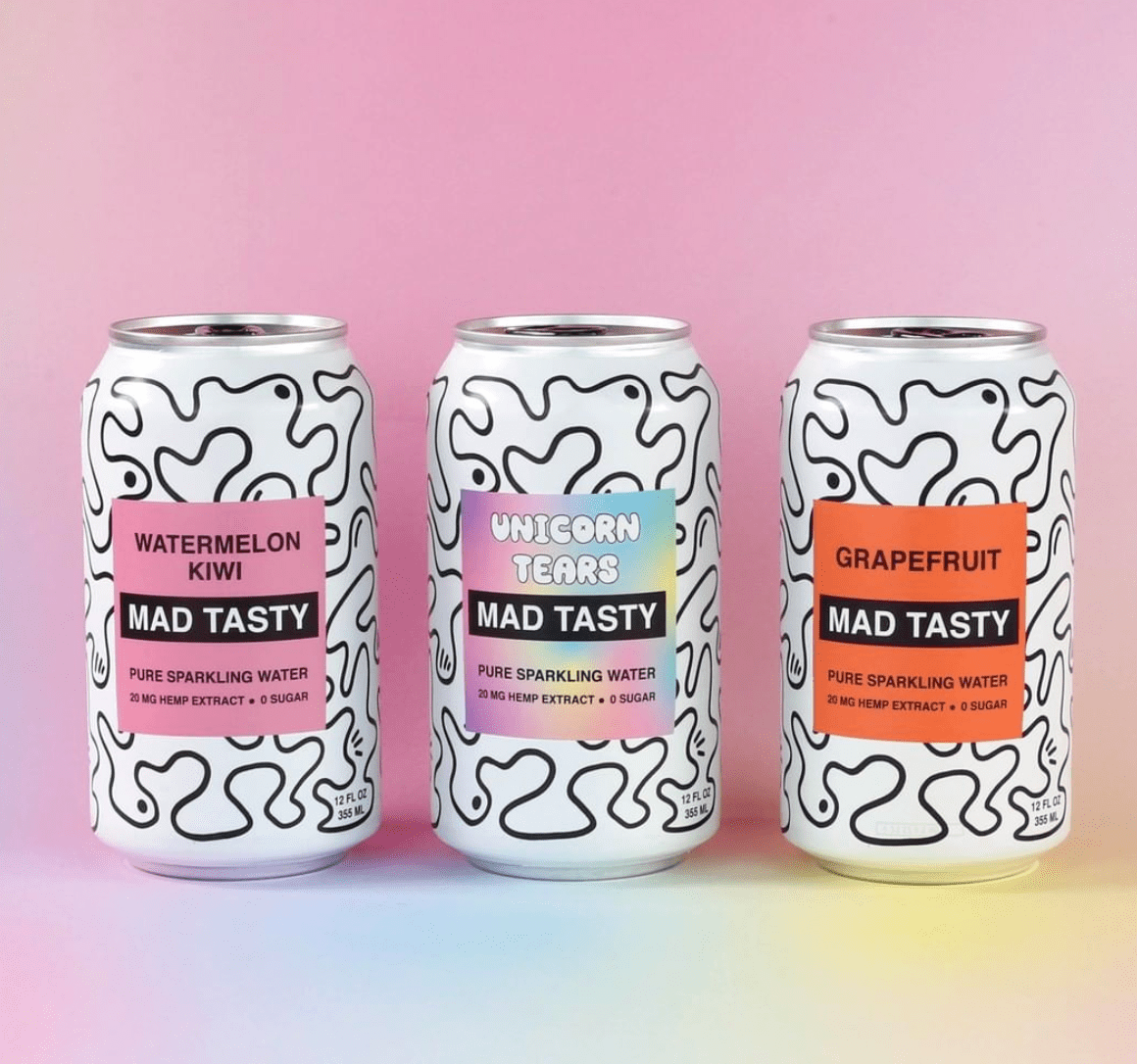
Fortune: Sparkling water and CBD are both hot markets right now, but they’re both crowded, too. What inspired the launch of Mad Tasty? And how does it stand out from the bevy of other canned seltzer and sodas on the market today?
Tedder: The inspiration for Mad Tasty began back in 2017. I was going through the hardest stretch of my life. I had traveled over 400,000 miles in about seven months, and I was completely burnt out from promoting a new album and being on tour. I was having panic attacks, heart palpitations, and had developed a major sleeping issue, which ultimately led to me being prescribed Xanax.
During this time, I reconnected with some high school buddies of mine—the Stanley brothers—who had started a hemp company called Charlotte’s Web. I invested in their company, and in tandem the Stanley brothers gave me a crash course in all things hemp, from its history as a major medicinal plant to the intricacies of the human cannabinoid system, and I quickly started introducing CBD into my everyday life.
In 2017 and 2018, the only way to dose with CBD was using tinctures and eyedroppers, usually mixed with olive oil or some other not-delicious oil. I knew there had to be a tastier way to enjoy CBD, and out of sheer luck and timing I got introduced to a company out of Seattle called Sorse [Technology]. Oil [hemp] and water don’t mix: So many CBD beverages end up with separation; that is, after a certain amount of time their hemp oil can float to the top of the bottle or can. Sorse figured out a way to emulsify hemp oil to the point that it maintains integrity for the life of the drink. I have never had strong opinions about cannabis—whether smoking or edible—and I’ve always had an adverse reaction to THC. So believe me when I say that I am the least likely person to join the hemp space.
However, as soon as I began using CBD as a stress-reducer and anti-inflammatory, I noticed that I felt more centered and calm without the euphoric effects that come with taking cannabis or the tiredness you get from Xanax. Combine all that with my desire to counterbalance all the coffee I drink with a lot more water, and I arrived at Mad Tasty.
CBD is such a buzzy space, but studies are still mixed on the health benefits. What are you hoping customers get from Mad Tasty?
As for the health benefits of CBD: They’re not a placebo, I’ve experienced them myself, and the personal stories we have from customers now are too many to mention. Before launching the company we consulted with number of doctors and hemp experts who understand the body’s reaction to CBD. I also knew of the tens of thousands of personal stories from Charlotte’s Web CBD users. We have the absolute highest level of testing and research, and our water is sourced from a natural aquifer in the Cascade mountains, so purity is never in question.
I’m hoping that customers find a restorative beverage that centers them and helps them find focus while alleviating the innumerable stresses that come at us every single day. The health benefits to me are real—anti-anxiety, anti-inflammation, et cetera—but it is up to each person to determine how hemp extract and CBD can benefit them.
What were some of the biggest hurdles you faced in the past year? What surprised you the most?
The biggest hurdle for any lifestyle or beverage company is the lack of FDA regulation in the hemp space. Globally, the demand for CBD and hemp extract has exploded, and certain countries like Canada have moved ahead, and, in my opinion, done the right thing by making it permissible to sell in food and beverage. Hemp extract and CBD have been consumed for thousands of years as medicinal supplements, and hemp has also been used for other things like rope, thread, and clothing. Without diving into the historical relevancy of hemp and its agricultural ancestry, I want people to know that hemp has always been a part of the American economy. It’s been around just as long as cotton. You’d be surprised to find how intertwined it is with our everyday lives.
The other hurdle for Mad Tasty this year, and most companies, is the COVID-19 pandemic. Our online and direct-to-consumer sales are up 700% since January, but our in-store retail sales are down 75%. Thankfully, our burn rate and overhead are lean, and we are still net positive for the year, which I feel is a victory on any level in 2020.
What kind of feedback have you received from your customers, and have you (or will you) apply that feedback to how you sell your products in the future?
At the risk of sounding too hyped on our brand, our feedback has been simply outstanding. Somewhere around 99% of our emails, surveys, and questionnaires have resulted in positive feedback. I should use the term “customer,” but given my experience in music, I tend to refer to consumers as fans, and I choose to treat them as such. Like the music industry, the goal is to keep our fans motivated to come back to our shows and continue to buy our albums and give them an experience that affects them personally, emotionally, and physically. In music, I am only trying to write songs that I want to hear myself, and my approach to Mad Tasty is the same. If Mad Tasty was an album, my objective is that it’s one you play on repeat.
Obviously, amid the coronavirus pandemic, consumers’ purchasing habits, practices, and even their relationship to groceries is going to change. How does Mad Tasty plan to adjust and fit into whatever this new normal might be?
Within 10 days of releasing our newest flavor, Unicorn Tears, we decided to donate 100% of our online profit to the Red Cross and frontline health care workers. Within three weeks of the pandemic, I called my executive team and said that we have to make masks. We are a small and nimble company, and I don’t plan on becoming so big that we can’t pivot on a dime to do the right thing at the right time. Being nimble in any nascent industry or category is everything.
At the same time, how does a shutdown of this nature affect the future of the business, from product development to raising capital?
In terms of raising capital, that has never been a problem for this brand, and I don’t see that being a problem in the future. The conversations that we have had as a business have exceeded my expectations and never cease to surprise me. Also, we have the benefit of a healthy level of autonomous liquidity between [investor] First Bev and myself. I want to go on the record and say that Bill Anderson and his team at First Bev have been absolute SEAL Team 6–level operators in this space, and I’ll never be able to praise their expertise and focus enough. They have been phenomenal partners, and I feel honored to be working with them.
Like everyone else in this line of work, we do not exist in national chains—even though we have pre-existing deals with many of them—and we have taken a hit in the retail segment because of that. Fortunately, it has been somewhat offset by our direct-to-consumer online sales. Apparently, people have figured out that CBD is a phenomenal anxiety suppressant. Lord knows we need more of that.
Looking beyond the post-pandemic era, which could be anywhere from a year to a few years from now, how do you plan to grow Mad Tasty, and what do you want the business to look like five years from now?
I plan to grow Mad Tasty the same way you build a fan base as a recording artist, one fan at a time. One believer, one consumer, one zealot in this space at an organic and unhurried pace. What I have learned quickly in this category [beverage] is that regardless of the trends, you only succeed if you take one state at a time, one account at a time, and one distributor at a time. I have developed an absolute obsession with this space and brand, and our team feels the same way. I’m prepared to own this company for as long as possible and help it grow until we reach critical mass.
The purpose of Mad Tasty is well beyond a need for me to prove something in the beverage space. It is a vehicle that impacts actual lives thousands of miles beyond the coffee shop or convenience store. Cranking the dial on that impact is my five-year plan.
More must-read lifestyle coverage from Fortune:
- Slowed mail delivery is the last thing indie bookstores need right now
- Why sustainable menswear is never out of style
- Black-owned food businesses are seeing a surge in publicity and customers—and hope that investors are next
- What to do if you lost money on an event canceled because of COVID-19
- Most Americans plan to continue at-home workouts even once gyms fully reopen