• Home
  • Latest
  • Fortune 500
  • Finance
  • Tech
  • Leadership
  • Lifestyle
  • Rankings
  • Multimedia
CommentaryCoronavirus

Eyeballs, asthmatics, and 3D-printed organs: New discoveries about COVID-19 abound

By
Carolyn Barber
Carolyn Barber
Down Arrow Button Icon
By
Carolyn Barber
Carolyn Barber
Down Arrow Button Icon
August 7, 2020, 10:00 AM ET
Eyeballs, asthmatics, and 3D-printed organs: New discoveries about COVID-19 abound
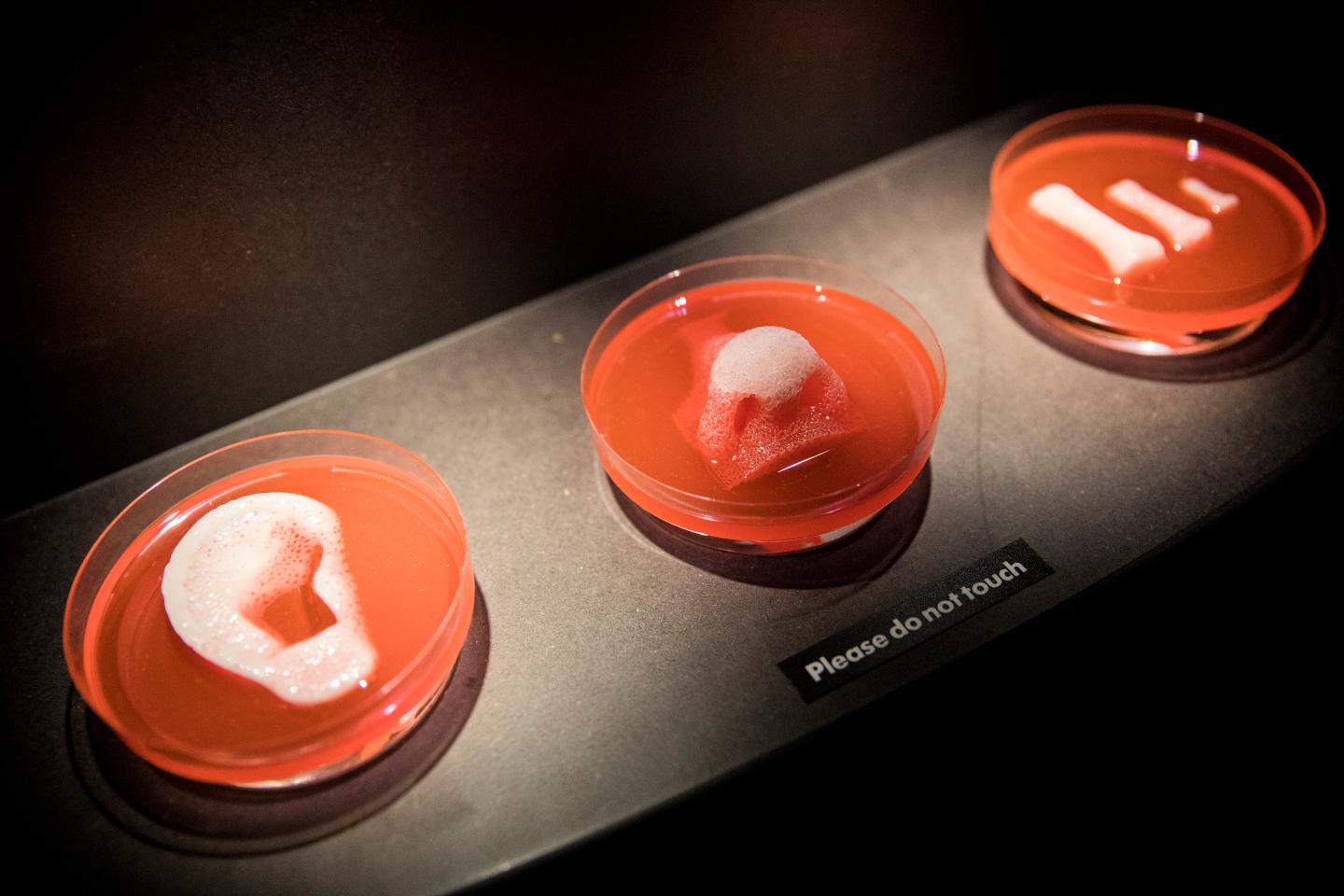
3D-printed organs created by the Wake Forest Institute for Regenerative Medicine are displayed on May 15, 2019, in London. Recent COVID-19 discoveries involve eye transmission, 3D printing, heart infection, asthma, and hand sanitizer, writes Carolyn Barber.Tristan Fewings—Getty Images/Barbican Centre

In general, the public’s interest in research related to COVID-19 is focused on a single issue: Is there a vaccine, and when is it going to be ready?

It’s a massive question, of course. But it is not the only one that scientists and medical experts are asking. Every day, researchers around the world are cranking out papers related to COVID-19—and the truth is, we are making progress in understanding this disease.

With more than 4.8 million cases and about 160,000 deaths in the U.S., the information their research is uncovering could not be more timely. Here are some of the most recent and interesting findings, drawn both from preprints—non-peer-reviewed articles—and published trials.

The eyes have it

Can the coronavirus infect us through our eyes? It appears likely. A team of Chinese researchers has mapped the genes for the ACE2 receptor (the specific protein that allows the virus to infect human cells) to the cornea of the eye.

These receptors are found also in the lungs, heart, gastrointestinal tract, kidneys, and elsewhere, but we now know they are in the eyes too. In fact, another team examined the eyes of deceased COVID patients and found that ACE2 receptors were located on both the surface and cornea of the eyes. The studies, published as preprints, don’t prove that someone could catch the virus from the eyes, but they certainly demonstrate that it’s possible.

This has important implications for all of us. As we mask up, eye-protective strategies may be a significant consideration. A recent, large systematic review published in The Lancet found that wearing eye coverings, like goggles, glasses or face shields, reduced COVID-19 and other viral transmission by nearly three times compared to individuals not wearing eye protection.

Hearts, attacked

Three studies released this month show that the coronavirus is infecting the hearts of some of its victims fairly commonly. That is a finding that bears watching.

According to a study published in JAMA Cardiology, autopsies of more than three dozen elderly victims of the disease showed that 61% of the patients’ hearts had virus present within the heart muscle. A German study, meanwhile, showed cardiac involvement in 78% of patients (average age 49) who had recently recovered from COVID-19. And a third study of 139 health care workers with past COVID-19 infection found a combined 40% incidence of heart inflammatory conditions, known as pericarditis or myocarditis, in those who were stable or asymptomatic nearly three months after their initial diagnosis. This is a bit unnerving.

Clearly, these studies are concerning for both the magnitude and apparent persistence of cardiac involvement in coronavirus patients. One of the next questions to answer is what the long-term consequences might be. Will surviving patients go on to develop heart failure, for example, or will their hearts fully recover? We just don’t know yet.

3D printing organs: It’s real

Although this sounds like something from a sci-fi movie, we now have the ability to 3D print human tissue. The process is known as 3D bioprinting.

Scientists have been able to 3D print living skin, complete with blood vessels, which one day will be helpful in treating burns and sizable wounds in patients. Now, as reported in the New York Times, researchers are 3D printing miniature organs for COVID-19—“thousands an hour”—in order to test potential medicines to combat the virus.

This is a remarkable development. These “organoids,” or tiny lungs and colons, may be used by laboratories to solve the COVID riddle.

Hand sanitizer versus soap

We’ve been told by the Centers for Disease Control and Prevention to wash our hands with soap and water when possible, rather than using hand sanitizer. But a new meta-analysis concludes differently. While both methods reduce germ transmission, the researchers state that direct and indirect evidence “suggest hand sanitizer might be more effective in practice.”

A word of caution, though: Some hand sanitizers have been labeled as containing ethanol, but they actually contain dangerous concentrations of methanol (also known as wood alcohol). These products, often made in Mexico, have been recalled by the Food and Drug Administration (FDA) because of serious toxicity that can result in blindness, cardiac issues, seizures, and even death. Here’s a link to the FDA’s do-not-use list.

Potential good news for asthmatics

Although it has been suggested otherwise, surprisingly little evidence exists that asthmatics have higher infection rates of COVID-19, or more severe disease, than people without asthma.

A study published in the Journal of Allergy and Clinical Immunology last month showed that asthma patients were no more likely to be hospitalized or experience higher mortalities than patients without asthma. Researchers wonder whether asthma patients’ younger age, fewer comorbid conditions like heart disease or diabetes, or use of inhaled steroids may play a role in modulating SARS-CoV-2 infectivity.

One study just released as a preprint did show somewhat higher inpatient mortality among asthmatic patients, but these patients were older and had more comorbidities than those without asthma, so the playing field wasn’t exactly level. The study also demonstrated that out of more than 71,000 patients with asthma, only 1.4% had contracted COVID-19.

That is an impressively low rate—and during these difficult times, it’s news worth sharing. COVID-19 is certainly a disease where we want to follow the science, and fortunately, scientists from around the globe are on the case. 

Carolyn Barber has been an emergency department physician for 25 years, is cofounder of the homeless work program Wheels of Change, and is a nationally published author.

About the Author
By Carolyn Barber
See full bioRight Arrow Button Icon

Latest in Commentary

Finance
Lorem ipsum dolor sit amet, consectetur adipiscing elit, sed do eiusmod tempor incididunt ut labore et dolore magna aliqua. Ut enim ad minim veniam
By Fortune Editors
October 20, 2025
Finance
Lorem ipsum dolor sit amet, consectetur adipiscing elit, sed do eiusmod tempor incididunt ut labore et dolore magna aliqua. Ut enim ad minim veniam
By Fortune Editors
October 20, 2025
Finance
Lorem ipsum dolor sit amet, consectetur adipiscing elit, sed do eiusmod tempor incididunt ut labore et dolore magna aliqua. Ut enim ad minim veniam
By Fortune Editors
October 20, 2025
Finance
Lorem ipsum dolor sit amet, consectetur adipiscing elit, sed do eiusmod tempor incididunt ut labore et dolore magna aliqua. Ut enim ad minim veniam
By Fortune Editors
October 20, 2025
Finance
Lorem ipsum dolor sit amet, consectetur adipiscing elit, sed do eiusmod tempor incididunt ut labore et dolore magna aliqua. Ut enim ad minim veniam
By Fortune Editors
October 20, 2025
Finance
Lorem ipsum dolor sit amet, consectetur adipiscing elit, sed do eiusmod tempor incididunt ut labore et dolore magna aliqua. Ut enim ad minim veniam
By Fortune Editors
October 20, 2025

Most Popular

Finance
Lorem ipsum dolor sit amet, consectetur adipiscing elit, sed do eiusmod tempor incididunt ut labore et dolore magna aliqua. Ut enim ad minim veniam
By Fortune Editors
October 20, 2025
Finance
Lorem ipsum dolor sit amet, consectetur adipiscing elit, sed do eiusmod tempor incididunt ut labore et dolore magna aliqua. Ut enim ad minim veniam
By Fortune Editors
October 20, 2025
Finance
Lorem ipsum dolor sit amet, consectetur adipiscing elit, sed do eiusmod tempor incididunt ut labore et dolore magna aliqua. Ut enim ad minim veniam
By Fortune Editors
October 20, 2025
Finance
Lorem ipsum dolor sit amet, consectetur adipiscing elit, sed do eiusmod tempor incididunt ut labore et dolore magna aliqua. Ut enim ad minim veniam
By Fortune Editors
October 20, 2025
Finance
Lorem ipsum dolor sit amet, consectetur adipiscing elit, sed do eiusmod tempor incididunt ut labore et dolore magna aliqua. Ut enim ad minim veniam
By Fortune Editors
October 20, 2025
Finance
Lorem ipsum dolor sit amet, consectetur adipiscing elit, sed do eiusmod tempor incididunt ut labore et dolore magna aliqua. Ut enim ad minim veniam
By Fortune Editors
October 20, 2025
Fortune Secondary Logo
Rankings
  • 100 Best Companies
  • Fortune 500
  • Global 500
  • Fortune 500 Europe
  • Most Powerful Women
  • World's Most Admired Companies
  • See All Rankings
  • Lists Calendar
Sections
  • Finance
  • Fortune Crypto
  • Features
  • Leadership
  • Health
  • Commentary
  • Success
  • Retail
  • Mpw
  • Tech
  • Lifestyle
  • CEO Initiative
  • Asia
  • Politics
  • Conferences
  • Europe
  • Newsletters
  • Personal Finance
  • Environment
  • Magazine
  • Education
Customer Support
  • Frequently Asked Questions
  • Customer Service Portal
  • Privacy Policy
  • Terms Of Use
  • Single Issues For Purchase
  • International Print
Commercial Services
  • Advertising
  • Fortune Brand Studio
  • Fortune Analytics
  • Fortune Conferences
  • Business Development
  • Group Subscriptions
About Us
  • About Us
  • Press Center
  • Work At Fortune
  • Terms And Conditions
  • Site Map
  • About Us
  • Press Center
  • Work At Fortune
  • Terms And Conditions
  • Site Map
  • Facebook icon
  • Twitter icon
  • LinkedIn icon
  • Instagram icon
  • Pinterest icon

Latest in Commentary

hollywood
CommentaryMarketing
I spent 20 years learning to navigate an industry. Then I built a campaign for the man who’s dismantling it
By Matti YahavApril 29, 2026
5 hours ago
aging
HealthLongevity
We’re the CEOs of Peloton and the Hospital for Special Surgery. Living longer isn’t enough, we need to live better, too
By Bryan T. Kelly and Peter SternApril 29, 2026
6 hours ago
gen z
Commentarydisruption
AI won’t kill your job — it will kill the path to your first one
By Jeffrey Sonnenfeld, Stephen Henriques, Johan Griesel, Andrew Alam-Nist and Peter YuApril 29, 2026
7 hours ago
greer
CommentaryTariffs
No, tariffs are not strengthening the economy
By Alex DuranteApril 29, 2026
8 hours ago
AI is changing who gets to be an expert. Are your colleagues ready to become ‘directors of intelligence’?
AIProductivity
AI is changing who gets to be an expert. Are your colleagues ready to become ‘directors of intelligence’?
By Bruce BroussardApril 29, 2026
10 hours ago
gen z
CommentaryEducation
Gen Z has the wrong idea about college. Your career doesn’t start after you graduate 
By Ashley BigdaApril 29, 2026
10 hours ago

Most Popular

Apple cofounder Ronald Wayne—whose stake would be worth up to $400 billion had he not sold it in 1976—says that at 91, he has no regrets
Success
Apple cofounder Ronald Wayne—whose stake would be worth up to $400 billion had he not sold it in 1976—says that at 91, he has no regrets
By Preston ForeApril 27, 2026
2 days ago
‘The cost of compute is far beyond the costs of the employees’: Nvidia executive says right now AI is more expensive than paying human workers
AI
‘The cost of compute is far beyond the costs of the employees’: Nvidia executive says right now AI is more expensive than paying human workers
By Sasha RogelbergApril 28, 2026
1 day ago
‘Take the money and run’: Johns Hopkins economist Steve Hanke on why the UAE quit OPEC
Energy
‘Take the money and run’: Johns Hopkins economist Steve Hanke on why the UAE quit OPEC
By Shawn TullyApril 29, 2026
12 hours ago
Current price of gold as of April 28, 2026
Personal Finance
Current price of gold as of April 28, 2026
By Danny BakstApril 28, 2026
1 day ago
The U.S. military may have already used up half of its most expensive missiles, and it could take up to 4 years to rebuild its stockpiles
Politics
The U.S. military may have already used up half of its most expensive missiles, and it could take up to 4 years to rebuild its stockpiles
By Sasha RogelbergApril 24, 2026
5 days ago
Current price of silver as of Tuesday, April 28, 2026
Personal Finance
Current price of silver as of Tuesday, April 28, 2026
By Joseph HostetlerApril 28, 2026
1 day ago

© 2026 Fortune Media IP Limited. All Rights Reserved. Use of this site constitutes acceptance of our Terms of Use and Privacy Policy | CA Notice at Collection and Privacy Notice | Do Not Sell/Share My Personal Information
FORTUNE is a trademark of Fortune Media IP Limited, registered in the U.S. and other countries. FORTUNE may receive compensation for some links to products and services on this website. Offers may be subject to change without notice.