• Home
  • Latest
  • Fortune 500
  • Finance
  • Tech
  • Leadership
  • Lifestyle
  • Rankings
  • Multimedia
Commentary

To fix America’s public health system, start with the right diagnosis

By
David Speiser
David Speiser
Down Arrow Button Icon
By
David Speiser
David Speiser
Down Arrow Button Icon
July 16, 2020, 9:00 AM ET
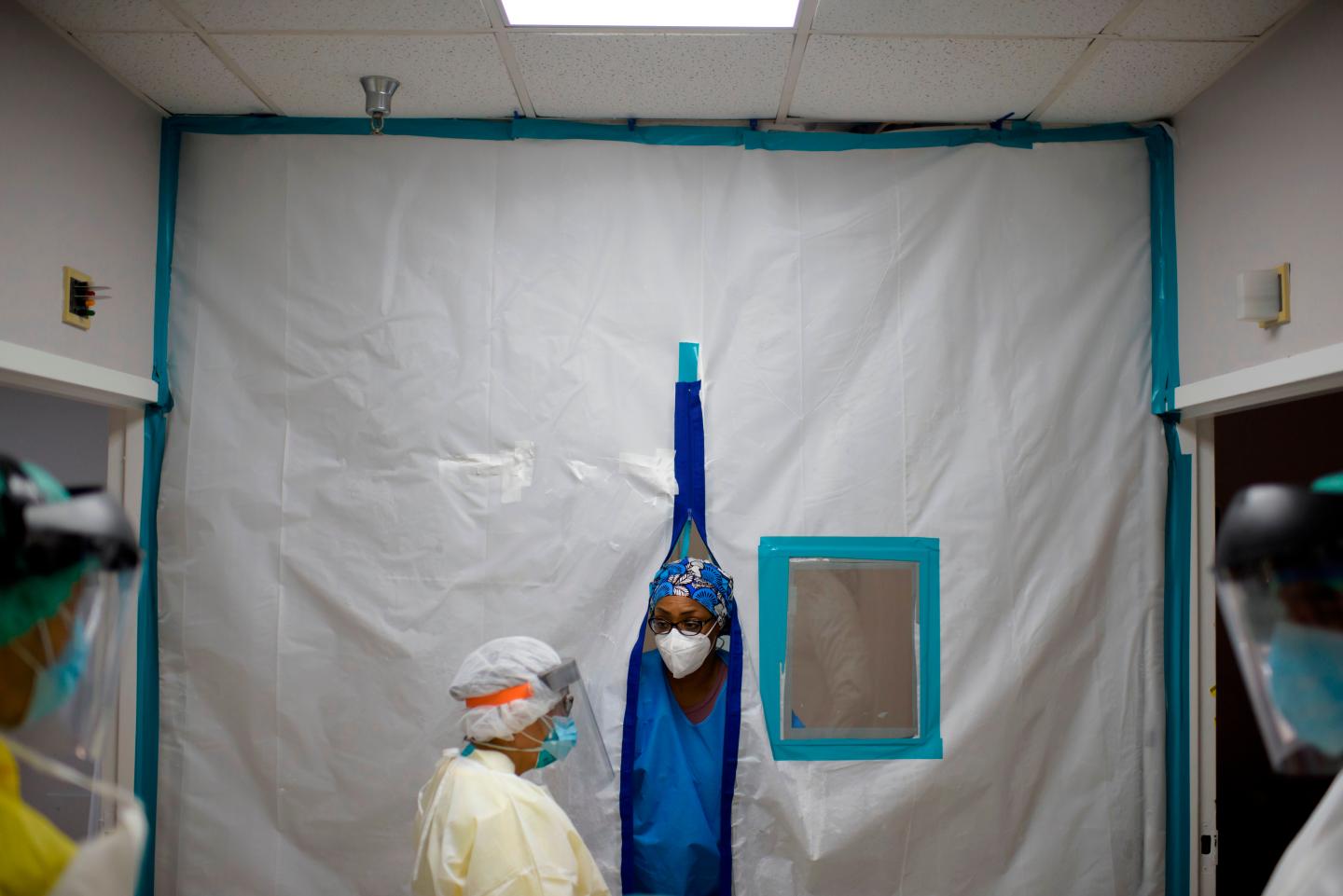
(Photo by MARK FELIX/AFP via Getty Images)

The U.S. Constitution purposefully divides government responsibilities among federal, state, and local levels. A fundamentally segmented infrastructure works from a democratic standpoint: checks and balances; accountability at every level. However, an inherent consequence of America’s system is fragmentation—particularly when it comes to integrating and advancing national public health. And that fragmentation has proved severely problematic when it comes to taking on the coronavirus pandemic.

America differs from more national-system–centric countries, like the United Kingdom, many European countries, and South Korea, in that public and private health care delivery providers and payers operate side by side. The rest of the public health system is made up of academic institutions and private sector supply chain participants that manufacture and distribute medical supplies, drugs, and other items. 

Even before COVID-19, America’s public health network was highly stressed and fragmented. Briefly stated, U.S. public health infrastructure mirrors the public sector’s separation of powers. Many public health system participants are simply not connected or supported enough to meet overwhelming patient demand during normal conditions, let alone in a crisis. And while the Constitution can’t easily be changed, our nation can do a much better job of working within, or compensating for, the nation’s public health constraints. 

Framework for a diagnosis

The 7-S framework was developed by McKinsey in the 1970s to transition corporations away from vertical reporting structures and toward horizontal collaboration. The framework deals with how all of an enterprise’s components work together to accomplish its goals, and it’s most commonly used to help illustrate a private sector company’s approach to shareholder-value creation. However, the categories covered by 7-S can also help America streamline its fragmented public health system—by providing a diagnosis that highlights what’s not working.

Strategy – America’s public health strategy depends on the country’s wealth to provide most of the underpinnings of success, relying on significant scientific advances over more basic fundamentals. The country has recently prioritized cost control over maintenance of emergency surge capacity. But that strategy has exposed America’s public health outcomes to the same inequity and inaccessibility that plague the broader health care system. America’s public health emergency preparation has been uneven. What’s more, the country’s national stockpile is primarily focused on disasters and bioterror, not pandemics.

Skills – There are things that America’s public health community is collectively good at delivering to the public. For example, the U.S. excels in scientific research and investigation en route to medical discovery and health care delivery. The health care maintains a very high level of professionalism in rolling out low-volume, high-tech interventions, including new cancer treatments and high-tech diagnostics. But we exhibit less focus and persistence in ensuring that all citizens have access to basic public health interventions, like vaccinations or prenatal care.

Shared Values – America’s public health system is fairly unified in its mission. Unfortunately, the nation it serves and protects isn’t. As a country, we do have a universal appreciation for health care workers. However, that appreciation doesn’t always extend to the governmental or scientific communities. Americans also tend to value personal independence over societal outcomes.

Structure – Public health operates under the umbrella of America’s tradition of division of government responsibility. Federal agencies guide, investigate, and regulate, but community action is led by state and local authorities—complemented by nonprofit organizations. The skill, independence, and stamina of local directors is pivotal to the entire U.S. public health system’s success. However, those directors’ ability to lead agencies and communities through transitions in thinking, behavior, and health delivery can be hindered by a lack of compensation and visibility.

Staff – This category refers to the collective abilities and backgrounds of America’s public health workforce. Compared with other nations, the U.S. has more political appointees running important public health agencies. Outside the public health system proper, few political leaders have scientific or public health training. In many cases, they don’t operate within a decision framework that prioritizes science. America’s health care system also remains anchored to cost management—which has led to chronic understaffing and a reliance on immigrant health care professionals.

Systems – In 7-S, this label refers to information technology, as well as business processes, decision-making, and oversight. Funding for America’s local public health infrastructure tends to be driven by specific worthwhile issues versus meeting overall public health goals. There is no national electronic health-record system, and no single federal program or agency to capture a national view of hospital patients. Even state participation in national surveillance systems is voluntary. The public health supply chain is primarily an extension of globalized private sector health care—leaving us competing for supplies with other countries impacted by the global pandemic. 

Style – This refers to which issues are communicated and how. In the U.S., discussions around public health, when they happen, are underfunded. Consequently, Americans lack much of a collective awareness that public health is an important national issue. And the marketing of products which contribute to poor public health outcomes and chronic lifestyle issues always outcompetes messages about public health and well-being. 

Where we go from here

Public health has taken on an elevated level of importance with COVID-19. Meanwhile, decades of insufficient public communications and education have left many Americans vulnerable to misinformation and mistrustful of public health efforts. 

Meaningful reform requires boosting understanding. Tapping 7-S to provide a comprehensive map of America’s current public health infrastructure can help. Advancing and streamlining America’s public health infrastructure should be guided by centralized goals, including enhancing jobs and pay, building integrated and comprehensive information systems, and establishing public-private partnerships. 

Experts are already examining America’s COVID-19 pandemic response for lessons to guide future actions. We can’t count on another century passing before the next major public health crisis hits the U.S. As the coronavirus persists, America’s leaders should explore building a less fragmented, more capable public health system to deal with whatever comes next. 

David Speiser, Ph.D., is the executive vice president, corporate strategy, at ICF, a global consultancy and digital services provider.

About the Author
By David Speiser
See full bioRight Arrow Button Icon

Latest in Commentary

Finance
Lorem ipsum dolor sit amet, consectetur adipiscing elit, sed do eiusmod tempor incididunt ut labore et dolore magna aliqua. Ut enim ad minim veniam
By Fortune Editors
October 20, 2025
Finance
Lorem ipsum dolor sit amet, consectetur adipiscing elit, sed do eiusmod tempor incididunt ut labore et dolore magna aliqua. Ut enim ad minim veniam
By Fortune Editors
October 20, 2025
Finance
Lorem ipsum dolor sit amet, consectetur adipiscing elit, sed do eiusmod tempor incididunt ut labore et dolore magna aliqua. Ut enim ad minim veniam
By Fortune Editors
October 20, 2025
Finance
Lorem ipsum dolor sit amet, consectetur adipiscing elit, sed do eiusmod tempor incididunt ut labore et dolore magna aliqua. Ut enim ad minim veniam
By Fortune Editors
October 20, 2025
Finance
Lorem ipsum dolor sit amet, consectetur adipiscing elit, sed do eiusmod tempor incididunt ut labore et dolore magna aliqua. Ut enim ad minim veniam
By Fortune Editors
October 20, 2025
Finance
Lorem ipsum dolor sit amet, consectetur adipiscing elit, sed do eiusmod tempor incididunt ut labore et dolore magna aliqua. Ut enim ad minim veniam
By Fortune Editors
October 20, 2025

Most Popular

Finance
Lorem ipsum dolor sit amet, consectetur adipiscing elit, sed do eiusmod tempor incididunt ut labore et dolore magna aliqua. Ut enim ad minim veniam
By Fortune Editors
October 20, 2025
Finance
Lorem ipsum dolor sit amet, consectetur adipiscing elit, sed do eiusmod tempor incididunt ut labore et dolore magna aliqua. Ut enim ad minim veniam
By Fortune Editors
October 20, 2025
Finance
Lorem ipsum dolor sit amet, consectetur adipiscing elit, sed do eiusmod tempor incididunt ut labore et dolore magna aliqua. Ut enim ad minim veniam
By Fortune Editors
October 20, 2025
Finance
Lorem ipsum dolor sit amet, consectetur adipiscing elit, sed do eiusmod tempor incididunt ut labore et dolore magna aliqua. Ut enim ad minim veniam
By Fortune Editors
October 20, 2025
Finance
Lorem ipsum dolor sit amet, consectetur adipiscing elit, sed do eiusmod tempor incididunt ut labore et dolore magna aliqua. Ut enim ad minim veniam
By Fortune Editors
October 20, 2025
Finance
Lorem ipsum dolor sit amet, consectetur adipiscing elit, sed do eiusmod tempor incididunt ut labore et dolore magna aliqua. Ut enim ad minim veniam
By Fortune Editors
October 20, 2025
Fortune Secondary Logo
Rankings
  • 100 Best Companies
  • Fortune 500
  • Global 500
  • Fortune 500 Europe
  • Most Powerful Women
  • World's Most Admired Companies
  • See All Rankings
  • Lists Calendar
Sections
  • Finance
  • Fortune Crypto
  • Features
  • Leadership
  • Health
  • Commentary
  • Success
  • Retail
  • Mpw
  • Tech
  • Lifestyle
  • CEO Initiative
  • Asia
  • Politics
  • Conferences
  • Europe
  • Newsletters
  • Personal Finance
  • Environment
  • Magazine
  • Education
Customer Support
  • Frequently Asked Questions
  • Customer Service Portal
  • Privacy Policy
  • Terms Of Use
  • Single Issues For Purchase
  • International Print
Commercial Services
  • Advertising
  • Fortune Brand Studio
  • Fortune Analytics
  • Fortune Conferences
  • Business Development
  • Group Subscriptions
About Us
  • About Us
  • Press Center
  • Work At Fortune
  • Terms And Conditions
  • Site Map
  • About Us
  • Press Center
  • Work At Fortune
  • Terms And Conditions
  • Site Map
  • Facebook icon
  • Twitter icon
  • LinkedIn icon
  • Instagram icon
  • Pinterest icon

Latest in Commentary

golf
Commentarybooks
How playing golf alone can make you better at your job
By Gary BelskyMay 8, 2026
17 hours ago
naomi
Commentarymental health
Naomi Osaka: the things I didn’t do to succeed
By Naomi OsakaMay 8, 2026
18 hours ago
amanda
Commentarybatteries
Why energy storage is moving beyond the capex debate
By Amanda SimonianMay 7, 2026
2 days ago
trump
CommentaryMedicare
Auto-enrollment in Medicare Advantage isn’t a nudge. It’s a trap
By Brian KeyserMay 7, 2026
2 days ago
nyse
CommentaryAI agents
Your trusted advocate or your rebellious Frankenstein: how you deploy agentic AI determines which one you get
By Jeffrey Sonnenfeld, Stephen Henriques, Yevheniia Podurets and Jasmine GarryMay 7, 2026
2 days ago
moore
CommentaryAntitrust
I litigated the JetBlue-Spirit merger. A few thoughts on the future of antitrust in the airline industry
By James "Jimmy" MooreMay 7, 2026
2 days ago

Most Popular

California farmers must destroy 420,000 peach trees after Del Monte closes its canneries and cancels more than $550 million in long-term contracts
North America
California farmers must destroy 420,000 peach trees after Del Monte closes its canneries and cancels more than $550 million in long-term contracts
By Sasha RogelbergMay 7, 2026
1 day ago
'Blue dot fever' plagues musicians like Post Malone, Meghan Trainor, and Zayn as a growing list of artists cancel tours due to lagging ticket sales
Arts & Entertainment
'Blue dot fever' plagues musicians like Post Malone, Meghan Trainor, and Zayn as a growing list of artists cancel tours due to lagging ticket sales
By Dave Lozo and Morning BrewMay 7, 2026
1 day ago
A Michigan farm town voted down plans for a giant OpenAI-Oracle data center. Weeks later, construction began
Magazine
A Michigan farm town voted down plans for a giant OpenAI-Oracle data center. Weeks later, construction began
By Sharon GoldmanMay 6, 2026
3 days ago
U.S. Treasury will have to borrow $2 trillion this year just to continue functioning—more than $166 billion every month
Economy
U.S. Treasury will have to borrow $2 trillion this year just to continue functioning—more than $166 billion every month
By Eleanor PringleMay 7, 2026
2 days ago
Airbnb CEO Brian Chesky warns two types of people won’t survive the AI era: ‘pure people managers’ and workers who resist change
Success
Airbnb CEO Brian Chesky warns two types of people won’t survive the AI era: ‘pure people managers’ and workers who resist change
By Emma BurleighMay 7, 2026
2 days ago
Current price of oil as of May 8, 2026
Personal Finance
Current price of oil as of May 8, 2026
By Joseph HostetlerMay 8, 2026
16 hours ago

© 2026 Fortune Media IP Limited. All Rights Reserved. Use of this site constitutes acceptance of our Terms of Use and Privacy Policy | CA Notice at Collection and Privacy Notice | Do Not Sell/Share My Personal Information
FORTUNE is a trademark of Fortune Media IP Limited, registered in the U.S. and other countries. FORTUNE may receive compensation for some links to products and services on this website. Offers may be subject to change without notice.