Subscribe to How To Reopen, our weekly newsletter on what it takes to reboot business in the midst of a pandemic.
When the COVID-19 pandemic took hold of the United States in March, private businesses from liquor producers to automakers mobilized to help produce essential supplies, from hand sanitizer to ventilators. Retailers and fashion designers were also conscripted into the modern wartime-esque effort, transitioning their production lines from apparel to personal protective equipment (PPE), including face masks and medical gowns.
FABRIC is a fashion incubator cofounded in 2016 by Angela Johnson and Sherri Barry, with the intent of re-shoring apparel manufacturing while helping apparel entrepreneurs design and manufacture niche sewn products in smaller quantities so they don’t have to over produce overseas.
“It’s a sustainable solution to a modern problem that has been growing as the fashion industry has shifted from big box brands to niche, direct-to-consumer, online fashion brands,” says Johnson, who is also a fashion designer of her eponymous collection of imaginative blazers and ball gowns made from upcycled t-shirts.
Based in Tempe, Ariz., FABRIC has worked with 450 emerging apparel brands in the last four years, offering services in consulting, design development, no-minimum manufacturing, branding, marketing, office space, event space, and more all under one roof and at below market rates, according to Johnson.
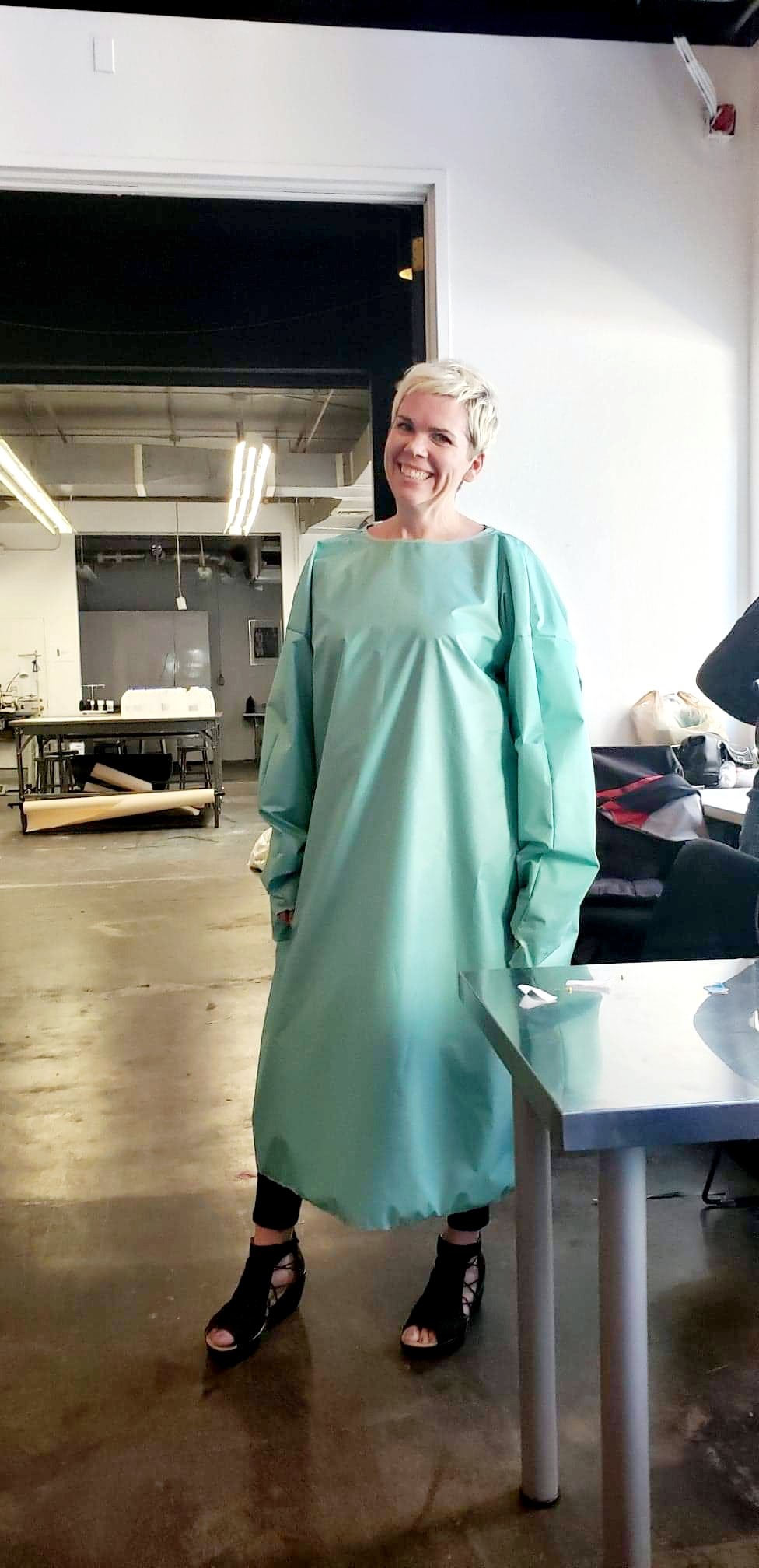
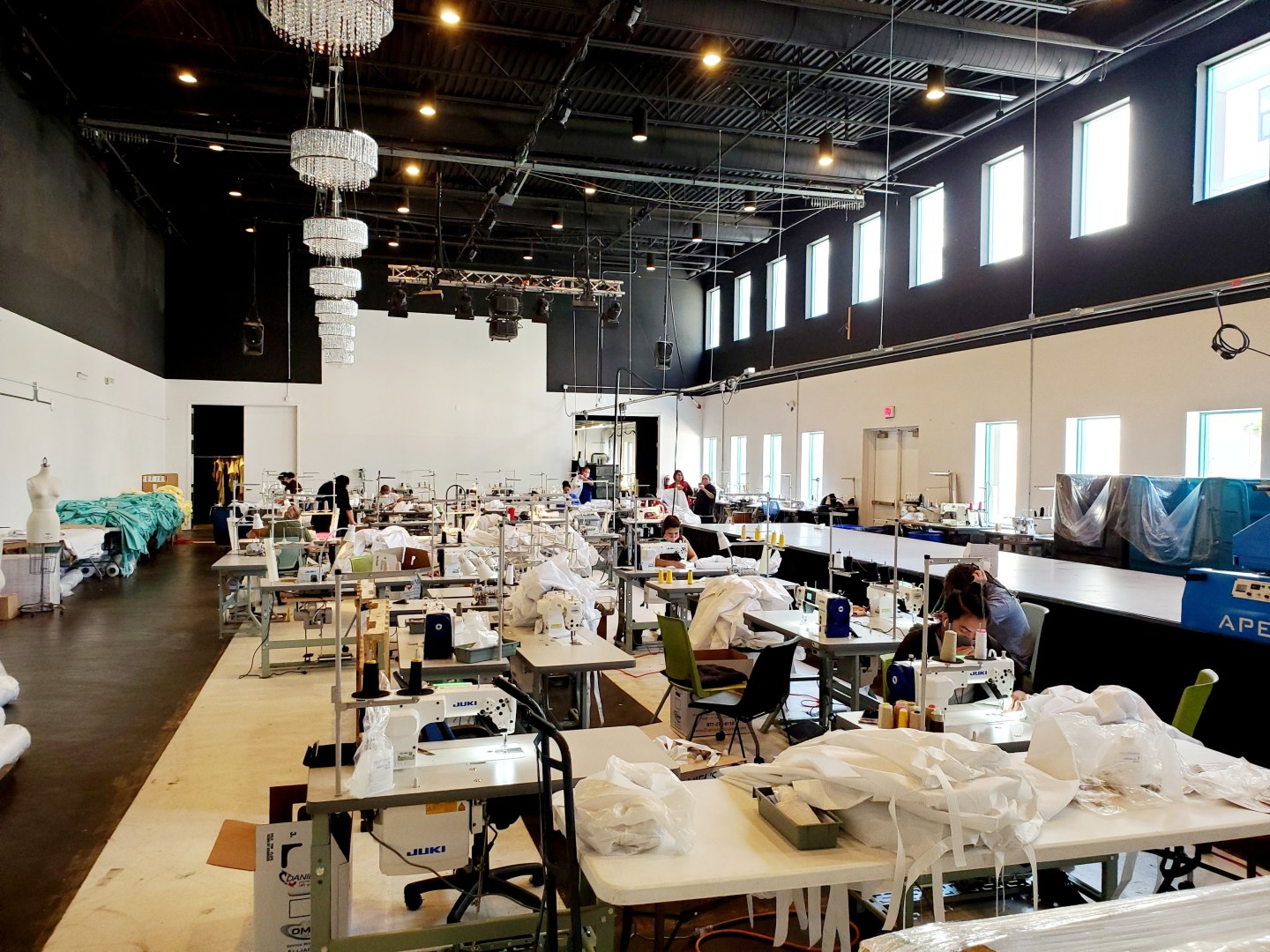
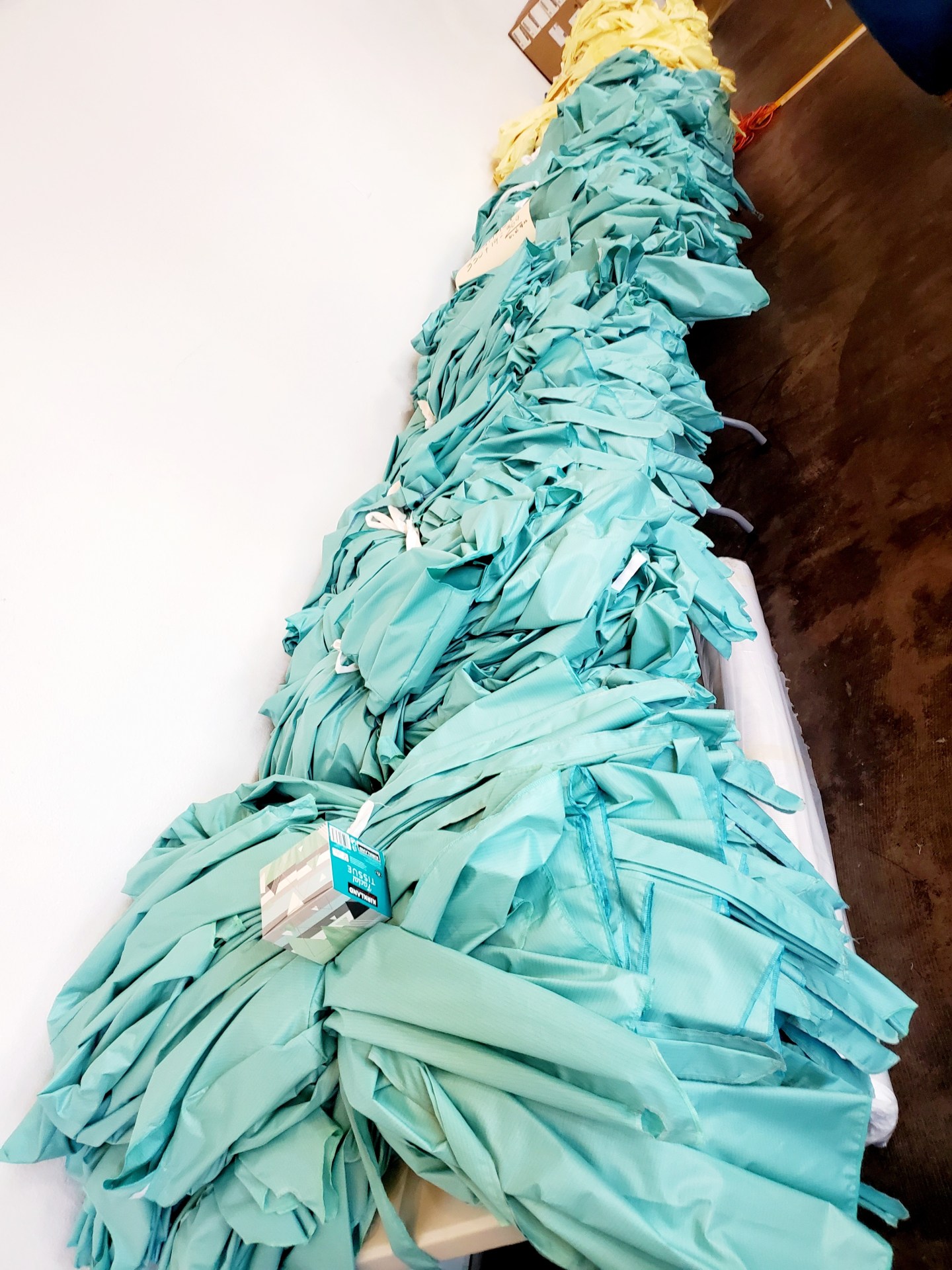
But when the pandemic hit and PPE shortages made headlines, Johnson says the incubator was bombarded with requests for help to make PPE because they “were the only local resource with the expertise, equipment, and experience to design and manufacture almost any sewn product.” So they cleared the runway—literally—immediately turning the entire showroom into a facility for producing FDA-approved reusable isolation gowns for healthcare facilities. As of the first week of July, tailors at FABRIC have made more than 80,000 of these sustainable medical gowns, which can be washed 100 times—the equivalent to 8,000,000 disposable gowns.
Fortune recently spoke with Johnson about what it was like to upend her entire business model, the challenges that might not be so obvious from the outside, and what it was like to develop an entirely new revenue stream during a public health crisis.
The following interview has been lightly edited and condensed for clarity.
Fortune: When did you first realize the COVID-19 pandemic would affect your business? Who first reached out for help with producing PPE?
Johnson: In mid-March, as COVID was really starting to make headlines, many businesses began to shut down and the PPE shortage quickly became the nation’s biggest concern.
As a fashion incubator helping hundreds of apparel entrepreneurs, FABRIC was the only resource in Arizona with the skills, equipment, experience, and personnel to design and manufacture almost any sewn product. We were making everything from leggings, bathing suits, and jeans, to dresses, bags, and even sewn product inventions at no-minimums to help startup brands. We had built a significant fashion community, been recognized with some exciting awards, and had made some awesome connections in our state’s public and private sector for the impact that our innovative incubator was making.
As desperate inquires for PPE naturally came flooding in from smaller healthcare facilities, we were also connected to larger facilities by various city and state officials, including the Arizona Commerce Authority and others. The first of the larger facilities to connect with us were Banner Health and Dignity Health.
What does the production line look like? How many people are working on this project? And where are the bulk of your PPE supplies going? Has that changed at all with the explosion of new COVID cases in Arizona as well as other states such as Texas, Florida, and California?
We wanted to make FDA-approved PPE that would protect health care workers, and since N95 masks were not a sewn product, we decided to focus on making FDA-approved, level two and level three reusable isolation gowns instead. These were in just as much demand as masks, and since cloth masks for the public could be made by anyone who could sew from home, the isolation gowns were proving to be the biggest need for the health care facilities.
Our small managerial team of six women, led by my co-founder Sherri Barry, created a pandemic task force. We locked ourselves in what we now call our War Room for about 18 hours to brainstorm how to pivot our model to help our healthcare heroes in this emergency crisis and simultaneously stay in business for the hundreds of brands who were counting on us. In collaboration with our non-profit, the AZ Apparel Foundation, we raised enough funds to obtain the equipment needed to transform our fashion runway into a PPE factory and acquire FDA certification in record time.
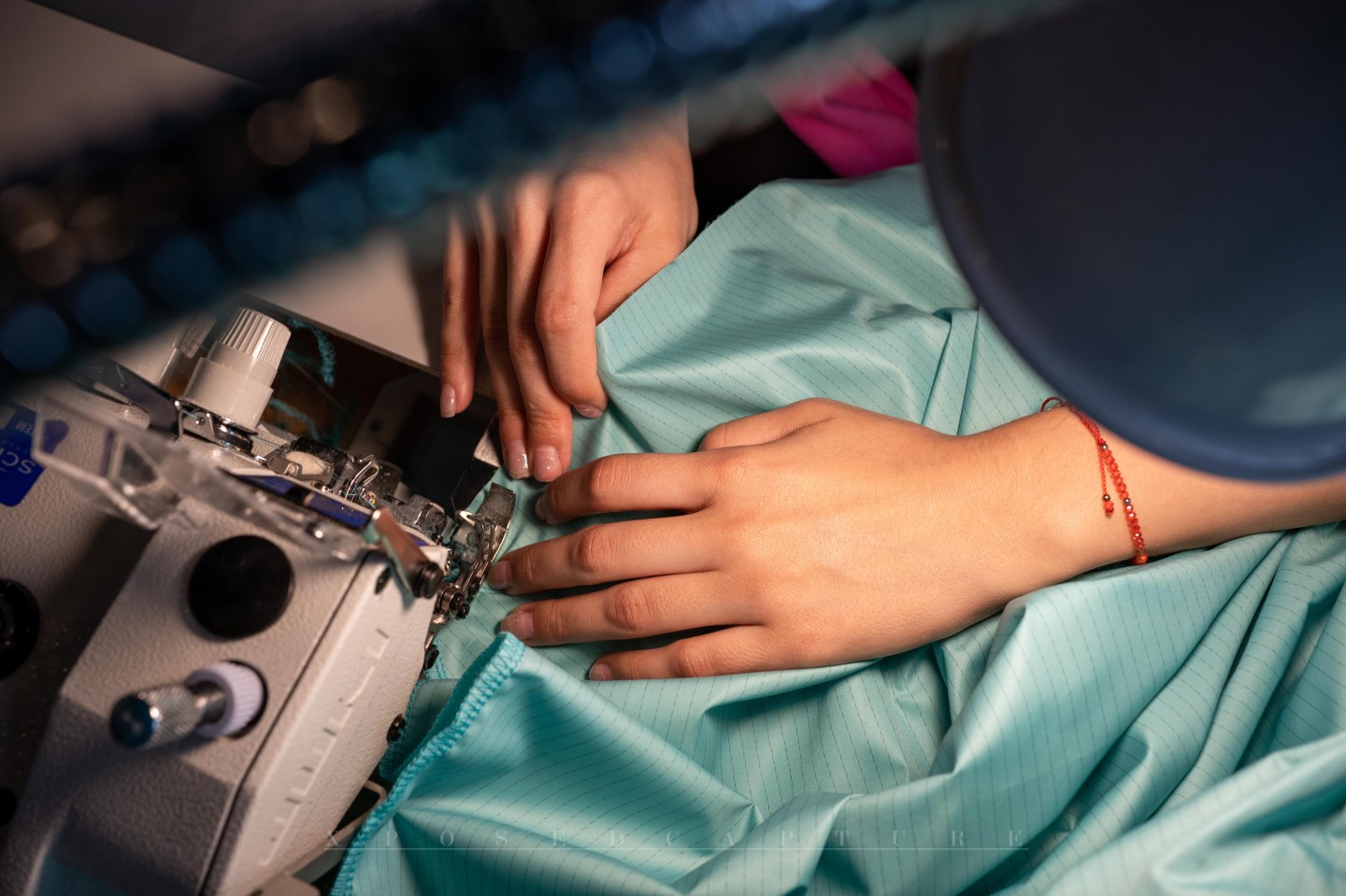
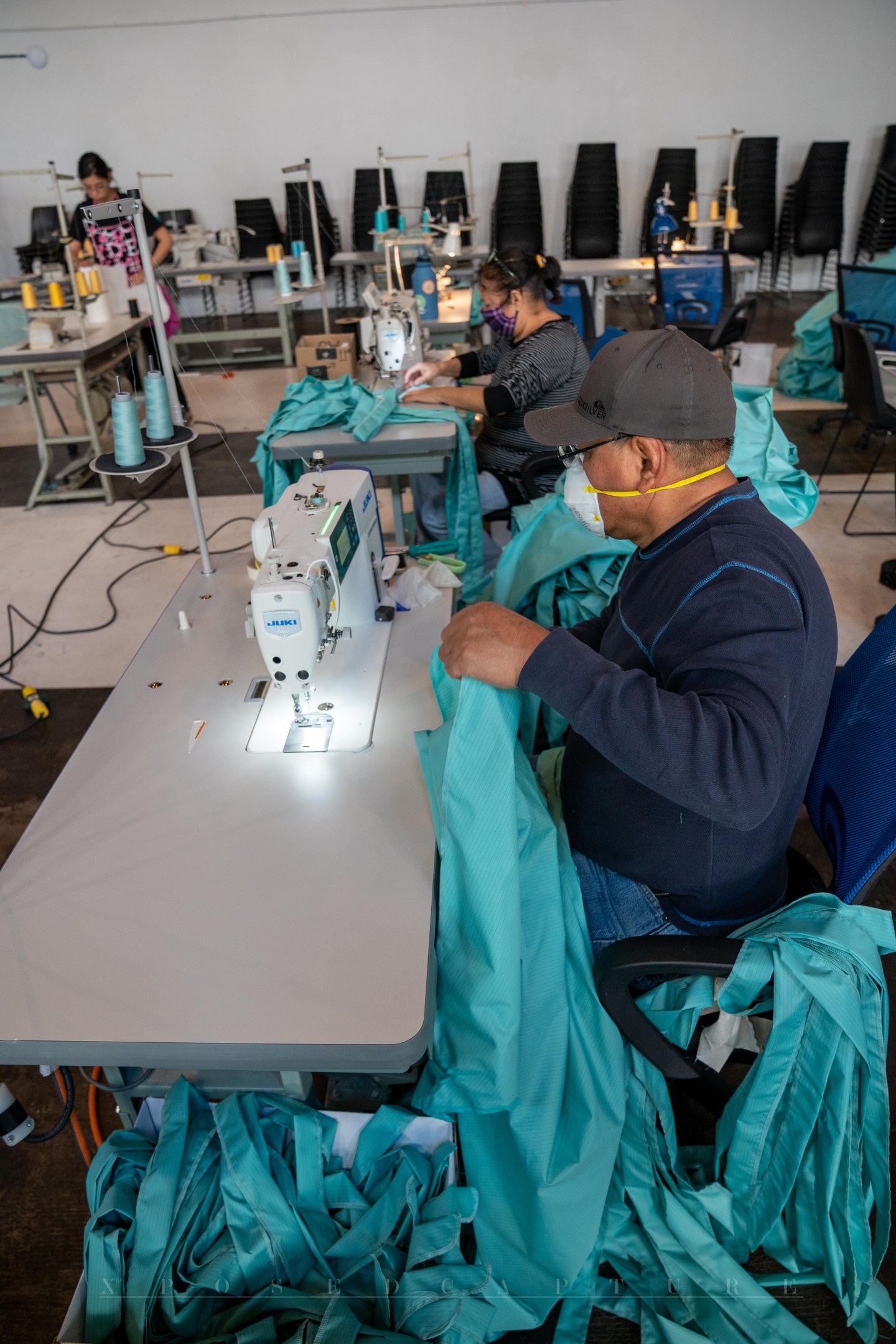
While simultaneously sourcing the scarce AAMI-approved materials and working with the doctors from each facility to design their own unique, ideal gown, we learned about lean manufacturing from the AZ Commerce Authority, hired about 50 more employees, and set up four production lines on our former runway. Each machine is placed strategically so that each sewing technician is six feet from the next, and they are all facing away from each other. As we built each line and filled them with employees, we immediately started filling very large orders for Banner and Dignity.
However, we also felt a social justice responsibility to address the needs of the smaller facilities as well as the Navajo Nation, who were seeing some of the highest rates of COVID cases in the country. We also created an open source project we called the 1 Million Gown Challenge in which we shared our design specs, instructions, pattern, and information on where to obtain a substantially equivalent material with the community so they could help create substantially equivalent gowns at home to fill these emergency needs. We’ve also trained and contracted out additional factories to help fill these large orders.
As of mid-July, we have made 80,000 reusable isolation gowns and each of these can be washed 100 times. This is equivalent to 8,000,000 disposable gowns so this is also a sustainable solution and if you factor in the per-use-price including the wash, they are also more affordable than disposable gowns. As COVID cases rise in Arizona and PPE demand keeps growing, we are faced with a sense of urgency to become more and more efficient and are adding overnight shifts starting this week and working on bringing on even more factories.
This was originally supposed to be a temporary turnaround for your business model, but it has since become permanent, at least for the duration of the pandemic. What motivated that shift? And what challenges has that shift presented?
Prior to the pandemic, many of the brands we have helped were growing and needed higher capacity manufacturing, so providing a local solution for these brands was already a topic of conversation. When the pandemic hit, we pivoted to help our community and our healthcare workers in this emergency crisis.
As we feverishly converted our fashion runway into a PPE factory, we knew that the additional machinery would allow us to eventually serve our community of designers/brands with higher capacity manufacturing, but we didn’t have the bandwidth to consider the logistics and think much beyond the pandemic at that time. Now well into the pandemic, not only is there no end in sight to filling PPE orders, but new apparel entrepreneurs who have been stuck at home since March are ready and eager to start their fashion brands so we are getting more inquiries for our regular fashion incubator services than ever.
While we are still trying to settle in to the new normal of manufacturing PPE while also offering our regular incubator services in one building, we are now tackling the logistics of how to move forward with these two different business models. We cannot continue to manufacture PPE in our current incubator building forever. The building isn’t set up for that, and we need a space with loading docks and much more square footage so that we can continue to add more machinery and staff. We also would like our FABRIC incubator to return to its original model one day. As a result of all of this, we’ve decided to officially establish the PPE manufacturing as its own entity called Reusa. We are also actively in the middle of acquiring a separate facility for Reusa.
On a personal note, whether we want to call it the New Normal or these anxious times, how have you been faring amid all this?
Thank you for asking this question. The pandemic has been hard on everyone in the world, and our team is definitely not immune. Checking in on each other is so important. While most people are dealing with isolation, loneliness, financial hardships, boredom, and other issues related to social distancing and business closures, our team has been dealing with the polar opposite, and this has also been challenging. We’ve worked more hours than ever before, and we’ve had to navigate exponential business growth while keeping our essential workers safe during a pandemic. Deprived of sleep and working at such a high stress level has come with its consequences.
Honestly, I would be lying if I didn’t admit that there have been times that I’ve personally been envious of my friends and family who are isolated at home with their families. However, the grass is always greener on the other side. I’ve spent the past two decades of my life creating the business of my dreams but it took an attitude shift to finally turn a corner with it in 2016. I had learned to be a “glass half full” person who believes in the power of gratitude. This new attitude had a powerful result in building my dream business and now its also helping me deal with anxieties of this pivot. I wouldn’t change a thing. I’m tired and anxious, but I’m grateful for the experience and for the opportunity to learn and push my own comfort level while doing something that is helping to save lives and benefit my community.