• Home
  • Latest
  • Fortune 500
  • Finance
  • Tech
  • Leadership
  • Lifestyle
  • Rankings
  • Multimedia

Trendingnow

1

Iran strikes 85 U.S. military sites in the Gulf, sparking a global selloff in stocks and a spike in the price of oil

2

Ex-PepsiCo CEO Indra Nooyi worked from midnight until 5 a.m. as a receptionist to pay for her Yale degree—and she says ‘respect went up’ because of it

3

Shark Tank's Kevin O'Leary says if he were 25 today, he'd chase these two booming opportunities in the world of AI

1

Iran strikes 85 U.S. military sites in the Gulf, sparking a global selloff in stocks and a spike in the price of oil

2

Ex-PepsiCo CEO Indra Nooyi worked from midnight until 5 a.m. as a receptionist to pay for her Yale degree—and she says ‘respect went up’ because of it

3

Shark Tank's Kevin O'Leary says if he were 25 today, he'd chase these two booming opportunities in the world of AI
Commentary

4 ways to close America’s huge racial ‘opportunity gap’

By
Suzanne P. Clark
Suzanne P. Clark
Down Arrow Button Icon
By
Suzanne P. Clark
Suzanne P. Clark
Down Arrow Button Icon
July 9, 2020, 4:30 AM ET
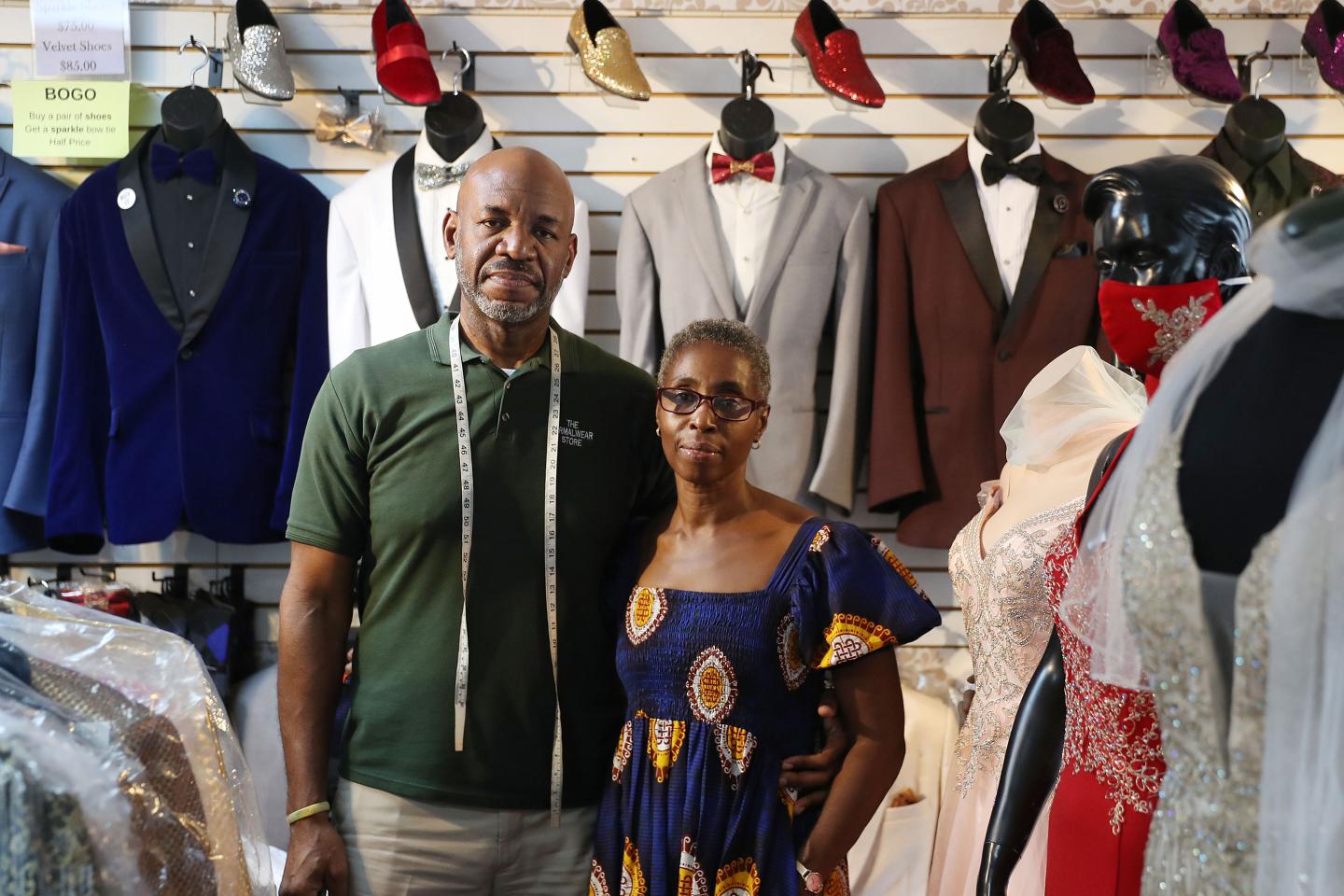
James Robinson and his wife Perlina Robinson pose for a portrait in The Formalwear store on Blackout Day 2020 on July 07, 2020 in Miami Gardens, Florida. They have owned the business for the last 22 years. Supporters of Blackout Day have committed to only spending money at black-owned businesses to showcase the economic power of the Black community
James Robinson and his wife Perlina Robinson pose for a portrait in The Formalwear store on Blackout Day 2020 on July 07, 2020 in Miami Gardens, Florida. They have owned the business for the last 22 years. Supporters of Blackout Day have committed to only spending money at black-owned businesses to showcase the economic power of the Black communityJoe Raedle—Getty Images
Add Fortune on Google for similar content.

The net worth of a typical Black family is only 10% of that of the typical white family, and the unemployment rate for Black Americans consistently has been double that of white Americans for four decades. These are just two of the outcomes resulting from long-standing systemic disadvantages that perpetuate an inequality of opportunity based on the color of one’s skin. 

This past month’s national dialogue on racial equality has brought many painful truths to the fore. Acknowledging these truths is important. Taking action to address them is essential. 

The U.S. Chamber of Commerce is the largest lobbying organization in the nation, representing businesses of all sizes across all sectors, touching every corner of our country. With that reach comes a responsibility to drive sustained action to eliminate systemic disadvantages. Convinced that our own previous efforts have been insufficient, we have committed to put the collective muscle of American business behind an urgent nationwide push for equality of opportunity.  

Two weeks ago, we convened more than 500 state and local chambers of commerce and business associations from across the country; business, government, academic, and civic leaders; and thousands of others for a National Summit on Equality of Opportunity. Informed by this dialogue, driven by data, and building upon years of advocacy, we are putting forward an action plan of policy solutions and best practices to help close opportunity gaps in four key areas: education, employment, entrepreneurship, and criminal justice reform.

First, addressing racial disparities in learning at every level of education is fundamental. 

All children deserve a strong K–12 foundation. Rather than making funding for schools a reflection of a community’s socioeconomic status, government should tie funding levels to student needs. Greater accountability and expanded choice would improve both school performance and student achievement.

Business and government should reexamine readiness assessments for all postsecondary paths—college, a certificate program, or a career. Additionally, our nation needs a way to recognize and accredit alternative pathways to careers and help people access and pay for these programs.

Second, closing opportunity gaps in employment can help reduce the Black unemployment rate, lift communities, and ensure that Black Americans are proportionately represented throughout our workforce.

The business community must prioritize diversity in the C-suite, on corporate boards, and in their talent pipelines, and the government can support these efforts. Employers should use data to analyze the diversity of their workforces and take necessary steps to improve performance. Business leaders also must expand their networks and create more pathways, including apprenticeships and mentorships for Black Americans.  

The federal government must ensure that funds across numerous programs reach persistently impoverished areas. The private sector should launch a broad, cross-sector campaign to promote impactful investment in these Opportunity Zones, and federal incentives should be expanded to promote local employment in low-income communities. 

Additionally, public-private partnerships to advance pay-for-performance job training programs should be expanded in areas with high unemployment. One example is the Chamber’s Talent Pipeline Management program linking job training to current and future jobs, which can be expanded to include more employers and help underserved communities. Coordinated efforts to make childcare more affordable and accessible would boost the impact of all these initiatives.

Next, tearing down barriers to entrepreneurship for Black Americans will help build wealth in families and communities, creating a virtuous cycle of new opportunity. 

Lack of access to capital is especially acute for Black entrepreneurs. Financial institutions, private equity firms, and venture capitalists all have a role to play in improving the flow of capital to Black innovators and businesses. Following the model of the successful 2012 JOBS Act, Congress should initiate a formal process through the SEC to develop recommendations for changes in existing law and regulations that would improve access to capital for Black-owned businesses.

The public and private sectors must work together to establish a streamlined and uniform process for certifying Black-owned businesses. Unnecessary state occupational licenses—often costly, time-consuming, and offering little benefit to consumers—should be eliminated. Congress also should increase support for the Minority Business Development Agency, enhancing government contracting opportunities, and the private sector should work closely with the agency to provide additional assistance to Black-owned businesses.

Utilizing a data-driven approach, the private sector also should establish best practices and resources to increase the participation of Black-owned enterprises in corporate supply chains. All of us can help by simply patronizing diverse businesses and promoting them within our communities. 

Finally, the criminal justice system must be reformed so that once someone pays his or her debt to society, they really have another chance for a better life. 

Federal law should be changed to allow prisoners to get an education through Pell Grants while serving time. This will improve rehabilitation, reentry, and post-prison job prospects. Federal and state governments should reform and more narrowly target licensing and hiring restrictions to provide a means to recognize rehabilitation. Let’s get rid of requirements for disclosure of past criminal convictions on initial job applications, which leads to otherwise qualified candidates being excluded from the hiring process.  

We also encourage businesses to see the opportunity in second-chance hiring and replicate best practices, such as those developed by the Society for Human Resource Management, so they can confidently hire employees with a criminal background. These and other policy solutions can help put people back in the workforce, not back in jail or on the margins of society.

Many leaders are asking if this moment is different—if the passion of this moment can be captured to create real change. We say yes. Yes, if leaders rally around these priorities. 

We call on a united business community to lead by example and put the pressure on elected officials to do their part. If we do that, this moment can be a true turning point for equality of opportunity for all. 

Suzanne P. Clark is president of the U.S. Chamber of Commerce.

About the Author
By Suzanne P. Clark
See full bioRight Arrow Button Icon
Add Fortune on Google for similar content.

Latest in Commentary

Finance
Lorem ipsum dolor sit amet, consectetur adipiscing elit, sed do eiusmod tempor incididunt ut labore et dolore magna aliqua. Ut enim ad minim veniam
By Fortune Editors
October 20, 2025
Finance
Lorem ipsum dolor sit amet, consectetur adipiscing elit, sed do eiusmod tempor incididunt ut labore et dolore magna aliqua. Ut enim ad minim veniam
By Fortune Editors
October 20, 2025
Finance
Lorem ipsum dolor sit amet, consectetur adipiscing elit, sed do eiusmod tempor incididunt ut labore et dolore magna aliqua. Ut enim ad minim veniam
By Fortune Editors
October 20, 2025
Finance
Lorem ipsum dolor sit amet, consectetur adipiscing elit, sed do eiusmod tempor incididunt ut labore et dolore magna aliqua. Ut enim ad minim veniam
By Fortune Editors
October 20, 2025
Finance
Lorem ipsum dolor sit amet, consectetur adipiscing elit, sed do eiusmod tempor incididunt ut labore et dolore magna aliqua. Ut enim ad minim veniam
By Fortune Editors
October 20, 2025
Finance
Lorem ipsum dolor sit amet, consectetur adipiscing elit, sed do eiusmod tempor incididunt ut labore et dolore magna aliqua. Ut enim ad minim veniam
By Fortune Editors
October 20, 2025

Most Popular

Finance
Lorem ipsum dolor sit amet, consectetur adipiscing elit, sed do eiusmod tempor incididunt ut labore et dolore magna aliqua. Ut enim ad minim veniam
By Fortune Editors
October 20, 2025
Finance
Lorem ipsum dolor sit amet, consectetur adipiscing elit, sed do eiusmod tempor incididunt ut labore et dolore magna aliqua. Ut enim ad minim veniam
By Fortune Editors
October 20, 2025
Finance
Lorem ipsum dolor sit amet, consectetur adipiscing elit, sed do eiusmod tempor incididunt ut labore et dolore magna aliqua. Ut enim ad minim veniam
By Fortune Editors
October 20, 2025
Finance
Lorem ipsum dolor sit amet, consectetur adipiscing elit, sed do eiusmod tempor incididunt ut labore et dolore magna aliqua. Ut enim ad minim veniam
By Fortune Editors
October 20, 2025
Finance
Lorem ipsum dolor sit amet, consectetur adipiscing elit, sed do eiusmod tempor incididunt ut labore et dolore magna aliqua. Ut enim ad minim veniam
By Fortune Editors
October 20, 2025
Finance
Lorem ipsum dolor sit amet, consectetur adipiscing elit, sed do eiusmod tempor incididunt ut labore et dolore magna aliqua. Ut enim ad minim veniam
By Fortune Editors
October 20, 2025
Fortune Secondary Logo
Rankings
  • 100 Best Companies
  • Fortune 500
  • Global 500
  • Fortune 500 Europe
  • Most Powerful Women
  • World's Most Admired Companies
  • See All Rankings
  • Lists Calendar
Sections
  • Finance
  • Fortune Crypto
  • Features
  • Leadership
  • Health
  • Commentary
  • Success
  • Retail
  • Mpw
  • Tech
  • Lifestyle
  • CEO Initiative
  • Asia
  • Politics
  • Conferences
  • Europe
  • Newsletters
  • Personal Finance
  • Environment
  • Magazine
  • Education
Customer Support
  • Frequently Asked Questions
  • Customer Service Portal
  • Privacy Policy
  • Terms Of Use
  • Single Issues For Purchase
  • International Print
Commercial Services
  • Advertising
  • Fortune Brand Studio
  • Fortune Analytics
  • Fortune Conferences
  • Business Development
  • Group Subscriptions
About Us
  • About Us
  • Press Center
  • Work At Fortune
  • Terms And Conditions
  • Site Map
  • About Us
  • Press Center
  • Work At Fortune
  • Terms And Conditions
  • Site Map
  • Facebook icon
  • Twitter icon
  • LinkedIn icon
  • Instagram icon
  • Pinterest icon

Latest in Commentary

t
CommentaryEducation
AI is about to disrupt millions of jobs. A century ago, America’s answer was to build a new high school
By Tim KnowlesJuly 8, 2026
20 hours ago
amit
CommentaryVenture Capital
Physical AI’s $50 trillion opportunity requires long-term conviction, but the payoff is huge 
By Amit ChaturvedyJuly 8, 2026
22 hours ago
heat
Commentaryclimate change
McKinsey Global Institute: Climate planning has prioritized floods. Heat demands equal attention
By Sylvain Johansson, Mekala Krishnan, Kanmani Chockalingam and Annabel FarrJuly 7, 2026
2 days ago
j
CommentaryEducation
AI didn’t break higher education—It exposed the credential trap
By Jason BenedictJuly 7, 2026
2 days ago
e
CommentaryEntrepreneurship
I skipped college and founded a company at 18. Several exits later, this is what I learned
By Eric FranciaJuly 7, 2026
2 days ago
mw
Commentaryregulation
Virtual Assets Regulatory Authority CEO: Finance’s AI future moves at the speed of its slowest regulator
By Matthew WhiteJuly 7, 2026
2 days ago

Most Popular

Iran strikes 85 U.S. military sites in the Gulf, sparking a global selloff in stocks and a spike in the price of oil
Newsletters
Iran strikes 85 U.S. military sites in the Gulf, sparking a global selloff in stocks and a spike in the price of oil
By Jim EdwardsJuly 8, 2026
19 hours ago
Ex-PepsiCo CEO Indra Nooyi worked from midnight until 5 a.m. as a receptionist to pay for her Yale degree—and she says ‘respect went up’ because of it
Success
Ex-PepsiCo CEO Indra Nooyi worked from midnight until 5 a.m. as a receptionist to pay for her Yale degree—and she says ‘respect went up’ because of it
By Preston ForeJuly 6, 2026
3 days ago
Shark Tank's Kevin O'Leary says if he were 25 today, he'd chase these two booming opportunities in the world of AI
AI
Shark Tank's Kevin O'Leary says if he were 25 today, he'd chase these two booming opportunities in the world of AI
By Marco Quiroz-GutierrezJuly 5, 2026
4 days ago
Current price of oil as of July 8, 2026
Personal Finance
Current price of oil as of July 8, 2026
By Joseph HostetlerJuly 8, 2026
17 hours ago
Billionaires John and Laura Arnold have already donated nearly half their wealth. Now they're funding a hunt for the health risks of sports betting
Success
Billionaires John and Laura Arnold have already donated nearly half their wealth. Now they're funding a hunt for the health risks of sports betting
By Sydney LakeJuly 8, 2026
22 hours ago
Investment firm's cofounder sues after being fired for neglecting the in-person work mandate he signed, saying it applies to employees not owners
Law
Investment firm's cofounder sues after being fired for neglecting the in-person work mandate he signed, saying it applies to employees not owners
By Jason MaJuly 5, 2026
3 days ago

© 2026 Fortune Media IP Limited. All Rights Reserved. Use of this site constitutes acceptance of our Terms of Use and Privacy Policy | CA Notice at Collection and Privacy Notice | Do Not Sell/Share My Personal Information
FORTUNE is a trademark of Fortune Media IP Limited, registered in the U.S. and other countries. FORTUNE may receive compensation for some links to products and services on this website. Offers may be subject to change without notice.