It’s tempting to think that the coronavirus pandemic sees no color. This is, after all, a pathogen. A virus. A virus infects a host, and it spreads with no regard for who or what unto it may latch.
But the numbers tell a different story—a tale that’s a depressing continuation of longstanding health care disparities for people of color in general and black Americans in particular.
The racial COVID conundrum
COVID-19 has a disproportionate impact on black Americans. That’s a basic reality that’s become clear over the past few months of the pandemic. While black people constitute just 13% of the U.S. population, nearly one in four COVID-19 deaths where the patient’s race is known is black, according to the COVID Tracking Project’s racial data initiative.
Of the 20 U.S. counties with the highest COVID-related death rates, eight of them were regions with predominantly black residents.
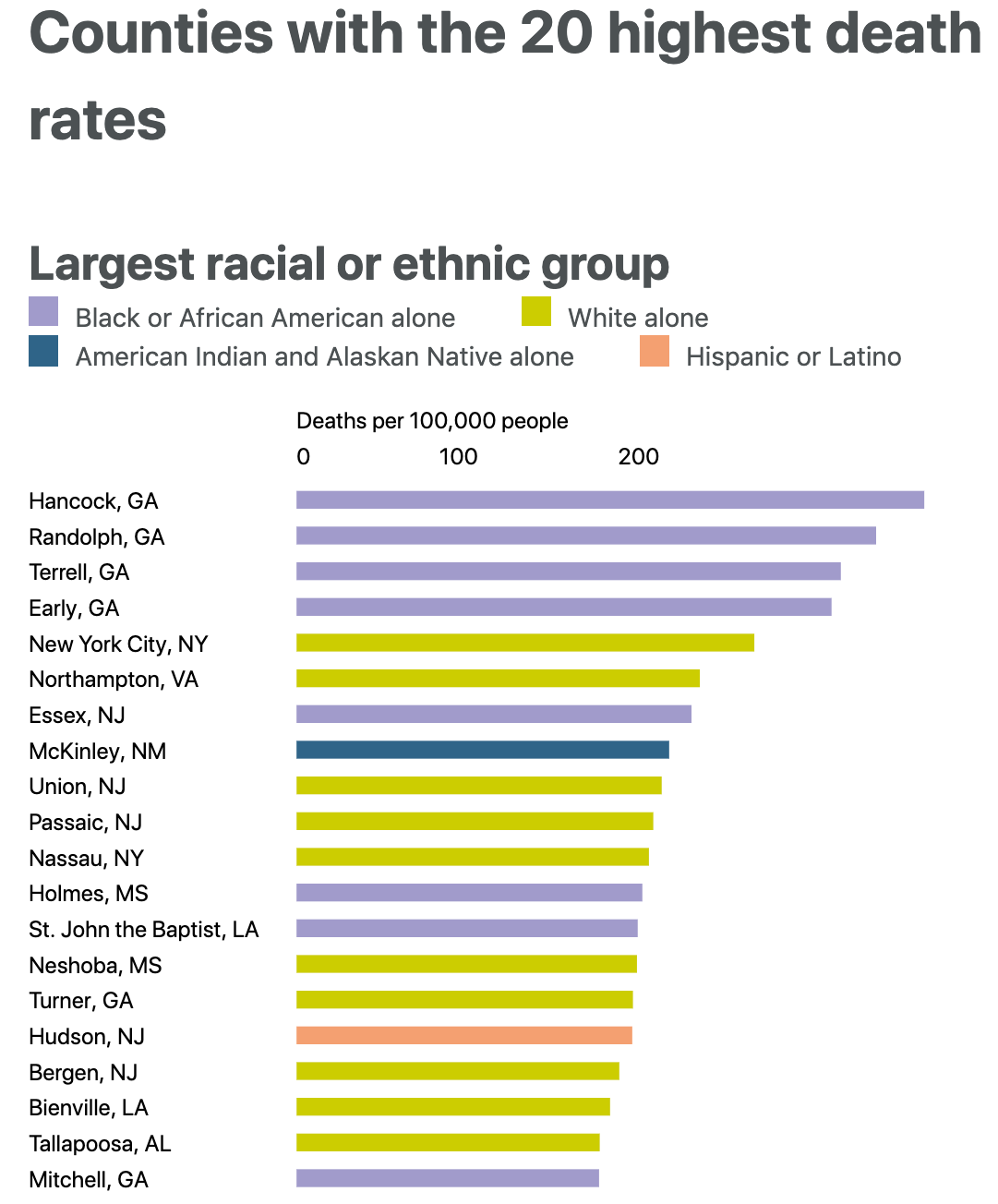
Surveys underscore how much further the crisis extends. “You see these disparities play out particularly acutely during the COVID crisis,” says Jennifer Benz, principal research scientist and deputy director of The Associated Press-NORC Center for Public Affairs Research at the University of Chicago. “One of our key measures that illustrates the racial and ethnic disparities is asking people if they have a family member or close friend who they know has died from COVID. And the differences are incredibly stark.”
Across the U.S., about 4% of white Americans surveyed know somebody who’s died from COVID-19 versus 11% of black Americans. It can vary from region to region, and the disparity is even larger in certain areas as reflected in the COVID Tracking Project data. In Atlanta, 4% of whites versus 14% of blacks know someone who has died from COVID. The figures are similar in Baltimore and even worse in Birmingham.
The precise reason for these stark disparities is nebulous. Genetics may play a part, to an extent. But numerous other factors may come into play.
“The outcomes are so much worse when people have other pre-existing conditions. Decades of research have shown the disproportionate rate at which black Americans have heart disease, diabetes, hypertension, and other such conditions,” says Benz. “And then you begin to see how all these longstanding inequities fit together in the puzzle that is COVID.”
A perfect storm of health inequities
The “nature versus nurture” debate has raged for decades. If someone develops heart disease or another chronic condition, is it their fault because they ostensibly chose to eat unhealthy foods, smoke cigarettes, drink alcohol, or not exercise? Or is that a far more complicated issue that stems from years of systemic inequities?
Bernard Tyson, the late CEO of nonprofit health giant Kaiser Permanente, was an ardent evangelist for the theory of the “social determinants of health” which lays significant blame on the latter proposition.
“We think all the ingredients are in place to move into other lanes that are directly linked to the health and wellbeing of people that would not fit neatly under the category of ‘health care,’ but that are part of the whole ecosystem of health,” he told Fortune a year before his untimely death. “And we now know that the social determinants of health—many of the other categories that we haven’t really addressed concretely—impact a person’s health much more than medical care. One of the big ones is the thing called the zip code. Literally, you can see the differences in the life expectancy in one zip code versus another.”
“Somebody’s zip code can be so predictive of what health outcomes they face. It’s not just individual choices, but one’s environment and the policy structures within which they live their lives,” adds Benz.
A zip code can mean the difference between living in a region with abundant access to supermarkets that sell fresh produce versus food deserts where one must rely on a corner store or bodega for nutrition. A lack of socioeconomic opportunity may spell the difference between being able to prepare a home cooked meal or working the graveyard shift. A 2018 Environmental Protection Agency (EPA) analysis found that black people “had 1.54 times higher burden” in exposure to PM 2.5, an air pollutant created by burning fossil fuels that’s linked with heart disease, lung disease, and generally shorter life spans.
In the COVID era, these are all factors that play into the inequities clearly on display.
A persisting history of medical discrimination
Americans have swung sharply in support of the Black Lives Matter movement in the wake of George Floyd’s killing by a white police officer. A survey by Fortune and Deloitte of 222 CEOs found that 62% of the chief executives are planning tangible policy challenges in their workplaces as a response to the protests and unrest.
Coronavirus cases have risen as states reopen, and some officials have pointed to the impact of the socially undistanced Black Lives Matters protests. Officials have encouraged protestors to isolate, wear masks, and get tested after attending group events—but black Americans are less likely to have access to testing facilities. It’s also unclear whether or not an open air protest where people are properly masked or distanced and taking other precautions is nearly as much of a problem as being in enclosed spaces unmasked.
The public cognizance of systemic racism when it comes to police brutality, though, doesn’t appear to extend to medicine.
“A lot of Americans aren’t even aware that these disparities in health care exist,” says Benz. University of Chicago’s NORC conducted a series of studies in the early 2000s and 2010s finding that while more than 70% of respondents believed black people were treated more unfairly than white people when it came to interactions with police, just 42% said the same of access to health care.
Multiple studies paint a different reality. Black Americans consistently face fewer opportunities to get medical care and, even if they do, tend to receive substandard care or face discrimination based on antiquated stereotypes and communication barriers.
“Physicians use clusters of information in making diagnostic and other complex judgments that must be arrived at without the luxury of the time and other resources to collect all the information that might be relevant,” reads a sweeping report by the Institute of Medicine (US) Committee on Understanding and Eliminating Racial and Ethnic Disparities in Health Care. “These conditions of time pressure and resource constraints are common to many clinical encounters, and map closely onto those identified as producing negative outcomes due to lack of information, to stereotypes, and to prejudice.”
A separate study from Johns Hopkins concludes that “communication skills training programs targeting emotion-handling and rapport-building behaviors are promising strategies to reduce disparities in health care and to enhance trust among ethnic minority patients.”
In other words: A largely white physician force doesn’t necessarily know the best ways to interact with black patients, and that leads to an inherent dearth of trust—the beating heart of medical decision-making.
And then there’s access to health care itself. While the Affordable Care Act, also known as Obamacare, significantly ramped up government programs such as Medicaid, the insurance option for poor or disabled Americans, its benefits were asymmetric. States had the option to choose to expand Medicaid under the law. The few states which have not expanded Medicaid tend to be poor states in the South, which has an outsize effect on communities of color, according to the nonpartisan Kaiser Family Foundation.
Then there were the 2.3 million Americans who fell into the so-called “coverage gap” where they made just enough money not to qualify for Medicaid but not quite enough to receive Obamacare’s subsidies for individual private plans.
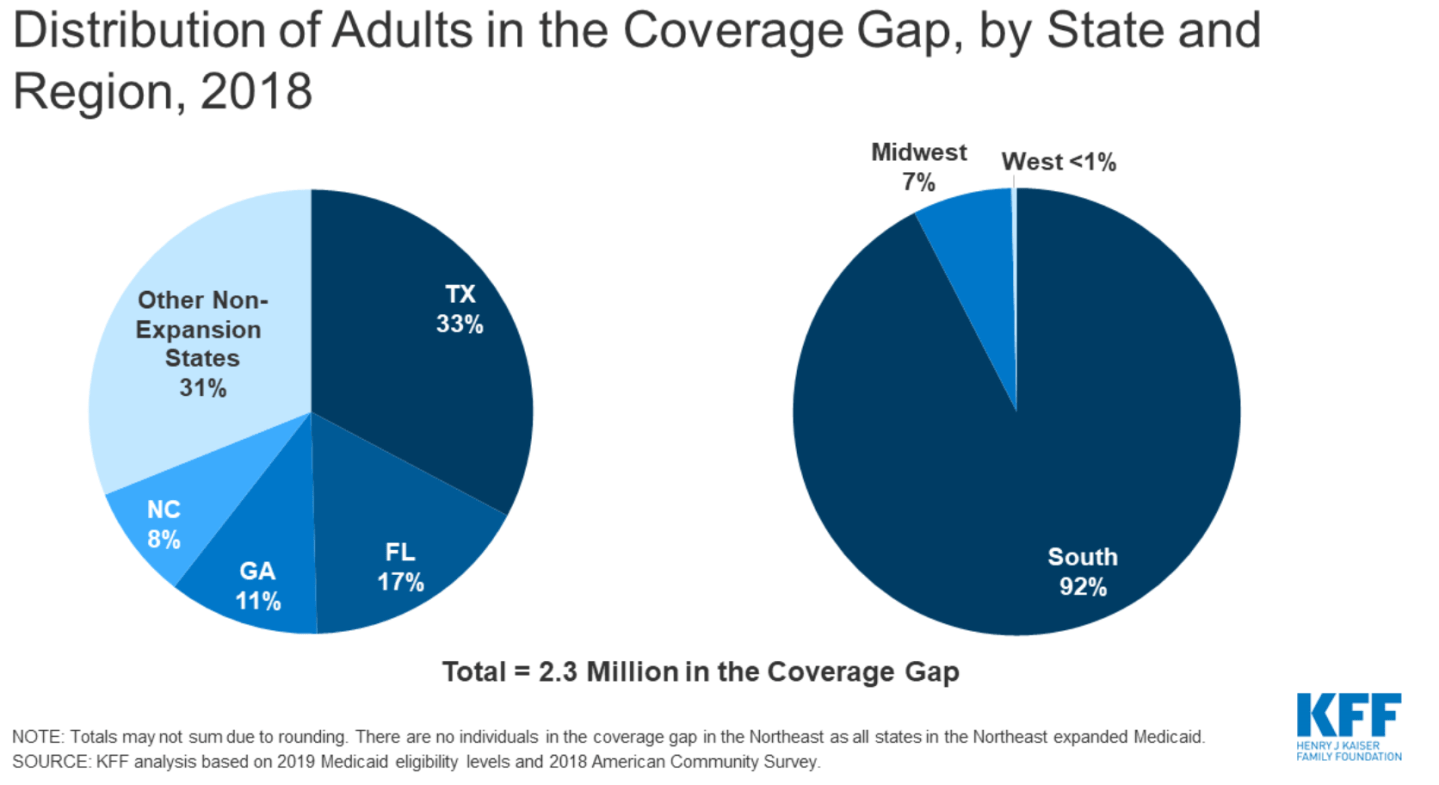
Southern states with large black populations, particularly Texas and Florida, have some of the biggest gaps in coverage.
The financial catastrophe wrought by the coronavirus pandemic certainly hasn’t made things easier. Nearly half of Americans receive health insurance through their employer, a result of a series of historical accidents which have linked insurance to having a job.
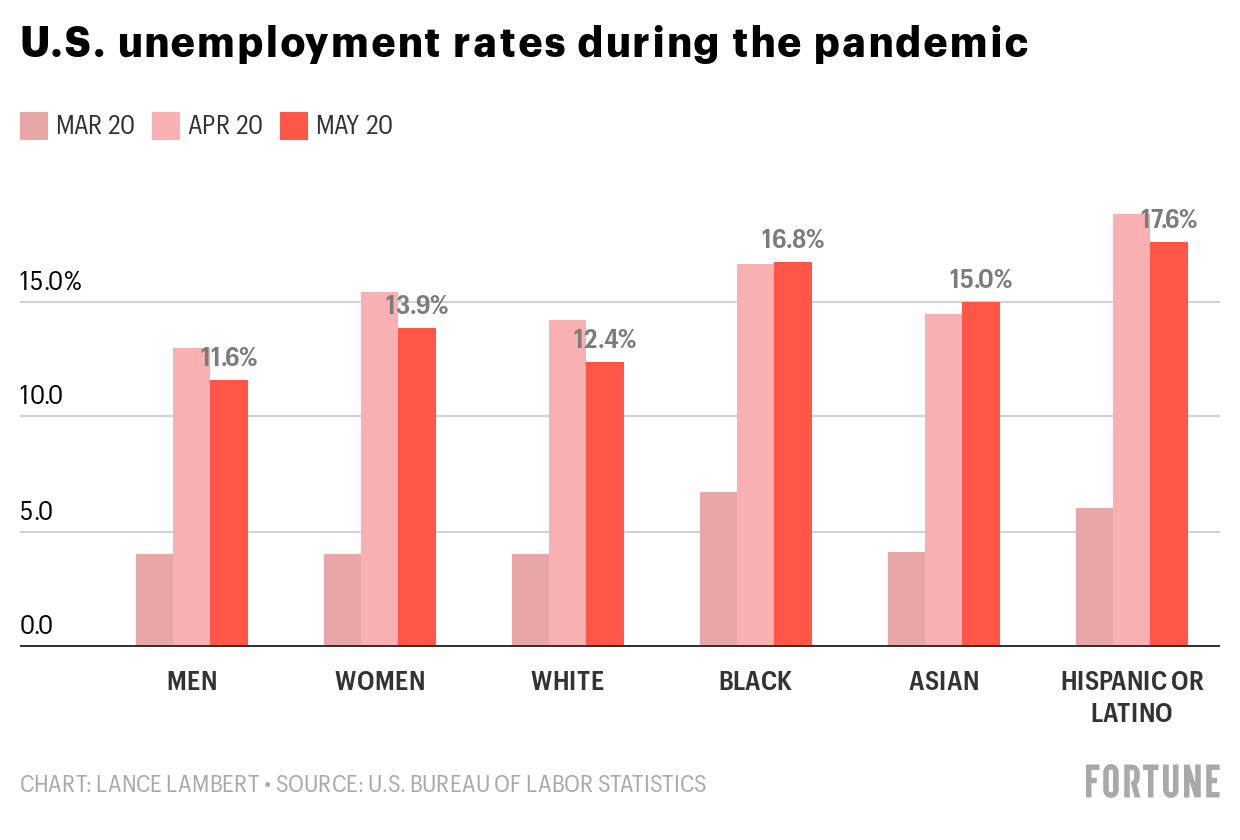
The most recent federal jobs report found that black Americans, and black women in particular, have borne the brunt of the unemployment crisis. While the unemployment rate dipped from 14.2% to 12.4% for white people in May, it rose from 16.7% to 16.8% for black people.
There’s no doubt that health is based on a combination of choice and chance. Our biological machinery can lead to arbitrary outcomes which are the fault of no one. But for many black Americans, the “choices” were made by others on their behalf long ago.