• Home
  • Latest
  • Fortune 500
  • Finance
  • Tech
  • Leadership
  • Lifestyle
  • Rankings
  • Multimedia
CommentaryInsurance

How we can set up America’s insurance system for a future pandemic

By
Daniel S. Glaser
Daniel S. Glaser
Down Arrow Button Icon
By
Daniel S. Glaser
Daniel S. Glaser
Down Arrow Button Icon
June 4, 2020, 7:00 PM ET
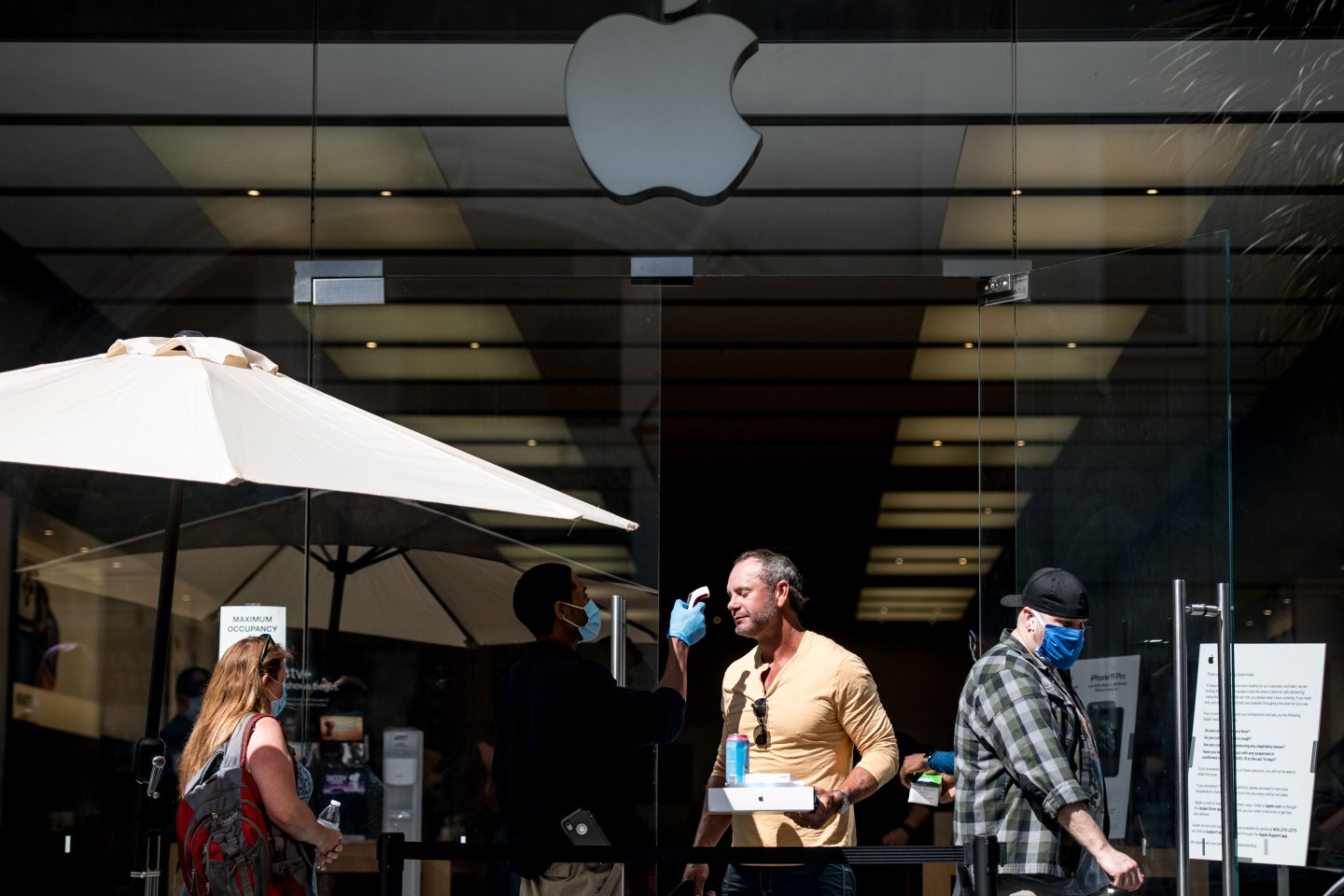
temperature check outside an Apple store
Apple Re-Opens Retail Store In Charleston, SC Amid COVID-19 Pandemic CHARLESTON, SC - MAY 13: A security guard checks a customers temperature outside the Apple Store on May 13, 2020 in Charleston, South Carolina. Customers had temperatures taken and were required to wear masks at the store, also reopening locations in Idaho, Alabama, and Alaska following forced pandemic closures. (Photo by Sean Rayford/Getty Images)Sean Rayford—Getty Images

We’re living through the unprecedented arrival of two black swans resulting from COVID-19: a double wallop of human suffering and a global lockdown. Businesses are experiencing losses that outpace any government support they may receive, and there is considerable debate over the role that insurance should play in covering this economic damage.

Insurers will certainly pay billions of dollars in coronavirus-related losses across a wide number of policies. However, not every policy will apply, and some policyholders will be disappointed. The insurance sector’s response should not end there. Instead we should collectively push to create solutions that enhance resilience. The scale of this challenge requires an approach that incorporates the efforts of insurers, government, and policyholders to develop the right playbook for any future pandemic.

Marsh, our insurance brokerage unit, helps companies find appropriate policies. As such, we could benefit financially from the advice offered here.

Insurance gives businesses the needed confidence to open their doors and take entrepreneurial risks. In the case of pandemics, insurance can help reduce widespread risk and build resilience to prevent future economic devastation on the scale we’ve seen recently.

The reality is that pandemic coverage has existed for a long time, but it has always been expensive and relatively rare; it’s often explicitly excluded from various insurance policies. The reason is grounded in both math and psychology: The payouts, while sporadic, can be so enormous they dramatically exceed insurers’ capacity to bear them. While most insurance policies cover events that may impact a single company (such as a fire) or region (like a hurricane), pandemics can impact the whole world. On the psychology side, it’s always harder to convince a company to buy insurance that protects against something that hasn’t happened in a hundred years and seems theoretical. Pandemic insurance has suffered from both supply and demand limitations.

While we can’t rewrite history, we can work together to underwrite a better future—and we should start immediately. Recent research from the World Economic Forum (in partnership with Marsh & McLennan and Zurich Insurance Group) found, “Pandemics have traditionally suffered from a panic-neglect cycle. Quiet periods see no action, early warnings of an outbreak tend to be overlooked, significant response and funding are late and uncoordinated, and valuable lessons from the crisis are not institutionalized.” In fighting COVID-19, we are rapidly developing both drug therapies and vaccines; let’s think about pandemic insurance the same way.

One institutionalized lesson to learn right now is that we can boost our economic resilience by forging a meaningful pandemic insurance system. Doing so will require shared action from the insurance sector, the federal government, and policyholders.

Robust national pandemic management needs insurers, backed by the federal government, to write pandemic insurance policies and brokers to contribute their risk knowledge and infrastructure. Widespread pandemic coverage would make the insurance sector the first line of economic response in future outbreaks. 

Relying on existing insurance processes to pay losses would improve on the operational scramble we’ve seen plague efforts like the Paycheck Protection Program. Increased insurance coverage will also help banks and other capital providers better understand and price risk and more confidently inject equity in vulnerable sectors.

The U.S. government is the only entity with the financial resources to help close the pandemic coverage gap. The government already plays a role insuring against certain widespread risks that impact our national well-being. It’s clear that pandemics should be among those risks, and there’s a debate underway over which model would work best.

Some in the insurance industry favor modeling a pandemic risk insurance program after the National Flood Insurance Program, under which the government assumes sole risk for flooding damages in certain communities. This is a potential solution, but having the government be the only provider of pandemic insurance may not result in sufficient societal and economic resilience. We need the market dynamics of the private insurance sector to help promote risk mitigation strategies and actively engage policyholders through education and incentives to lower their risks.

Behavioral economics and recent history indicate that some private capital should still be on the line. After the 9/11 attacks, Congress passed the Terrorism Risk Insurance Act, which created a federal backstop for insurance claims arising from terrorist attacks. But the government did not assume all responsibility on its own. As a result, insurance companies wrote terrorism policies, businesses improved their security practices, and the country is more resilient to the threat. 

Fortunately, the hesitance among some insurers to deploy capital is far from universal: There are a number of carriers that are willing to put private capital at risk so long as there is a strong government backstop. We work with many of them to help our clients manage risk. 

With the right public-private solution, policyholders will take significant steps to bend the risk curve in collaboration with carriers, brokers, and risk advisers. While the world waits for a COVID-19 vaccine, all stakeholders must be part of ensuring that once this pandemic is eradicated, we remain vigilant against future outbreaks. 

The new normal in manufacturing will likely include more geographically diversified supply chains. Stores and restaurants will shift to contactless payment. Businesses of all kinds will have infrastructure to support remote work or social distancing, new standards for cleaning facilities, and plans to be able to diagnose their employees daily. These steps will reduce the cost of future pandemic insurance and help prevent future outbreaks from reaching the scale of COVID-19.

One lesson of the coronavirus is that we all underestimated our susceptibility to a pandemic and the domino effect it would have on our global economy. Certain risks—like terrorism, massive cyberattacks, and pandemics—are too big for government or the private sector to manage alone and too important to ignore. 

A strong pandemic insurance system can make us more resilient to risk and avoid the panic-neglect cycle—and inspire more economic confidence into the future.

Daniel S. Glaser is CEO of Marsh & McLennan.

About the Author
By Daniel S. Glaser
See full bioRight Arrow Button Icon

Latest in Commentary

Finance
Lorem ipsum dolor sit amet, consectetur adipiscing elit, sed do eiusmod tempor incididunt ut labore et dolore magna aliqua. Ut enim ad minim veniam
By Fortune Editors
October 20, 2025
Finance
Lorem ipsum dolor sit amet, consectetur adipiscing elit, sed do eiusmod tempor incididunt ut labore et dolore magna aliqua. Ut enim ad minim veniam
By Fortune Editors
October 20, 2025
Finance
Lorem ipsum dolor sit amet, consectetur adipiscing elit, sed do eiusmod tempor incididunt ut labore et dolore magna aliqua. Ut enim ad minim veniam
By Fortune Editors
October 20, 2025
Finance
Lorem ipsum dolor sit amet, consectetur adipiscing elit, sed do eiusmod tempor incididunt ut labore et dolore magna aliqua. Ut enim ad minim veniam
By Fortune Editors
October 20, 2025
Finance
Lorem ipsum dolor sit amet, consectetur adipiscing elit, sed do eiusmod tempor incididunt ut labore et dolore magna aliqua. Ut enim ad minim veniam
By Fortune Editors
October 20, 2025
Finance
Lorem ipsum dolor sit amet, consectetur adipiscing elit, sed do eiusmod tempor incididunt ut labore et dolore magna aliqua. Ut enim ad minim veniam
By Fortune Editors
October 20, 2025

Most Popular

Finance
Lorem ipsum dolor sit amet, consectetur adipiscing elit, sed do eiusmod tempor incididunt ut labore et dolore magna aliqua. Ut enim ad minim veniam
By Fortune Editors
October 20, 2025
Finance
Lorem ipsum dolor sit amet, consectetur adipiscing elit, sed do eiusmod tempor incididunt ut labore et dolore magna aliqua. Ut enim ad minim veniam
By Fortune Editors
October 20, 2025
Finance
Lorem ipsum dolor sit amet, consectetur adipiscing elit, sed do eiusmod tempor incididunt ut labore et dolore magna aliqua. Ut enim ad minim veniam
By Fortune Editors
October 20, 2025
Finance
Lorem ipsum dolor sit amet, consectetur adipiscing elit, sed do eiusmod tempor incididunt ut labore et dolore magna aliqua. Ut enim ad minim veniam
By Fortune Editors
October 20, 2025
Finance
Lorem ipsum dolor sit amet, consectetur adipiscing elit, sed do eiusmod tempor incididunt ut labore et dolore magna aliqua. Ut enim ad minim veniam
By Fortune Editors
October 20, 2025
Finance
Lorem ipsum dolor sit amet, consectetur adipiscing elit, sed do eiusmod tempor incididunt ut labore et dolore magna aliqua. Ut enim ad minim veniam
By Fortune Editors
October 20, 2025
Rankings
  • 100 Best Companies
  • Fortune 500
  • Global 500
  • Fortune 500 Europe
  • Most Powerful Women
  • Future 50
  • World’s Most Admired Companies
  • See All Rankings
Sections
  • Finance
  • Leadership
  • Success
  • Tech
  • Asia
  • Europe
  • Environment
  • Fortune Crypto
  • Health
  • Retail
  • Lifestyle
  • Politics
  • Newsletters
  • Magazine
  • Features
  • Commentary
  • Mpw
  • CEO Initiative
  • Conferences
  • Personal Finance
  • Education
Customer Support
  • Frequently Asked Questions
  • Customer Service Portal
  • Privacy Policy
  • Terms Of Use
  • Single Issues For Purchase
  • International Print
Commercial Services
  • Advertising
  • Fortune Brand Studio
  • Fortune Analytics
  • Fortune Conferences
  • Business Development
About Us
  • About Us
  • Editorial Calendar
  • Press Center
  • Work At Fortune
  • Diversity And Inclusion
  • Terms And Conditions
  • Site Map
  • Facebook icon
  • Twitter icon
  • LinkedIn icon
  • Instagram icon
  • Pinterest icon

Latest in Commentary

depa
CommentaryConsulting
Adaptability is the new job security and 4 more future AI trends from EY’s global chief innovation officer
By Joe DepaJanuary 16, 2026
11 hours ago
verma
CommentaryGoogle
Google Meet exec on the knowledge engine hiding in your calendar: meetings become IP
By Awaneesh VermaJanuary 16, 2026
12 hours ago
sharma
CommentaryTraining
AI will infiltrate the industrial workforce in 2026—let’s apply it to training the next generation, not replacing them
By Kriti SharmaJanuary 15, 2026
2 days ago
CommentaryBusiness
Using AI just to reduce costs is a woeful misuse of a transformative technology
By Nigel VazJanuary 15, 2026
2 days ago
powell
CommentaryMiddle class
Forget the K-Shape: We have a barbell economy—and the middle class is buckling under the weight
By Katica RoyJanuary 14, 2026
2 days ago
engineer
Commentaryengineering
China graduates 1.3 million engineers per year, versus just 130,000 in the U.S. We need AI to bridge the gap
By Paul Eremenko and Ashish SrivastavaJanuary 14, 2026
2 days ago

© 2025 Fortune Media IP Limited. All Rights Reserved. Use of this site constitutes acceptance of our Terms of Use and Privacy Policy | CA Notice at Collection and Privacy Notice | Do Not Sell/Share My Personal Information
FORTUNE is a trademark of Fortune Media IP Limited, registered in the U.S. and other countries. FORTUNE may receive compensation for some links to products and services on this website. Offers may be subject to change without notice.


Most Popular

placeholder alt text
Health
The head of marketing at Slate posted on LinkedIn requesting cleaning services as a benefit at her company. The next day, HR answered her call
By Sydney LakeJanuary 15, 2026
2 days ago
placeholder alt text
Europe
Americans have been quietly plundering Greenland for over 100 years, since a Navy officer chipped fragments off the Cape York iron meteorite
By Paul Bierman and The ConversationJanuary 14, 2026
2 days ago
placeholder alt text
Economy
America’s $38 trillion national debt is so big the nearly $1 trillion interest payment will be larger than Medicare soon
By Shawn TullyJanuary 15, 2026
2 days ago
placeholder alt text
Personal Finance
Peter Thiel makes his biggest donation in years to help defeat California’s billionaire wealth tax
By Nick LichtenbergJanuary 14, 2026
2 days ago
placeholder alt text
Politics
One year after Bill Gates surprised with the choice to close his foundation by 2045, he's cutting staff jobs
By Stephanie Beasley and The Associated PressJanuary 14, 2026
2 days ago
placeholder alt text
Politics
Ford CEO Jim Farley says the White House will 'always answer the phone,' but needs Trump to do more to curtail China’s threat to America's autos
By Sasha RogelbergJanuary 16, 2026
18 hours ago