This article is part of a Fortune Special Report: Business in the Coronavirus Economy—a look at the impact of the pandemic on more than 50 industries.
In March, French President Emmanuel Macron went on national television from the Élysée Palace and told his countrymen that in the fight against the coronavirus, “We are at war.” Three days later, Patrick Pouyanné, chief executive of French oil giant Total, delivered to his roughly 100,000 employees a video message about the energy rout that was no less blunt. The price of oil had collapsed, “halving our share price,” noted the visibly pale CEO, speaking from the Total Tower in Paris into a microphone he was clutching in his right hand, in the style of a talk-show life coach. To stanch the bleeding, Total for 2020 would slash its capital spending more than 20%, nearly triple its planned cuts in operating expenses, and suspend share buybacks.
But one thing Total would not do, Pouyanné told his workers, was cut spending on its “new energies” division, a unit that includes investments in solar, wind, and batteries. That unit, Pouyanné declared, “will be safeguarded, as we must prepare for the future.” The upshot: This year, the approximately $2 billion Total will spend on its renewable-energy and energy-storage forays will account for about 13% of the company’s capital spending—a share that once would have been all but inconceivable for a fossil-fuel producer.
Long before this spring’s epic oil-price crash, the energy sector was struggling with a longer-term existential threat. Gone were the good old days, when oil consumption grew inexorably and the nations and corporations that controlled the most juice minted the juiciest profits. A scary new world had arrived, one in which oil demand was projected to peak in the next couple of decades even as external pressure surged—not just from environmental activists and regulators, but also from central banks and hedge funds—for Big Oil to diversify into lower-carbon energy sources.
That pressure already had begun to reshape the industry’s business strategy. Today’s energy-market carnage shows every sign of intensifying that low-carbon shift.
The plummeting oil price has changed the return-on-investment calculus for both oil executives and mainstream investors. It has slashed the profit margins of many petroleum projects to the lower levels long typical of renewable-energy projects. But the greener projects, because they typically sell their energy under much longer-term contracts than are common in the oil industry, remain lower-risk. And the oil majors’ long-term clean-energy activities are relatively unaffected by the companies’ short-term spending cuts, because those cuts aim to minimize the amount of petroleum the firms bring to market at today’s suddenly depressed prices.
Right now, the oil industry is reeling from a one-two punch: a supply surge sparked by brinkmanship between Saudi Arabia and Russia, and demand destruction amid a likely recession set off by the coronavirus. The price of Brent crude, the international benchmark oil, cratered 52% between March 3 and April 1, and prices per barrel were languishing around $30s in mid-April. Global oil consumption, whose growth has been slowing for several years, actually will fall in 2020, the first full-year drop since the global financial crisis, the International Energy Agency projects. Major oil companies have scurried to retrench as their stock prices tanked; Exxon Mobil announced in April some of the deepest cuts, pledging to ax 2020 capital spending 30%, to $23 billion. Some smaller firms have begun filing for bankruptcy, among them Whiting Petroleum, a once-high-flying producer in the North Dakota–focused Bakken shale play.
As has happened so often before in the oil patch, boom has turned to bust. The industry was hoping that a mid-April agreement to curb production, particularly by Saudi Arabia, would buoy prices. But the industry’s underlying challenges remain: plentiful supply and slowing growth in demand. Particularly hard hit will be the Permian Basin, a storied and prolific oil zone spanning western Texas and eastern New Mexico. Retrenchments by major Permian producers Exxon Mobil, Chevron, and Occidental Petroleum foreshadow spending cuts in the basin this year totaling many billions of dollars.
Ken Winkles feels the coming crunch from his office in Pecos, Texas, in the Permian’s heart. Until recently in Pecos, throngs of oilfield workers had the bunkhouses known as “man camps” bursting, the burger joints breaking records, and the traffic snarled. All that is now dissipating. In March, in an ominous early indicator, the number of drilling-rig permits granted in the county was down 38% from February 2020 and 59% from March 2019. Winkles, executive director of the Pecos Economic Development Corp., considers himself an optimist. But he’s also a realist. “We’re just in the beginning of the slowdown, crash, whatever you want to call it,” he tells me.
$447,612,200,000
decline in market value of the stocks in the S&P 500 energy sector, March 2 to March 18, 2020. Source: Bloomberg
The bust came fast. When Chevron held its annual investors’ meeting in New York on March 3, amid mounting concern about the coronavirus, it forsook handshakes, prompting executives and analysts to greet each other with elbow bumps. Still, the bumpers were bullish. Executives whipped through slides outlining investment plans that assumed Brent would remain at $60 a barrel.
Three days later, the Saudi-Russia fight sent oil prices through the floor. On March 24, Chevron, scrambling to regain its bearings, announced it would cut its 2020 capital-spending budget 20%, to $16 billion. The cuts will focus on short-term production—nearly half will come by curbing production in the Permian Basin. They’ll also include layoffs. This downturn is “the most difficult one the industry has faced,” Pierre Breber, Chevron’s chief financial officer, tells me. “Assuming that oil stays at $30 for two years is certainly a stress case that we need to have our arms around.”
But Breber says Chevron’s long-term plan to cut its carbon intensity is “largely intact.” Those plans include retrofitting oil-drilling operations to make them more energy-efficient. Chevron is also ramping up, notably at a massive natural-gas field off the coast of Australia, a technology called “carbon capture and sequestration,” which grabs carbon-dioxide emissions and shoots them underground—an approach many scientists see as essential to curbing climate change.

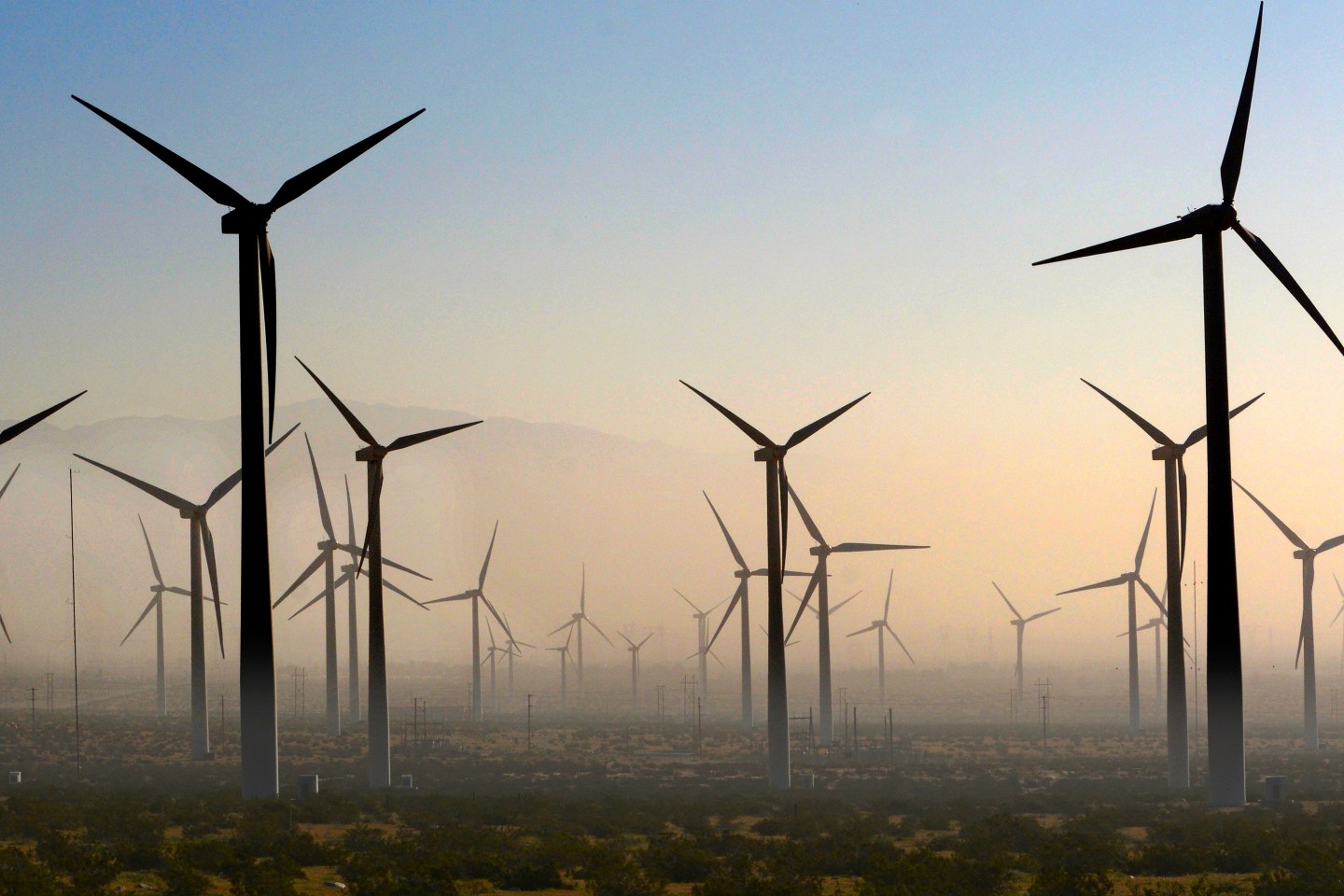
The virus-driven economic slowdown, too, is highlighting the competitiveness of renewable energy—particularly in electricity markets, where oil companies increasingly are deciding they must play. In many parts of the world, power demand has fallen. Those declines have had the effect of increasing the percentage of power in those markets that’s supplied by solar and wind, both because their fuel is free and because of production subsidies they get. The global crash has “fast-forwarded some power systems 10 years into the future,” Fatih Birol, the IEA’s executive director, wrote in a March analysis, “suddenly giving them levels of wind and solar power that they wouldn’t have had otherwise without another decade of investment.”
A case in point is California, long a green-energy leader. As of mid-April, with the state’s population under shelter-in-place orders, weekday electricity demand was down 5% to 8% below normal levels, according to the state’s power-grid manager, the California Independent System Operator. Renewable-energy generators typically sell their power to the grid at lower prices than fossil-fuel generators do, because their energy, unlike fossil fuel, is lost if they don’t use it. So “it’s a reasonable conclusion that renewables are serving a higher percentage of the load than they would otherwise,” Steve Berberich, chief executive of the operator, tells me. That has amplified the problem that, at times of particularly strong sunshine or wind, renewable-energy sources generate more power than California can use. And that highlights the rising importance of improving the nimbleness of power grids—with technologies such as energy storage—to accommodate greater supplies from renewables.
Renewable-energy projects aren’t immune to the global economic shock. Overall growth in solar-panel and wind-turbine sales is slowing from its recently torrid levels, as factories, shipping, and electricity demand take a pause. At France’s Total, executives say that construction delays are likely for some solar and wind farms because coronavirus-related restrictions are waylaying workers. In a sense, though, that’s a sign of the progress that clean-energy technologies have made: Once a rounding error, they’re now significant enough as industries that they’re as exposed to macroeconomic forces as are the fossil-fuel behemoths.
The headwinds for clean energy, moreover, are relative. As oil heads for its worst year in recent memory, solar and wind installations remain strong, according to Wood Mackenzie. Global solar projects will dip a bit in 2020 before resuming quick growth next year, the research firm projects, and wind installations will post a new yearly record.
A version of this article appears in the May 2020 issue of Fortune with the headline “A ‘green’ silver lining to an oil-patch cloud.“
More must-read energy sector coverage from Fortune:
—The oil sector is quickly running out of storage for its unprecedented surplus
—How Global 500 companies are responding to the coronavirus
—Coronavirus fight could prove fatal for addressing climate change
—For boom-bust oil towns, coronavirus is a very different kind of crisis
—Listen to Leadership Next, a Fortune podcast examining the evolving role of CEO
—WATCH: PSEG CEO on climate change action: “It should have been done yesterday”
Subscribe to The Loop, a weekly look at the revolutions in energy, tech, and sustainability.