• Home
  • Latest
  • Fortune 500
  • Finance
  • Tech
  • Leadership
  • Lifestyle
  • Rankings
  • Multimedia
Commentaryconnected vehicles

Connected vehicles will make our roads safer—but only with regulators’ help

By
Michael Moskowitz
Down Arrow Button Icon
By
Michael Moskowitz
Down Arrow Button Icon
March 7, 2020, 10:00 AM ET
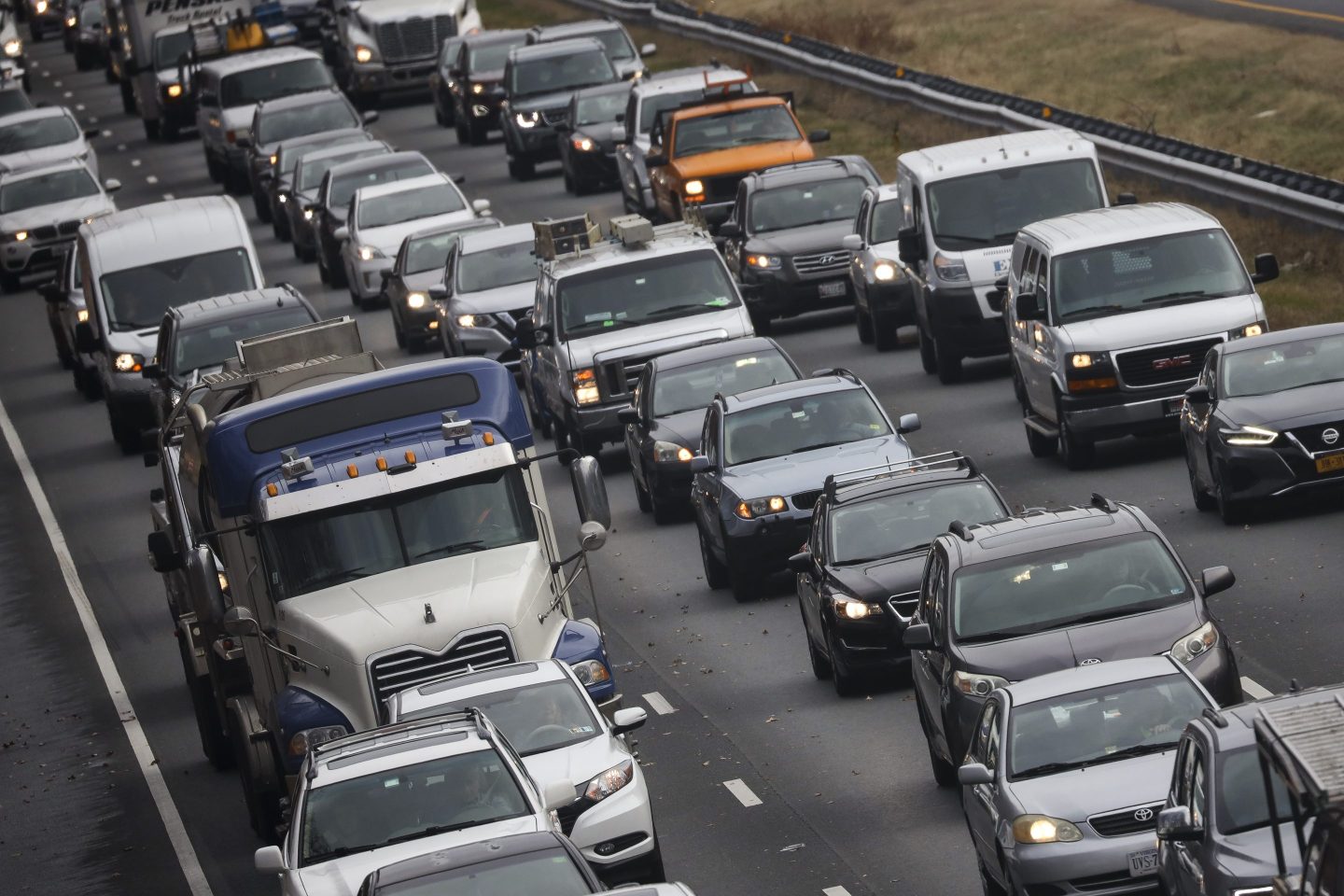
Heavy traffic moves slowly on I-495 (Capital Beltway) the day before Thanksgiving November 27, 2019 in Bethesda, Maryland.
BETHESDA, MD - NOVEMBER 27: Heavy traffic moves slowly on I-495 (Capital Beltway) the day before Thanksgiving November 27, 2019 in Bethesda, Maryland. Both the American West and Midwest are facing significant weather events that could impact holiday travelers. (Photo by Drew Angerer/Getty Images)Drew Angerer—Getty Images

In 2018, an estimated 40,000 Americans died in traffic accidents. Sadly, an estimated 94% of these accidents are due to human error, according to a 2015 study by the National Highway Traffic Safety Administration (NHTSA).

Thankfully, an innovation that could significantly reduce the number of traffic deaths isn’t too far down the road.

Connected vehicles—vehicles with on-board sensors and advanced software that communicates with drivers, other vehicles, road infrastructure, and the cloud—have the potential to not only dramatically improve traffic safety, but also reduce congestion on our roads.

This technology should become increasingly common in the coming years. According to research firm IHS Markit, 72.5 million connected cars will be sold globally in 2023 (24 million were sold in 2015), which would make up almost 70% of all passenger vehicle sales.

That’s great news. And once the federal government provides certainty there will be adequate radio spectrum for connected vehicles, the technology will have the chance to fully excel.

Tech and automobile companies, as well as some states, are already making major strides with V2X technology. My company, Panasonic, is deeply invested: Through partnerships with the Colorado, Utah, and Georgia transportation departments, we’re already operating an advanced transportation data network and cloud platform.

Connected vehicles work by collecting information from their surroundings and communicating it to each other, as well as intelligent transportation infrastructure that uses sensors installed alongside roads, on utility poles, on large gantries along highways, and on poles dedicated for traffic cameras or lights. This vehicle-to-everything, or “V2X,” communication, as it’s called, delivers practical information to drivers and workers coordinating road traffic.

Widespread V2X deployment will have a major impact on road safety. According to the NHTSA, connected cars could prevent up to 80% of multi-vehicle crashes involving unimpaired drivers.

Connected vehicles are able to send and receive immediate warnings or guidance based on road conditions. For instance, a connected vehicle could send data to roadside sensors when it rapidly changes speed, which would then communicate to traffic operators that an abnormal situation might be occurring. Operators could then dispatch emergency personnel if necessary, depending on data shared by other vehicles in the vicinity.

As connected cars spread across the driving fleet, machine-learning platforms can develop models from the data over time and begin predicting conditions and incidents. Such platforms, managed by traffic administration agencies, could suggest improvements to road infrastructure at points on the road that can be particularly hazardous, such as sudden sharp turns on rural freeways or slick pavement due to poor weather.

Connected vehicle technology can address traffic congestion too. In addition to costing the U.S. economy an estimated $87 billion in 2018, per INRIX data, congestion also reduces the productivity of workers idling in traffic, adds costs and length of time for transporting goods, and increases air pollution.

Sharing real-time traffic data can prevent jams before they impede traffic flow. The state of Utah has built one of the first operational connected-vehicle corridors in the U.S. in Salt Lake City and Provo. Its buses are equipped with radios that “talk” to traffic signals. If the bus is running behind schedule, the signal can extend the length of the green light without any action taken by the bus driver.

Some states have already begun deploying connected car technology in roadway infrastructure. In addition to the aforementioned Utah program, states like Colorado, New York, and Wyoming,and many others, are using connected vehicle technology to gather and send vital safety information directly to roadway infrastructure users.

Auto manufacturers are also embracing this innovation. Ford, for example, announced earlier this year that all 2022 models in the U.S. will be equipped with an advanced V2X system. Cadillac is working to enable its cars with V2X capabilities by 2023. And most of Volkswagen’s 2020 European models will be equipped with V2X.

But in order to expand connected vehicles nationwide, the federal government needs to create certainty in the market. The Federal Communications Commission (FCC) recently proposed changes that would allow part of the radio spectrum allocated for transportation safety to be used for communications unrelated to transportation. The FCC’s proposed plan would allow harmful interference from adjacent Wi-Fi bands, similar to having a noisy neighbor move in next door. This interference would threaten to disable the benefits of deploying V2X’s lifesaving technology, and could impel some vehicle manufacturers that had previously committed to deploying V2X technology on the radio spectrum to pull back.

To provide certainty that connected cars can directly share data between vehicles to improve safety, the FCC should continue to work with the U.S. Transportation Department to ensure enough interference-free spectrum is available for transportation safety.   

Improving regulations around V2X will help the technology mature faster. By combining smart government efforts like this with private innovation, connected vehicles will soon be making all of our lives safer and more convenient.

Michael Moskowitz is chairman and CEO of Panasonic Corporation of North America.

More opinion in Fortune:

—Coronavirus shows why we need vaccines before, not after, an outbreak
—How Democrats’ impeachment campaign helped Trump
—Being a CEO is more tenuous than ever. How I survived 30 years at Aflac
—How Warren Buffett built Berkshire Hathaway
—Are the Houston Astros irredeemable cheaters? Or are they all of us?

Listen to our audio briefing, Fortune 500 Daily

About the Author
By Michael Moskowitz
See full bioRight Arrow Button Icon

Latest in Commentary

Finance
Lorem ipsum dolor sit amet, consectetur adipiscing elit, sed do eiusmod tempor incididunt ut labore et dolore magna aliqua. Ut enim ad minim veniam
By Fortune Editors
October 20, 2025
Finance
Lorem ipsum dolor sit amet, consectetur adipiscing elit, sed do eiusmod tempor incididunt ut labore et dolore magna aliqua. Ut enim ad minim veniam
By Fortune Editors
October 20, 2025
Finance
Lorem ipsum dolor sit amet, consectetur adipiscing elit, sed do eiusmod tempor incididunt ut labore et dolore magna aliqua. Ut enim ad minim veniam
By Fortune Editors
October 20, 2025
Finance
Lorem ipsum dolor sit amet, consectetur adipiscing elit, sed do eiusmod tempor incididunt ut labore et dolore magna aliqua. Ut enim ad minim veniam
By Fortune Editors
October 20, 2025
Finance
Lorem ipsum dolor sit amet, consectetur adipiscing elit, sed do eiusmod tempor incididunt ut labore et dolore magna aliqua. Ut enim ad minim veniam
By Fortune Editors
October 20, 2025
Finance
Lorem ipsum dolor sit amet, consectetur adipiscing elit, sed do eiusmod tempor incididunt ut labore et dolore magna aliqua. Ut enim ad minim veniam
By Fortune Editors
October 20, 2025

Most Popular

Finance
Lorem ipsum dolor sit amet, consectetur adipiscing elit, sed do eiusmod tempor incididunt ut labore et dolore magna aliqua. Ut enim ad minim veniam
By Fortune Editors
October 20, 2025
Finance
Lorem ipsum dolor sit amet, consectetur adipiscing elit, sed do eiusmod tempor incididunt ut labore et dolore magna aliqua. Ut enim ad minim veniam
By Fortune Editors
October 20, 2025
Finance
Lorem ipsum dolor sit amet, consectetur adipiscing elit, sed do eiusmod tempor incididunt ut labore et dolore magna aliqua. Ut enim ad minim veniam
By Fortune Editors
October 20, 2025
Finance
Lorem ipsum dolor sit amet, consectetur adipiscing elit, sed do eiusmod tempor incididunt ut labore et dolore magna aliqua. Ut enim ad minim veniam
By Fortune Editors
October 20, 2025
Finance
Lorem ipsum dolor sit amet, consectetur adipiscing elit, sed do eiusmod tempor incididunt ut labore et dolore magna aliqua. Ut enim ad minim veniam
By Fortune Editors
October 20, 2025
Finance
Lorem ipsum dolor sit amet, consectetur adipiscing elit, sed do eiusmod tempor incididunt ut labore et dolore magna aliqua. Ut enim ad minim veniam
By Fortune Editors
October 20, 2025
Rankings
  • 100 Best Companies
  • Fortune 500
  • Global 500
  • Fortune 500 Europe
  • Most Powerful Women
  • Future 50
  • World’s Most Admired Companies
  • See All Rankings
Sections
  • Finance
  • Leadership
  • Success
  • Tech
  • Asia
  • Europe
  • Environment
  • Fortune Crypto
  • Health
  • Retail
  • Lifestyle
  • Politics
  • Newsletters
  • Magazine
  • Features
  • Commentary
  • Mpw
  • CEO Initiative
  • Conferences
  • Personal Finance
  • Education
Customer Support
  • Frequently Asked Questions
  • Customer Service Portal
  • Privacy Policy
  • Terms Of Use
  • Single Issues For Purchase
  • International Print
Commercial Services
  • Advertising
  • Fortune Brand Studio
  • Fortune Analytics
  • Fortune Conferences
  • Business Development
About Us
  • About Us
  • Editorial Calendar
  • Press Center
  • Work At Fortune
  • Diversity And Inclusion
  • Terms And Conditions
  • Site Map

© 2025 Fortune Media IP Limited. All Rights Reserved. Use of this site constitutes acceptance of our Terms of Use and Privacy Policy | CA Notice at Collection and Privacy Notice | Do Not Sell/Share My Personal Information
FORTUNE is a trademark of Fortune Media IP Limited, registered in the U.S. and other countries. FORTUNE may receive compensation for some links to products and services on this website. Offers may be subject to change without notice.


Latest in Commentary

Thomas “Tom” McInerney is President, CEO and a Director of Genworth Financial
CommentaryCaregiving
I’m a CEO who’s spent nearly 40 years talking to presidents, lawmakers and leaders about our long-term care crisis. They knew this moment was coming
By Thomas McInerneyDecember 19, 2025
2 days ago
Kristin Olson
Commentaryinvesting advice
I lead Goldman Sachs’ alternatives for wealth globally. Around the world, investors want to know more 
By Kristin OlsonDecember 19, 2025
2 days ago
unemployed
CommentaryLayoffs
The AI efficiency illusion: why cutting 1.1 million jobs will stifle, not scale, your strategy
By Katica RoyDecember 18, 2025
3 days ago
Muddu
CommentaryIT
IT service is reaching its breaking point. At Salesforce, we see 3 tipping points
By Muddu SudhakarDecember 18, 2025
3 days ago
small business
CommentaryLayoffs
Our data shows that companies of 500 and fewer workers mostly avoided the AI layoffs. They’re making AI work for them
By Gabby BurlacuDecember 18, 2025
3 days ago
Sophia Romee is the General Manager of the GenAI Studio at the College Board
CommentaryEducation
Gen Z is on the fence about AI in the classroom. That’s a good thing
By Sophia RomeeDecember 18, 2025
3 days ago

Most Popular

placeholder alt text
Success
The scientist who helped create AI says it’s only ‘a matter of time’ before every single job is wiped out—even safer trade jobs like plumbing
By Orianna Rosa RoyleDecember 19, 2025
2 days ago
placeholder alt text
Economy
James Talarico says the biggest 'welfare queens' in America are 'the giant corporations that don't pay a penny in income taxes'
By Dave SmithDecember 20, 2025
22 hours ago
placeholder alt text
Success
As graduates face a ‘jobpocalypse,’ Goldman Sachs exec tells Gen Z they need to know their commercial impact 
By Preston ForeDecember 18, 2025
3 days ago
placeholder alt text
Economy
Sneaking unemployment rate means the U.S. economy is inching closer to a key recession indicator, says Moody’s
By Eleanor PringleDecember 19, 2025
2 days ago
placeholder alt text
Future of Work
'They'll lose their humanity': Dartmouth professor says he's surprised just how scared his Gen Z students are of AI
By Nick LichtenbergDecember 20, 2025
20 hours ago
placeholder alt text
AI
Meta’s 28-year-old billionaire prodigy says the next Bill Gates will be a 13-year-old who is ‘vibe coding’ right now
By Eva RoytburgDecember 19, 2025
2 days ago










