• Home
  • Latest
  • Fortune 500
  • Finance
  • Tech
  • Leadership
  • Lifestyle
  • Rankings
  • Multimedia
CommentaryLeadership

Forget Socialism. The U.S. Needs Responsible Capitalism

By
Bill George
Bill George
Down Arrow Button Icon
By
Bill George
Bill George
Down Arrow Button Icon
May 6, 2019, 7:00 AM ET
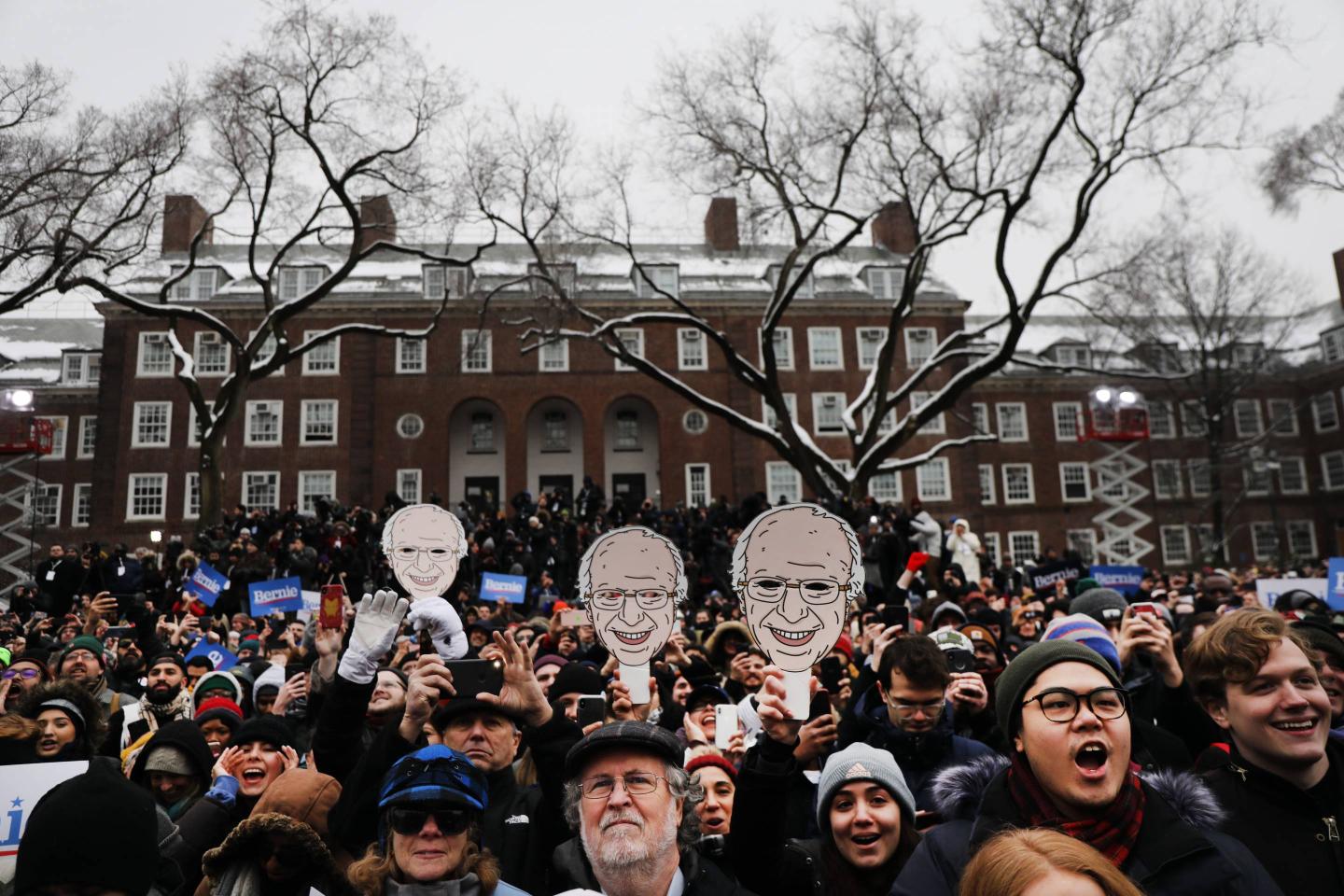
People listen to presidential candidate, and self-described democratic socialist, Sen. Bernie Sanders (I-VT) at a rally in Brooklyn.
Spencer Platt—Getty Images

During the last four decades, the U.S. has experienced a form of capitalism that has led to growing economic inequality and increasing dissatisfaction with our capitalist system—a discontent highlighted by prominent politicians like presidential candidate Sen. Bernie Sanders and Rep. Alexandria Ocasio-Cortez who embrace tenets of democratic socialism. As economist Joseph Stiglitz recently warned, “[T]he American economy is failing its citizens. Some 90% have seen their incomes stagnate or decline in the past 30 years.”

Ever since Nobel laureate economist Milton Friedman wrote his 1970 article, “The Social Responsibility of Business is to Increase its Profits,” a debate has raged between financial advocates of shareholder primacy and business leaders who believe business must serve all its stakeholders. Beginning in the 1980s, short-term shareholders gained the upper hand as hedge funds, activist investors, and private equity firms pushed management teams to increase debt, cut costs to the bone, and forego long-term investments in order to return more cash to shareholders. The social contract of employment frayed, as even long-term employees realized they could be fired at any time, losing their pensions and health care. Overleveraging in the financial system resulted in the 2008 financial crisis, triggering the recession that followed, which greatly exacerbated income inequality.

As a result, public confidence in capitalism has continued to decrease.

Fortunately, the tide is turning now toward a new model: responsible capitalism. Responsible capitalism recognizes that companies have a clear purpose to serve society, their customers, and their employees as well as their investors. When they do so, they create the most sustainable long-term value for their shareholders. In the past decade, practitioners of responsible capitalism—like former PepsiCo CEO Indra Nooyi and former Unilever CEO Paul Polman—have flourished.

Recently, more leaders of the financial community have come forward to advocate for responsible capitalism. Last January, for instance, Blackrock founder and CEO Laurence Fink wrote in his annual letter to CEOs that with “the failure of government to provide lasting solutions, society is increasingly looking to companies, both public and private, to address pressing social and economic issues.” He called on CEOs to look beyond just profits and “begin with a clear embodiment of your company’s purpose in your business model and corporate strategy.”

In JPMorgan Chase’s 2018 corporate responsibility report, CEO Jamie Dimon called on CEOs to “buck short-termism,” stating that “[w]hen everyone has a fair shot at participating in and sharing in the rewards of growth, the economy will be stronger and society more cohesive.”

In his treatise, “Why and How Capitalism Needs to Be Reformed,” Bridgewater Associates founder Ray Dalio went even further in recognizing that “capitalism isn’t working well for most Americans,” noting low wage growth, the ascendant income gap, and educational failures. “These conditions pose an existential risk for the U.S.,” he emphasized. “I think the American dream is lost,” Dalio said on CBS, also stating that he believed the growing wage gap to be “a national emergency.”

These powerful voices cannot be ignored. Capitalists must take the lead in reforming capitalism from its unrestrained vices into its responsible virtues. When practiced responsibly, capitalism can be the greatest wealth creator and builder of societies and nations. But when wealth is hoarded by the powerful few at the expense of the many, people question the legitimacy of the economic system.

Recognizing the challenges of income inequality, global warming, rising health care costs, data privacy, and technological obsolescence, corporate CEOs are stepping up to address societal challenges through their mainstream missions. Here are a few examples of responsible capitalists taking the lead:

With the federal minimum wage stuck at $7.25 for the last decade, leading CEOs recognized the growing wage gap and began to raise their minimum wages. Last fall, CEO Jeff Bezos raised Amazon’s minimum wage to $15 per hour for all employees in the U.S. Moreover, he encouraged his competitors to match Amazon. Bank of America CEO Brian Moynihan went even further: he announced that the company’s minimum wage would increase to $20 per hour by 2021 for his 205,000 employees.

Responding to rising concerns over global warming, General Motors CEO Mary Barra created a bold goal of “zero crashes, zero emissions, and zero congestion.” In the last five years, Barra has also transformed GM’s hierarchical culture into a dynamic meritocracy that is responsive to the marketplace and societal concerns.

In the context of high health care costs, rising drug costs have become a major policy concern for pharmaceutical companies. In response, Merck CEO Kenneth Frazier cut the cost of its hepatitis C drug, Zepatier, by 60% and reduced (by 10%) the price of six other medications. Frazier also pledged not to increase other drug prices by more than the rate of inflation.

Recognizing the controversy surrounding consumer privacy on social media sites, Apple CEO Tim Cook took a principled stand on the matter, asserting “that privacy is a fundamental human right,” as he called for government regulations on data privacy.

Expressing concerns about artificial intelligence eliminating jobs, IBM CEO Ginni Rometty emphasized how the company is focused on reskilling its 350,000 employees. “[A]ll jobs will be forever changed by A.I.,” she said during a panel at this year’s World Economic Forum. “To address this massive shift, we need to build a global workforce that’s equipped with a new generation of skills.”

These are just a few examples of corporate CEOs who recognize that they have the power and responsibility to build their business and simultaneously address pressing social needs through their mainstream resources. As CEOs take action on these issues, responsible capitalists are recognizing the tremendous potential they have to improve the world while restoring trust in the capitalist system.

Bill George is a senior fellow at Harvard Business School and former chairman and CEO of Medtronic. Follow him on Twitter or read more at BillGeorge.org.

This article is commentary. For more opinion in Fortune, click here.

About the Author
By Bill George
See full bioRight Arrow Button Icon

Latest in Commentary

Finance
Lorem ipsum dolor sit amet, consectetur adipiscing elit, sed do eiusmod tempor incididunt ut labore et dolore magna aliqua. Ut enim ad minim veniam
By Fortune Editors
October 20, 2025
Finance
Lorem ipsum dolor sit amet, consectetur adipiscing elit, sed do eiusmod tempor incididunt ut labore et dolore magna aliqua. Ut enim ad minim veniam
By Fortune Editors
October 20, 2025
Finance
Lorem ipsum dolor sit amet, consectetur adipiscing elit, sed do eiusmod tempor incididunt ut labore et dolore magna aliqua. Ut enim ad minim veniam
By Fortune Editors
October 20, 2025
Finance
Lorem ipsum dolor sit amet, consectetur adipiscing elit, sed do eiusmod tempor incididunt ut labore et dolore magna aliqua. Ut enim ad minim veniam
By Fortune Editors
October 20, 2025
Finance
Lorem ipsum dolor sit amet, consectetur adipiscing elit, sed do eiusmod tempor incididunt ut labore et dolore magna aliqua. Ut enim ad minim veniam
By Fortune Editors
October 20, 2025
Finance
Lorem ipsum dolor sit amet, consectetur adipiscing elit, sed do eiusmod tempor incididunt ut labore et dolore magna aliqua. Ut enim ad minim veniam
By Fortune Editors
October 20, 2025

Most Popular

Finance
Lorem ipsum dolor sit amet, consectetur adipiscing elit, sed do eiusmod tempor incididunt ut labore et dolore magna aliqua. Ut enim ad minim veniam
By Fortune Editors
October 20, 2025
Finance
Lorem ipsum dolor sit amet, consectetur adipiscing elit, sed do eiusmod tempor incididunt ut labore et dolore magna aliqua. Ut enim ad minim veniam
By Fortune Editors
October 20, 2025
Finance
Lorem ipsum dolor sit amet, consectetur adipiscing elit, sed do eiusmod tempor incididunt ut labore et dolore magna aliqua. Ut enim ad minim veniam
By Fortune Editors
October 20, 2025
Finance
Lorem ipsum dolor sit amet, consectetur adipiscing elit, sed do eiusmod tempor incididunt ut labore et dolore magna aliqua. Ut enim ad minim veniam
By Fortune Editors
October 20, 2025
Finance
Lorem ipsum dolor sit amet, consectetur adipiscing elit, sed do eiusmod tempor incididunt ut labore et dolore magna aliqua. Ut enim ad minim veniam
By Fortune Editors
October 20, 2025
Finance
Lorem ipsum dolor sit amet, consectetur adipiscing elit, sed do eiusmod tempor incididunt ut labore et dolore magna aliqua. Ut enim ad minim veniam
By Fortune Editors
October 20, 2025
Fortune Secondary Logo
Rankings
  • 100 Best Companies
  • Fortune 500
  • Global 500
  • Fortune 500 Europe
  • Most Powerful Women
  • World's Most Admired Companies
  • See All Rankings
  • Lists Calendar
Sections
  • Finance
  • Fortune Crypto
  • Features
  • Leadership
  • Health
  • Commentary
  • Success
  • Retail
  • Mpw
  • Tech
  • Lifestyle
  • CEO Initiative
  • Asia
  • Politics
  • Conferences
  • Europe
  • Newsletters
  • Personal Finance
  • Environment
  • Magazine
  • Education
Customer Support
  • Frequently Asked Questions
  • Customer Service Portal
  • Privacy Policy
  • Terms Of Use
  • Single Issues For Purchase
  • International Print
Commercial Services
  • Advertising
  • Fortune Brand Studio
  • Fortune Analytics
  • Fortune Conferences
  • Business Development
  • Group Subscriptions
About Us
  • About Us
  • Press Center
  • Work At Fortune
  • Terms And Conditions
  • Site Map
  • About Us
  • Press Center
  • Work At Fortune
  • Terms And Conditions
  • Site Map
  • Facebook icon
  • Twitter icon
  • LinkedIn icon
  • Instagram icon
  • Pinterest icon

Latest in Commentary

francis
CommentaryFlorida
Former Miami Mayor Francis Suarez: Why I’m joining Stephen Ross and Ken Griffin in betting big on ambitious business leaders
By Francis SuarezMay 1, 2026
2 minutes ago
valerie
CommentaryLayoffs
Tesla’s former HR chief: the AI layoff panic Is built on a false premise—here’s what most workers need to know
By Valerie Capers WorkmanMay 1, 2026
2 hours ago
tamas
CommentaryPolymarket
SEON CEO: Prediction markets can forecast the future. Can they survive their own manipulation problem?
By Tamas KadarMay 1, 2026
5 hours ago
sundar
Commentary250 Years of Innovation
America at 250: immigration and the making of an innovative nation
By Nasser KazeminyMay 1, 2026
6 hours ago
Derek Kilmer
CommentaryEconomics
The U.S. economy is booming — just not where 50 million Americans live
By Derek KilmerMay 1, 2026
6 hours ago
hegseth
CommentaryMilitary
America shot its arsenal empty in 2 wars. Now it needs Beijing’s permission to reload
By Steve H. Hanke and Jeffrey WengApril 30, 2026
21 hours ago

Most Popular

China dominates the world's lithium supply. The U.S. just found 328 years' worth in its own backyard
North America
China dominates the world's lithium supply. The U.S. just found 328 years' worth in its own backyard
By Jake AngeloApril 30, 2026
21 hours ago
Apple cofounder Ronald Wayne—whose stake would be worth up to $400 billion had he not sold it in 1976—says that at 91, he has no regrets
Success
Apple cofounder Ronald Wayne—whose stake would be worth up to $400 billion had he not sold it in 1976—says that at 91, he has no regrets
By Preston ForeApril 27, 2026
4 days ago
Accenture's Julie Sweet blew up 50 years of company history. She says the hardest part is still ahead
Conferences
Accenture's Julie Sweet blew up 50 years of company history. She says the hardest part is still ahead
By Nick LichtenbergApril 29, 2026
2 days ago
America shot its arsenal empty in 2 wars. Now it needs Beijing's permission to reload
Commentary
America shot its arsenal empty in 2 wars. Now it needs Beijing's permission to reload
By Steve H. Hanke and Jeffrey WengApril 30, 2026
21 hours ago
Exclusive: America's largest Black-owned bank launches podcast with mission to unlock hidden shame holding back generational wealth
Banking
Exclusive: America's largest Black-owned bank launches podcast with mission to unlock hidden shame holding back generational wealth
By Nick LichtenbergApril 29, 2026
2 days ago
Google Cloud revenue is now 18% of Alphabet's business. Is this the beginning of the end of Google's search identity?
Big Tech
Google Cloud revenue is now 18% of Alphabet's business. Is this the beginning of the end of Google's search identity?
By Alexei OreskovicApril 29, 2026
2 days ago

© 2026 Fortune Media IP Limited. All Rights Reserved. Use of this site constitutes acceptance of our Terms of Use and Privacy Policy | CA Notice at Collection and Privacy Notice | Do Not Sell/Share My Personal Information
FORTUNE is a trademark of Fortune Media IP Limited, registered in the U.S. and other countries. FORTUNE may receive compensation for some links to products and services on this website. Offers may be subject to change without notice.