• Home
  • Latest
  • Fortune 500
  • Finance
  • Tech
  • Leadership
  • Lifestyle
  • Rankings
  • Multimedia
CommentaryAI

The AI Wars Have Not Even Begun

By
Vivek Wadhwa
Down Arrow Button Icon
By
Vivek Wadhwa
Down Arrow Button Icon
October 4, 2018, 4:29 PM ET

To gauge by the news headlines, it would be easy to believe that artificial intelligence (AI) is about to take over the world. Kai-Fu Lee, a Chinese venture capitalist, says that AI will soon create tens of trillions of dollars of wealth and claims China and the U.S. are the two AI superpowers.

There is no doubt that AI has incredible potential. But the technology is still in its infancy; there are no AI superpowers. The race to implement AI has hardly begun, particularly in business. As well, the most advanced AI tools are open source, which means that everyone has access to them.

Tech companies are generating hype with cool demonstrations of AI, such as Google’s AlphaGo Zero, which learned one of the world’s most difficult board games in three days and could easily defeat its top-ranked players. Several companies are claiming breakthroughs with self-driving vehicles. But don’t be fooled: The games are just special cases, and the self-driving cars are still on their training wheels.

AlphaGo, the original iteration of AlphaGo Zero, developed its intelligence through use of generative adversarial networks, a technology that pits two AI systems against each another to allow them to learn from each other. The trick was that before the networks battled each other, they received a lot of coaching. And, more importantly, their problems and outcomes were well defined.

Unlike board games and arcade games, business systems don’t have defined outcomes and rules. They work with very limited datasets, often disjointed and messy. The computers also don’t do critical business analysis; it’s the job of humans to comprehend information that the systems gather and to decide what to do with it. Humans can deal with uncertainty and doubt; AI cannot. Google’s Waymo self-driving cars have collectively driven over 9 million miles, yet are nowhere near ready for release. Tesla’s Autopilot, after gathering 1.5 billion miles’ worth of data, won’t even stop at traffic lights.

Today’s AI systems do their best to reproduce the functioning of the human brain’s neural networks, but their emulations are very limited. They use a technique called deep learning: After you tell an AI exactly what you want it to learn and provide it with clearly labeled examples, it analyzes the patterns in those data and stores them for future application. The accuracy of its patterns depends on completeness of data, so the more examples you give it, the more useful it becomes.

Herein lies a problem, though: An AI is only as good as the data it receives, and is able to interpret them only within the narrow confines of the supplied context. It doesn’t “understand” what it has analyzed, so it is unable to apply its analysis to scenarios in other contexts. And it can’t distinguish causation from correlation.

The larger issue with this form of AI is that what it has learned remains a mystery: a set of indefinable responses to data. Once a neural network has been trained, not even its designer knows exactly how it is doing what it does. They call this the black box of AI.

Businesses can’t afford to have their systems making unexplained decisions, as they have regulatory requirements and reputational concerns and must be able to understand, explain, and prove the logic behind every decision that they make.

Then there is the issue of reliability. Airlines are installing AI-based facial-recognition systems and China is basing its national surveillance systems on such systems. AI is being used for marketing and credit analysis and to control cars, drones, and robots. It is being trained to perform medical data analysis and assist or replace human doctors. The problem is that, in all such uses, AI can be fooled.

Google published a paper last December that showed that it could trick AI systems into recognizing a banana as a toaster. Researchers at the Indian Institute of Science have just demonstrated that they could confuse almost any AI system without even using, as Google did, knowledge of what the system has used as a basis for learning. With AI, security and privacy are an afterthought, just as they were early in the development of computers and the Internet.

Leading AI companies have handed over the keys to their kingdoms by making their tools open source. Software used to be considered a trade secret, but developers realized that having others look at and build on their code could lead to great improvements in it. Microsoft, Google, and Facebook have released their AI code to the public for free to explore, adapt, and improve. China’s Baidu has also made its self-driving software, Apollo, available as open source.

Software’s real value lies in its implementation: what you do with it. Just as China built its tech companies and India created a $160 billion IT services industry on top of tools created by Silicon Valley, anyone can use openly available AI tools to build sophisticated applications. Innovation has now globalized, creating a level playing field—especially in AI.

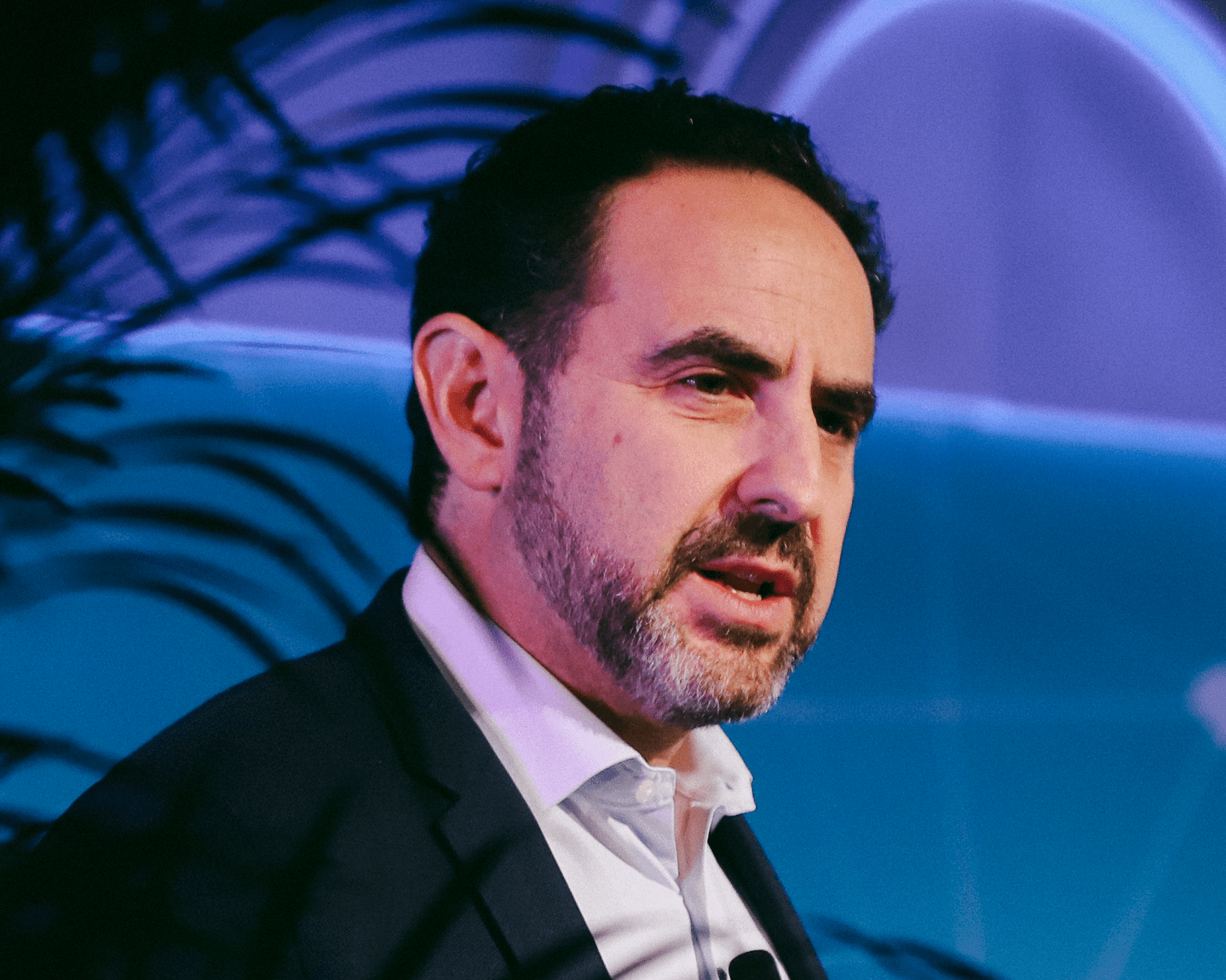
Vivek Wadhwa is a distinguished fellow at Carnegie Mellon University’s College of Engineering. He is the co-author of Your Happiness Was Hacked: Why Tech Is Winning the Battle to Control Your Brain—and How to Fight Back.
About the Author
By Vivek Wadhwa
See full bioRight Arrow Button Icon

Latest in Commentary

Finance
Lorem ipsum dolor sit amet, consectetur adipiscing elit, sed do eiusmod tempor incididunt ut labore et dolore magna aliqua. Ut enim ad minim veniam
By Fortune Editors
October 20, 2025
Finance
Lorem ipsum dolor sit amet, consectetur adipiscing elit, sed do eiusmod tempor incididunt ut labore et dolore magna aliqua. Ut enim ad minim veniam
By Fortune Editors
October 20, 2025
Finance
Lorem ipsum dolor sit amet, consectetur adipiscing elit, sed do eiusmod tempor incididunt ut labore et dolore magna aliqua. Ut enim ad minim veniam
By Fortune Editors
October 20, 2025
Finance
Lorem ipsum dolor sit amet, consectetur adipiscing elit, sed do eiusmod tempor incididunt ut labore et dolore magna aliqua. Ut enim ad minim veniam
By Fortune Editors
October 20, 2025
Finance
Lorem ipsum dolor sit amet, consectetur adipiscing elit, sed do eiusmod tempor incididunt ut labore et dolore magna aliqua. Ut enim ad minim veniam
By Fortune Editors
October 20, 2025
Finance
Lorem ipsum dolor sit amet, consectetur adipiscing elit, sed do eiusmod tempor incididunt ut labore et dolore magna aliqua. Ut enim ad minim veniam
By Fortune Editors
October 20, 2025

Most Popular

Finance
Lorem ipsum dolor sit amet, consectetur adipiscing elit, sed do eiusmod tempor incididunt ut labore et dolore magna aliqua. Ut enim ad minim veniam
By Fortune Editors
October 20, 2025
Finance
Lorem ipsum dolor sit amet, consectetur adipiscing elit, sed do eiusmod tempor incididunt ut labore et dolore magna aliqua. Ut enim ad minim veniam
By Fortune Editors
October 20, 2025
Finance
Lorem ipsum dolor sit amet, consectetur adipiscing elit, sed do eiusmod tempor incididunt ut labore et dolore magna aliqua. Ut enim ad minim veniam
By Fortune Editors
October 20, 2025
Finance
Lorem ipsum dolor sit amet, consectetur adipiscing elit, sed do eiusmod tempor incididunt ut labore et dolore magna aliqua. Ut enim ad minim veniam
By Fortune Editors
October 20, 2025
Finance
Lorem ipsum dolor sit amet, consectetur adipiscing elit, sed do eiusmod tempor incididunt ut labore et dolore magna aliqua. Ut enim ad minim veniam
By Fortune Editors
October 20, 2025
Finance
Lorem ipsum dolor sit amet, consectetur adipiscing elit, sed do eiusmod tempor incididunt ut labore et dolore magna aliqua. Ut enim ad minim veniam
By Fortune Editors
October 20, 2025
Rankings
  • 100 Best Companies
  • Fortune 500
  • Global 500
  • Fortune 500 Europe
  • Most Powerful Women
  • Future 50
  • World’s Most Admired Companies
  • See All Rankings
Sections
  • Finance
  • Leadership
  • Success
  • Tech
  • Asia
  • Europe
  • Environment
  • Fortune Crypto
  • Health
  • Retail
  • Lifestyle
  • Politics
  • Newsletters
  • Magazine
  • Features
  • Commentary
  • Mpw
  • CEO Initiative
  • Conferences
  • Personal Finance
  • Education
Customer Support
  • Frequently Asked Questions
  • Customer Service Portal
  • Privacy Policy
  • Terms Of Use
  • Single Issues For Purchase
  • International Print
Commercial Services
  • Advertising
  • Fortune Brand Studio
  • Fortune Analytics
  • Fortune Conferences
  • Business Development
About Us
  • About Us
  • Editorial Calendar
  • Press Center
  • Work At Fortune
  • Diversity And Inclusion
  • Terms And Conditions
  • Site Map

Latest in Commentary

sustainability
CommentarySustainability
2025: the year sustainability didn’t die 
By Andrew WinstonDecember 21, 2025
2 hours ago
Thomas “Tom” McInerney is President, CEO and a Director of Genworth Financial
CommentaryCaregiving
I’m a CEO who’s spent nearly 40 years talking to presidents, lawmakers and leaders about our long-term care crisis. They knew this moment was coming
By Thomas McInerneyDecember 19, 2025
2 days ago
Kristin Olson
Commentaryinvesting advice
I lead Goldman Sachs’ alternatives for wealth globally. Around the world, investors want to know more 
By Kristin OlsonDecember 19, 2025
2 days ago
unemployed
CommentaryLayoffs
The AI efficiency illusion: why cutting 1.1 million jobs will stifle, not scale, your strategy
By Katica RoyDecember 18, 2025
3 days ago
Muddu
CommentaryIT
IT service is reaching its breaking point. At Salesforce, we see 3 tipping points
By Muddu SudhakarDecember 18, 2025
3 days ago
small business
CommentaryLayoffs
Our data shows that companies of 500 and fewer workers mostly avoided the AI layoffs. They’re making AI work for them
By Gabby BurlacuDecember 18, 2025
3 days ago

Most Popular

placeholder alt text
Economy
For the first time since Trump’s tariff rollout, import tax revenue has fallen, threatening his lofty plans to slash the $38 trillion national debt
By Sasha RogelbergDecember 12, 2025
9 days ago
placeholder alt text
Success
The scientist who helped create AI says it’s only ‘a matter of time’ before every single job is wiped out—even safer trade jobs like plumbing
By Orianna Rosa RoyleDecember 19, 2025
2 days ago
placeholder alt text
Future of Work
A Walmart employee nearly doubled her pay after entering its pipeline for skilled tradespeople. 'I was able to move out of my parents' house'
By Anne D'Innocenzio and The Associated PressDecember 20, 2025
16 hours ago
placeholder alt text
Future of Work
'They'll lose their humanity': Dartmouth professor says he's surprised just how scared his Gen Z students are of AI
By Nick LichtenbergDecember 20, 2025
1 day ago
placeholder alt text
Future of Work
Meet a 55-year-old automotive technician in Arkansas who didn’t care if his kids went to college: ‘There are options’
By Muskaan ArshadDecember 21, 2025
6 hours ago
placeholder alt text
Economy
Sneaking unemployment rate means the U.S. economy is inching closer to a key recession indicator, says Moody’s
By Eleanor PringleDecember 19, 2025
2 days ago

© 2025 Fortune Media IP Limited. All Rights Reserved. Use of this site constitutes acceptance of our Terms of Use and Privacy Policy | CA Notice at Collection and Privacy Notice | Do Not Sell/Share My Personal Information
FORTUNE is a trademark of Fortune Media IP Limited, registered in the U.S. and other countries. FORTUNE may receive compensation for some links to products and services on this website. Offers may be subject to change without notice.