• Home
  • Latest
  • Fortune 500
  • Finance
  • Tech
  • Leadership
  • Lifestyle
  • Rankings
  • Multimedia

Trendingnow

1

Analysts expected oil to surge above $200 but China has quietly kept prices half of that—and can’t for much longer

2

Pentagon accuses Alibaba, Baidu and BYD, three of China's biggest companies, of supporting the Chinese military

3

Marc Lore’s robots make 500 burrito bowls an hour. A human can make 45

1

Analysts expected oil to surge above $200 but China has quietly kept prices half of that—and can’t for much longer

2

Pentagon accuses Alibaba, Baidu and BYD, three of China's biggest companies, of supporting the Chinese military

3

Marc Lore’s robots make 500 burrito bowls an hour. A human can make 45
Commentary

How Congress Can Pass Tax Reform That Actually Helps the Middle Class

By
Joseph Blasi
Joseph Blasi
,
Douglas Kruse
Douglas Kruse
, and
Bethany Cianciolo
Bethany Cianciolo
Down Arrow Button Icon
By
Joseph Blasi
Joseph Blasi
,
Douglas Kruse
Douglas Kruse
, and
Bethany Cianciolo
Bethany Cianciolo
Down Arrow Button Icon
October 12, 2017, 2:01 PM ET
House And Senate Republican Leaders Release Tax Reform Plan
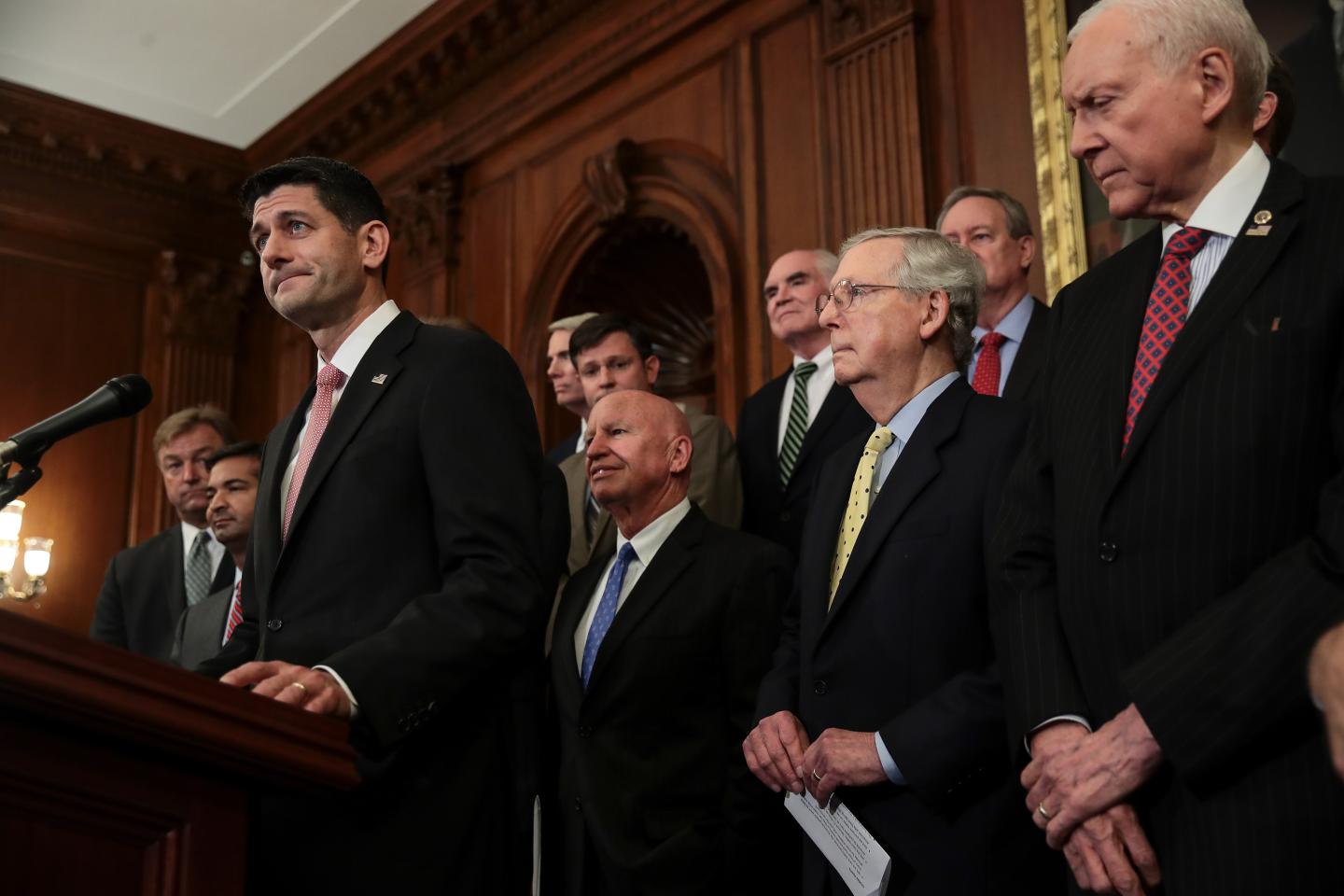
WASHINGTON, DC - SEPTEMBER 27: Speaker of the House Paul Ryan (R-WI) speaks during a news conference to discuss their plans for tax reform, September 27, 2017 in Washington, DC. On Wednesday, Republican leaders proposed cutting tax rates for the middle class, wealthy and businesses. Key questions remain on how they plan to offset the trillions of dollars in lost tax revenue. (Photo by Drew Angerer/Getty Images)Drew Angerer — Getty Images

The Trump administration’s tax proposal reduces tax rates for corporations and for high-income individuals, but does not do much to increase the wealth of the middle class. The only way it could do that is by reducing taxes for companies that share profits or stock with employees.

Real wages for most of the middle class have been basically flat for several decades in spite of a recent uptick. Most of the new wealth in our society is going to the top. The concentration of capital ownership—namely the ownership of stocks, bonds, real estate, and other assets—and the concentration of capital income, such as interest, dividends, and capital gains, is getting much worse. But the families who are doing better are those families whose income and wealth is coming from sharing in the profits and gains of owning a business or working in a business and earning some form of stock ownership in a business or being granted stock or stock options.

Let’s be clear: Profit and equity sharing in American history were ideas largely designed by Republican industrialists and business leaders in the 19th century and early 20th century to protect capitalism by making it more inclusive. Democrats brought their support to the ideas mainly in the 20th century.

In 1792, President George Washington, Cabinet member Thomas Jefferson, and Secretary of the Treasury Alexander Hamilton collaborated on a policy to give what was essentially lower tax rates to ships in the cod fishery if the captains and ship owners offered broad-based profit shares to all of the sailors and crew. Cod was one of the top exports of the United States during the period just before the American Revolution in 1776, and this tax policy was designed to encourage economic development and increase the incomes of those sailors and crew through shares.

In the first part of the 20th century, as employee share ownership plans spread among corporations, better tax treatment through tax deductions was offered for a variety of share plans by both Republican and Democratic administrations. During President Franklin Delano Roosevelt’s administration, Sen. Arthur Vandenberg (R-Mich.) collaborated with the Democrats to offer a better tax situation to companies that offered deferred profit sharing plans. This created a 67-fold increase in profit-sharing companies in the country at the time, according to the Encyclopedia of Retirement and Finance.

After World War II, the idea of better tax treatment for companies doing capital shares took hold in other ways. Congress offered significant tax deductions to companies offering retirement and savings plans to their employees. Those retirement plans were largely invested in the stock and bond markets. During the 1970s and 1980s, both Republicans and Democrats collaborated on creating a series of extensive tax breaks for Employee Stock Ownership Plans (ESOPs). Notably, President Ronald Reagan and legendary Democratic Louisiana Senator and Senate Finance Chairman Russell B. Long worked together on an expansion of these tax incentives, and the number of ESOPs dramatically increased by over 400% from the late ‘70s to 2014.

There have been a number of proposals over the years for lower tax rates for companies with profit sharing and for lower tax rates for companies that invest in employee training, and other aspects of high-performance work systems that benefit both employees and companies. In 1996, Sen. Edward Kennedy (D-Mass.) advanced a plan called the “Corporation A” tax code, which was introduced by Sen. Jeff Bingaman (D-N.M.) and Sen. Tom Daschle (D-S.D.) to provide better tax treatment to companies that had broad-based profit sharing, employee equity shares, and other characteristics. In 2000, we proposed lower tax rates for profit and equity-sharing firms as part of a study for the Aspen Institute’s Domestic Strategy group.

The level of reduced taxes for businesses with capital shares would be up to bipartisan negotiation, while the profit-sharing and employee share ownership forms and formats should be up to businesses and boards to decide, as they are today. The key point is that trillions of tax breaks should not be used in tax reform to continue the concentration of wealth and the decline of America’s middle class.

Profit sharing and employee share ownership plans have bipartisan appeal: They don’t redistribute wealth, they are easy to understand, and educated people realize that employees will only benefit if they earn these shares by helping to make the companies more profitable and the stock more valuable.


We now need for a small group of conservatives and progressives to come together and support this idea. In the 2016 presidential election, the Democratic Party endorsed profit sharing in its platform, while employee share ownership was endorsed in the Republican Party’s platform. For conservatives, the capital shares at the workplace idea plays to the emphasis on individual personal responsibility and earning your keep. For centrists, liberals, and progressives, encouraging workplace capital shares provides a specific approach to sharing precisely what is a root cause of the concentration of wealth and capital income. If capital ownership and capital income are concentrated, then why not broaden access to both? Luckily, 20% of employees have access to employee share plans, while 20% to 30% have access to gain sharing and profit-sharing plans, so companies nationwide are familiar with the concepts. Now it is time to encourage expansion of the breadth and depth of these plans.

There are serious questions about whether the administration’s legislative proposals are going to pass with the bad rap on the middle class that they are now getting. Republicans need a new idea to emphasize the bill’s appeal to the middle class, while Democrats need to make a standout, substantive, and intelligent contribution to the bill that will make the middle class recognize that they made a sincere effort to improving middle class wealth through tax reform. It is time for constructive Republicans and Democrats on the tax committees in the House and Senate to join together to design this workable bipartisan idea into realistic legislation.

Joseph Blasi is the J. Robert Beyster Distinguished Professor at the Rutgers University School of Management and Labor Relations and a Senior Fellow of the Aspen Institute. Douglas Kruse is Associate Dean and Distinguished Professor at the Rutgers University School of Management and Labor Relations. These ideas are discussed in The Citizen’s Share (Yale University Press).

About the Authors
By Joseph Blasi
See full bioRight Arrow Button Icon
By Douglas Kruse
See full bioRight Arrow Button Icon
By Bethany Cianciolo
See full bioRight Arrow Button Icon

Latest in Commentary

Finance
Lorem ipsum dolor sit amet, consectetur adipiscing elit, sed do eiusmod tempor incididunt ut labore et dolore magna aliqua. Ut enim ad minim veniam
By Fortune Editors
October 20, 2025
Finance
Lorem ipsum dolor sit amet, consectetur adipiscing elit, sed do eiusmod tempor incididunt ut labore et dolore magna aliqua. Ut enim ad minim veniam
By Fortune Editors
October 20, 2025
Finance
Lorem ipsum dolor sit amet, consectetur adipiscing elit, sed do eiusmod tempor incididunt ut labore et dolore magna aliqua. Ut enim ad minim veniam
By Fortune Editors
October 20, 2025
Finance
Lorem ipsum dolor sit amet, consectetur adipiscing elit, sed do eiusmod tempor incididunt ut labore et dolore magna aliqua. Ut enim ad minim veniam
By Fortune Editors
October 20, 2025
Finance
Lorem ipsum dolor sit amet, consectetur adipiscing elit, sed do eiusmod tempor incididunt ut labore et dolore magna aliqua. Ut enim ad minim veniam
By Fortune Editors
October 20, 2025
Finance
Lorem ipsum dolor sit amet, consectetur adipiscing elit, sed do eiusmod tempor incididunt ut labore et dolore magna aliqua. Ut enim ad minim veniam
By Fortune Editors
October 20, 2025

Most Popular

Finance
Lorem ipsum dolor sit amet, consectetur adipiscing elit, sed do eiusmod tempor incididunt ut labore et dolore magna aliqua. Ut enim ad minim veniam
By Fortune Editors
October 20, 2025
Finance
Lorem ipsum dolor sit amet, consectetur adipiscing elit, sed do eiusmod tempor incididunt ut labore et dolore magna aliqua. Ut enim ad minim veniam
By Fortune Editors
October 20, 2025
Finance
Lorem ipsum dolor sit amet, consectetur adipiscing elit, sed do eiusmod tempor incididunt ut labore et dolore magna aliqua. Ut enim ad minim veniam
By Fortune Editors
October 20, 2025
Finance
Lorem ipsum dolor sit amet, consectetur adipiscing elit, sed do eiusmod tempor incididunt ut labore et dolore magna aliqua. Ut enim ad minim veniam
By Fortune Editors
October 20, 2025
Finance
Lorem ipsum dolor sit amet, consectetur adipiscing elit, sed do eiusmod tempor incididunt ut labore et dolore magna aliqua. Ut enim ad minim veniam
By Fortune Editors
October 20, 2025
Finance
Lorem ipsum dolor sit amet, consectetur adipiscing elit, sed do eiusmod tempor incididunt ut labore et dolore magna aliqua. Ut enim ad minim veniam
By Fortune Editors
October 20, 2025
Fortune Secondary Logo
Rankings
  • 100 Best Companies
  • Fortune 500
  • Global 500
  • Fortune 500 Europe
  • Most Powerful Women
  • World's Most Admired Companies
  • See All Rankings
  • Lists Calendar
Sections
  • Finance
  • Fortune Crypto
  • Features
  • Leadership
  • Health
  • Commentary
  • Success
  • Retail
  • Mpw
  • Tech
  • Lifestyle
  • CEO Initiative
  • Asia
  • Politics
  • Conferences
  • Europe
  • Newsletters
  • Personal Finance
  • Environment
  • Magazine
  • Education
Customer Support
  • Frequently Asked Questions
  • Customer Service Portal
  • Privacy Policy
  • Terms Of Use
  • Single Issues For Purchase
  • International Print
Commercial Services
  • Advertising
  • Fortune Brand Studio
  • Fortune Analytics
  • Fortune Conferences
  • Business Development
  • Group Subscriptions
About Us
  • About Us
  • Press Center
  • Work At Fortune
  • Terms And Conditions
  • Site Map
  • About Us
  • Press Center
  • Work At Fortune
  • Terms And Conditions
  • Site Map
  • Facebook icon
  • Twitter icon
  • LinkedIn icon
  • Instagram icon
  • Pinterest icon

Latest in Commentary

gordon
CommentaryVenture Capital
Gordon Ritter: I predicted AI’s learning loop a decade ago. The doomers are still measuring the wrong thing
By Gordon RitterJune 11, 2026
5 hours ago
bessent
CommentarySocial Security
Social Security and Medicare are heading toward insolvency. Congress has 6 years to act
By Steve H. Hanke and David M. WalkerJune 11, 2026
7 hours ago
Digital sovereignty isn’t the same thing as digital isolation. Asia’s governments should be careful
Commentarydata sovereignty
Digital sovereignty isn’t the same thing as digital isolation. Asia’s governments should be careful
By Leonard LimJune 10, 2026
20 hours ago
tim
CommentaryAirline industry
Merlin CTO: autonomy can rebuild the foundation of aviation — and national security
By Tim BurnsJune 9, 2026
2 days ago
dewar
CommentaryLeadership
I founded McKinsey’s CEO practice: Here’s why operational excellence is a liability right now
By Carolyn DewarJune 9, 2026
2 days ago
250
Commentary250 Years of Innovation
America turns 250. Its greatest innovation was never a product — it was a system that let anyone build one
By Keith KrachJune 7, 2026
4 days ago

Most Popular

Analysts expected oil to surge above $200 but China has quietly kept prices half of that—and can’t for much longer
Energy
Analysts expected oil to surge above $200 but China has quietly kept prices half of that—and can’t for much longer
By Sasha RogelbergJune 10, 2026
23 hours ago
Pentagon accuses Alibaba, Baidu and BYD, three of China's biggest companies, of supporting the Chinese military
Asia
Pentagon accuses Alibaba, Baidu and BYD, three of China's biggest companies, of supporting the Chinese military
By Kate O'Keeffe and BloombergJune 8, 2026
3 days ago
Marc Lore’s robots make 500 burrito bowls an hour. A human can make 45
Innovation
Marc Lore’s robots make 500 burrito bowls an hour. A human can make 45
By Amanda GerutJune 9, 2026
2 days ago
Costco CEO Ron Vachris rose from forklift driver to the C-suite without a college degree: ‘Don’t chase a title’ is the career advice that got him there
Success
Costco CEO Ron Vachris rose from forklift driver to the C-suite without a college degree: ‘Don’t chase a title’ is the career advice that got him there
By Preston ForeJune 8, 2026
3 days ago
Current price of oil as of June 10, 2026
Personal Finance
Current price of oil as of June 10, 2026
By Joseph HostetlerJune 10, 2026
1 day ago
Corporate America has been draining the world's water. Matt Damon's new campaign calls on Gap, Starbucks, and Amazon to help give it back
Environment
Corporate America has been draining the world's water. Matt Damon's new campaign calls on Gap, Starbucks, and Amazon to help give it back
By Catherina GioinoJune 9, 2026
2 days ago

© 2026 Fortune Media IP Limited. All Rights Reserved. Use of this site constitutes acceptance of our Terms of Use and Privacy Policy | CA Notice at Collection and Privacy Notice | Do Not Sell/Share My Personal Information
FORTUNE is a trademark of Fortune Media IP Limited, registered in the U.S. and other countries. FORTUNE may receive compensation for some links to products and services on this website. Offers may be subject to change without notice.