• Home
  • Latest
  • Fortune 500
  • Finance
  • Tech
  • Leadership
  • Lifestyle
  • Rankings
  • Multimedia
CommentaryNordstrom

Nordstrom Is the First Retailer That Actually Understands What We Want

By
Thomaï Serdari
Thomaï Serdari
and
Bethany Cianciolo
Down Arrow Button Icon
September 15, 2017, 6:04 PM ET
Nordstrom Opens New Store At Christiana Mall
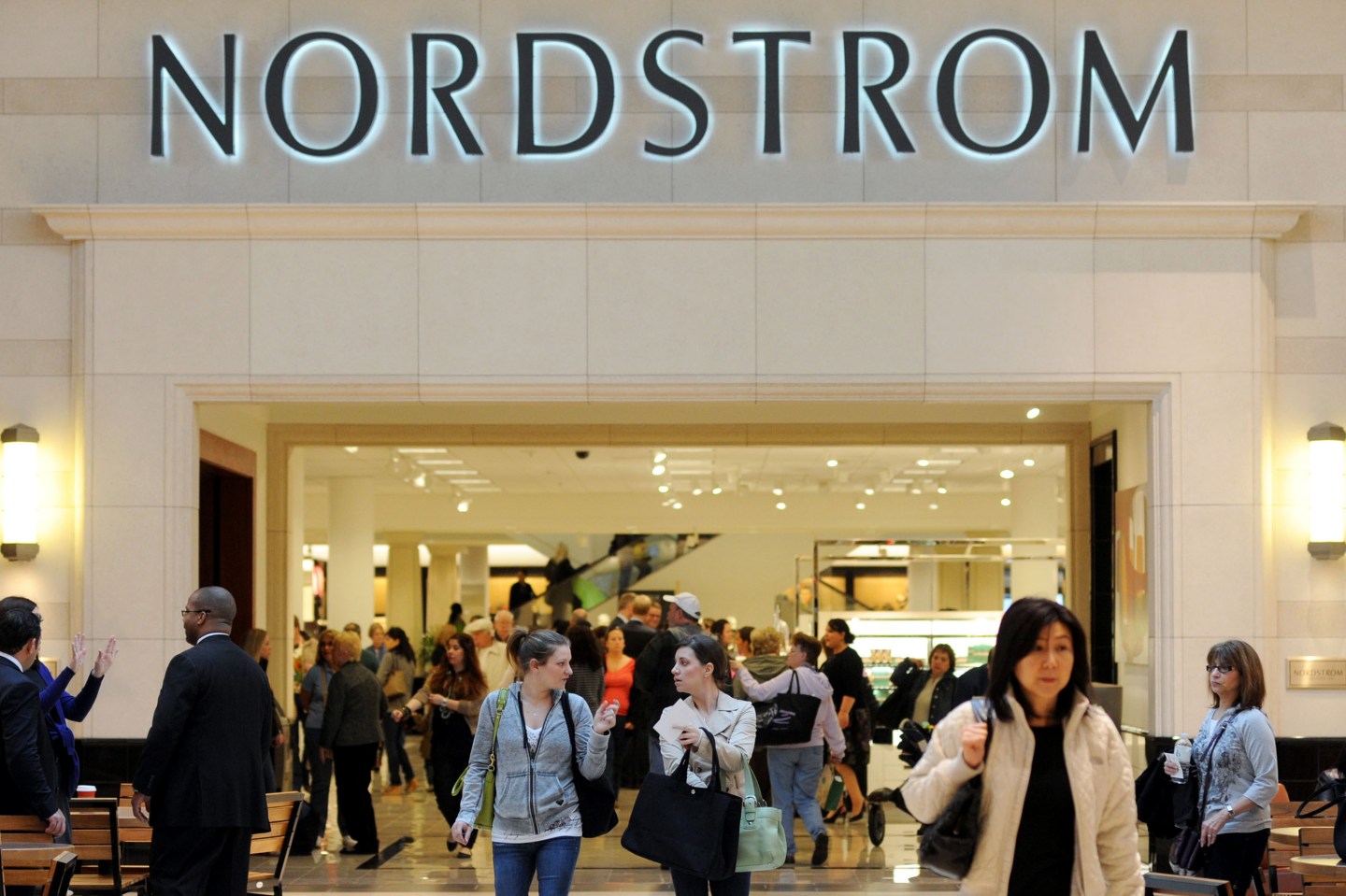
Customers exit a Nordstrom Inc. department store and enter the Christiana Mall in Christiana, Delaware, U.S., on Friday, April 8, 2011. Seattle-based Nordstrom Inc., one of the nation's leading fashion specialty retailers, kicked off the opening of its new store at Christiana Mall in April with a sold-out evening gala that helped raise $123,000 for local charities. Photographer: William Thomas Cain/Bloomberg via Getty ImagesWilliam Thomas Cain/Bloomberg via Getty Images

The retail sector has perhaps suffered the most over the years, as it constantly struggles to adjust to what is current, pertinent, and efficient in delivering customers the products and services they want. A focus on how things look as opposed to what they do for the customer is a very shortsighted view of the relationship between retailer and consumer. Nordstrom (JWN), one of the very few companies in continuous operation since 1901 and with the original family owner still involved in the business, is perhaps the first retailer to understand this, as evident in its decision to open Nordstrom Local, its first store that won’t sell clothes.

In retail, the container is often mistaken for the content (pun intended), and the only way out of this dilemma for every retailer is to think like a software business. This means accepting that the environment is in constant flux and focusing on the company’s mission. The former should lead retailers to a thorough evaluation of tools available to them so as to minimize capital expenditures and avoid investment in any technological or other type of platform exclusively. The latter redirects all company efforts to the emotion their mission has promised the customer.

Nordstrom Local, the latest of the upscale retailer’s initiatives as it experiments with new delivery formats, promises an in-store bar with wine, beer, coffee, and juices; eight fitting rooms; alterations; convenient merchandise pick-ups and returns; manicures; and expert image consulting advice from its knowledgeable personal stylists. Instead of a point of sale, the Local aspires to become a physical manifestation of the Nordstrom brand, creating indulgent customer experiences that can be completed with purchases through any of the retailer’s other channels. That’s how Nordstrom interprets fabulousness today, and that’s what it will deliver via the Local, set to open in Los Angeles on October 3.

This new retail format can create more personalized visits with less friction—shorter waits, fewer returns, and lower levels of frustration on returns and pick-ups overall. In other words, it is designed to eliminate multiple customer pain points while also providing the retailer with information on tastes, lifestyles, and specific behavior—all of which can lead to improvement of merchandise assortment in its other stores, as well as overall customer experience with the Nordstrom brand. The Local store can close the loop on data collected on Nordstrom’s website and mobile apps (quantitative) as well as actual face-to-face contact via its styling experts (qualitative) while making sure that catering to specific needs is achieved through expert advice. Nordstrom Local will be contributing to customer loyalty while the retailer will be strengthening a key performance metric, the customer’s “intent to return.” Additional information (quantitative and qualitative) always results in smarter inventory and processes. It also fosters additional innovation in modes of engagement and delivery.

Nordstrom’s mission is to “provide a fabulous customer experience by empowering customers and the employees who serve them.” The large, Seattle-based retailer has had its fair share of trouble, including substantial labor disputes in the 1990s. It was at that pivotal point that its leadership updated the company’s mission and chose to focus on a culture of collegiality, respect, and personal growth, ushering in an era of employee satisfaction and consequently, substantial growth of its customer base all through the early 2000s.

With its mission and now its new concept store, Nordstrom is asking us this: “Who wants to feel fabulous?” Traditional retailing has been based on simpler questions. The following questions are good examples of older types of retailing. They may also mistakenly represent a business as a whole when in fact they give only partial answers:

“Who needs clothing?” determines the geographic location of a clothing store.

“Who wants clothing?” determines market positioning, customer age etc.

“What type of clothing do you want?” links the business to ways of life that may become obsolete, as is the case with formal corporate attire. As casual Fridays led to more relaxed office environments, casual dress is now adjusting to a moderate form of athleisure. One has not entirely replaced the other, but the shift is happening.


When retailers follow one of these product or service questions too closely, they risk failing. When they focus on a specific emotion to deliver, they catalyze their own evolution. Think of Amazon (AMZN) that delivers instant gratification, or Apple (AAPL) that delivers temptation.

Retailers chasing the next technological platform or alternate retail format need to be reminded that the shift on how value creation is delivered is real and deeply rooted in human emotions. Each business needs a clear mission statement that both supports it now and guides it into the future. Emotions are the essence of human nature, and the only indicator of what a business should do next.

In other words, if Nordstrom can keep its promise to deliver fabulousness, it will be around for many years. Let’s stop thinking about the container (is it a department store, an e-commerce site, an omni-channel retailer?) and let’s focus on the content. That’s what the retail sector is about.

Thomaï Serdari is an adjunct associate professor of marketing at NYU Stern School of Business.
About the Authors
By Thomaï Serdari
See full bioRight Arrow Button Icon
By Bethany Cianciolo
See full bioRight Arrow Button Icon

Latest in Commentary

Finance
Lorem ipsum dolor sit amet, consectetur adipiscing elit, sed do eiusmod tempor incididunt ut labore et dolore magna aliqua. Ut enim ad minim veniam
By Fortune Editors
October 20, 2025
Finance
Lorem ipsum dolor sit amet, consectetur adipiscing elit, sed do eiusmod tempor incididunt ut labore et dolore magna aliqua. Ut enim ad minim veniam
By Fortune Editors
October 20, 2025
Finance
Lorem ipsum dolor sit amet, consectetur adipiscing elit, sed do eiusmod tempor incididunt ut labore et dolore magna aliqua. Ut enim ad minim veniam
By Fortune Editors
October 20, 2025
Finance
Lorem ipsum dolor sit amet, consectetur adipiscing elit, sed do eiusmod tempor incididunt ut labore et dolore magna aliqua. Ut enim ad minim veniam
By Fortune Editors
October 20, 2025
Finance
Lorem ipsum dolor sit amet, consectetur adipiscing elit, sed do eiusmod tempor incididunt ut labore et dolore magna aliqua. Ut enim ad minim veniam
By Fortune Editors
October 20, 2025
Finance
Lorem ipsum dolor sit amet, consectetur adipiscing elit, sed do eiusmod tempor incididunt ut labore et dolore magna aliqua. Ut enim ad minim veniam
By Fortune Editors
October 20, 2025

Most Popular

Finance
Lorem ipsum dolor sit amet, consectetur adipiscing elit, sed do eiusmod tempor incididunt ut labore et dolore magna aliqua. Ut enim ad minim veniam
By Fortune Editors
October 20, 2025
Finance
Lorem ipsum dolor sit amet, consectetur adipiscing elit, sed do eiusmod tempor incididunt ut labore et dolore magna aliqua. Ut enim ad minim veniam
By Fortune Editors
October 20, 2025
Finance
Lorem ipsum dolor sit amet, consectetur adipiscing elit, sed do eiusmod tempor incididunt ut labore et dolore magna aliqua. Ut enim ad minim veniam
By Fortune Editors
October 20, 2025
Finance
Lorem ipsum dolor sit amet, consectetur adipiscing elit, sed do eiusmod tempor incididunt ut labore et dolore magna aliqua. Ut enim ad minim veniam
By Fortune Editors
October 20, 2025
Finance
Lorem ipsum dolor sit amet, consectetur adipiscing elit, sed do eiusmod tempor incididunt ut labore et dolore magna aliqua. Ut enim ad minim veniam
By Fortune Editors
October 20, 2025
Finance
Lorem ipsum dolor sit amet, consectetur adipiscing elit, sed do eiusmod tempor incididunt ut labore et dolore magna aliqua. Ut enim ad minim veniam
By Fortune Editors
October 20, 2025
Rankings
  • 100 Best Companies
  • Fortune 500
  • Global 500
  • Fortune 500 Europe
  • Most Powerful Women
  • Future 50
  • World’s Most Admired Companies
  • See All Rankings
Sections
  • Finance
  • Leadership
  • Success
  • Tech
  • Asia
  • Europe
  • Environment
  • Fortune Crypto
  • Health
  • Retail
  • Lifestyle
  • Politics
  • Newsletters
  • Magazine
  • Features
  • Commentary
  • Mpw
  • CEO Initiative
  • Conferences
  • Personal Finance
  • Education
Customer Support
  • Frequently Asked Questions
  • Customer Service Portal
  • Privacy Policy
  • Terms Of Use
  • Single Issues For Purchase
  • International Print
Commercial Services
  • Advertising
  • Fortune Brand Studio
  • Fortune Analytics
  • Fortune Conferences
  • Business Development
About Us
  • About Us
  • Editorial Calendar
  • Press Center
  • Work At Fortune
  • Diversity And Inclusion
  • Terms And Conditions
  • Site Map

© 2025 Fortune Media IP Limited. All Rights Reserved. Use of this site constitutes acceptance of our Terms of Use and Privacy Policy | CA Notice at Collection and Privacy Notice | Do Not Sell/Share My Personal Information
FORTUNE is a trademark of Fortune Media IP Limited, registered in the U.S. and other countries. FORTUNE may receive compensation for some links to products and services on this website. Offers may be subject to change without notice.


Most Popular

placeholder alt text
Future of Work
Malcolm Gladwell tells young people if they want a STEM degree, 'don’t go to Harvard.' You may end up at the bottom of your class and drop out
By Sasha RogelbergDecember 27, 2025
2 days ago
placeholder alt text
Success
MacKenzie Scott's close relationship with Toni Morrison long before Amazon put her on the path give more than $1 billion to HBCUs
By Sasha RogelbergDecember 28, 2025
15 hours ago
placeholder alt text
Banking
Russian official warns a banking crisis is possible amid nonpayments. 'I don’t want to think about a continuation of the war or an escalation'
By Jason MaDecember 27, 2025
1 day ago
placeholder alt text
Arts & Entertainment
Gen Zers and millennials flock to so-called analog islands 'because so little of their life feels tangible'
By Michael Liedtke and The Associated PressDecember 28, 2025
14 hours ago
placeholder alt text
Politics
Peter Thiel and Larry Page are preparing to flee California in case the state passes a billionaire wealth tax, report says
By Jason MaDecember 27, 2025
1 day ago
placeholder alt text
Success
As millions of Gen Zers face unemployment, CEOs of Amazon, Walmart, and McDonald's say opportunity is still there—if you have the right mindset
By Preston ForeDecember 26, 2025
3 days ago

Latest in Commentary

Sridhar Ramaswamy is CEO of Snowflake, the AI Data Cloud company.
CommentarySoftware
Snowflake CEO: Big Tech’s grip on AI will loosen in 2026 — plus 6 more predictions that will define the year
By Sridhar RamaswamyDecember 28, 2025
15 hours ago
Federal Reserve Gov. Chris Waller engages 200 top CEOs at the Yale CEO Summit in December, 2025. (Photo courtesy of the Yale Chief Executive Leadership Institute/Photographer Donovan Marks)
CommentaryFederal Reserve
Why over 80% of America’s top CEOs think Trump would be wrong not to pick Chris Waller for Fed chair
By Jeffrey Sonnenfeld and Steven TianDecember 27, 2025
2 days ago
Kence Anderson is the founder and CEO of AMESA 
CommentarySoftware
I pioneered machine teaching at Microsoft. Building AI agents is like building a basketball team, not drafting a player 
By Kence AndersonDecember 27, 2025
2 days ago
Butch Meily
Commentaryempathy
The global empathy crisis that confronts us this Christmas
By Butch MeilyDecember 25, 2025
4 days ago
economy
CommentaryGDP
Why 4.3% GDP growth proves the ‘vibecession’ theory is historically wrong
By Brian HamiltonDecember 24, 2025
5 days ago
students
CommentaryEducation
Why restricting graduate loans will bankrupt America’s talent supply chain
By Katica RoyDecember 23, 2025
6 days ago