• Home
  • Latest
  • Fortune 500
  • Finance
  • Tech
  • Leadership
  • Lifestyle
  • Rankings
  • Multimedia
CommentaryInfrastructure

Trump’s Infrastructure Plan Isn’t Much of a Plan

By
Michael Granof
Michael Granof
and
Martin Luby
Martin Luby
Down Arrow Button Icon
By
Michael Granof
Michael Granof
and
Martin Luby
Martin Luby
Down Arrow Button Icon
July 12, 2017, 12:31 PM ET
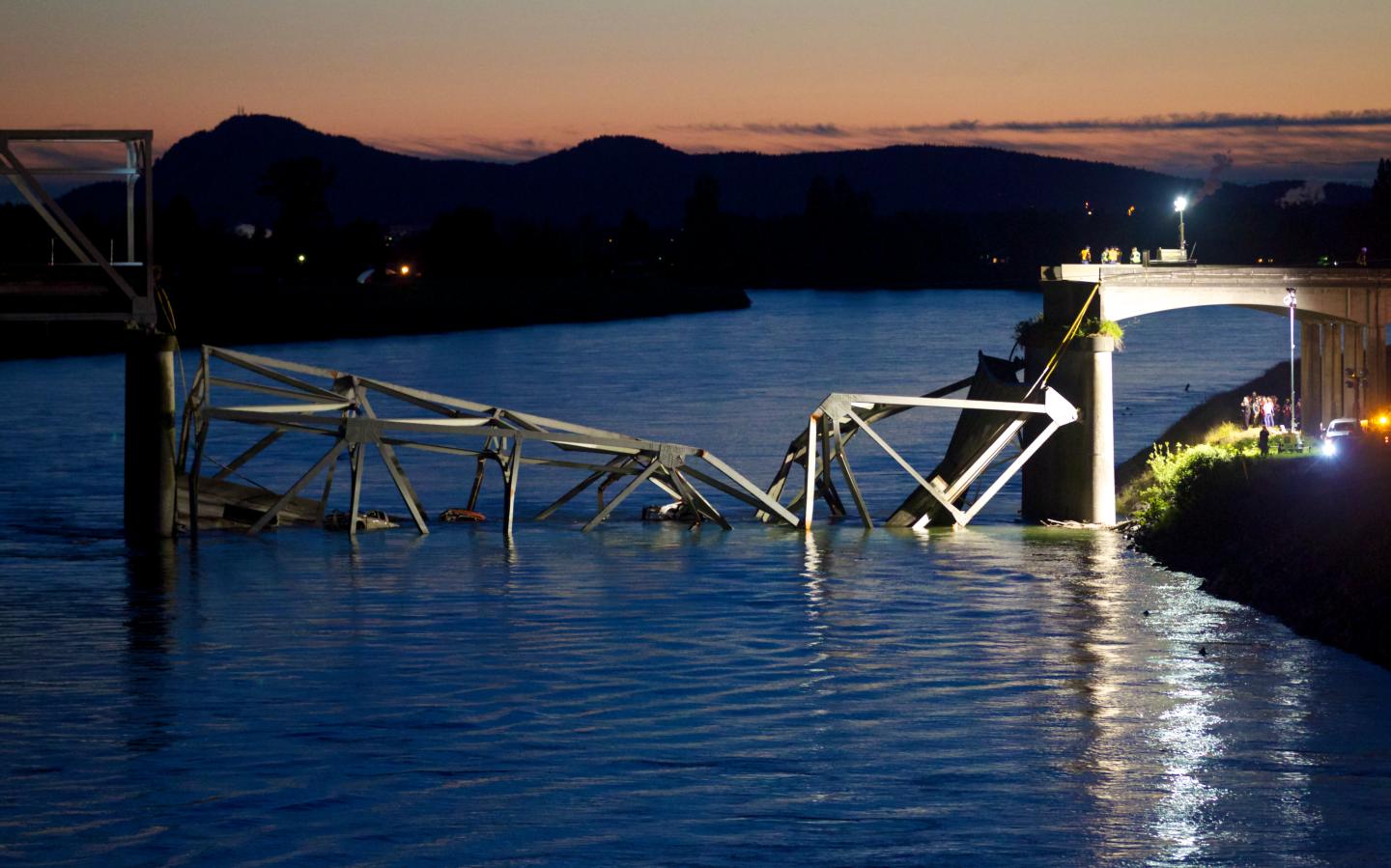
Stephen Brashear/Getty Images

President Donald Trump hasn’t fully outlined his prescription for making American infrastructure great again, but he has called for a major dose of public-private partnerships—also known as P3s. These P3s, he promises, provide “better procurement methods, market discipline and a long-term focus on maintaining assets.”

That’s true enough in some cases, but P3s are no cure-all for every public project. Despite the hype, the public-private approach does not provide new funding sources to communities, nor does it work for many types of public projects.

Most of us have seen a P3 at work in our community. The government contracts with a private company to finance, build, and maintain a public works project, such as a road. The company finances construction by borrowing money from banks or investors or by issuing shares of stock. After some extended period, the company will turn over the road to the government. In the meantime, the company collects tolls on the road and is responsible for maintaining it. The tolls are expected to cover the maintenance, interest, and principal on the debt and to enable the company to profit.

By contrast, in the more conventional arrangement, the government contracts with a private company to construct the road and finance the project by selling tax-exempt municipal bonds or pay for it with its existing funds. The government is responsible for maintaining the road and for servicing the debt. It expects to cover its costs through taxes or tolls.

In both cases, a private company is contracted to do the work with financing from private sector capital, and all of us bear the cost burden either through tolls or taxes. There is no “new” source of funding.

P3s rearrange the risks and rewards of infrastructure projects. Under the P3 arrangement, the government does not appear to be incurring these costs because it does not have to write the checks to pay for them. However, it is sacrificing the toll revenue collected.

The private sector “owner” of the road bears the risk that tolls will be inadequate to cover the costs and reaps the benefits if tolls exceed anticipated costs. But if the owner incurs major losses and is forced to declare bankruptcy, it falls upon the government to take back the project and ensure that it continues. This situation is exactly what happened in Indiana recently when a private operator’s bankruptcy filing threatened to cause significant construction delays on a partially completed road. Something similar happened in Texas with the Texas 130 toll road connecting San Antonio and Austin. Toll revenues did not meet expectations.

But P3s are not without their benefits. They can often launch without the lengthy procedures mandated by government. P3 debt is not subject to debt limitations that the government may face and does not appear on its balance sheet. In some circumstances, the private owner of the project may, in fact, be capable of operating it more efficiently and effectively than a government can.

But ease does not equal abundance. In fact, the P3 approach does nothing to solve the fundamental infrastructure funding challenge faced by governments at the local, state, and federal levels. According to a 2017 analysis by the American Society of Civil Engineers, the U.S. has more than a $2.1 trillion gap between current funding and estimated needs for surface transportation, airports, water, wastewater, inland waterways, and other infrastructure projects. In the end, it is the public that must provide the funding regardless of the structure of the project.

Even P3 enthusiasts will admit that many of the nation’s infrastructure needs are for projects that do not generate direct revenue that would make them attractive P3 candidates. Road repaving, bridge and building maintenance, school construction, and telecommunication system expansions are common projects that may not generate revenue streams collectible through tolls or other means. The conventional government infrastructure approach is probably the only viable option for these public works.

American infrastructure needs rebuilding, and P3s belong in the mix of remedies available to the government. However, clear heads realize that P3s are not a blanket cure for the nation’s infrastructure ills, but a targeted remedy with limited effect on the larger problem—a lack of funding resources.

Michael Granof is the Ernst & Young professor of accounting at The University of Texas at Austin. Martin Luby is an assistant professor in the LBJ School of Public Affairs at The University of Texas at Austin. Martin Luby is an assistant professor in the LBJ School of Public Affairs at The University of Texas at Austin.

About the Authors
By Michael Granof
See full bioRight Arrow Button Icon
By Martin Luby
See full bioRight Arrow Button Icon

Latest in Commentary

Finance
Lorem ipsum dolor sit amet, consectetur adipiscing elit, sed do eiusmod tempor incididunt ut labore et dolore magna aliqua. Ut enim ad minim veniam
By Fortune Editors
October 20, 2025
Finance
Lorem ipsum dolor sit amet, consectetur adipiscing elit, sed do eiusmod tempor incididunt ut labore et dolore magna aliqua. Ut enim ad minim veniam
By Fortune Editors
October 20, 2025
Finance
Lorem ipsum dolor sit amet, consectetur adipiscing elit, sed do eiusmod tempor incididunt ut labore et dolore magna aliqua. Ut enim ad minim veniam
By Fortune Editors
October 20, 2025
Finance
Lorem ipsum dolor sit amet, consectetur adipiscing elit, sed do eiusmod tempor incididunt ut labore et dolore magna aliqua. Ut enim ad minim veniam
By Fortune Editors
October 20, 2025
Finance
Lorem ipsum dolor sit amet, consectetur adipiscing elit, sed do eiusmod tempor incididunt ut labore et dolore magna aliqua. Ut enim ad minim veniam
By Fortune Editors
October 20, 2025
Finance
Lorem ipsum dolor sit amet, consectetur adipiscing elit, sed do eiusmod tempor incididunt ut labore et dolore magna aliqua. Ut enim ad minim veniam
By Fortune Editors
October 20, 2025

Most Popular

Finance
Lorem ipsum dolor sit amet, consectetur adipiscing elit, sed do eiusmod tempor incididunt ut labore et dolore magna aliqua. Ut enim ad minim veniam
By Fortune Editors
October 20, 2025
Finance
Lorem ipsum dolor sit amet, consectetur adipiscing elit, sed do eiusmod tempor incididunt ut labore et dolore magna aliqua. Ut enim ad minim veniam
By Fortune Editors
October 20, 2025
Finance
Lorem ipsum dolor sit amet, consectetur adipiscing elit, sed do eiusmod tempor incididunt ut labore et dolore magna aliqua. Ut enim ad minim veniam
By Fortune Editors
October 20, 2025
Finance
Lorem ipsum dolor sit amet, consectetur adipiscing elit, sed do eiusmod tempor incididunt ut labore et dolore magna aliqua. Ut enim ad minim veniam
By Fortune Editors
October 20, 2025
Finance
Lorem ipsum dolor sit amet, consectetur adipiscing elit, sed do eiusmod tempor incididunt ut labore et dolore magna aliqua. Ut enim ad minim veniam
By Fortune Editors
October 20, 2025
Finance
Lorem ipsum dolor sit amet, consectetur adipiscing elit, sed do eiusmod tempor incididunt ut labore et dolore magna aliqua. Ut enim ad minim veniam
By Fortune Editors
October 20, 2025
Fortune Secondary Logo
Rankings
  • 100 Best Companies
  • Fortune 500
  • Global 500
  • Fortune 500 Europe
  • Most Powerful Women
  • Future 50
  • World’s Most Admired Companies
  • See All Rankings
Sections
  • Finance
  • Fortune Crypto
  • Features
  • Leadership
  • Health
  • Commentary
  • Success
  • Retail
  • Mpw
  • Tech
  • Lifestyle
  • CEO Initiative
  • Asia
  • Politics
  • Conferences
  • Europe
  • Newsletters
  • Personal Finance
  • Environment
  • Magazine
  • Education
Customer Support
  • Frequently Asked Questions
  • Customer Service Portal
  • Privacy Policy
  • Terms Of Use
  • Single Issues For Purchase
  • International Print
Commercial Services
  • Advertising
  • Fortune Brand Studio
  • Fortune Analytics
  • Fortune Conferences
  • Business Development
  • Group Subscriptions
About Us
  • About Us
  • Editorial Calendar
  • Press Center
  • Work At Fortune
  • Diversity And Inclusion
  • Terms And Conditions
  • Site Map
  • About Us
  • Editorial Calendar
  • Press Center
  • Work At Fortune
  • Diversity And Inclusion
  • Terms And Conditions
  • Site Map
  • Facebook icon
  • Twitter icon
  • LinkedIn icon
  • Instagram icon
  • Pinterest icon

Latest in Commentary

trump
CommentaryWhite House
Trump has already endorsed the Monroe Doctrine. Now he needs to endorse the Truman Doctrine
By Robert HormatsApril 18, 2026
6 minutes ago
trump
CommentaryManufacturing
Tariffs alone won’t save American manufacturing — here’s what actually will
By Johan "Kip" EidebergApril 18, 2026
51 minutes ago
hormuz
CommentaryIran
With Hormuz under strain, a trade corridor built for resilience faces a real-world test
By Angela Chitkara and Samantha SuttonApril 17, 2026
20 hours ago
broker
CommentarySoftware
The 3 forces quietly dismantling the business model that made enterprise software fabulously profitable
By Michael Jacobides and Stefano PuntoniApril 17, 2026
21 hours ago
welti
CommentaryIran
Switzerland’s former ambassador to Iran: here’s how to end this war — and why Pakistan isn’t enough
By Philippe WeltiApril 17, 2026
1 day ago
Anita Beveridge-Raffo is Head of Retail and Consumer Goods at Palantir Technologies
CommentaryAI agents
Palantir exec: the biggest mistake retailers are making with AI? Trying to do it all with one agent
By Anita Beveridge-RaffoApril 16, 2026
2 days ago

Most Popular

Pope Leo warned the world is in ‘big trouble’ if Elon Musk becomes the first trillionaire
Success
Pope Leo warned the world is in ‘big trouble’ if Elon Musk becomes the first trillionaire
By Preston ForeApril 17, 2026
1 day ago
A world going broke: IMF says America's $39 trillion national debt is actually a global problem—and AI may be the only rescue
Economy
A world going broke: IMF says America's $39 trillion national debt is actually a global problem—and AI may be the only rescue
By Nick LichtenbergApril 16, 2026
2 days ago
Jeff Bezos pledged $10 billion for climate change. With the 2030 clock ticking, his wife, Lauren Sánchez Bezos, is leading the charge to spend it
Environment
Jeff Bezos pledged $10 billion for climate change. With the 2030 clock ticking, his wife, Lauren Sánchez Bezos, is leading the charge to spend it
By Sydney LakeApril 15, 2026
3 days ago
Older millennials are starting to act like boomers in the housing market—and pulling away from the pack
Real Estate
Older millennials are starting to act like boomers in the housing market—and pulling away from the pack
By Nick LichtenbergApril 17, 2026
1 day ago
Iran has reopened the Strait of Hormuz—but experts say it now holds a card that works ‘almost like a nuclear deterrent’
Energy
Iran has reopened the Strait of Hormuz—but experts say it now holds a card that works ‘almost like a nuclear deterrent’
By Eva RoytburgApril 17, 2026
17 hours ago
Germany already told its workers to ditch four-day weeks and work-life balance. Now the government wants to cut their pay for calling in sick, too
Success
Germany already told its workers to ditch four-day weeks and work-life balance. Now the government wants to cut their pay for calling in sick, too
By Orianna Rosa RoyleApril 16, 2026
2 days ago

© 2026 Fortune Media IP Limited. All Rights Reserved. Use of this site constitutes acceptance of our Terms of Use and Privacy Policy | CA Notice at Collection and Privacy Notice | Do Not Sell/Share My Personal Information
FORTUNE is a trademark of Fortune Media IP Limited, registered in the U.S. and other countries. FORTUNE may receive compensation for some links to products and services on this website. Offers may be subject to change without notice.