• Home
  • Latest
  • Fortune 500
  • Finance
  • Tech
  • Leadership
  • Lifestyle
  • Rankings
  • Multimedia
LeadershipGovernment

A Key Part of Republicans’ Corporate Tax Plan Is in Trouble

By
Stephen Ohlemacher
Stephen Ohlemacher
and
The Associated Press
Down Arrow Button Icon
By
Stephen Ohlemacher
Stephen Ohlemacher
and
The Associated Press
Down Arrow Button Icon
June 17, 2017, 4:41 PM ET
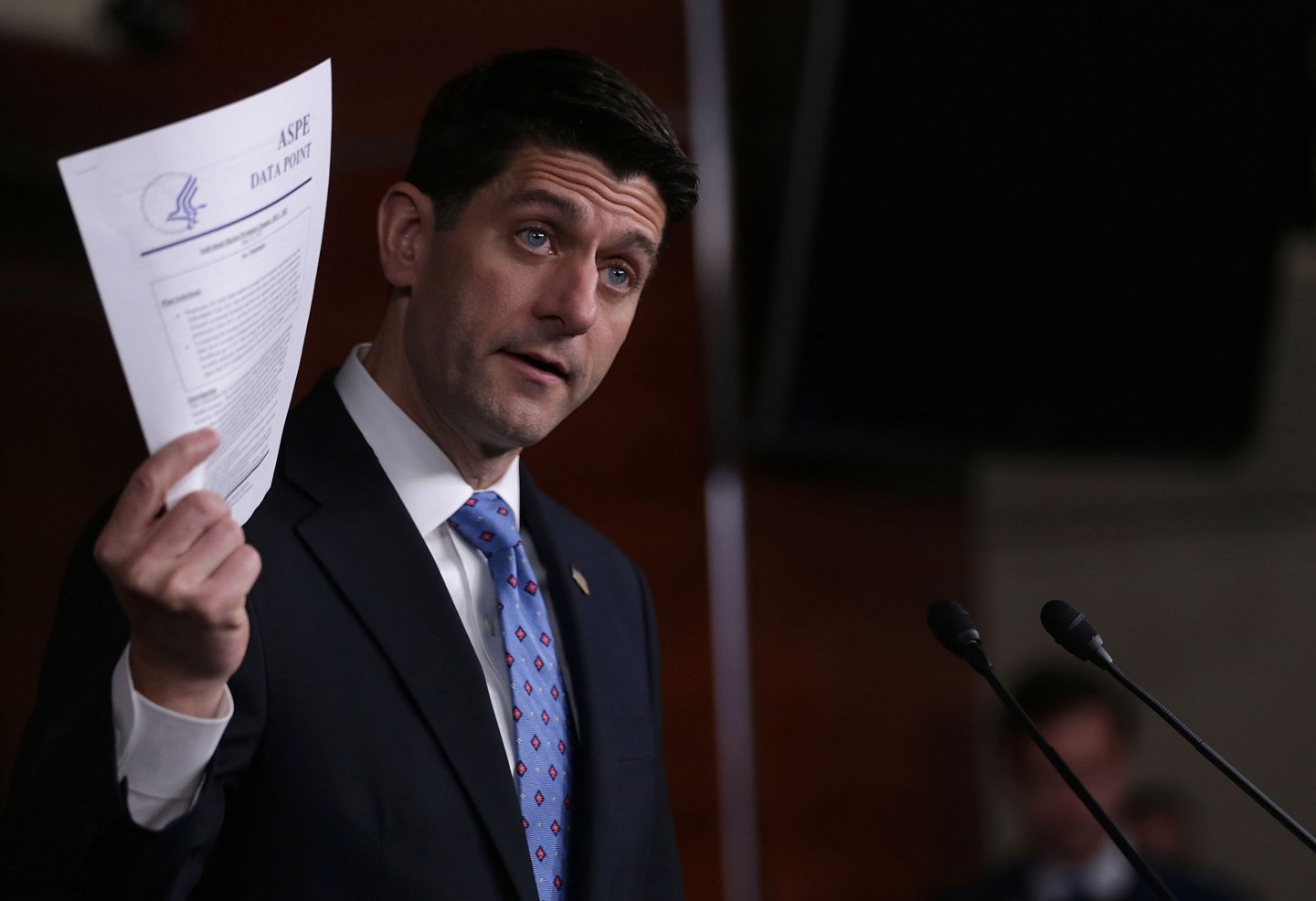
House Speaker Paul Ryan Holds Weekly Press Briefing At The Capitol
WASHINGTON, DC - MAY 25: U.S. Speaker of the House Rep. Paul Ryan (R-WI) holds up a Department of Health and Human Services report on "Individual Market Premium Changes: 2013 - 2017" during a weekly news briefing May 25, 2017 on Capitol Hill in Washington, DC. Speaker Ryan took questions from the media on the CBO score of the AHCA and the alleged assault on a reporter by Montana congressional candidate Greg Gianforte. (Photo by Alex Wong/Getty Images)Alex Wong/Getty Images

WASHINGTON (AP) — A key part of House Republicans’ plan to overhaul the way corporations pay taxes is on life support, leaving lawmakers scrambling to save one of President Donald Trump’s biggest priorities and increasing the chances the GOP will simply pass a tax cut instead of overhauling the tax code.

A proposed tax on imports is central to the GOP plan to lower the overall corporate tax rate. It would generate about $1 trillion over the next decade to finance the lower rates without adding to the deficit. It would also provide strong incentives for U.S.-based companies to keep their operations in the United States and perhaps persuade companies to move overseas operations to the U.S.

But the tax faces strong opposition from retailers, automakers and the oil industry, and a growing number of congressional Republicans have come out against it. They worry that it will increase the cost of imports, raising consumer prices.

Majority Leader Mitch McConnell, R-Ky., says there probably aren’t enough votes to pass the import tax in the Senate — not a single Republican senator has publicly endorsed it. And a powerful group of House conservatives says it’s time to dump the idea.

“The sooner we acknowledge that and get on with a plan that actually works and actually can build consensus, the better off we will be,” said Rep. Mark Meadows, R-N.C., chairman of the conservative Freedom Caucus.

Even one of the biggest backers of the new tax says he is open to other ideas.

Rep. Kevin Brady, R-Texas, has pushed the tax as chairman of the powerful House Ways and Means Committee. He still says it’s the best way to promote economic growth and domestic jobs, but he has softened his stance on alternatives.

“I’m still confident that we’re going to stay at the table until we solve that problem, which is how do we stop U.S. jobs from continuing to leave the United States,” Brady said. “We’re going to remain open to the best ideas on how we do that.”

On Tuesday, Brady proposed gradually phasing in the tax over five years to give corporations time to adjust.

It wasn’t received well by opponents.

“Forcing consumers to pay more so that some profitable companies can operate tax-free is no better of an idea in five years than it is today,” said Brian Dodge of the Retail Industry Leaders Association.

But if the import tax is dead, then what?

“I would never declare anything dead until there was a fully formed alternative,” said Rohit Kumar, a former tax counsel to McConnell who now heads PwC’s Washington tax office. “I think that’s one of the big challenges that Republicans are struggling with right now.”

Thirty-one years after the last tax overhaul, there is widespread agreement that the current system is too complicated and picks winners and losers, compelling companies to make decisions based on tax implications instead of sound business reasons.

The goal — for now — is to simplify the tax code and make it more efficient in a way that does not add to the federal government’s mounting debt. That means some would pay more and some would pay less, a heavy political lift among politicians who have deep political and practical disagreements.

Lawmakers also are trying to overhaul taxes on individuals, which raises another set of big challenges.

“It’s easier to get a coalition to cut taxes,” said Mark Mazur, a former Treasury official under President Barack Obama. “And if the conversation is, ‘how long do they last and how deep are the tax cuts,’ each party knows how to do that conversation. It’s not like you’re asking for a huge lift.”

The new import tax, which is called a border adjustment tax, would radically change the way corporations are taxed. Under current law, corporations pay a top tax rate of 35 percent on their profits. But the tax code is filled with so many exemptions, deductions and credits that most corporations pay a much lower rate.

Under the proposed system, American companies that produce and sell their products in the U.S. would pay a new 20 percent tax on the profits from these sales. However, if a company exports a product, the profits from that sale would not be taxed by the U.S.

Foreign companies that import goods to the U.S. would also have to pay the tax, and they would not be able to deduct the cost of the imported good as a business expense.

Republicans in Congress and at the White House have been meeting behind closed doors for weeks to come up with viable alternatives. Democrats have been largely excluded from the talks, leaving Republicans with little room for error.

“I still think that Republicans, out of pure political necessity, if nothing else, are likely to find a way to get some sort of tax bill to the president’s desk for his signature,” Kumar said.

Whether it’s genuine tax reform or simply a tax cut “is still very much in question right now,” he added.

With reporting by Erica Werner.

About the Authors
By Stephen Ohlemacher
See full bioRight Arrow Button Icon
By The Associated Press
See full bioRight Arrow Button Icon

Latest in Leadership

JPMorganChase CEO Jamie Dimon says AI will eliminate jobs—and that soft skills will be more important than ever.
Future of WorkTech
Jamie Dimon says soft skills like emotional intelligence and communication are vital as AI eliminates roles
By Nino PaoliDecember 14, 2025
41 minutes ago
Nicholas Thompson
C-SuiteBook Excerpt
I took over one of the most prestigious media firms while training for an ultramarathon. Here’s what I learned becoming CEO of The Atlantic
By Nicholas ThompsonDecember 13, 2025
22 hours ago
Lauren Antonoff
SuccessCareers
Once a college dropout, this CEO went back to school at 52—but she still says the Gen Zers who will succeed are those who ‘forge their own path’
By Preston ForeDecember 13, 2025
23 hours ago
Asiathe future of work
The CEO of one of Asia’s largest co-working space providers says his business has more in common with hotels
By Angelica AngDecember 12, 2025
1 day ago
Donald Trump
HealthHealth Insurance
‘Tragedy in the making’: Top healthcare exec on why insurance will spike to subsidize a tax cut to millionaires and billionaires
By Nick LichtenbergDecember 12, 2025
2 days ago
three men in suits, one gesturing
AIBrainstorm AI
The fastest athletes in the world can botch a baton pass if trust isn’t there—and the same is true of AI, Blackbaud exec says
By Amanda GerutDecember 12, 2025
2 days ago

Most Popular

placeholder alt text
Success
Apple cofounder Ronald Wayne sold his 10% stake for $800 in 1976—today it’d be worth up to $400 billion
By Preston ForeDecember 12, 2025
2 days ago
placeholder alt text
Economy
Tariffs are taxes and they were used to finance the federal government until the 1913 income tax. A top economist breaks it down
By Kent JonesDecember 12, 2025
2 days ago
placeholder alt text
Success
40% of Stanford undergrads receive disability accommodations—but it’s become a college-wide phenomenon as Gen Z try to succeed in the current climate
By Preston ForeDecember 12, 2025
2 days ago
placeholder alt text
Economy
The Fed just ‘Trump-proofed’ itself with a unanimous move to preempt a potential leadership shake-up
By Jason MaDecember 12, 2025
2 days ago
placeholder alt text
Success
Apple CEO Tim Cook out-earns the average American’s salary in just 7 hours—to put that into context, he could buy a new $439,000 home in just 2 days
By Emma BurleighDecember 12, 2025
2 days ago
placeholder alt text
Economy
For the first time since Trump’s tariff rollout, import tax revenue has fallen, threatening his lofty plans to slash the $38 trillion national debt
By Sasha RogelbergDecember 12, 2025
2 days ago
Rankings
  • 100 Best Companies
  • Fortune 500
  • Global 500
  • Fortune 500 Europe
  • Most Powerful Women
  • Future 50
  • World’s Most Admired Companies
  • See All Rankings
Sections
  • Finance
  • Leadership
  • Success
  • Tech
  • Asia
  • Europe
  • Environment
  • Fortune Crypto
  • Health
  • Retail
  • Lifestyle
  • Politics
  • Newsletters
  • Magazine
  • Features
  • Commentary
  • Mpw
  • CEO Initiative
  • Conferences
  • Personal Finance
  • Education
Customer Support
  • Frequently Asked Questions
  • Customer Service Portal
  • Privacy Policy
  • Terms Of Use
  • Single Issues For Purchase
  • International Print
Commercial Services
  • Advertising
  • Fortune Brand Studio
  • Fortune Analytics
  • Fortune Conferences
  • Business Development
About Us
  • About Us
  • Editorial Calendar
  • Press Center
  • Work At Fortune
  • Diversity And Inclusion
  • Terms And Conditions
  • Site Map

© 2025 Fortune Media IP Limited. All Rights Reserved. Use of this site constitutes acceptance of our Terms of Use and Privacy Policy | CA Notice at Collection and Privacy Notice | Do Not Sell/Share My Personal Information
FORTUNE is a trademark of Fortune Media IP Limited, registered in the U.S. and other countries. FORTUNE may receive compensation for some links to products and services on this website. Offers may be subject to change without notice.