• Home
  • Latest
  • Fortune 500
  • Finance
  • Tech
  • Leadership
  • Lifestyle
  • Rankings
  • Multimedia
CommentaryGE

Why John Flannery’s Leadership Could Be a Win for GE

By
Hal Gregersen
Hal Gregersen
and
Bethany Cianciolo
Bethany Cianciolo
Down Arrow Button Icon
By
Hal Gregersen
Hal Gregersen
and
Bethany Cianciolo
Bethany Cianciolo
Down Arrow Button Icon
June 15, 2017, 3:11 PM ET
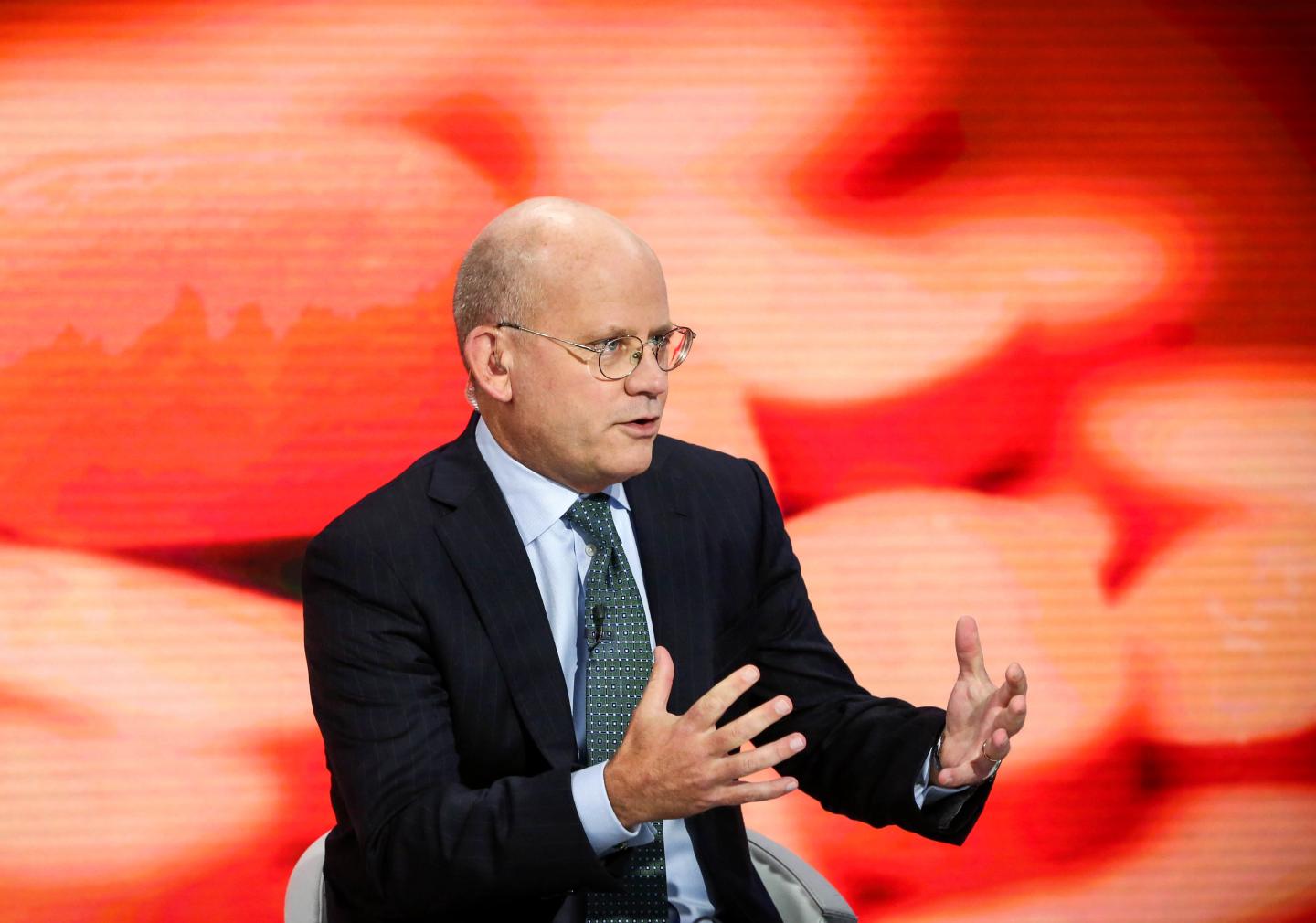
GE Healthcare  President And Chief Executive Officer John Flannery Interview
John Flannery, president and chief executive officer of GE Healthcare, speaks during a Bloomberg Television interview in New York, U.S., on Friday, Sept. 30, 2016. Flannery discussed the company's performance and growth. Photographer: Christopher Goodney/Bloomberg via Getty ImagesPhotograph by Christopher Goodney — Bloomberg via Getty Images

With the news this week that Jeff Immelt is stepping down as CEO of GE (GE) and John Flannery is stepping up to the job, plenty of people are asking: What will Immelt’s departure mean for GE’s performance? After 16 years of stock-price malaise, will the company get energized again? Many seem to think so.

The evidence is mixed on how effective a big change in the corner office is to company performance, but some interesting patterns emerge from the most rigorously conducted studies. Unsurprisingly, there is no simple answer. Leadership is always contextual, and how things go in the aftermath of a succession depends on multiple factors. Management scholars have tended to focus on two big variables: whether the business was in crisis, obviously needing a change of direction; and whether the new leader was recruited from the outside vs. promoted from within.

Based on these studies’ findings, GE appears to have done what tends to work best in its situation. Internal candidate appointments generally deliver the greatest performance gains when a company does not need radical change in its strategy and/or operations. The insider edge is sharpest when the new CEO has spent time working directly with the past CEO, as Flannery certainly has. (See Yan Zhang and Nandini Rajagopalan’s research on “relay” CEO successions.) Yet gains in such situations are usually modest and centered on shareholder returns. (Indeed, researchers Rakesh Khurana and Nitin Nohria found, on average, no improvement in return on assets.)

There is a second way, however, to see Flannery’s prospects more clearly, and that is to think about what in particular GE needs to achieve, what it takes to achieve that, and whether Flannery is the right person to make it happen.

What GE needs, clearly, is growth. And while acquisitions provide one way to achieve that, turning the company into more of an innovation engine is an even better path to follow. For decades, my own research agenda has focused on figuring out how some leaders do just that. Over the years, I’ve noticed that leaders in fast-growing companies tend to engage in and encourage a higher level of questioning—both in terms of quantity and quality. This makes sense, given that high-impact innovation always proceeds from some flash of insight—and it is almost always possible to trace these breakthroughs back to someone’s reframing of a problem they are trying to solve. Asking a better question can unlock a whole new pathway to finding a better answer.

See also: Why Jeff Immelt’s GE Succession Will Go Much Better Than Jack Welch’s

The CEO doesn’t personally have to come up with all of the better questions (let alone all of the answers). In fact, it’s far better to create the conditions where others give voice to assumption-challenging questions—and to listen carefully for the ones that might prove catalytic, even game-changing. Flannery shows signs of being capable of this. In his first interviews post-announcement, he has stressed that he will start by getting out to the far reaches of his organization, and listening to what people have to tell him.

Flannery’s background at GE, rich in assignments outside of the United States, also resonates with research I’ve done on CEO international experience and firm performance. On average, substantial international experience in a CEO’s career correlates with 3% to 4% higher share performance. My interpretation of that finding is that these executives have learned through their immersions in different cultures to look at issues from multiple perspectives. They recognize that their (and others’) assumptions can be productively challenged, and are, as a result, better decision-makers.

When Jeff Dyer, Clay Christensen, and I analyzed interviews and case studies for The Innovator’s DNA, we found evidence suggesting that leaders who have worked in multiple industries and/or geographies are twice as likely to ask generative questions—that is, the kind that invite people’s best thinking rather than put them on the defensive, and manage to elicit valuable new ideas. Research by others highlights the importance of “perspective taking” in any attempt to find a novel new solution—and that is a skill one often gains as an expat.

In short, based on what I gather from Flannery’s words and work, it seems wrong to pigeonhole him as “the quintessential company man.” He has spent much of his career working far away from headquarters, and been part of many different units at the company, so we can hope for something more.

A decade ago, Joe Bower of Harvard Business School published The CEO Within, which made a research-based case for what he called the “inside-outside” leader. These executives grow up in a company and therefore know how to get things done in it, yet they have also acquired the capacity to look at it with the eyes of an outsider—say, as a party who just acquired the company. Inside outsiders, Bower concludes, lead their companies to higher performance. One reason they do so well is that they ask basic questions, and create the space for basic assumptions to be reexamined.


In months to come, as plenty of people keep close watch on what Flannery is doing, this is what I’ll be looking for. And given his international experience, it’s what I’ll be expecting. Others will be anxious to see what answers he has for GE, but I’ll start by listening for the questions.

Hal Gregersen is executive director of the MIT Leadership Center and a senior lecturer in leadership and innovation at the MIT Sloan School of Management. He is the author of Bursting the CEO Bubble and The Innovator’s DNA: Mastering the Five Skills of Disruptive Innovators.

About the Authors
By Hal Gregersen
See full bioRight Arrow Button Icon
By Bethany Cianciolo
See full bioRight Arrow Button Icon

Latest in Commentary

Finance
Lorem ipsum dolor sit amet, consectetur adipiscing elit, sed do eiusmod tempor incididunt ut labore et dolore magna aliqua. Ut enim ad minim veniam
By Fortune Editors
October 20, 2025
Finance
Lorem ipsum dolor sit amet, consectetur adipiscing elit, sed do eiusmod tempor incididunt ut labore et dolore magna aliqua. Ut enim ad minim veniam
By Fortune Editors
October 20, 2025
Finance
Lorem ipsum dolor sit amet, consectetur adipiscing elit, sed do eiusmod tempor incididunt ut labore et dolore magna aliqua. Ut enim ad minim veniam
By Fortune Editors
October 20, 2025
Finance
Lorem ipsum dolor sit amet, consectetur adipiscing elit, sed do eiusmod tempor incididunt ut labore et dolore magna aliqua. Ut enim ad minim veniam
By Fortune Editors
October 20, 2025
Finance
Lorem ipsum dolor sit amet, consectetur adipiscing elit, sed do eiusmod tempor incididunt ut labore et dolore magna aliqua. Ut enim ad minim veniam
By Fortune Editors
October 20, 2025
Finance
Lorem ipsum dolor sit amet, consectetur adipiscing elit, sed do eiusmod tempor incididunt ut labore et dolore magna aliqua. Ut enim ad minim veniam
By Fortune Editors
October 20, 2025

Most Popular

Finance
Lorem ipsum dolor sit amet, consectetur adipiscing elit, sed do eiusmod tempor incididunt ut labore et dolore magna aliqua. Ut enim ad minim veniam
By Fortune Editors
October 20, 2025
Finance
Lorem ipsum dolor sit amet, consectetur adipiscing elit, sed do eiusmod tempor incididunt ut labore et dolore magna aliqua. Ut enim ad minim veniam
By Fortune Editors
October 20, 2025
Finance
Lorem ipsum dolor sit amet, consectetur adipiscing elit, sed do eiusmod tempor incididunt ut labore et dolore magna aliqua. Ut enim ad minim veniam
By Fortune Editors
October 20, 2025
Finance
Lorem ipsum dolor sit amet, consectetur adipiscing elit, sed do eiusmod tempor incididunt ut labore et dolore magna aliqua. Ut enim ad minim veniam
By Fortune Editors
October 20, 2025
Finance
Lorem ipsum dolor sit amet, consectetur adipiscing elit, sed do eiusmod tempor incididunt ut labore et dolore magna aliqua. Ut enim ad minim veniam
By Fortune Editors
October 20, 2025
Finance
Lorem ipsum dolor sit amet, consectetur adipiscing elit, sed do eiusmod tempor incididunt ut labore et dolore magna aliqua. Ut enim ad minim veniam
By Fortune Editors
October 20, 2025
Fortune Secondary Logo
Rankings
  • 100 Best Companies
  • Fortune 500
  • Global 500
  • Fortune 500 Europe
  • Most Powerful Women
  • World's Most Admired Companies
  • See All Rankings
  • Lists Calendar
Sections
  • Finance
  • Fortune Crypto
  • Features
  • Leadership
  • Health
  • Commentary
  • Success
  • Retail
  • Mpw
  • Tech
  • Lifestyle
  • CEO Initiative
  • Asia
  • Politics
  • Conferences
  • Europe
  • Newsletters
  • Personal Finance
  • Environment
  • Magazine
  • Education
Customer Support
  • Frequently Asked Questions
  • Customer Service Portal
  • Privacy Policy
  • Terms Of Use
  • Single Issues For Purchase
  • International Print
Commercial Services
  • Advertising
  • Fortune Brand Studio
  • Fortune Analytics
  • Fortune Conferences
  • Business Development
  • Group Subscriptions
About Us
  • About Us
  • Press Center
  • Work At Fortune
  • Terms And Conditions
  • Site Map
  • About Us
  • Press Center
  • Work At Fortune
  • Terms And Conditions
  • Site Map
  • Facebook icon
  • Twitter icon
  • LinkedIn icon
  • Instagram icon
  • Pinterest icon

Latest in Commentary

hoskins
Commentaryoffices
Gensler Co-Chair: Hot-desking was supposed to save money. It may be costing you your culture
By Diane HoskinsApril 30, 2026
18 minutes ago
tillis
CommentaryCongress
Thom Tillis: Free markets built American prosperity. Government intervention puts it at risk
By Thom Tillis and John StanfordApril 30, 2026
2 hours ago
iran
CommentaryIran
The Strait of Hormuz is a data problem, not just a military one
By Erik Bethel and Ami DanielApril 30, 2026
2 hours ago
hollywood
CommentaryMarketing
I spent 20 years learning to navigate an industry. Then I built a campaign for the man who’s dismantling it
By Matti YahavApril 29, 2026
21 hours ago
aging
HealthLongevity
We’re the CEOs of Peloton and the Hospital for Special Surgery. Living longer isn’t enough, we need to live better, too
By Bryan T. Kelly and Peter SternApril 29, 2026
22 hours ago
gen z
Commentarydisruption
AI won’t kill your job — it will kill the path to your first one
By Jeffrey Sonnenfeld, Stephen Henriques, Johan Griesel, Andrew Alam-Nist and Peter YuApril 29, 2026
23 hours ago

Most Popular

Apple cofounder Ronald Wayne—whose stake would be worth up to $400 billion had he not sold it in 1976—says that at 91, he has no regrets
Success
Apple cofounder Ronald Wayne—whose stake would be worth up to $400 billion had he not sold it in 1976—says that at 91, he has no regrets
By Preston ForeApril 27, 2026
3 days ago
‘Take the money and run’: Johns Hopkins economist Steve Hanke on why the UAE quit OPEC
Energy
‘Take the money and run’: Johns Hopkins economist Steve Hanke on why the UAE quit OPEC
By Shawn TullyApril 29, 2026
1 day ago
‘The cost of compute is far beyond the costs of the employees’: Nvidia executive says right now AI is more expensive than paying human workers
AI
‘The cost of compute is far beyond the costs of the employees’: Nvidia executive says right now AI is more expensive than paying human workers
By Sasha RogelbergApril 28, 2026
2 days ago
Jamie Dimon gets candid about national debt: ‘There will be a bond crisis, and then we’ll have to deal with it’
Economy
Jamie Dimon gets candid about national debt: ‘There will be a bond crisis, and then we’ll have to deal with it’
By Eleanor PringleApril 29, 2026
24 hours ago
‘They left me no choice’: Powell isn’t going anywhere—blocking Trump from another Fed appointee
Banking
‘They left me no choice’: Powell isn’t going anywhere—blocking Trump from another Fed appointee
By Eva RoytburgApril 29, 2026
16 hours ago
More than two-thirds of U.S. schools say they’re unable to afford the cost of student free lunch—and MAHA’s dietary guidelines may make it worse
Economy
More than two-thirds of U.S. schools say they’re unable to afford the cost of student free lunch—and MAHA’s dietary guidelines may make it worse
By Sasha RogelbergApril 29, 2026
1 day ago

© 2026 Fortune Media IP Limited. All Rights Reserved. Use of this site constitutes acceptance of our Terms of Use and Privacy Policy | CA Notice at Collection and Privacy Notice | Do Not Sell/Share My Personal Information
FORTUNE is a trademark of Fortune Media IP Limited, registered in the U.S. and other countries. FORTUNE may receive compensation for some links to products and services on this website. Offers may be subject to change without notice.