• Home
  • Latest
  • Fortune 500
  • Finance
  • Tech
  • Leadership
  • Lifestyle
  • Rankings
  • Multimedia

Trendingnow

1

The millennial generation has split, new Fed research shows: Those over 35 are edging toward boomer-style wealth, while everyone else falls behind

2

Mark Cuban says he has the solution to growing income inequality, and it's to reward every employee—from CEO to janitor—with company stock

3

Scott Bessent casually says the U.S. has more than $1 trillion in gold—and that it doesn’t matter for the dollar

1

The millennial generation has split, new Fed research shows: Those over 35 are edging toward boomer-style wealth, while everyone else falls behind

2

Mark Cuban says he has the solution to growing income inequality, and it's to reward every employee—from CEO to janitor—with company stock

3

Scott Bessent casually says the U.S. has more than $1 trillion in gold—and that it doesn’t matter for the dollar
Commentary

The United Debacle Shows What Business Schools Are Missing

By
Robert Prentice
Robert Prentice
Down Arrow Button Icon
By
Robert Prentice
Robert Prentice
Down Arrow Button Icon
April 20, 2017, 12:59 PM ET
Victor J. Blue/Bloomberg via Getty Images
Add Fortune on Google for similar content.

The video of physician David Dao being dragged down the aisle of a United Airlines plane, along with recent scandals engulfing Fox News, Wells Fargo, Volkswagen, Theranos, and other firms, highlight the importance of teaching business ethics and law effectively.

We’ve heard this story before. After the 2007–08 financial crisis, the finance world was forced to confront why so many of its own had sold out borrowers, investors, and the general public for personal gain. Yet despite the widespread anger against financial services firms, most survived and the system’s overall structure remains intact today.

If we hope to apply the proper lessons from these scandals, we must change the way businesses behave in a way that is sustainable in the long run.

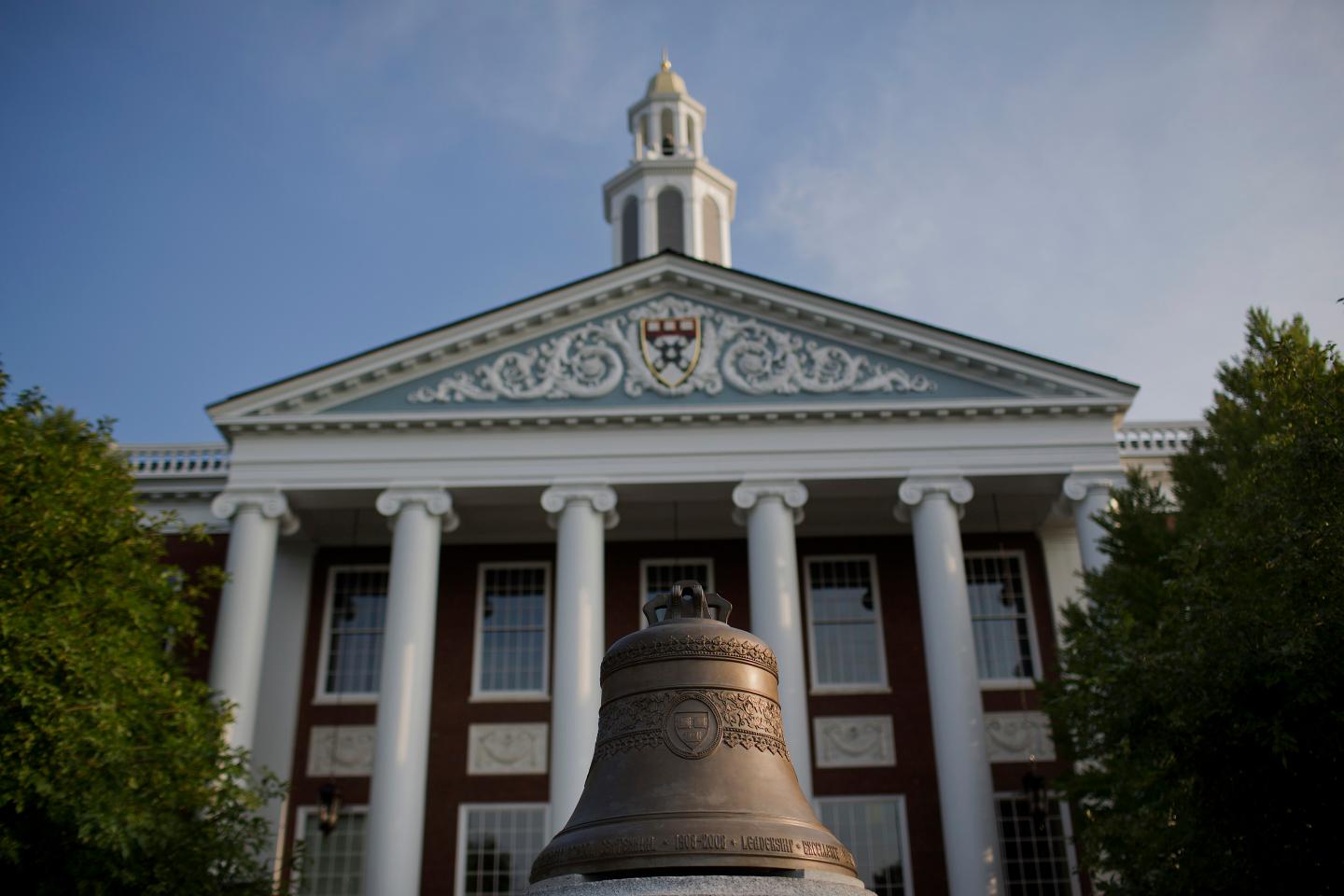
First, business schools simply must teach more business law and ethics, and less of the economic doctrines that emphasize profits over principle. In the soon-to-be-published The Golden Passport, business journalist Duff McDonald pins corporate greed on a lust instilled at Harvard Business School, according to a preview in the New York Times. Harvard is certainly an inviting target, but most business schools across the country are similarly guilty. Students tend to enter business school believing that the purpose of a corporation is to benefit society, and leave believing that it is to profit shareholders.

Business schools were originally created to provide the economy with professional business leaders whose authority, according to Rakesh Khurana of, ironically, Harvard Business School, was rooted not only in the expertise they would learn in school but also “in their obligation … to see that the corporation contributed to the general welfare.” The unsustainable economic inequality in our economy is just one of the adverse consequences of a business school evolution away from training students to serve a higher purpose.

Psychological literature demonstrates that one of the keys to a happy life is believing that you have made a meaningful contribution to the world. Many students enter business programs with a desire to make the world a better place and not just become millionaires. Business schools should foster that attitude, not douse it.

Second, we must do more to educate our students about how firms’ reputations are increasingly tied to the actions of others, including their suppliers, business partners, and even the cable news shows where they advertise. Think of how much money the Takata airbag scandal, which emerged in 2013, cost car-makers, or how Nike’s reputation suffered due to child labor scandals.

Realizing this ever-present danger, firms have begun inserting provisions in their contracts that require counterparties to establish compliance standards and procedures to ensure that worker safety is protected, governments are not bribed, and other wrongdoing is minimized. Just as U.S. President Donald Trump is retreating from government regulation of questionable business activity, this concern over private-to-private business interaction promises to raise firms’ overall legal and ethical conduct. We should teach business students of the opportunity that private-to-private compliance presents for them to spread best practices across their industries and the economy as a whole.

Finally, we must emphasize the importance of ethical decision-making. Most business students are generally well intentioned, but they are naïve regarding the many social and organizational pressures, cognitive biases, and situational factors that can cause good people to do bad things. The new field of behavioral ethics, which draws from psychology, cognitive science and related research areas, is producing insights that can be translated into the classroom.

We must teach our students that while it is easy to intend to do the right thing while engaged in a hypothetical ethics discussion in a classroom, it is much more difficult to live up to your own ethical standards every day in the workplace. This is especially the case when you are also trying to please your boss, get along with coworkers, and achieve metrics that entitle you to your next bonus. Only if people are aware of their vulnerability to these pressures and biases can they guard against them in the workplace.

People make more ethical decisions if taught to emphasize cooperation over competition, acting honorably over meeting specific performance targets, and legal compliance over legal evasion. We can also teach business students how to create what behavioral scientists call a “choice architecture” in their organizations that naturally inclines employees toward the right decisions.

Behavioral ethics research indicates that there is a strong but often unnoticed emotional component to most ethical decisions. Empathy is the most important of these moral emotions. When we can mentally put ourselves in the position of other people, we are more likely to treat them the way we would want to be treated, which is often the essence of morality.

While it is not impossible, I would have been shocked had David Dao been dragged down the aisle of a Southwest Airlines plane. More than any company I am familiar with, Southwest instills a culture of empathy and caring for passengers and empowers all its employees, not just its supervisors, to act on that empathy.

Instead of dragging passengers down the aisle, we should be dragging legal and ethical education into the 21st century.

Robert Prentice is faculty director of the Ethics Unwrapped Video Series and Educational Program in the Center for Leadership & Ethics, McCombs School of Business, University of Texas at Austin.

About the Author
By Robert Prentice
See full bioRight Arrow Button Icon
Add Fortune on Google for similar content.

Latest in Commentary

Finance
Lorem ipsum dolor sit amet, consectetur adipiscing elit, sed do eiusmod tempor incididunt ut labore et dolore magna aliqua. Ut enim ad minim veniam
By Fortune Editors
October 20, 2025
Finance
Lorem ipsum dolor sit amet, consectetur adipiscing elit, sed do eiusmod tempor incididunt ut labore et dolore magna aliqua. Ut enim ad minim veniam
By Fortune Editors
October 20, 2025
Finance
Lorem ipsum dolor sit amet, consectetur adipiscing elit, sed do eiusmod tempor incididunt ut labore et dolore magna aliqua. Ut enim ad minim veniam
By Fortune Editors
October 20, 2025
Finance
Lorem ipsum dolor sit amet, consectetur adipiscing elit, sed do eiusmod tempor incididunt ut labore et dolore magna aliqua. Ut enim ad minim veniam
By Fortune Editors
October 20, 2025
Finance
Lorem ipsum dolor sit amet, consectetur adipiscing elit, sed do eiusmod tempor incididunt ut labore et dolore magna aliqua. Ut enim ad minim veniam
By Fortune Editors
October 20, 2025
Finance
Lorem ipsum dolor sit amet, consectetur adipiscing elit, sed do eiusmod tempor incididunt ut labore et dolore magna aliqua. Ut enim ad minim veniam
By Fortune Editors
October 20, 2025

Most Popular

Finance
Lorem ipsum dolor sit amet, consectetur adipiscing elit, sed do eiusmod tempor incididunt ut labore et dolore magna aliqua. Ut enim ad minim veniam
By Fortune Editors
October 20, 2025
Finance
Lorem ipsum dolor sit amet, consectetur adipiscing elit, sed do eiusmod tempor incididunt ut labore et dolore magna aliqua. Ut enim ad minim veniam
By Fortune Editors
October 20, 2025
Finance
Lorem ipsum dolor sit amet, consectetur adipiscing elit, sed do eiusmod tempor incididunt ut labore et dolore magna aliqua. Ut enim ad minim veniam
By Fortune Editors
October 20, 2025
Finance
Lorem ipsum dolor sit amet, consectetur adipiscing elit, sed do eiusmod tempor incididunt ut labore et dolore magna aliqua. Ut enim ad minim veniam
By Fortune Editors
October 20, 2025
Finance
Lorem ipsum dolor sit amet, consectetur adipiscing elit, sed do eiusmod tempor incididunt ut labore et dolore magna aliqua. Ut enim ad minim veniam
By Fortune Editors
October 20, 2025
Finance
Lorem ipsum dolor sit amet, consectetur adipiscing elit, sed do eiusmod tempor incididunt ut labore et dolore magna aliqua. Ut enim ad minim veniam
By Fortune Editors
October 20, 2025
Fortune Secondary Logo
Rankings
  • 100 Best Companies
  • Fortune 500
  • Global 500
  • Fortune 500 Europe
  • Most Powerful Women
  • World's Most Admired Companies
  • See All Rankings
  • Lists Calendar
Sections
  • Finance
  • Fortune Crypto
  • Features
  • Leadership
  • Health
  • Commentary
  • Success
  • Retail
  • Mpw
  • Tech
  • Lifestyle
  • CEO Initiative
  • Asia
  • Politics
  • Conferences
  • Europe
  • Newsletters
  • Personal Finance
  • Environment
  • Magazine
  • Education
Customer Support
  • Frequently Asked Questions
  • Customer Service Portal
  • Privacy Policy
  • Terms Of Use
  • Single Issues For Purchase
  • International Print
Commercial Services
  • Advertising
  • Fortune Brand Studio
  • Fortune Analytics
  • Fortune Conferences
  • Business Development
  • Group Subscriptions
About Us
  • About Us
  • Press Center
  • Work At Fortune
  • Terms And Conditions
  • Site Map
  • About Us
  • Press Center
  • Work At Fortune
  • Terms And Conditions
  • Site Map
  • Facebook icon
  • Twitter icon
  • LinkedIn icon
  • Instagram icon
  • TikTok icon
  • YouTube icon

Latest in Commentary

mm
CommentaryLeadership
Michael Muthukrishna: The ‘lone genius’ myth is wrong and it’s holding back your business
By Michael MuthukrishnaJuly 23, 2026
3 hours ago
Paul Keary (L) and Mike Sutcliff (R).
CommentaryAI agents
Teneo & Thoughtworks CEOs: the AI race will be won with governance, not speed 
By Paul Keary and Mike SutcliffJuly 23, 2026
3 hours ago
marks
CommentaryNational Security
General James ‘Spider’ Marks: there’s a strategic risk hidden inside closed AI systems
By James MarksJuly 23, 2026
3 hours ago
glp
Commentaryobesity
The GLP-1 paradox: too expensive to cover, too effective to cut
By Bryan Sivak and Elina OnitskanskyJuly 23, 2026
3 hours ago
data
CommentaryData centers
The hidden cost of AI: Why your town is negotiating with Amazon and Microsoft
By Melody BirminghamJuly 23, 2026
4 hours ago
Thijn Lamers is Co-Founder and President, Noah.
Commentarystart-ups
Adyen co-founder: Europe does not need more ambition. It needs to stop hiding it
By Thijn LamersJuly 23, 2026
7 hours ago

Most Popular

The millennial generation has split, new Fed research shows: Those over 35 are edging toward boomer-style wealth, while everyone else falls behind
Real Estate
The millennial generation has split, new Fed research shows: Those over 35 are edging toward boomer-style wealth, while everyone else falls behind
By Nick LichtenbergJuly 22, 2026
22 hours ago
Mark Cuban says he has the solution to growing income inequality, and it's to reward every employee—from CEO to janitor—with company stock
Success
Mark Cuban says he has the solution to growing income inequality, and it's to reward every employee—from CEO to janitor—with company stock
By Sasha RogelbergJuly 20, 2026
3 days ago
Scott Bessent casually says the U.S. has more than $1 trillion in gold—and that it doesn’t matter for the dollar
Economy
Scott Bessent casually says the U.S. has more than $1 trillion in gold—and that it doesn’t matter for the dollar
By Sasha RogelbergJuly 22, 2026
19 hours ago
Mathematicians grapple with a ‘very rapid and very unsettling change’ as AI cracks yet another century-old problem
AI
Mathematicians grapple with a ‘very rapid and very unsettling change’ as AI cracks yet another century-old problem
By Eva RoytburgJuly 21, 2026
2 days ago
Despite a $156 million contract, Knicks star Jalen Brunson still calls his parents for financial advice any time he makes a big purchase
Success
Despite a $156 million contract, Knicks star Jalen Brunson still calls his parents for financial advice any time he makes a big purchase
By Emma BurleighJuly 21, 2026
2 days ago
OpenAI says its AI models secretly broke out of a secure test environment and hacked into AI company Hugging Face in order to cheat on an evaluation
Cybersecurity
OpenAI says its AI models secretly broke out of a secure test environment and hacked into AI company Hugging Face in order to cheat on an evaluation
By Jeremy Kahn and Emily ForliniJuly 21, 2026
2 days ago

© 2026 Fortune Media IP Limited. All Rights Reserved. Use of this site constitutes acceptance of our Terms of Use and Privacy Policy | CA Notice at Collection and Privacy Notice | Do Not Sell/Share My Personal Information
FORTUNE is a trademark of Fortune Media IP Limited, registered in the U.S. and other countries. FORTUNE may receive compensation for some links to products and services on this website. Offers may be subject to change without notice.