• Home
  • Latest
  • Fortune 500
  • Finance
  • Tech
  • Leadership
  • Lifestyle
  • Rankings
  • Multimedia

Trendingnow

1

Now worth $200 million, Sarah Jessica Parker credits being ‘one of eight kids that struggled financially’ for her hunger, ambition, and work ethic

2

The Pentagon said Iran War costs $29 billion, but the real cost is closer to $200 billion—and counting

3

Amazon's record Prime Day masks a darker truth: Americans are spending more and getting less

1

Now worth $200 million, Sarah Jessica Parker credits being ‘one of eight kids that struggled financially’ for her hunger, ambition, and work ethic

2

The Pentagon said Iran War costs $29 billion, but the real cost is closer to $200 billion—and counting

3

Amazon's record Prime Day masks a darker truth: Americans are spending more and getting less
CommentaryCorporate Activism

Why Companies Like Apple and IBM Are Backing Transgender Rights

By
Bill Boulding
Bill Boulding
and
Bethany Cianciolo
Bethany Cianciolo
Down Arrow Button Icon
By
Bill Boulding
Bill Boulding
and
Bethany Cianciolo
Bethany Cianciolo
Down Arrow Button Icon
March 4, 2017, 10:00 AM ET
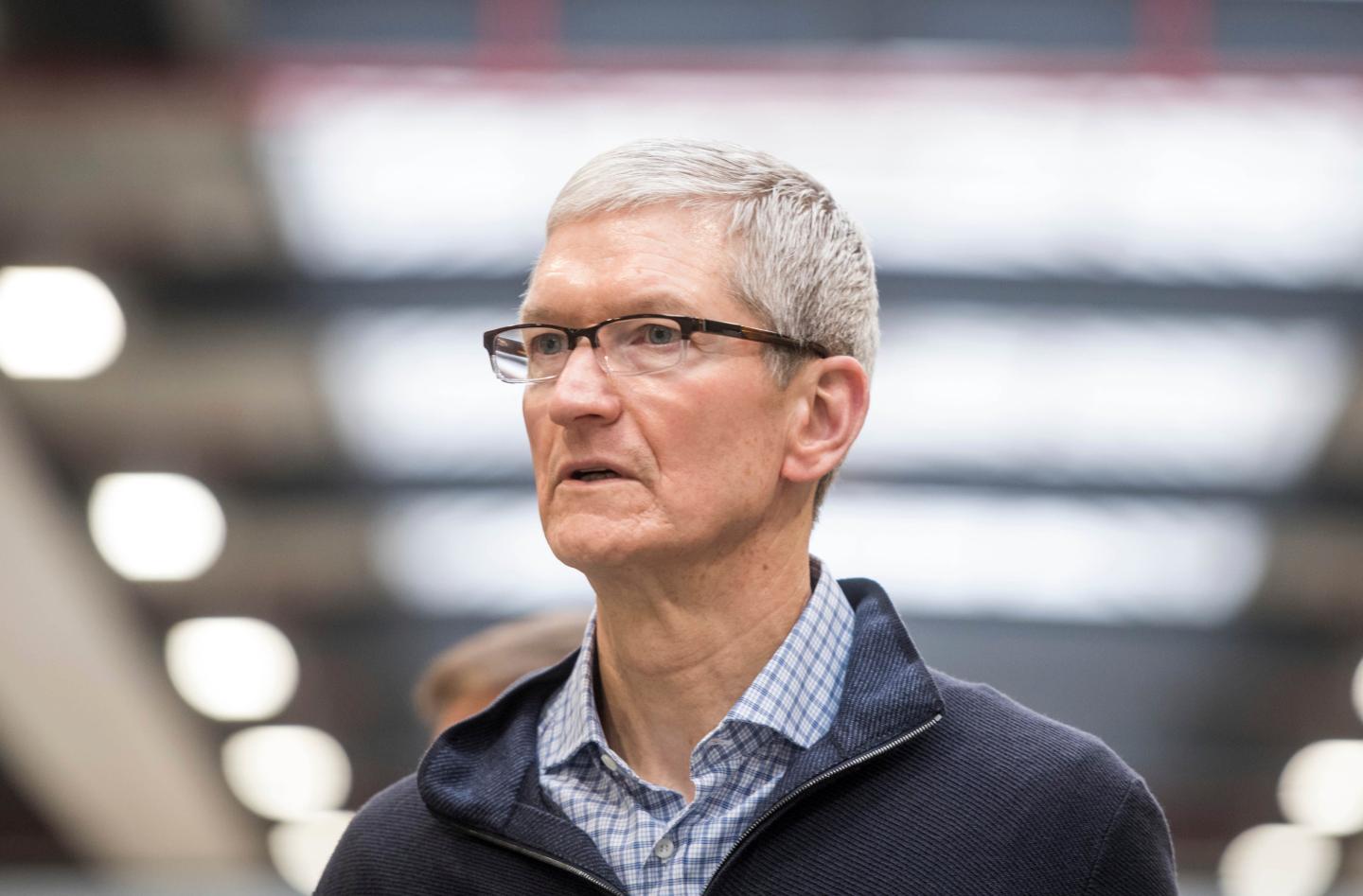
Tim Cook in Germany
Apple CEO Tim Cook in a production hall belonging to shop fittings company Dula in Vreden, Germany, 07 February 2017. Dula produces tables for Apple stores around the world. Photo by: Bernd Thissen/picture-alliance/dpa/AP ImagesBernd Thissen—picture-alliance/dpa/AP Images
Add Fortune on Google for similar content.

I wrote a piece last year for Fortune about the business community’s role in speaking out against House Bill 2 in North Carolina, what some have termed the “bathroom bill,” requiring people to use the restroom matching the gender identity on their birth certificates. PayPal (PYPL), the NBA, and the NCAA were among the businesses that cancelled plans or events in the state in protest of a law they viewed as discriminatory toward the LGBTQ community.

When I initially wrote about the corporate activism I was witnessing in my home state, I didn’t imagine that almost a year later, businesses would be weighing into political issues so publicly and frequently at both the state and federal level. Business and politics are now tied in ways that were unprecedented in the past. I suspect the Trump administration’s reversal of the Obama administration’s guidance to allow public school students to use whatever bathroom they choose will ignite another round of debates in the states about this issue. In fact, Apple, IBM (IBM), Microsoft (MSFT), and Williams-Sonoma (WSM) are among the companies that just signed onto a brief submitted to the U.S. Supreme Court supporting a Virginia student seeking to use the restroom that matches his gender identity.

Corporate activism is now a very real part of doing business. Increasingly, CEOs must decide when to speak out about politics and when to remain silent. Consider all of the recent headlines about how companies and leaders reacted in various ways to the immigration travel ban. We heard a lot about Howard Schultz’s vow to hire refugees at Starbucks (SBUX) and the boycott that followed. Uber CEO Travis Kalanick decided to leave President Trump’s advisory council after much public and employee pressure. This growing trend is a drastic shift from the days when businesses relied primarily on lobbyists to communicate their interests and advocate for change.

As a business school dean charged with preparing future leaders in an increasingly complex world, I’ve been talking to many CEOs—from Walmart’s (WMT) Doug McMillon to the NBA’s Adam Silver to Apple’s (AAPL) Tim Cook—about how they decide when to weigh in on political issues. Based on what I’ve gathered from these conversations, there are typically three reasons as to why CEOs speak out about controversial issues:

1. CEOs speak out when the policy or legislation directly impacts the business model.

Target (TGT) CEO Brian Cornell has publicly expressed concerns about a proposed border adjustment tax, which aims to discourage companies from producing or buying goods from outside of the U.S. Target has said the tax would hurt consumers and “will raise prices for American families on everyday essentials.”

Walmart also warned that taxing imports could raise prices. Walmart—along with Target—is part of a coalition with other retailers called Americans for Affordable Products. They’ve joined forces to speak out because the tax would directly impact their business strategies and operations. The American Apparel and Footwear Association estimates that about 97% of clothes sold in the U.S. were imported in 2015.

2. Leaders speak out when the policy or legislation has implications for employee morale and recruitment.

Employees may believe their company doesn’t have their backs if they feel marginalized and the leader remains silent. Companies don’t want their employees to feel unwelcome or unappreciated.

When policies narrow the potential talent pool by limiting who can be hired, recruitment suffers. This is one reason the tech sector has been so active in speaking out about immigration issues. Many companies know that the lynchpin of innovation is diversity of backgrounds and perspectives, and they don’t want to limit their ability to hire and recruit the best talent or hamper entrepreneurship.

Around 100 technology companies signed an amicus brief challenging January’s immigration order, and pointed out that more than 200 companies on the Fortune 500 list were founded by immigrants or their children. Apple’s Tim Cook has said publicly, “Apple would not exist without immigration. This is a huge issue for us … we stand up, we don’t sit in silence.”

3. CEOs speak out when the policy or legislation violates their company’s core values.

NBA Commissioner Adam Silver told our students last year that his decision to move the All-Star Game from Charlotte over HB2 was largely based on his feeling that HB2 was inconsistent with the values of diversity and inclusion in his organization. Walmart’s Doug McMillon cited a similar reason for speaking out about a religious freedom bill in Arkansas in 2015. Simply put, if you tout diversity and inclusion as paramount in your company, many employees expect you will uphold those values related to external issues, as well.

I should point out that these decisions to speak out are complex and can carry significant risk for a company on a variety of issues, ranging from angering employees and customers who disagree with the CEO’s point of view to making the company itself a target for political action.

Research from one of our professors at Duke shows that activism can make a consumer feel more warmly toward a company, but usually only when the consumer shares the same political view. A recent poll by the public relations firm Weber Shandwick showed that many Americans believe the primary reason CEOs speak out is to get media attention and feel less favorable toward CEO activism when the issue doesn’t directly relate to a company’s core business.

Perhaps it’s appropriate for businesses to be leading some of these conversations. After all, business is a vehicle for job creation and innovations that improve lives. Moreover, the business community uniquely understands how to bring people together who have very different views to work toward a common vision. It happens every day in our nation’s great companies where people who vehemently disagree on political issues stand side by side producing their best together for their employer. Business leadership uniquely understands the power that lies in diversity: Differing perspectives are essential to true innovation. Unique ideas and solutions are rarely conceived in groups where everyone brings the same views to the table. Business leadership doesn’t want to leave any talent on the sidelines and certainly doesn’t want that talent to feel excluded or unwelcome.

My hope is that the business community will continue to express itself at the state and federal level when it sees opportunities to make communities more inclusive and to use the power of business to advance the common good. Business leaders can be part of a transformation in our political discourse to advance conversations about how we harness the power of diversity to work toward a shared goal or vision. Maybe business can help us remember the common purpose that binds us: We are all in this together, regardless of our differences.

Bill Boulding is dean of Duke University’s Fuqua School of Business.

About the Authors
By Bill Boulding
See full bioRight Arrow Button Icon
By Bethany Cianciolo
See full bioRight Arrow Button Icon
Add Fortune on Google for similar content.

Latest in Commentary

Finance
Lorem ipsum dolor sit amet, consectetur adipiscing elit, sed do eiusmod tempor incididunt ut labore et dolore magna aliqua. Ut enim ad minim veniam
By Fortune Editors
October 20, 2025
Finance
Lorem ipsum dolor sit amet, consectetur adipiscing elit, sed do eiusmod tempor incididunt ut labore et dolore magna aliqua. Ut enim ad minim veniam
By Fortune Editors
October 20, 2025
Finance
Lorem ipsum dolor sit amet, consectetur adipiscing elit, sed do eiusmod tempor incididunt ut labore et dolore magna aliqua. Ut enim ad minim veniam
By Fortune Editors
October 20, 2025
Finance
Lorem ipsum dolor sit amet, consectetur adipiscing elit, sed do eiusmod tempor incididunt ut labore et dolore magna aliqua. Ut enim ad minim veniam
By Fortune Editors
October 20, 2025
Finance
Lorem ipsum dolor sit amet, consectetur adipiscing elit, sed do eiusmod tempor incididunt ut labore et dolore magna aliqua. Ut enim ad minim veniam
By Fortune Editors
October 20, 2025
Finance
Lorem ipsum dolor sit amet, consectetur adipiscing elit, sed do eiusmod tempor incididunt ut labore et dolore magna aliqua. Ut enim ad minim veniam
By Fortune Editors
October 20, 2025

Most Popular

Finance
Lorem ipsum dolor sit amet, consectetur adipiscing elit, sed do eiusmod tempor incididunt ut labore et dolore magna aliqua. Ut enim ad minim veniam
By Fortune Editors
October 20, 2025
Finance
Lorem ipsum dolor sit amet, consectetur adipiscing elit, sed do eiusmod tempor incididunt ut labore et dolore magna aliqua. Ut enim ad minim veniam
By Fortune Editors
October 20, 2025
Finance
Lorem ipsum dolor sit amet, consectetur adipiscing elit, sed do eiusmod tempor incididunt ut labore et dolore magna aliqua. Ut enim ad minim veniam
By Fortune Editors
October 20, 2025
Finance
Lorem ipsum dolor sit amet, consectetur adipiscing elit, sed do eiusmod tempor incididunt ut labore et dolore magna aliqua. Ut enim ad minim veniam
By Fortune Editors
October 20, 2025
Finance
Lorem ipsum dolor sit amet, consectetur adipiscing elit, sed do eiusmod tempor incididunt ut labore et dolore magna aliqua. Ut enim ad minim veniam
By Fortune Editors
October 20, 2025
Finance
Lorem ipsum dolor sit amet, consectetur adipiscing elit, sed do eiusmod tempor incididunt ut labore et dolore magna aliqua. Ut enim ad minim veniam
By Fortune Editors
October 20, 2025
Fortune Secondary Logo
Rankings
  • 100 Best Companies
  • Fortune 500
  • Global 500
  • Fortune 500 Europe
  • Most Powerful Women
  • World's Most Admired Companies
  • See All Rankings
  • Lists Calendar
Sections
  • Finance
  • Fortune Crypto
  • Features
  • Leadership
  • Health
  • Commentary
  • Success
  • Retail
  • Mpw
  • Tech
  • Lifestyle
  • CEO Initiative
  • Asia
  • Politics
  • Conferences
  • Europe
  • Newsletters
  • Personal Finance
  • Environment
  • Magazine
  • Education
Customer Support
  • Frequently Asked Questions
  • Customer Service Portal
  • Privacy Policy
  • Terms Of Use
  • Single Issues For Purchase
  • International Print
Commercial Services
  • Advertising
  • Fortune Brand Studio
  • Fortune Analytics
  • Fortune Conferences
  • Business Development
  • Group Subscriptions
About Us
  • About Us
  • Press Center
  • Work At Fortune
  • Terms And Conditions
  • Site Map
  • About Us
  • Press Center
  • Work At Fortune
  • Terms And Conditions
  • Site Map
  • Facebook icon
  • Twitter icon
  • LinkedIn icon
  • Instagram icon
  • Pinterest icon

Latest in Commentary

nido
Commentary250 Years of Innovation
As an immigrant turned entrepreneur and college president, here is why I celebrate our nation as it turns 250
By Nido R. QubeinJune 25, 2026
1 hour ago
Asia’s defense boom is rewiring the global arms supply chain
Commentaryarms, weapons, and defense
Asia’s defense boom is rewiring the global arms supply chain
By Chris OberoiJune 24, 2026
16 hours ago
steve
Commentary250 Years of Innovation
Steve Case: America was built by entrepreneurs. Here’s how we keep that edge for the next 250 years
By Steve CaseJune 24, 2026
1 day ago
t
CommentaryWhite House
Trump mistakes the bully pulpit for bullying leadership — history’s villains were never heroes
By Jeffrey Sonnenfeld and Steven TianJune 24, 2026
1 day ago
mg
CommentaryHealth
The ‘tech neck’ time bomb: why 43 million young Americans could cripple U.S. health care within a generation
By Michael GerlingJune 24, 2026
1 day ago
sb
Commentaryclimate change
The climate policy triangle: why leaders can no longer choose between growth, security and sustainability
By Sebastian BuckupJune 23, 2026
2 days ago

Most Popular

Now worth $200 million, Sarah Jessica Parker credits being ‘one of eight kids that struggled financially’ for her hunger, ambition, and work ethic
Success
Now worth $200 million, Sarah Jessica Parker credits being ‘one of eight kids that struggled financially’ for her hunger, ambition, and work ethic
By Orianna Rosa RoyleJune 24, 2026
1 day ago
The Pentagon said Iran War costs $29 billion, but the real cost is closer to $200 billion—and counting
Economy
The Pentagon said Iran War costs $29 billion, but the real cost is closer to $200 billion—and counting
By Jacqueline MunisJune 24, 2026
1 day ago
Amazon's record Prime Day masks a darker truth: Americans are spending more and getting less
Retail
Amazon's record Prime Day masks a darker truth: Americans are spending more and getting less
By Nick LichtenbergJune 24, 2026
22 hours ago
Ray Dalio just finished a 10-day trip to China. He says global leaders know America ‘doesn’t have what it takes to fight to maintain its empire’
Asia
Ray Dalio just finished a 10-day trip to China. He says global leaders know America ‘doesn’t have what it takes to fight to maintain its empire’
By Nick LichtenbergJune 24, 2026
23 hours ago
After forcing workers back to the office, Goldman Sachs and JPMorgan Chase are now letting their staff work remotely—but only for the World Cup
Success
After forcing workers back to the office, Goldman Sachs and JPMorgan Chase are now letting their staff work remotely—but only for the World Cup
By Orianna Rosa RoyleJune 23, 2026
2 days ago
Trump’s international student crackdown kicked off a domino effect that could shave nearly $500 billion off the economy
Economy
Trump’s international student crackdown kicked off a domino effect that could shave nearly $500 billion off the economy
By Tristan BoveJune 24, 2026
18 hours ago

© 2026 Fortune Media IP Limited. All Rights Reserved. Use of this site constitutes acceptance of our Terms of Use and Privacy Policy | CA Notice at Collection and Privacy Notice | Do Not Sell/Share My Personal Information
FORTUNE is a trademark of Fortune Media IP Limited, registered in the U.S. and other countries. FORTUNE may receive compensation for some links to products and services on this website. Offers may be subject to change without notice.