You don’t need Donald Trump to make a good news story in Russia right now.
Far away from the lurid headlines that dominate the political sections, business in Russia – at least in some areas – is roaring back from the crisis into which it was pitched in 2014 by Vladimir Putin’s Ukrainian adventure and the collapse of world oil prices.
According to both the Moscow government and the International Monetary Fund, the economy will grow in 2017 for the first time in three years. Meanwhile the Russian stock market, which fell by half after the Ukrainian disaster started to unfold, is now nearly back where it was in 2013, after rising 56% last year.
At the heart of this recovery is something truly notable: the banking sector. A byword for corruption and money-laundering for over two decades, the banking industry has been rigorously cleaned up by the formidable head of the Central Bank of Russia (CBR), Elvira Nabiullina. Since 2013, Nabiullina has shut or restructured over 300 banks that were unsound or worse – nearly one out of every three banks in the country – leaving a more civilized and emptier field to the survivors.
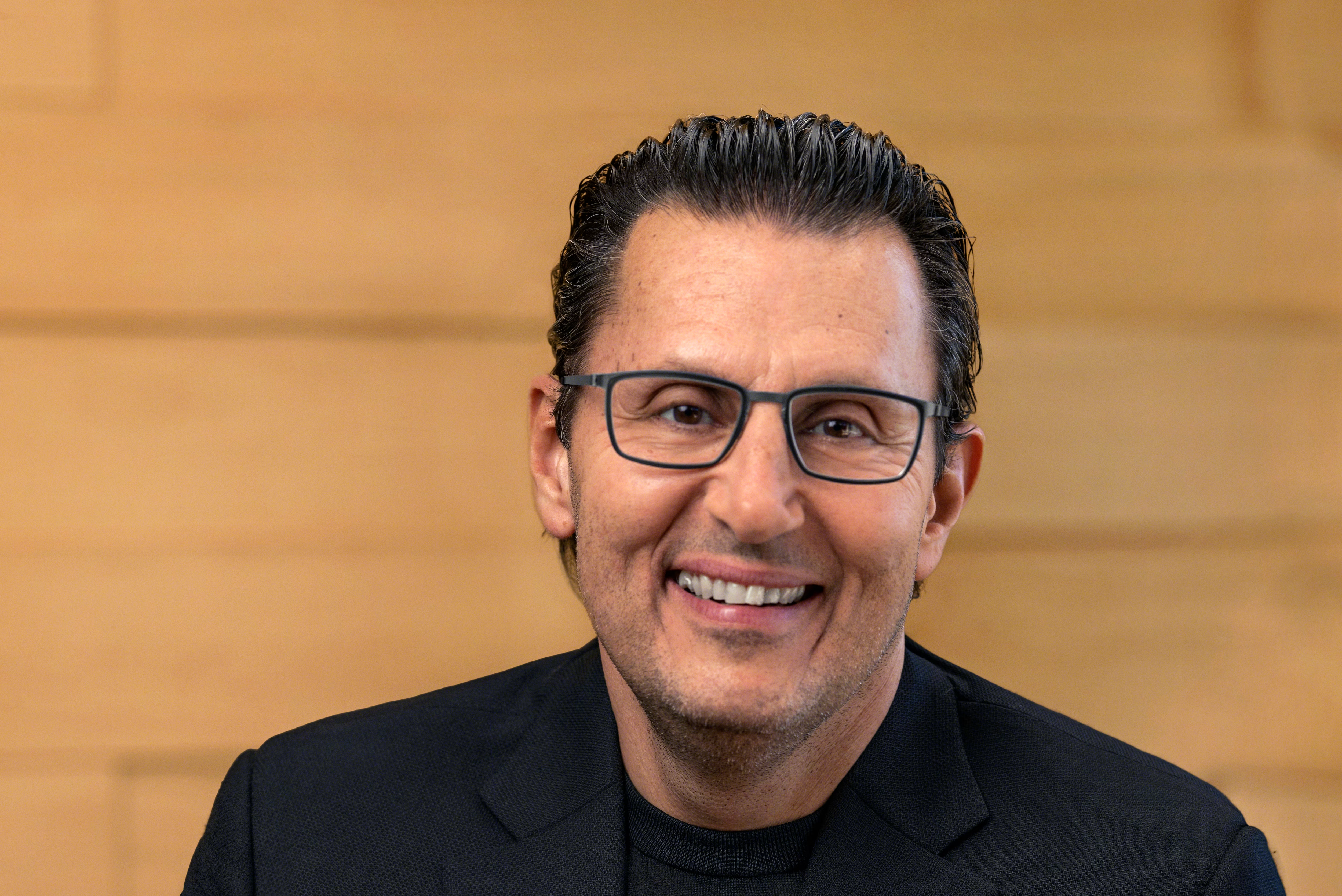
“I love the fact that we’ve had a good clean-out in the market,” says Oliver Hughes, the CEO of one of its biggest beneficiaries, TCS Group. “There’s less competition and there’s a huge opportunity for us to do more stuff very profitably.”
He’s not exaggerating. Return on equity at TCS was over 35% in 2016, thanks to 25% loan growth, fat margins and an eager take-up of new brokerage and business services that generate good fees but require little capital. The company’s London share price more than tripled between January and December. In absolute terms, it’s still small – the balance sheet still barely totals $3 billion – but it already accounts for 10% of Russia’s credit card market.
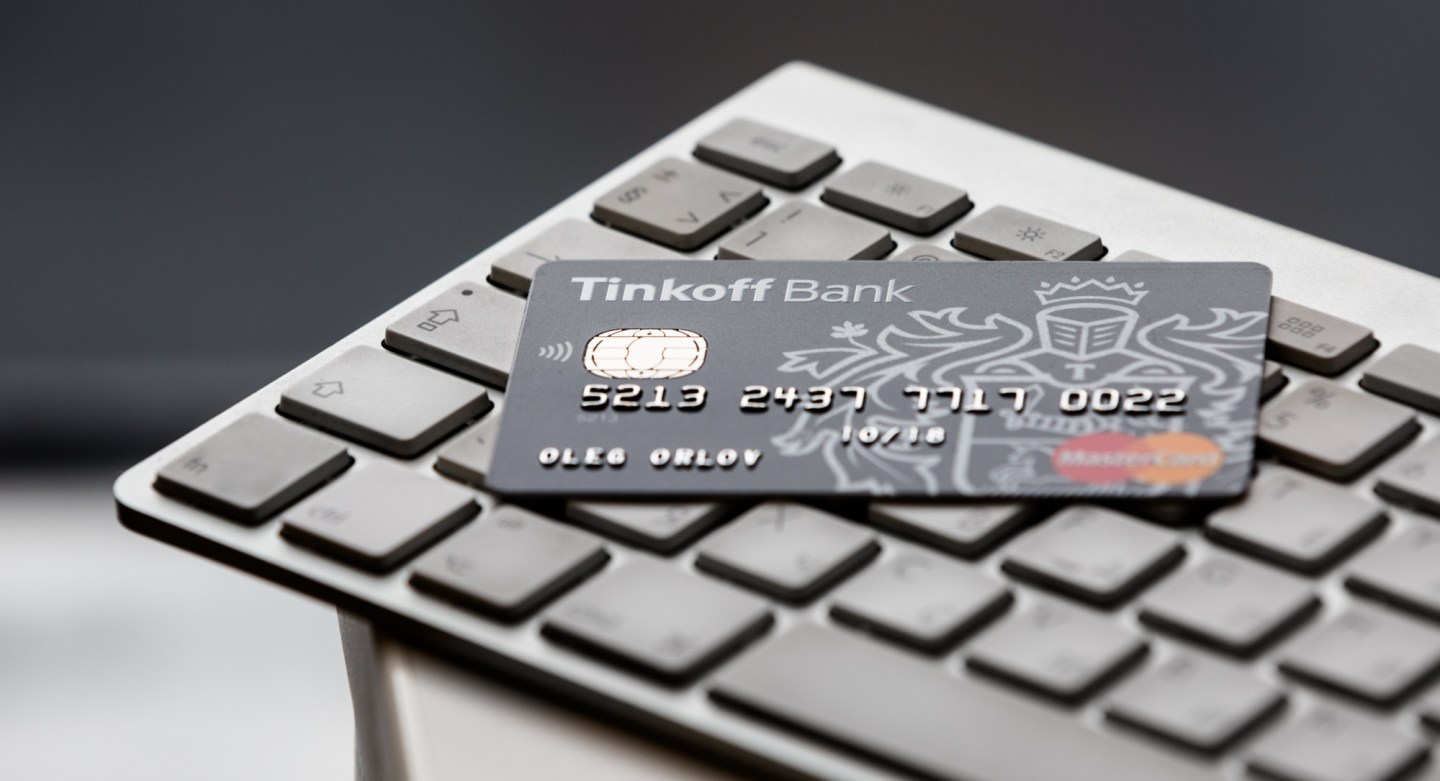
Credit cards were TCS’s first business when it started up 10 years ago, under the brand name of its founder Oleg Tinkov. The English-born Hughes has been there since the start, having joined from Visa International. Tinkoff Bank, as it’s known locally, quickly developed a reputation for good service and modern technology, particularly among younger and richer customers.
As the CBR’s cull gathered pace, TCS found that more and more people trusted it with their savings. That in itself differed from the previous occasional culls of the banking sector, when the reflex reaction of average Russians had been to move their money to the big state-owned players, Sberbank and VTB. Andrew Keeley, an analyst with Sberbank’s investment bank in London, points out that so much in retail deposits has flowed in that TCS now has the same ratio of loans to deposits as Sberbank, the dominant main street bank in Russia since Stalin’s day.
“We’ve become the bank of choice for younger, more affluent, more mobile, transactional customers, who like our interfaces, like our service, like our product and like our brand,” Hughes told Fortune, when we caught up with him on the sidelines of a conference for financial disruptors in London last week.
Dodging ‘Cowboys’
That’s the kind of talk you’d expect from the kind of “fintech” startup that TCS used to be. But if TCS was ever a disruptor, it isn’t any more. For a company that’s only 10 years old, Hughes talks surprisingly like an incumbent.
The CBR’s clean-up “means that there’s more barriers to entry, more stringent requirements on existing players, which means that the likelihood that cowboys will come in and over-lever customers again is a lot lower,” he says. “So that’s good news all round.”
But Hughes has another reason for steering clear of fintech-ish disruptor-speak. When TCS went public in late 2013, it was marketed as more of a tech stock than a bank, commanding an accordingly higher valuation. Lead manager Goldman Sachs priced the offering at over five times the equity’s book value (this at a time when European bank stocks were, almost without exception, trading at a discount to book value).
A rout followed. Real news about tighter Russian lending standards was amplified by fake news of a political witch-hunt against TCS. Four months later, Russia annexed Crimea, triggering western sanctions and driving foreign investors pell-mell out of Russian equities. Eight months on, the heavily-indebted state oil company Rosneft triggered a ruble crisis that further battered the banking sector, and when that crisis passed, Saudi Arabia’s war on U.S. shale producers crushed the price of crude oil, the economy’s last remaining prop. Real incomes in Russia fell by a cumulative 16%, and customer defaults and arrears soared. By September 2015, those who had held TCS stock since the IPO had lost 90% of their investment. At just under $10 today, the stock still has to rise another 40% to get back to the start line.
“We’ve all got lot of battle scars all over our bodies,” Hughes admits. Even that choice of words is an unwitting indicator of progress. No one in Russian finance would have dreamed of using such a figure of speech back in 2006, when the CBR’s then-head of supervision, Andrey Kozlov, was murdered on the orders of one of the bankers he was trying to shut down.
Perhaps with an eye on the stock price, Hughes is quick to put down recent rumors of a secondary offering. TCS is already generating enough cash to finance rapid growth, he says, and new product offerings – like its small business service, currently adding 10,000 new customers a month – are expected to break even in the second half of this year. A major M&A move in Russia and an international expansion are both “unlikely in the near future,” he says, “but buying a credit card portfolio is entirely possible if the right one comes along at the right price.”
He’s also quick to squash any suggestion of founder Oleg Tinkov cutting his stake below 50%. Tinkov had been criticised by some for encouraging the IPO hype, using the opportunity to cash out some of his own shares as well as raising new capital. He currently owns 53% of the company, having bought some stock back on the open market in the dark days of 2014.
Hughes thinks that “a lot of investors would come back in” if President Trump lifted sanctions on Russia, as many expect him to, but reckons it would have only a minimal effect on Tinkoff’s T business itself, even through the indirect channel of higher consumer confidence.
“In terms of the mass market, the vast bulk of Russians, I don’t think [sanctions] makes a difference,” he says. “What does make a difference is political stability and the amount of money in their pockets.”