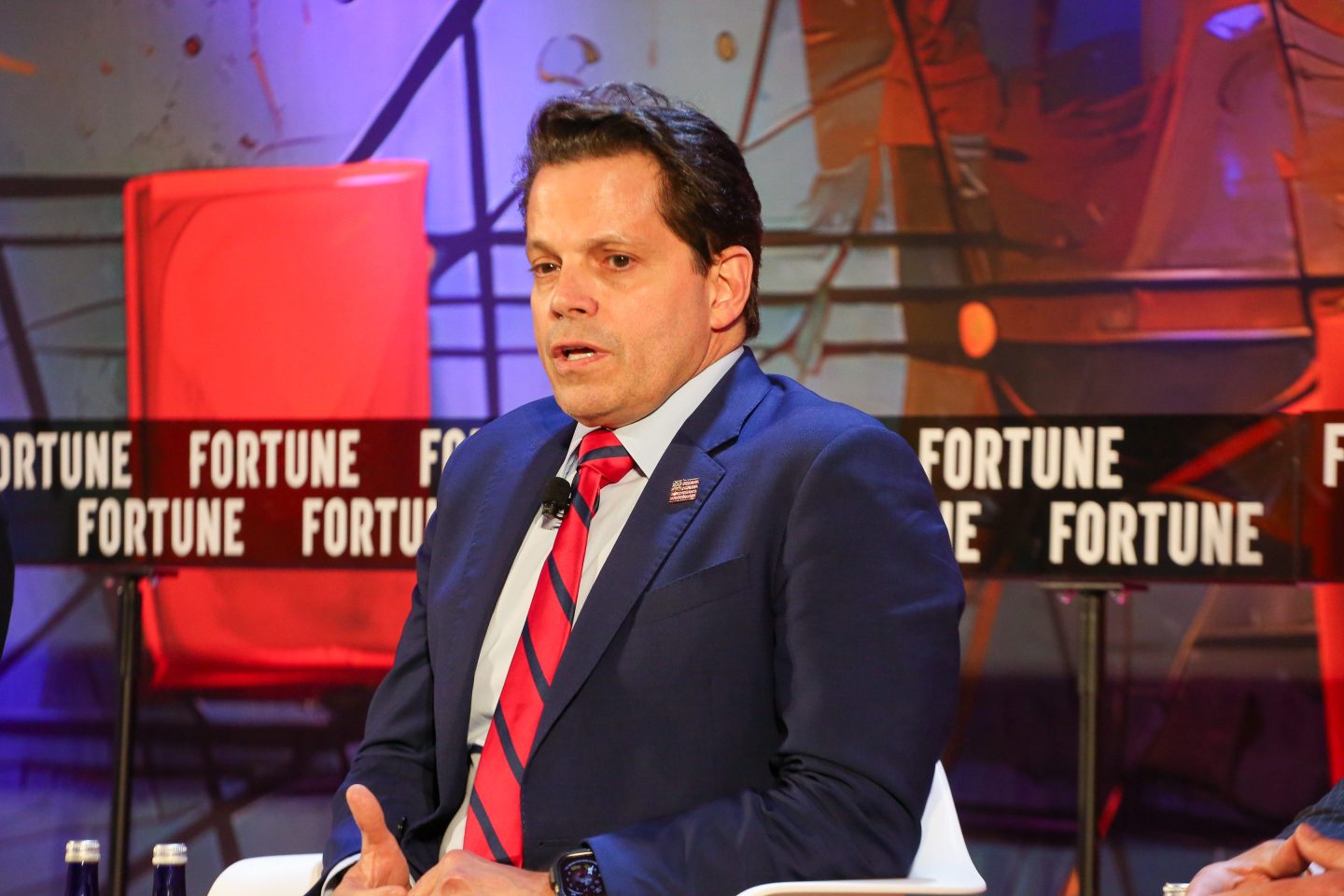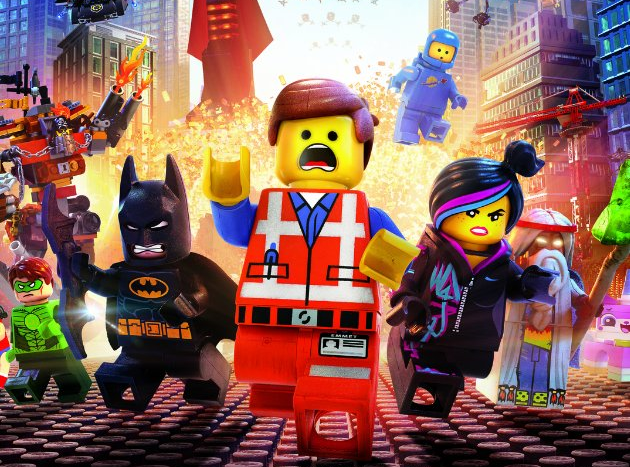
Many traditional toy makers are having a tough time as competition intensifies from digital games, but Lego is one toymaker that stands out, as the industry saw last week when it posted strong earnings growth for 2014. Sure, having a global blockbuster film in your name is good for business, but to look at Lego’s historic, record-breaking 2014 and point only to The Lego Movie would miss much about the longer term success and uniqueness of the company. Even CEO Jørgen Vig Knudstorp, after singing “Everything is Awesome!” at a press conference announcing profits of $829 million (15% over last year’s all-time high), said that “without The Lego Movie we would have continued our growth trajectory.”
And what a trajectory. Last year, Lego added 893 employees, opened new offices in Shanghai and London; it passed Mattel (MAT) to become the top toy manufacturer in the world, and is now ranked “the most powerful brand” in the world (previously held by Ferrari) by the consultancy, Brand Finance. As Knudstorp pointed out, much of Lego’s market—like many other companies is in China. The movie didn’t even screen in China. “The fact that it didn’t play there means that our more than 50% growth rate in China was helped by the general strength of our marketing and assortment,” he said. “The movie is an important event but it is far from the only explanation.
It has not had a recall in more than a decade
One explanation is efficiency. The company’s operating margin was 34% last year, which is extraordinarily high, particularly when you consider: it makes plastic and brightly colored bricks. Lego probably has the world’s most efficient operating model. Its logistics are unparalleled. When you buy a box of Legos, no matter how large or small, every brick comes with a numeric code, etched inside. If there is ever a missing piece, or a piece that does not fit, Lego will not just send out a replacement immediately, but track down exactly what went wrong in its manufacturing and supply chain, and where.
The cost savings of such relentless error tracking is monumental. Lego hasn’t had a single product recall in more than half a decade. Few, if any, companies have successfully competed with Lego, because few companies can approach Lego’s level of efficiency or manufacturing precision. This is fairly well known. But the real, unheralded secret to Lego’s success is the company’s deeply serious study of play.
Most toy companies—like all companies—conduct market research by sending out surveys and forming focus groups. Lego sends people out into the world to study kids in their natural habitat. It is the largest private sponsor of play research, globally, through its Lego Foundation. Play is simply part of the company’s DNA (the word Lego is an abbreviation of the Danish “leg godt,” meaning “play well”). Lego has attacked the question of why we play from many angles, including watching subjects’ brains at play under an MRI, to see which parts light up in different ways, when playing with different toys.
But what began happening about 10 years ago, when the extraordinary rise of Lego was just beginning, was that Lego’s researchers noticed that kids who were most engaged in sustained play were focused on mastering a skill, in making something. Whether that thing was landing a trick on a skateboard, or constructing a Millennium Falcon, this skills-based play has been and will continue to be key to Lego’s mission, sales, and long-term profits.
It gets kids (and their parents)
Lego does not simply wish to understand why kids play, but has used what it has learned to build up a deep and rich understanding of what is fun, for both child and adults. Most companies study consumers to figure out how they make decisions in order to hijack the decision-making process and sell more product. Lego has a different approach. Its aim is far outside the scope of most companies—to understand the cultures kids live in; the interplay between parents and children; the social dynamics that shape our aspirations. Instead of figuring out how to market stuff to kids, these goals, and the company’s efforts towards achieving them, give Lego a completely unique perspective on what’s important to kids and how you make experiences that are deeply meaningful. Having this perspective on why we play provides Lego a focus and sense of direction that is unparalleled in not simply the toy industry, but all consumer-facing companies.
It is also why Lego is so successful: It’s the only toy company in the world that can claim to capture the desires of both kids and parents. Lego’s bricks are almost like a smartphone in this way, that rare purchase where both kids and parents feel that they have won. A mobile phone gives parents a way to reach their kids at anytime; and it gives kids independence, with a direct link to their friends, games, social media feeds and photos. With Lego, it’s much the same, but even more blurring. Parents see their kids concentrating, making stuff and learning. Kids get to make stuff, play with that stuff, tear it down, build it up, master this new skill and world. There’s a lot of value for both parties. It’s why Lego can take play as seriously as its efficiencies—both are baked in to the company’s bottom line.
It’s the Twitter of toys
The rise of social media actually feeds into this desire for mastery. It puts pressure on kids to be more original; to stand out in the crowd, and put their unique stamp on the world. Children today are more adept than previous generations at noticing what stands out in a crowd, and craving originality. Lego calls this essential aspect of play “the joy of building, and the pride of creation.” It’s that feeling of, “look what I did!” that is a fundamental truth for us all, long after we’ve grown-up.
It’s as addicting as your iPhone
Finally, Lego is able to take this long-tail view of its customers, because it is creating not just one-off toys, but an entire ecosystem.
It is not unlike Apple in this sense, where one product feeds another, and where it’s customers are not just buying into a single product, but an entire world view. Lego’s deeply researched perspective on kids does not just spur on its imagination and creativity, but sense of fun. The company has a humor and irreverence. It’s filled with funny twists.
In some ways, The Lego Movie was the greatest (certainly most mass-market) reflection of this view. Its final message—that one need not follow the instructions, or build exactly according to plan, and keep everything in its finished, perfect form—might be the best reflection of the company’s ethos to date, where imagination rules and “everything is awesome, when we’re living our dream.” But it would have been impossible for the song, and the film, to exist were it not for Lego’s commitment to understanding the world beyond the company walls.
Mikkel Rasmussen is a senior partner at ReD Associates, a strategy and innovation consulting firm. He is author of The Moment of Clarity: Using the Human Sciences to Solve Your Toughest Business Problems.