• Home
  • News
  • Fortune 500
  • Tech
  • Finance
  • Leadership
  • Lifestyle
  • Rankings
  • Multimedia
LeadershipDonald Trump

Reality Check: If Mexico Pays for President Trump’s Border Wall, Business Pays Too

By
Tory Newmyer
Tory Newmyer
Down Arrow Button Icon
By
Tory Newmyer
Tory Newmyer
Down Arrow Button Icon
January 27, 2017, 3:07 PM ET
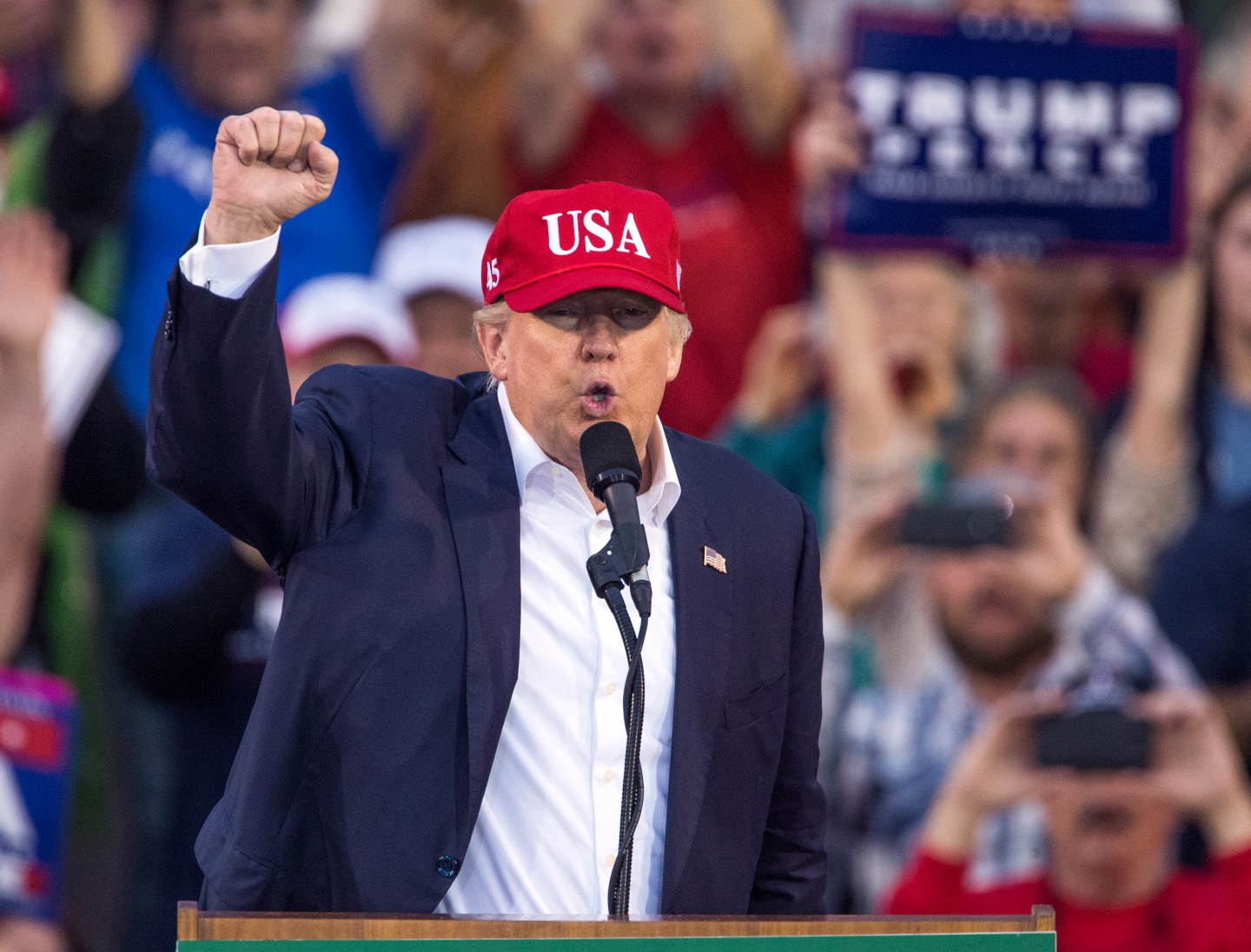
President-Elect Donald Trump Holds Thank You Rally In Mobile, Alabama
MOBILE, AL - DECEMBER 17: President-elect Donald Trump speaks during a thank you rally in Ladd-Peebles Stadium on December 17, 2016 in Mobile, Alabama. President-elect Trump has been visiting several states that he won, to thank people for their support during the U.S. election. (Photo by Mark Wallheiser/Getty Images)Photograph by Mark Wallheiser—Getty Images

Policymakers and lobbyists in Washington are still scratching their heads over the Trump team’s floating of a 20% tax on Mexican imports to fund construction of a border wall. By its timing on Thursday afternoon, the proposal appeared to come as the latest escalation of a budding feud between the new administration and our southern neighbor: After Trump signed an executive order on Wednesday authorizing construction of the wall, Mexican President Enrique Peña Nieto announced midday Thursday that he’d canceled a trip planned for next week to meet with the new U.S. president. But White House press secretary Sean Spicer walked back the tax idea almost as soon as he’d offered it, following up with reporters to state it was just one method among several under consideration to get Mexico to cover the wall’s cost.

“Here’s one way. Boom. Done,” Spicer said. “We could go in another direction. We could talk about tariffs.”

It seems likely that Spicer meant the White House is warming to a House Republican plan that would impose a 20% tax on all imported goods. Earlier this month, Trump panned the idea, known as a border adjustment tax, as “too complicated.” The House GOP is still drafting their proposal, but it already faces stiff opposition from major importers, including retailers and oil refiners, and skepticism from Senate Republicans. The approach at least has the political upside of presenting the White House with a path to declaring a win on a key campaign pledge: There’s no easy way to get Mexico to pay for a wall it doesn’t want built, and while the tax tweak would apply indiscriminately to imports from everywhere, the administration could argue collections from levies on Mexican goods subsidized the wall.

The alternative that Spicer named—tariffs—are another story. Trump in December threatened to slap a 35% tariff on imports from American companies that ship operations abroad. That isn’t how tariffs work, since they’re applied to product categories, not goods from individual companies. And if Trump decides to pursue them, he’ll soon find out he doesn’t have much more authority to impose tariffs unilaterally than he does to change the tax code.

Absent a war or a state of national emergency (which Trump could declare as a precondition—”technically that’s possible, but it’d be pretty extreme,” says Frank Samolis, co-chair of the international trade practice at Squire Patton Boggs), the president would likely be limited by the 1974 Trade Act to a 15% maximum tariff that expires after six months, unless Congress decides to extend it. And Republican lawmakers from both chambers are expressing deep concerns about Trump’s inclination to wield what tariff authority he does have. House Majority Leader Kevin McCarthy (R-Calif.) last month said he worried it could precipitate a trade war. Earlier this month, Sen. Mike Lee (R-Utah) introduced legislation to require the president to go through Congress before imposing a tariff or withdrawing the U.S. from the North American Free Trade Agreement.

Which is to say, as it already feels stale to say, Trump is swiftly discovering translating campaign pledges into policy is easier said than done.

About the Author
By Tory Newmyer
See full bioRight Arrow Button Icon

Latest in Leadership

Apple CEO Tim Cook wearing a white polo shirt and throwing up a peace sign
Big TechApple
Apple won’t be the same in 2026. Meet the company’s next generation of leaders and rising stars after its biggest executive exodus in years
By Dave SmithDecember 8, 2025
3 hours ago
Successphilanthropy
Craigslist founder signs the Giving Pledge, and his fortune will go to military families, fighting cyberattacks—and a pigeon rescue
By Sydney LakeDecember 8, 2025
4 hours ago
Mike Cavanagh
C-SuiteMedia
Comcast pulls out of WBD bidding war, president says: ‘We roll on with a lot of focus. But I think we’re better for having taken a look’
By Nick LichtenbergDecember 8, 2025
4 hours ago
Nvidia CEO Jensen Huang
SuccessCareers
Nvidia CEO Jensen Huang says people need to find success in traditional factory jobs again: ‘Every successful person doesn’t need to have a PhD’
By Emma BurleighDecember 8, 2025
4 hours ago
Michael Bloomberg looks on during the first half of an NBA basketball game between the LA Clippers and the New York Knicks Wednesday, March 26, 2025, in New York.
North AmericaMichael Bloomberg
Mike Bloomberg’s new $50 million mayor bootcamp trains local leaders not to ‘play it safe’
By Glenn Gamboa and The Associated PressDecember 8, 2025
5 hours ago
Google.org
CommentaryTech
Nonprofits are solving 21st century problems—they need 21st century tech
By Maggie Johnson and Shannon FarleyDecember 8, 2025
6 hours ago

Most Popular

placeholder alt text
Real Estate
The 'Great Housing Reset' is coming: Income growth will outpace home-price growth in 2026, Redfin forecasts
By Nino PaoliDecember 6, 2025
2 days ago
placeholder alt text
Politics
Supreme Court to reconsider a 90-year-old unanimous ruling that limits presidential power on removing heads of independent agencies
By Mark Sherman and The Associated PressDecember 7, 2025
1 day ago
placeholder alt text
AI
Nvidia CEO says data centers take about 3 years to construct in the U.S., while in China 'they can build a hospital in a weekend'
By Nino PaoliDecember 6, 2025
2 days ago
placeholder alt text
Economy
The most likely solution to the U.S. debt crisis is severe austerity triggered by a fiscal calamity, former White House economic adviser says
By Jason MaDecember 6, 2025
2 days ago
placeholder alt text
Uncategorized
Transforming customer support through intelligent AI operations
By Lauren ChomiukNovember 26, 2025
12 days ago
placeholder alt text
Economy
JPMorgan CEO Jamie Dimon says Europe has a 'real problem’
By Katherine Chiglinsky and BloombergDecember 6, 2025
2 days ago
Rankings
  • 100 Best Companies
  • Fortune 500
  • Global 500
  • Fortune 500 Europe
  • Most Powerful Women
  • Future 50
  • World’s Most Admired Companies
  • See All Rankings
Sections
  • Finance
  • Leadership
  • Success
  • Tech
  • Asia
  • Europe
  • Environment
  • Fortune Crypto
  • Health
  • Retail
  • Lifestyle
  • Politics
  • Newsletters
  • Magazine
  • Features
  • Commentary
  • Mpw
  • CEO Initiative
  • Conferences
  • Personal Finance
  • Education
Customer Support
  • Frequently Asked Questions
  • Customer Service Portal
  • Privacy Policy
  • Terms Of Use
  • Single Issues For Purchase
  • International Print
Commercial Services
  • Advertising
  • Fortune Brand Studio
  • Fortune Analytics
  • Fortune Conferences
  • Business Development
About Us
  • About Us
  • Editorial Calendar
  • Press Center
  • Work At Fortune
  • Diversity And Inclusion
  • Terms And Conditions
  • Site Map

© 2025 Fortune Media IP Limited. All Rights Reserved. Use of this site constitutes acceptance of our Terms of Use and Privacy Policy | CA Notice at Collection and Privacy Notice | Do Not Sell/Share My Personal Information
FORTUNE is a trademark of Fortune Media IP Limited, registered in the U.S. and other countries. FORTUNE may receive compensation for some links to products and services on this website. Offers may be subject to change without notice.