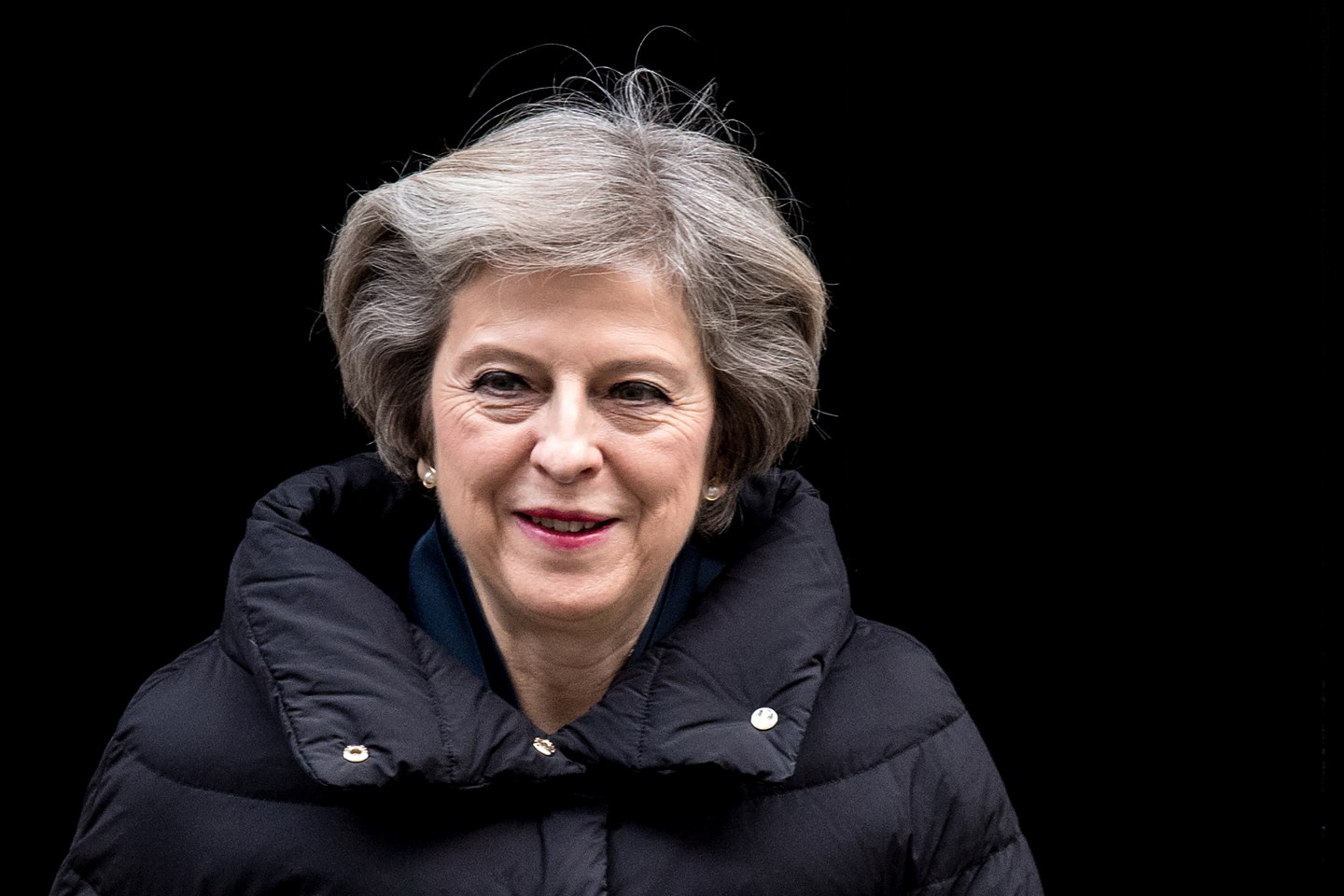
In a major speech on Tuesday, British Prime Minister Theresa May will clear up months of speculation about what sort of relationship Britain will seek to have with the E.U. once it leaves the bloc.
According to remarks reported over the weekend, she will say the United Kingdom is prepared to make a clean break from the European Union’s common market, or what has become known as a “hard Brexit.”
May will say that Britain will not be “half-in, half-out” of the E.U.” or “hold on to bits of membership as we leave,” as she lays out her negotiating objectives at London’s Lancaster House. The Prime Minister has pledged to trigger Article 50 of the E.U. treaty — the formal mechanism to begin the process of departure — by the end of March.
For readers who are not closely familiar with the debate that has followed the U.K.’s vote to leave the E.U. in June 2016, here’s exactly what a “hard Brexit” means.
The term is thought have been coined more than year before the referendum, in a Feb. 2015 report to HSBC clients by Simon Wells and Liz Martins. In the report, the economists distinguished between hard and soft exits from the E.U.; the former, they said, would be a “huge risk” and “operationally complicated” while the latter is “less risky, but maintains much of the status quo.”
A hard Brexit arrangement means the U.K. will give up full access to the E.U’s single market in order to have full control over its borders. It would also likely mean a withdrawal from the E.U.’s customs union.
The single market is an economic arrangement between E.U. member states and a few others who agree to four fundamental freedoms: the free movement of services, goods, capital and people. The customs union ensures E.U. member states and others each charge the same import duties on goods from countries outside the bloc. Membership also allows countries to enjoy tariff-free goods transport.
Given Britain’s vote to leave the E.U. was driven, amongst other things, by a desire to put stronger restrictions on immigration the government insists that it must regain control of its borders as part of any ‘Brexit.’ As membership of the single market requires free movement of E.U. citizens, Britain must leave in order to do that. Britain’s minister of international trade, Liam Fox, has also said a Britain outside the E.U. would be free to sign its own trade deals, which would entail withdrawal from the customs union.
What Britain gains, in theory, is full control over immigration and the ability to sign independent trade deals. But post-Brexit the government will be under pressure to quickly make new trade pacts with not only the economic bloc, but also countries around the globe, as tariffs will be imposed in line with World Trade Organization rules.
Institutions and economists have also warned a clean break with the E.U.’s trading zones could severely disrupt the economy if alternative mechanisms are not quickly set up. In 2015, around 44% of all U.K.’s exports in goods and services went to the E.U. Banks would have to give up their “passporting” rights, which allows them to provide services in the E.U. while based in London. The British Retail Consortium has warned that severing ties could see an overall rise in prices of goods in shops.
A “soft Brexit” — which some in industry and in Theresa May’s own Conservative Party had wanted — would have allowed Britain to retain some form of access to the single market by maintaining the free movement of people. However as the HSBC report of 2015 said, this would have kept much of the status quo intact — which is not what 52% of voters wanted when they chose Brexit last year.
This article originally appeared on Time.com.