• Home
  • Latest
  • Fortune 500
  • Finance
  • Tech
  • Leadership
  • Lifestyle
  • Rankings
  • Multimedia
LeadershipCommentary

Why U.S. Law Makes It Easy for Donald Trump To Stiff Contractors

By
Roger Parloff
Roger Parloff
Down Arrow Button Icon
By
Roger Parloff
Roger Parloff
Down Arrow Button Icon
September 30, 2016, 12:51 PM ET
Photograph by Getty Images

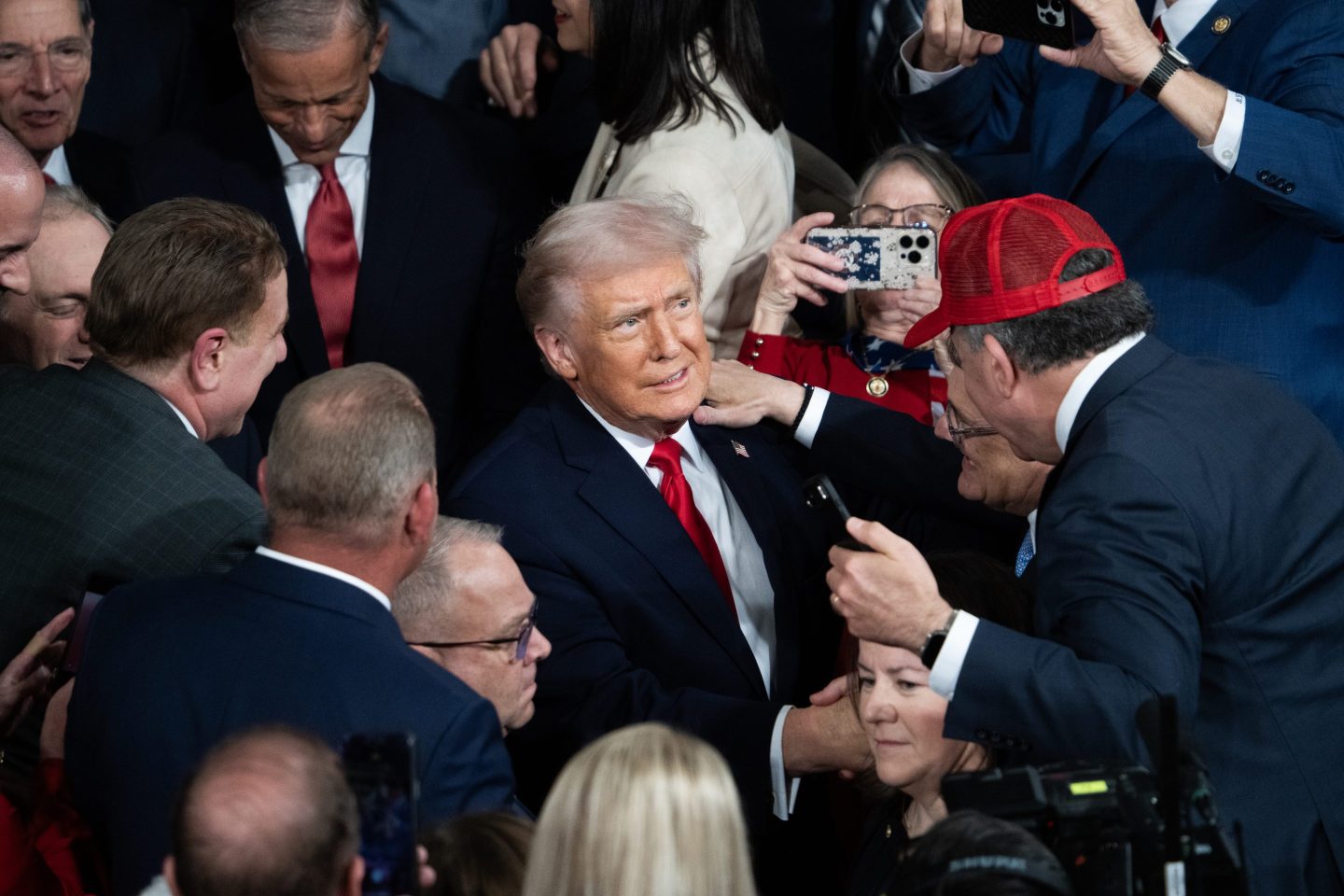
One of the more startling moments in Monday night’s presidential debate was the one where Donald Trump appeared to admit that one of his business secrets is an unsavory one: He stiffs his contractors.

That Trump frequently follows such a practice has long been alleged in the press, with Trump issuing muddled responses—half denial, half admission. But what many Americans may not realize is that the prospect of a businessman systematically reneging on his promises as a negotiating strategy—known as “selling out one’s goodwill”—is a recognized danger of the way our contract law works. Fortunately, it’s one that few business people actually exploit, for several reasons.

The allegation that Trump is one of those businessmen who frequently refuses to fully pay his contractors was raised in a Wall Street Journal feature story last June, entitled “Donald Trump’s Business Plan Left a Trail of Unpaid Bills,” and was then revisited in subsequent pieces by such media outlets as Fox News, Reuters, NBC News, and New York Magazine.

At the debate, Clinton confronted Trump in these terms: “I’ve met a lot of the people who were stiffed by you and your businesses, Donald. I’ve met dishwashers, painters, architects, glass installers, marble installers, drapery installers, like my dad was, who you refused to pay when they finished the work that you asked them to do. We have an architect in the audience who designed one of your clubhouses at one of your golf courses. It’s a beautiful facility. It immediately was put to use.”

Trump first offered a half-hearted, pro forma defense: “Maybe he didn’t do a good job and I was unsatisfied with his work.”

That response was similar to one he’d given the Wall Street Journal last June. “ ‘I love to hold back and negotiate when people don’t do good work,’” he told the paper. “ ‘If they do a good job, I won’t cut them at all. . . . It’s probably 1,000 to one where I pay.’”

But at the debate he went on to make another point. “First of all, they did get paid a lot,” he said. “But I take advantage of the laws of the nation because I’m running a company. My obligation right now is to do well for myself, my family, my employees, for my companies. And that’s what I do.”

As he sees it, then, his first loyalty is to himself and his people, and not to the poor suckers on the other side of his contracts. It’s just business, not personal, as Mario Puzo might have put it.

What Trump’s talking about, and what he evidently sees as simply another example of his much-needed, hard-nosed business acumen, is actually a phenomenon that is fairly rare in business. It does occur, though, and has a name, and law students learn about it in their first-year contracts class. It’s called “selling out your good will.” My contracts professor, the late Arthur Leff, explained it in roughly the following terms.

In the U.S. we generally require each side in a lawsuit to pay its own attorneys fees. In England, in contrast, the general rule is that the loser pays the winner’s fees.

Each approach has its advantages and disadvantages, but suffice it to say that the American rule does have an unintended consequence in the realm of contracts. The most you can usually get in a contract case is what you were promised under the terms of the contract. (You can’t get punitive damages in a contract case; those are only available in tort cases, like where someone is injured in an accident.) So if one party to a contract—a carpet supplier, say—fully performs his end of a bargain, it actually becomes irrational, as a matter of cold mathematics, for the other party—a hotel owner, say—to pay everything he promised, assuming the hotel owner has no sense of right or wrong.

Here’s the simple math. Suppose a supplier contracts with a hotel owner to provide carpeting for a new hotel for $100,000. The supplier fully performs. The hotel owner refuses to pay. To recover, the supplier has to go to court, and the most he can possibly win is $100,000. But paying his attorneys fees is going to run him $30,000, leaving the supplier with a recovery worth only $70,000 on his $100,000 contract. As a practical matter, the supplier may lose his whole profit margin.

So an unprincipled hotel owner might say to the supplier, “Look, you’re up a creek. I’ll pay you $75,000. Sure, you’re screwed, but that’s better than you can do by going to court, so be reasonable.”

In practice this rarely happens, for two reasons.

First, most business people, despite what some people think, have integrity, a heart, and a conscience.

Second—and, okay, maybe this is the more important factor—most business people have ongoing relationships with their suppliers. So if you screw them, they’ll stop working with you. Moreover, word will get out, and other suppliers won’t work with you either.

There are two situations where the second principle doesn’t operate. The first are one-off contracts, where the parties are never going to deal with each other again. If a hotel owner builds one hotel in Rhode Island, for instance, and contracts with a local carpet supplier there, and then builds another in Abu Dhabi, and contracts with another local carpet supplier there, and then builds another in Las Vegas, and so on, he may be able to get away with serially stiffing local suppliers.

The other situation occurs when a company owner is about to give up his business—due to retirement, sale, or bankruptcy—and the callous owner no longer gives a damn about maintaining his business reputation. In that situation an unprincipled businessman might be willing to screw his contractors for the short-term, one-time gain—“selling out his goodwill.”

Fortunately, you don’t see that too often. That’s because most business people, like most other Americans, are fundamentally decent people. They believe in, and practice, the Golden Rule.

It’s one of those basic lessons that parents want to pass along to their children, as Melania Trump put it movingly in her speech at the Republican convention last July: “Your word is your bond and you do what you say and keep your promise.”

Or was that Michelle Obama?
About the Author
By Roger Parloff
See full bioRight Arrow Button Icon

Latest in Leadership

Finance
Lorem ipsum dolor sit amet, consectetur adipiscing elit, sed do eiusmod tempor incididunt ut labore et dolore magna aliqua. Ut enim ad minim veniam
By Fortune Editors
October 20, 2025
Finance
Lorem ipsum dolor sit amet, consectetur adipiscing elit, sed do eiusmod tempor incididunt ut labore et dolore magna aliqua. Ut enim ad minim veniam
By Fortune Editors
October 20, 2025
Finance
Lorem ipsum dolor sit amet, consectetur adipiscing elit, sed do eiusmod tempor incididunt ut labore et dolore magna aliqua. Ut enim ad minim veniam
By Fortune Editors
October 20, 2025
Finance
Lorem ipsum dolor sit amet, consectetur adipiscing elit, sed do eiusmod tempor incididunt ut labore et dolore magna aliqua. Ut enim ad minim veniam
By Fortune Editors
October 20, 2025
Finance
Lorem ipsum dolor sit amet, consectetur adipiscing elit, sed do eiusmod tempor incididunt ut labore et dolore magna aliqua. Ut enim ad minim veniam
By Fortune Editors
October 20, 2025
Finance
Lorem ipsum dolor sit amet, consectetur adipiscing elit, sed do eiusmod tempor incididunt ut labore et dolore magna aliqua. Ut enim ad minim veniam
By Fortune Editors
October 20, 2025

Most Popular

Finance
Lorem ipsum dolor sit amet, consectetur adipiscing elit, sed do eiusmod tempor incididunt ut labore et dolore magna aliqua. Ut enim ad minim veniam
By Fortune Editors
October 20, 2025
Finance
Lorem ipsum dolor sit amet, consectetur adipiscing elit, sed do eiusmod tempor incididunt ut labore et dolore magna aliqua. Ut enim ad minim veniam
By Fortune Editors
October 20, 2025
Finance
Lorem ipsum dolor sit amet, consectetur adipiscing elit, sed do eiusmod tempor incididunt ut labore et dolore magna aliqua. Ut enim ad minim veniam
By Fortune Editors
October 20, 2025
Finance
Lorem ipsum dolor sit amet, consectetur adipiscing elit, sed do eiusmod tempor incididunt ut labore et dolore magna aliqua. Ut enim ad minim veniam
By Fortune Editors
October 20, 2025
Finance
Lorem ipsum dolor sit amet, consectetur adipiscing elit, sed do eiusmod tempor incididunt ut labore et dolore magna aliqua. Ut enim ad minim veniam
By Fortune Editors
October 20, 2025
Finance
Lorem ipsum dolor sit amet, consectetur adipiscing elit, sed do eiusmod tempor incididunt ut labore et dolore magna aliqua. Ut enim ad minim veniam
By Fortune Editors
October 20, 2025
Fortune Secondary Logo
Rankings
  • 100 Best Companies
  • Fortune 500
  • Global 500
  • Fortune 500 Europe
  • Most Powerful Women
  • Future 50
  • World’s Most Admired Companies
  • See All Rankings
Sections
  • Finance
  • Fortune Crypto
  • Features
  • Leadership
  • Health
  • Commentary
  • Success
  • Retail
  • Mpw
  • Tech
  • Lifestyle
  • CEO Initiative
  • Asia
  • Politics
  • Conferences
  • Europe
  • Newsletters
  • Personal Finance
  • Environment
  • Magazine
  • Education
Customer Support
  • Frequently Asked Questions
  • Customer Service Portal
  • Privacy Policy
  • Terms Of Use
  • Single Issues For Purchase
  • International Print
Commercial Services
  • Advertising
  • Fortune Brand Studio
  • Fortune Analytics
  • Fortune Conferences
  • Business Development
About Us
  • About Us
  • Editorial Calendar
  • Press Center
  • Work At Fortune
  • Diversity And Inclusion
  • Terms And Conditions
  • Site Map
Fortune Secondary Logo
  • About Us
  • Editorial Calendar
  • Press Center
  • Work At Fortune
  • Diversity And Inclusion
  • Terms And Conditions
  • Site Map
  • Facebook icon
  • Twitter icon
  • LinkedIn icon
  • Instagram icon
  • Pinterest icon

Latest in Leadership

carvalho
Lawschools
2 years after $3 million deal with bankrupt chatbot firm, LA’s schools superintendent is under investigation
By Jaimie Ding, Julie Watson and The Associated PressMarch 2, 2026
51 minutes ago
venice
Real EstateChina
Meet a burned out 28-year-old who pays $168 a month in China’s faux Venice to retire early from her Shanghai finance gig
By Albee Zhang and The Associated PressMarch 2, 2026
53 minutes ago
warren
InvestingBerkshire Hathaway
Berkshire’s Greg Abel admits ‘Warren is obviously a very hard act to follow’ in first letter to shareholders
By Josh Funk and The Associated PressMarch 2, 2026
1 hour ago
Recruiter holding candidate resume taking job interview at desk.
NewslettersFortune Workplace Innovation
Skills-based hiring was an HR mantra. Execution never followed
By Kristin StollerMarch 2, 2026
1 hour ago
C-SuiteNext to Lead
From brand builder to business operator: The unconventional career blueprint behind one executive’s C-suite rise
By Ruth UmohMarch 2, 2026
2 hours ago
roger
Arts & EntertainmentBook Excerpt
Scenes from the 2010 World Cup: Men in Blazers’ Roger Bennett recalls the journey from niche podcast to soccer trailblazer
By Roger BennettMarch 2, 2026
2 hours ago

Most Popular

placeholder alt text
Economy
Your grandparents are the reason the U.S. isn't in a recession right now. That won't last forever
By Eleanor PringleMarch 1, 2026
1 day ago
placeholder alt text
Success
MacKenzie Scott's close relationship with Toni Morrison long before Amazon put her on the path give more than $1 billion to HBCUs
By Sasha RogelbergMarch 1, 2026
22 hours ago
placeholder alt text
Middle East
U.S. military gives Iran a taste of its own medicine with cheap copycat Shahed drones, while concern shifts to munitions supply in extended conflict
By Jason MaMarch 1, 2026
18 hours ago
placeholder alt text
Middle East
As Iran attacks Dubai, the tax-free haven for the global elite could see 'catastrophic' fallout — 'this can also send shockwaves globally'
By Jason MaMarch 1, 2026
20 hours ago
placeholder alt text
Personal Finance
Trump's universal 401(k) architect on why lower-income people distrust retirement accounts: 'they want to know what the catch is'
By Jacqueline MunisFebruary 28, 2026
2 days ago
placeholder alt text
Health
Gen Z men are eating ‘boy kibble,’ the human equivalent to dog food, to load up on protein cheaply
By Jake AngeloMarch 1, 2026
1 day ago

© 2026 Fortune Media IP Limited. All Rights Reserved. Use of this site constitutes acceptance of our Terms of Use and Privacy Policy | CA Notice at Collection and Privacy Notice | Do Not Sell/Share My Personal Information
FORTUNE is a trademark of Fortune Media IP Limited, registered in the U.S. and other countries. FORTUNE may receive compensation for some links to products and services on this website. Offers may be subject to change without notice.