Wendy Cutler, former acting deputy U.S. trade representative, is vice president of the Asia Society Policy Institute in Washington, D.C.
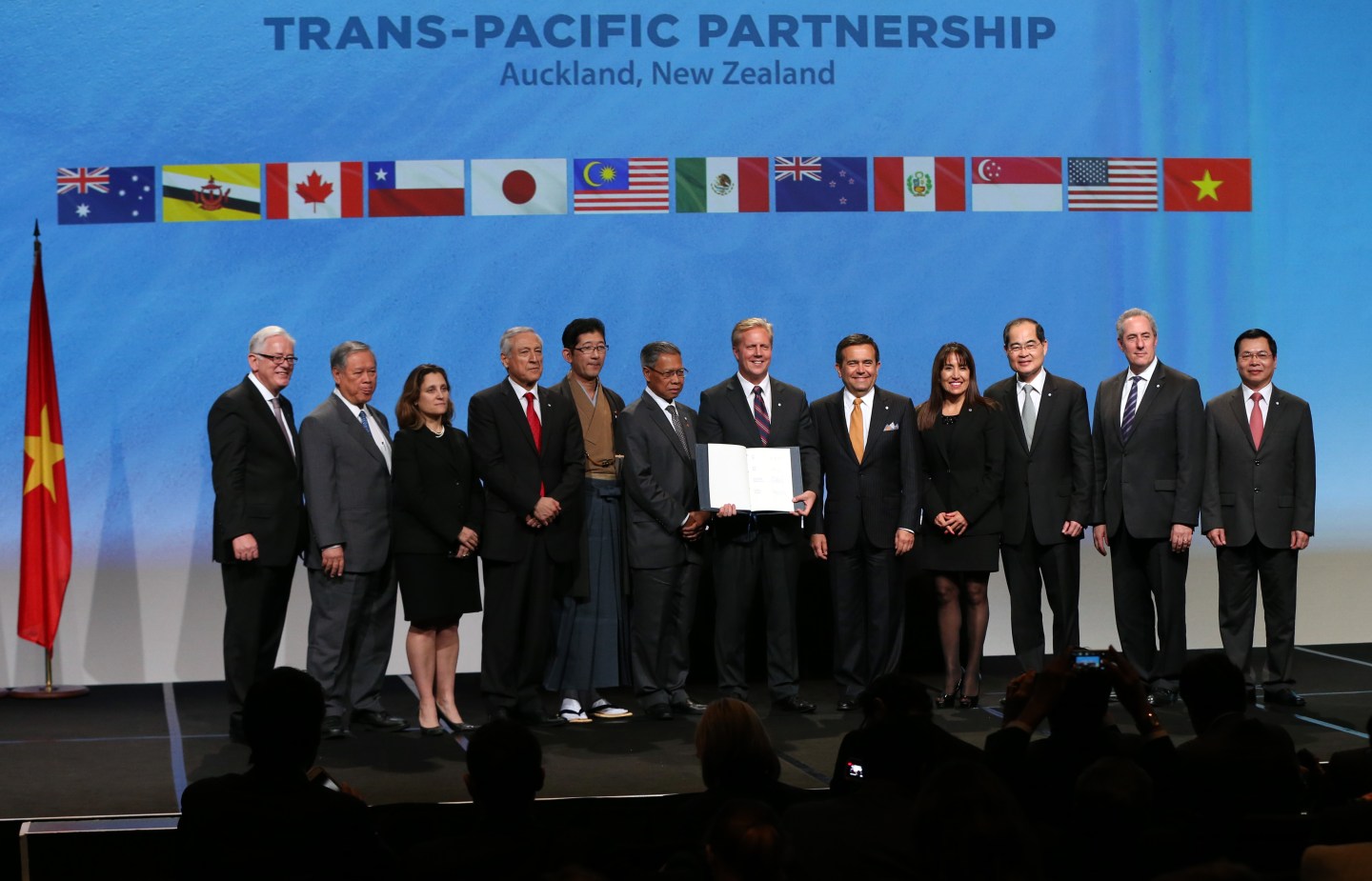
Here’s my nightmare: In 10 years, Asia-Pacific countries are seamlessly trading and cooperating with one another, and the U.S. has been left out. And 2016 will be remembered as the year that the U.S. failed to implement the Trans-Pacific Partnership (TPP).
This outcome isn’t inevitable, but avoiding it will require our country to have an honest, fact-based debate about what trade agreements can and can’t accomplish.
The TPP is not perfect. As one of the agreement’s senior negotiators, I can attest that no one party, the U.S. included, got everything it wanted. That’s the nature of making a deal. But after more than five years of hard negotiations on the TPP, including moments when we walked away from the table, the U.S. achieved a final agreement that reflects an overwhelming majority of American priorities and values.
Yet over the last year, opposition to the TPP has become a centerpiece of the presidential race. By blaming America’s economic woes on free trade, candidates on both the left and the right have fueled the increasingly popular, but misguided, view that if we scrap our existing trade deals and click our heels together, manufacturing jobs will return, the middle class will grow, and income inequality will disappear.
These arguments sound good on TV, but they don’t reflect reality. The strain on the American middle class is not the result of trade agreements. It has far more to do with improvements in productivity, advancements in technology, and insufficient domestic policy responses.
The past 20 years of globalization have created clear winners and losers in our economy, and such yawning inequality cannot be ignored. But pulling back from the world won’t reverse this trend. Instead, what we need is a “competitiveness agenda”: a collection of measures to retrain our workers, rebuild our infrastructure, improve our educational system so our children are prepared to compete in the global economy, and construct an environment that allows innovation and entrepreneurship to thrive.
As President Obama said earlier this week in a joint press conference with Singapore’s Prime Minister Lee Hsien Loong, the U.S. must “make sure that globalization and trade is working for us, not against us.”
Trade agreements can actually help protect our workers. They allow the U.S. to shape the process of globalization by urging others to embrace our commitment to the rule of law, transparency, fairness, and openness, and bind other countries to shared rules banning unfair competition. As our economic ties with other countries deepen, trade agreements can reduce the likelihood of conflict.
The TPP accomplishes all of this, and more. It strengthens U.S. economic ties with the fastest-growing region in the world; provides substantial export opportunities for American firms, including small businesses; and promotes digital trade, an area in which the U.S. holds a competitive edge. If our partners don’t live up to the agreement’s groundbreaking labor and environmental provisions, the TPP allows us to reimpose tariffs. It also simplifies customs procedures, ensures other countries don’t use non-tariff measures to keep U.S. products out of their markets, and institutes high standards for intellectual property, protecting U.S. inventions and ideas.
More than anything else, the TPP will boost economic growth and support high-paying U.S. jobs. That’s not just my view—it’s the consensus of 14 former chairs of the president’s Council of Economic Advisers, dating back to the Gerald Ford administration.
However, some still believe that we could have pushed harder and that the U.S. should attempt to renegotiate the TPP. Let me be clear: Asking our partners to return to the negotiating table to give us more is not a viable option. They would expect concessions that we couldn’t make, and the carefully balanced deal would quickly unravel.
If that were to happen, our trading partners would pursue deals among themselves, excluding the U.S. We would lose our competitive advantage in sector after sector, as we found ourselves denied the tariff benefits extended to others. We would lose the opportunity to push nations to improve their labor and environmental standards. We would allow others to shape the rules of globalization, reflecting their own interests. And—having already gone to the mat for a great deal—we would lose credibility in future negotiations on trade and other global issues like climate change.
In the joint press conference, both Obama and Lee underscored the serious consequences of non-action. Not only would our important relationships in the Asia-Pacific region immediately suffer from America’s backing out of the TPP, but also, as Lee put it, these relationships would be “really damaged for a long time to come.”
My nightmare doesn’t have to become reality. The TPP is a quality agreement that reflects U.S. priorities and values. Let’s not squander this opportunity. There won’t be another.