• Home
  • Latest
  • Fortune 500
  • Finance
  • Tech
  • Leadership
  • Lifestyle
  • Rankings
  • Multimedia
CommentaryBrexit

What Politicians Are Getting Wrong About the Brexit Vote

By
Brayden King
Down Arrow Button Icon
By
Brayden King
Down Arrow Button Icon
July 1, 2016, 1:00 AM ET
BRITAIN-EU-POLITICS-BREXIT-VOTE
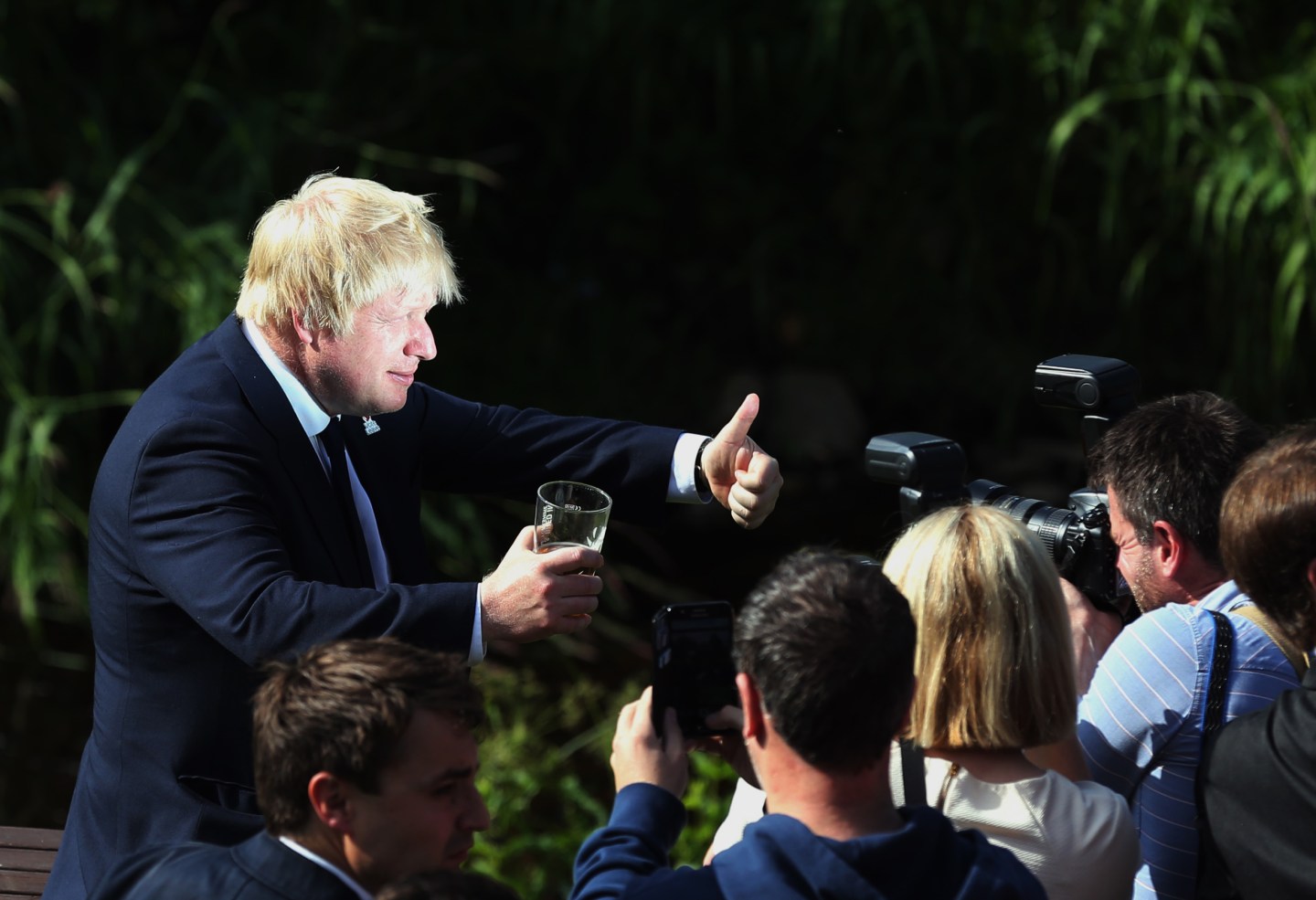
Former London Mayor, and "Vote Leave" campaigner, Boris Johnson poses for the media ahead of meeting with members of the public and supporters in Piercebridge, near Darlington, north-east England on June 22, 2016, as he continues to campaign for a Brexit ahead of the June 23 EU referendum. Wednesday is the last day of campaigning for Britain's referendum on whether or not to stay in the EU, a momentous decision with far-reaching implications for Britain and Europe. / AFP / SCOTT HEPPELL (Photo credit should read SCOTT HEPPELL/AFP/Getty Images)Scott Heppell — AFP/Getty Images

Brayden King is a sociologist and a professor at Kellogg School of Management at Northwestern University. He is an expert on organizational change and reputation management.

The conventional explanation for the surprising outcome of the Brexit vote in the U.K. to leave the European Union pits the haves against the have-nots, a divide defined largely by economics. Although economic differences certainly matter, a driving force that has been talked about less — and a factor that may also help explain the rise of presumed Republican U.S. presidential nominee Donald Trump — is actually cultural and cuts across socioeconomic levels.

Both Brexit “leavers,” whose sheer number and fury were underestimated by pollsters, and Trump supporters are more likely to belong to a social group known as “locals.” With affinities that transcend economics and even politics, locals are best defined as having a societal view focused on their local community. They tend to be less adventurous in their travel and cultural consumption (from ethnic food to music), gain status from their community affiliations, and may be wary of outsiders, especially those who are perceived to change the homogeneity of their local community.

In contrast, “cosmopolitans” tend to have a global perspective, seeing themselves as part of an economy that crosses borders, rather than being contained by them. Their social networks extend outside their local communities. They travel more, have broader consumer tastes, and see diversity in experience and friendships as a core value. While often associated with being more highly educated, cosmopolitans are just as likely to include “starving artists” as ex-patriate executives.

While the distinctions between these groups have been known for decades to social scientists, pundits have ignored the delineation between cosmopolitans and locals when discussing Brexit and the U.S. presidential campaign. By failing to recognize these groups, their motivations, and where they see themselves in the context of the world, political analysts have underestimated the very different emotional reactions that locals and cosmopolitans have toward the Brexit campaign and Trump’s promises to crack down on immigration.

One of the takeaways from Brexit, with a direct parallel to the U.S. presidential election, is just how emotionally-driven the average voter is. UK Prime Minister David Cameron and other Conservative party members had expected the Brexit issue to come down to rational economic arguments: that is, they believed the majority of voters would be persuaded that the UK would be better off politically and economically if it stayed in the EU.

What Cameron, who resigned after the Brexit vote, and others misjudged was that people are far less rational than assumed and tend to vote with their emotions and later justify those decisions with logic. (This might also explain the apparent after-the-fact remorse by millions of UK voters who, perhaps having been betrayed by their emotions, have signed an online petition, asking for a re-do vote.)

Sparking much of the emotion in the U.K., as well as in the U.S., is immigration. Many of the Brexit “leavers” who celebrated victory cited immigration as a major concern. Immigration is also at the center of the campaign by Trump, who hailed the Brexit victory as “a fantastic thing.” Trump is perhaps best known for his “build a wall” campaign rhetoric, which sounds outrageous to the cosmopolitans, but may resonate among locals as a solution to quell their fears that outsiders are changing their communities.

Immigration has a surprising level of salience in politics today. A simple Google trend analysis of media coverage going back to 2014 reveals immigration as garnering the most coverage, followed by the economy. Terrorism, same-sex marriage, and the military, by comparison, have far less visibility in the U.S. media.

The firestorm around immigration has no doubt been a surprise for the Republican party, which has largely sidestepped the issue for fear of alienating Latino voters on one hand and its mainstream constituency on the other. While immigration often triggers fear among the disenfranchised — people who view themselves on the losing side of the economy — it also has a strong emotional impact among the locals, including those whose employment is in no way affected, but who fear the changes potentially brought by immigrants.

Cosmopolitans, meanwhile, may very well favor immigration because it resonates with a core value of embracing diversity. Because pro-immigration policies appeal to them emotionally, they naturally see it as a way to stimulate jobs and economic opportunities and to address a talent gap in sectors such as technology. But as they present what they see as logical arguments about the benefits of immigration, they fail to grasp the emotional concerns of their local counterparts.

Within this gap in perception, political entrepreneurs such as Trump and Brexit leaders have found a strategic opening. Deft at crafting politically evocative statements and promulgating them via social media, they appeal to the emotional triggers of locals and, in so doing, have created a major cultural divide between locals and cosmopolitans.

If Brexit is any indication, this cultural difference will continue to play a major role in the political arena, particularly as the U.S. presidential campaign heats up. In order to understand the constituencies and the issues that matter most to them, politicians and pundits alike would do well to look beyond economic differences and pay attention to the cultural divisions that stimulate such strong emotional responses among voters.


About the Author
By Brayden King
See full bioRight Arrow Button Icon

Latest in Commentary

Finance
Lorem ipsum dolor sit amet, consectetur adipiscing elit, sed do eiusmod tempor incididunt ut labore et dolore magna aliqua. Ut enim ad minim veniam
By Fortune Editors
October 20, 2025
Finance
Lorem ipsum dolor sit amet, consectetur adipiscing elit, sed do eiusmod tempor incididunt ut labore et dolore magna aliqua. Ut enim ad minim veniam
By Fortune Editors
October 20, 2025
Finance
Lorem ipsum dolor sit amet, consectetur adipiscing elit, sed do eiusmod tempor incididunt ut labore et dolore magna aliqua. Ut enim ad minim veniam
By Fortune Editors
October 20, 2025
Finance
Lorem ipsum dolor sit amet, consectetur adipiscing elit, sed do eiusmod tempor incididunt ut labore et dolore magna aliqua. Ut enim ad minim veniam
By Fortune Editors
October 20, 2025
Finance
Lorem ipsum dolor sit amet, consectetur adipiscing elit, sed do eiusmod tempor incididunt ut labore et dolore magna aliqua. Ut enim ad minim veniam
By Fortune Editors
October 20, 2025
Finance
Lorem ipsum dolor sit amet, consectetur adipiscing elit, sed do eiusmod tempor incididunt ut labore et dolore magna aliqua. Ut enim ad minim veniam
By Fortune Editors
October 20, 2025

Most Popular

Finance
Lorem ipsum dolor sit amet, consectetur adipiscing elit, sed do eiusmod tempor incididunt ut labore et dolore magna aliqua. Ut enim ad minim veniam
By Fortune Editors
October 20, 2025
Finance
Lorem ipsum dolor sit amet, consectetur adipiscing elit, sed do eiusmod tempor incididunt ut labore et dolore magna aliqua. Ut enim ad minim veniam
By Fortune Editors
October 20, 2025
Finance
Lorem ipsum dolor sit amet, consectetur adipiscing elit, sed do eiusmod tempor incididunt ut labore et dolore magna aliqua. Ut enim ad minim veniam
By Fortune Editors
October 20, 2025
Finance
Lorem ipsum dolor sit amet, consectetur adipiscing elit, sed do eiusmod tempor incididunt ut labore et dolore magna aliqua. Ut enim ad minim veniam
By Fortune Editors
October 20, 2025
Finance
Lorem ipsum dolor sit amet, consectetur adipiscing elit, sed do eiusmod tempor incididunt ut labore et dolore magna aliqua. Ut enim ad minim veniam
By Fortune Editors
October 20, 2025
Finance
Lorem ipsum dolor sit amet, consectetur adipiscing elit, sed do eiusmod tempor incididunt ut labore et dolore magna aliqua. Ut enim ad minim veniam
By Fortune Editors
October 20, 2025
Rankings
  • 100 Best Companies
  • Fortune 500
  • Global 500
  • Fortune 500 Europe
  • Most Powerful Women
  • Future 50
  • World’s Most Admired Companies
  • See All Rankings
Sections
  • Finance
  • Leadership
  • Success
  • Tech
  • Asia
  • Europe
  • Environment
  • Fortune Crypto
  • Health
  • Retail
  • Lifestyle
  • Politics
  • Newsletters
  • Magazine
  • Features
  • Commentary
  • Mpw
  • CEO Initiative
  • Conferences
  • Personal Finance
  • Education
Customer Support
  • Frequently Asked Questions
  • Customer Service Portal
  • Privacy Policy
  • Terms Of Use
  • Single Issues For Purchase
  • International Print
Commercial Services
  • Advertising
  • Fortune Brand Studio
  • Fortune Analytics
  • Fortune Conferences
  • Business Development
About Us
  • About Us
  • Editorial Calendar
  • Press Center
  • Work At Fortune
  • Diversity And Inclusion
  • Terms And Conditions
  • Site Map

© 2025 Fortune Media IP Limited. All Rights Reserved. Use of this site constitutes acceptance of our Terms of Use and Privacy Policy | CA Notice at Collection and Privacy Notice | Do Not Sell/Share My Personal Information
FORTUNE is a trademark of Fortune Media IP Limited, registered in the U.S. and other countries. FORTUNE may receive compensation for some links to products and services on this website. Offers may be subject to change without notice.


Latest in Commentary

unemployed
CommentaryLayoffs
The AI efficiency illusion: why cutting 1.1 million jobs will stifle, not scale, your strategy
By Katica RoyDecember 18, 2025
12 hours ago
Muddu
CommentaryIT
IT service is reaching its breaking point. At Salesforce, we see 3 tipping points
By Muddu SudhakarDecember 18, 2025
17 hours ago
small business
CommentaryLayoffs
Our data shows that companies of 500 and fewer workers mostly avoided the AI layoffs. They’re making AI work for them
By Gabby BurlacuDecember 18, 2025
17 hours ago
Sophia Romee is the General Manager of the GenAI Studio at the College Board
CommentaryEducation
Gen Z is on the fence about AI in the classroom. That’s a good thing
By Sophia RomeeDecember 18, 2025
17 hours ago
Tim Parker
CommentaryAutos
How Bentley’s brand is creating business advantage in disruptive times 
By Tim ParkerDecember 18, 2025
20 hours ago
layoffs
CommentaryLayoffs
The AI layoff wave is just beginning — and it’s by design
By Kevin OakesDecember 17, 2025
2 days ago

Most Popular

placeholder alt text
Economy
The $38 trillion national debt is to blame for over $1 trillion in annual interest payments from here on out, CRFB says
By Nick LichtenbergDecember 17, 2025
2 days ago
placeholder alt text
C-Suite
Red Lobster CEO Damola Adamolekun says the key to being a better leader is being a better person: ‘Leadership is self-improvement’
By Sydney LakeDecember 17, 2025
2 days ago
placeholder alt text
AI
'Robots are going to be amongst us': Qualcomm exec says buckle up for the next 5 years. Your car is going to be the first shoe to drop
By Nino PaoliDecember 17, 2025
2 days ago
placeholder alt text
Success
As millions of Gen Zers face unemployment, McDonald's CEO dishes out some tough love career advice for navigating the market: ‘You've got to make things happen for yourself’
By Preston ForeDecember 16, 2025
3 days ago
placeholder alt text
Success
Britain’s defense chief calls on Gen Z grads leaving university to skip corporate jobs and join the military as war with Russia becomes a growing risk
By Emma BurleighDecember 17, 2025
2 days ago
placeholder alt text
Future of Work
LinkedIn CEO says it's 'outdated' to have a five-year career plan: It's a 'little bit foolish' considering the pace AI is changing the workplace
By Sydney LakeDecember 18, 2025
16 hours ago