• Home
  • Latest
  • Fortune 500
  • Finance
  • Tech
  • Leadership
  • Lifestyle
  • Rankings
  • Multimedia
Brexit

Pro-Brexit Voters Fueled by “A Destructive Urge,” Says Goldsmiths Professor

By
David Z. Morris
David Z. Morris
Down Arrow Button Icon
By
David Z. Morris
David Z. Morris
Down Arrow Button Icon
June 26, 2016, 4:43 PM ET
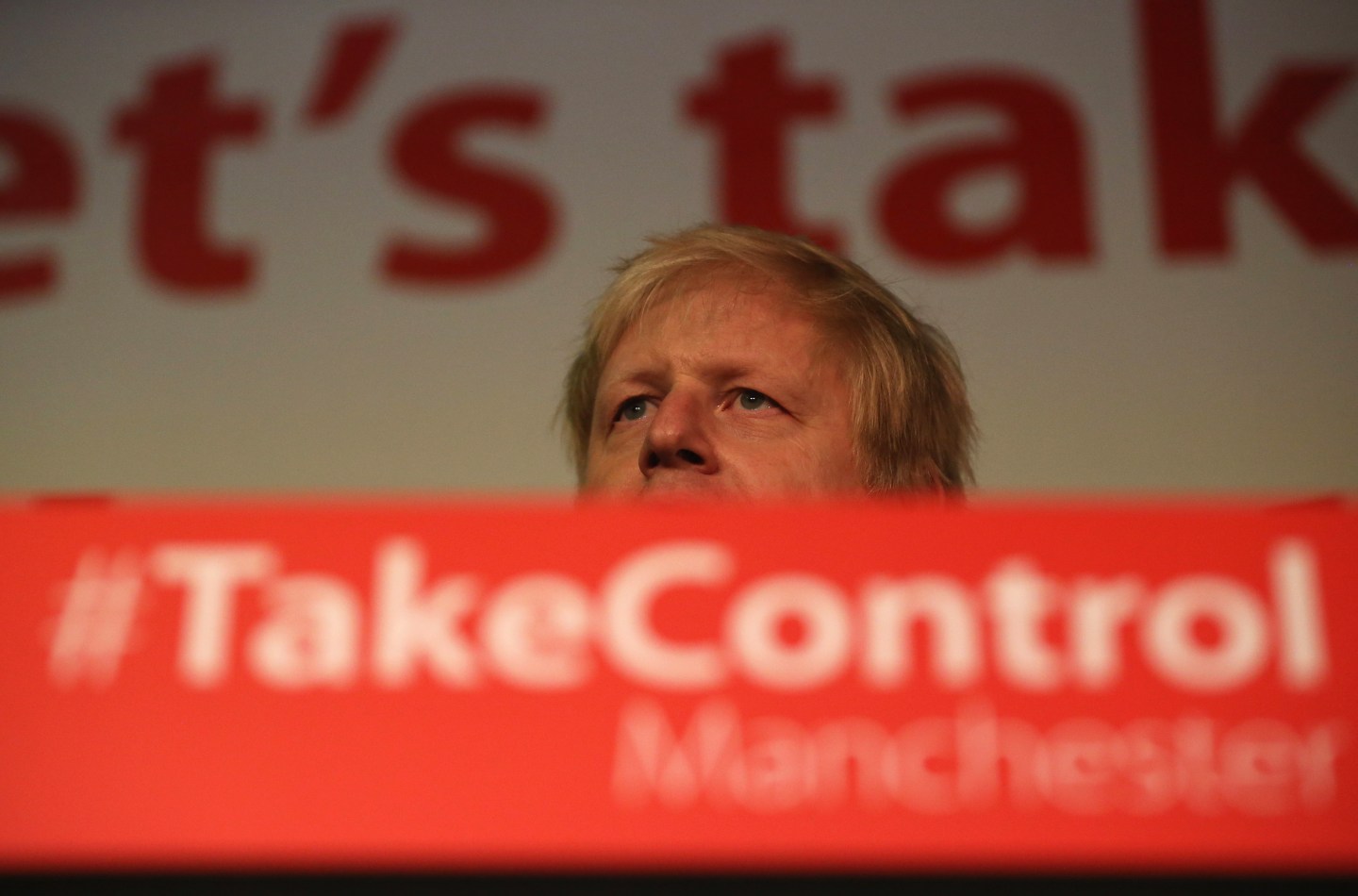
Boris Johnson Leads 48Hour Brexit Blitz Of Campaigning
Photograph by Christopher Furlong Getty Images

There has been no shortage of bleak analyses of Thursday’s Brexit result, with the financial and business press almost uniformly certain that the consequences will be just as economically disastrous as Friday’s global market slump suggests. But if you want to read something really depressing, try this deep dive into the psychology of Leave voters by Dr. Will Davies.

Davies, a sociologist and Co-Director of the Political Economy Research Centre at Goldsmiths College, University of London, argues that support for Brexit was driven, not by any sense that leaving the EU would create more jobs, raise incomes, or strengthen the U.K.—but by an actual drive to self-destruction.

Get Data Sheet, Fortune’s technology newsletter.

“Amongst people who have utterly given up on the future, political movements don’t need to promise any desirable and realistic change,” writes Davies. “If anything, they are more comforting and trustworthy if predicated on the notion that the future is beyond rescue, for that chimes more closely with people’s private experiences.” Interviews with pro-Brexit voters in Doncaster, for instance, found that they had little hope for a different future.

But Davies says this goes beyond cynicism. “I’ve long suspected that, on some unconscious level . . . the self-harm inflicted by Brexit could potentially be part of its appeal.”

“Brexit was never really articulated as a viable policy,” Davies continues, “And only ever as a destructive urge, which some [voters] no doubt now feel guilty for giving way to.” Signs of that “Regrexit” have been cropping up all weekend.

Davies cites as evidence certain voters casting ballots directly against their economic self-interest. Many of the biggest supporters of Brexit, he finds, were those most dependent on the EU, both through economic relationships and subsidies. He argues that those relationships—particularly subsidies, such as those to farmers—bred not gratitude or a sense of closeness to Europe, but actual resentment. Davies says a British culture of snobbery made things even worse, leaving voters, at least at the moment of pulling the lever, willing to abandon economic benefits in exchange for the Leave campaign’s promise that they could “take back control.”

“Think of what it means on an individual level to rediscover control,” Davies writes. “To be a person without control (for instance to suffer incontinence or a facial tick) is to be the butt of cruel jokes, to be potentially embarrassed in public. [The Leave campaign] spoke directly to this feeling of inadequacy and embarrassment, then promised to eradicate it.”

For more on Brexit, watch our video:

It’s a variation on an argument familiar from U.S. politics, most pointedly crystallized in Thomas Frank’s 2004 book What’s the Matter With Kansas. Frank thought some American voters were being distracted from economic matters by cultural and religious issues—which his critics were quick to point out can legitimately outweigh pure financial calculus.

Davies, though, isn’t saying voters were distracted or duped, but instead that they were acting out of an actual sense of disgust at being the beneficiaries of economic redistribution. That’s profoundly worrisome, because redistribution schemes are being floated with increasing frequency as a solution to the seemingly intractable disparities of the globalized, tech-driven economy. And not just by the likes of Bernie Sanders—have a look at the adventurously capitalistic tech incubator Y Combinator’s pilot study of what’s known as a basic income.

Redistribution in all its forms is certainly controversial, but it’s at least a possible solution to a widely-acknowledged macroeconomic and social problem. If, as Davies argues, it breeds such a sense of alienation that it drives voters who benefit from it to dismantle the framework of global trade itself, that problem just started looking a lot more complex.


About the Author
By David Z. Morris
See full bioRight Arrow Button Icon

Latest in International

Finance
Lorem ipsum dolor sit amet, consectetur adipiscing elit, sed do eiusmod tempor incididunt ut labore et dolore magna aliqua. Ut enim ad minim veniam
By Fortune Editors
October 20, 2025
Finance
Lorem ipsum dolor sit amet, consectetur adipiscing elit, sed do eiusmod tempor incididunt ut labore et dolore magna aliqua. Ut enim ad minim veniam
By Fortune Editors
October 20, 2025
Finance
Lorem ipsum dolor sit amet, consectetur adipiscing elit, sed do eiusmod tempor incididunt ut labore et dolore magna aliqua. Ut enim ad minim veniam
By Fortune Editors
October 20, 2025
Finance
Lorem ipsum dolor sit amet, consectetur adipiscing elit, sed do eiusmod tempor incididunt ut labore et dolore magna aliqua. Ut enim ad minim veniam
By Fortune Editors
October 20, 2025
Finance
Lorem ipsum dolor sit amet, consectetur adipiscing elit, sed do eiusmod tempor incididunt ut labore et dolore magna aliqua. Ut enim ad minim veniam
By Fortune Editors
October 20, 2025
Finance
Lorem ipsum dolor sit amet, consectetur adipiscing elit, sed do eiusmod tempor incididunt ut labore et dolore magna aliqua. Ut enim ad minim veniam
By Fortune Editors
October 20, 2025

Most Popular

Finance
Lorem ipsum dolor sit amet, consectetur adipiscing elit, sed do eiusmod tempor incididunt ut labore et dolore magna aliqua. Ut enim ad minim veniam
By Fortune Editors
October 20, 2025
Finance
Lorem ipsum dolor sit amet, consectetur adipiscing elit, sed do eiusmod tempor incididunt ut labore et dolore magna aliqua. Ut enim ad minim veniam
By Fortune Editors
October 20, 2025
Finance
Lorem ipsum dolor sit amet, consectetur adipiscing elit, sed do eiusmod tempor incididunt ut labore et dolore magna aliqua. Ut enim ad minim veniam
By Fortune Editors
October 20, 2025
Finance
Lorem ipsum dolor sit amet, consectetur adipiscing elit, sed do eiusmod tempor incididunt ut labore et dolore magna aliqua. Ut enim ad minim veniam
By Fortune Editors
October 20, 2025
Finance
Lorem ipsum dolor sit amet, consectetur adipiscing elit, sed do eiusmod tempor incididunt ut labore et dolore magna aliqua. Ut enim ad minim veniam
By Fortune Editors
October 20, 2025
Finance
Lorem ipsum dolor sit amet, consectetur adipiscing elit, sed do eiusmod tempor incididunt ut labore et dolore magna aliqua. Ut enim ad minim veniam
By Fortune Editors
October 20, 2025
Fortune Secondary Logo
Rankings
  • 100 Best Companies
  • Fortune 500
  • Global 500
  • Fortune 500 Europe
  • Most Powerful Women
  • Future 50
  • World’s Most Admired Companies
  • See All Rankings
Sections
  • Finance
  • Fortune Crypto
  • Features
  • Leadership
  • Health
  • Commentary
  • Success
  • Retail
  • Mpw
  • Tech
  • Lifestyle
  • CEO Initiative
  • Asia
  • Politics
  • Conferences
  • Europe
  • Newsletters
  • Personal Finance
  • Environment
  • Magazine
  • Education
Customer Support
  • Frequently Asked Questions
  • Customer Service Portal
  • Privacy Policy
  • Terms Of Use
  • Single Issues For Purchase
  • International Print
Commercial Services
  • Advertising
  • Fortune Brand Studio
  • Fortune Analytics
  • Fortune Conferences
  • Business Development
  • Group Subscriptions
About Us
  • About Us
  • Editorial Calendar
  • Press Center
  • Work At Fortune
  • Diversity And Inclusion
  • Terms And Conditions
  • Site Map
  • About Us
  • Editorial Calendar
  • Press Center
  • Work At Fortune
  • Diversity And Inclusion
  • Terms And Conditions
  • Site Map
  • Facebook icon
  • Twitter icon
  • LinkedIn icon
  • Instagram icon
  • Pinterest icon

Most Popular

The U.S. government is spending $88 billion a month in interest on national debt—equal to spending on defense and education combined
Economy
The U.S. government is spending $88 billion a month in interest on national debt—equal to spending on defense and education combined
By Fortune EditorsApril 9, 2026
1 day ago
A Meta employee created a dashboard so coworkers can compete to be the company's No. 1 AI token user—and Zuckerberg doesn't even rank in the top 250
AI
A Meta employee created a dashboard so coworkers can compete to be the company's No. 1 AI token user—and Zuckerberg doesn't even rank in the top 250
By Fortune EditorsApril 9, 2026
1 day ago
Gen Z doesn't want your full-time job. They want several part-time roles, and it's reshaping the entire workforce
Success
Gen Z doesn't want your full-time job. They want several part-time roles, and it's reshaping the entire workforce
By Fortune EditorsApril 9, 2026
1 day ago
White-collar workers are quietly rebelling against AI as 80% outright refuse adoption mandates
AI
White-collar workers are quietly rebelling against AI as 80% outright refuse adoption mandates
By Fortune EditorsApril 9, 2026
1 day ago
'I hate working 5 days': Zoom CEO says traditional work schedules are becoming obsolete—and predicts a 3-day workweek by 2031
Success
'I hate working 5 days': Zoom CEO says traditional work schedules are becoming obsolete—and predicts a 3-day workweek by 2031
By Fortune EditorsApril 9, 2026
22 hours ago
Mark Cuban admits he made a mistake letting go of the Mavericks: 'I don't regret selling. I regret who I sold to'
Investing
Mark Cuban admits he made a mistake letting go of the Mavericks: 'I don't regret selling. I regret who I sold to'
By Fortune EditorsApril 9, 2026
21 hours ago

© 2026 Fortune Media IP Limited. All Rights Reserved. Use of this site constitutes acceptance of our Terms of Use and Privacy Policy | CA Notice at Collection and Privacy Notice | Do Not Sell/Share My Personal Information
FORTUNE is a trademark of Fortune Media IP Limited, registered in the U.S. and other countries. FORTUNE may receive compensation for some links to products and services on this website. Offers may be subject to change without notice.