• Home
  • Latest
  • Fortune 500
  • Finance
  • Tech
  • Leadership
  • Lifestyle
  • Rankings
  • Multimedia
CommentaryFCC

The New Privacy Cop Patrolling the Internet

By
Jon Leibowitz
Jon Leibowitz
and
Jonathan Nuechterlein
Down Arrow Button Icon
By
Jon Leibowitz
Jon Leibowitz
and
Jonathan Nuechterlein
Down Arrow Button Icon
May 10, 2016, 1:00 AM ET
Networked
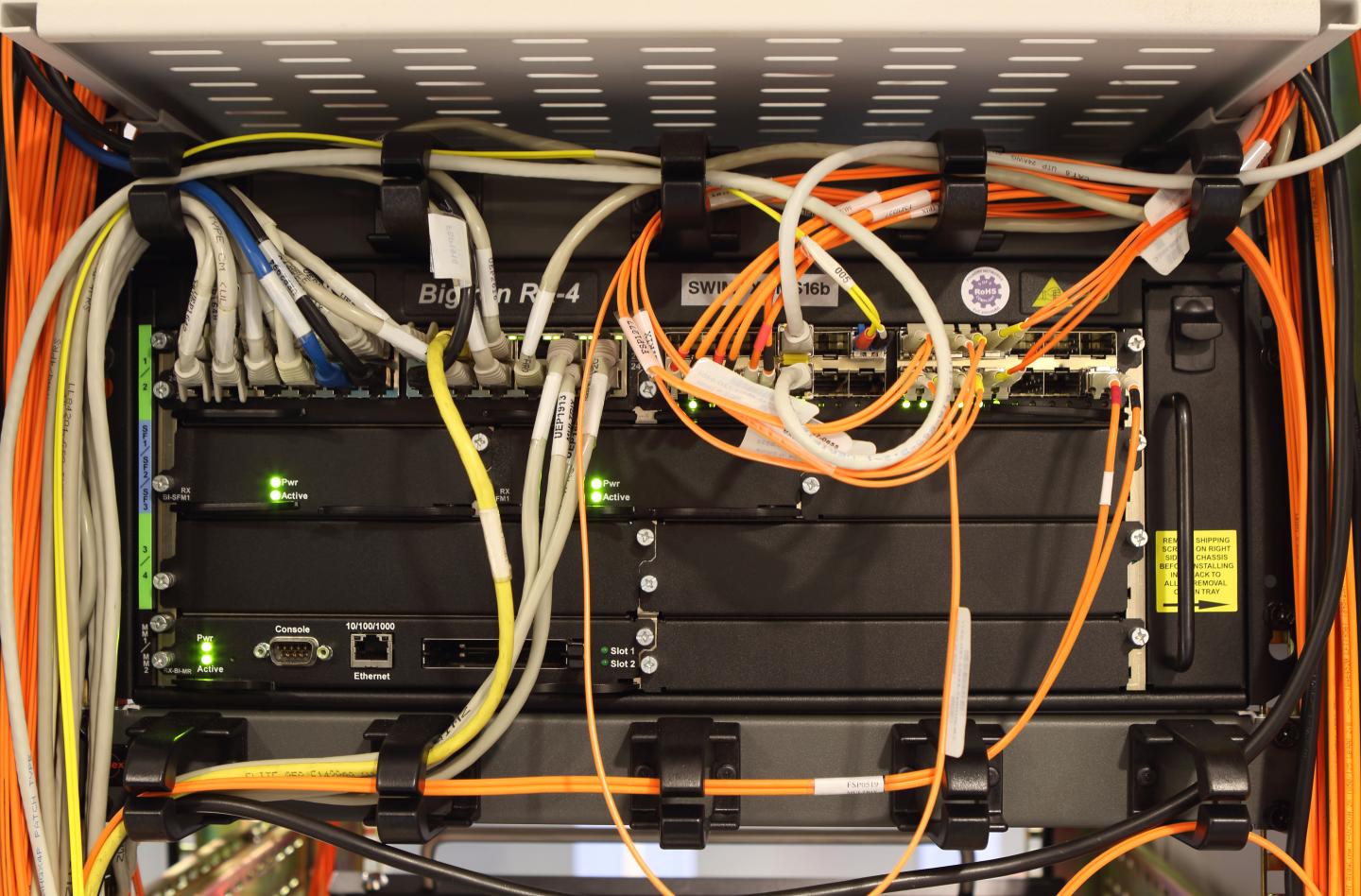
Multiple network internet cables plugged in on a server in a computer server room.Photograph by Getty Images

As our online footprints grow in size and scope, it is more important than ever for Internet companies to protect us against hackers and disclose how they use our personal data. The Federal Trade Commission was long the main privacy cop enforcing these essential consumer protections. But last year, the FTC’s sister agency—the Federal Communications Commission—reclassified broadband ISPs as common carriers outside the FTC’s jurisdiction. Unless the courts reverse that decision, there are now two privacy cops on the Internet beat. The FCC polices ISPs like Verizon (VZ), Charter, and Sprint (S), while the FTC continues policing everyone else, from Google (GOOGL)and Facebook (FB) to Apple (AAPL)and Amazon (AMZN).

The critical question is how the FCC will exercise its new privacy powers. In our view, the FCC should follow the same basic approach that the FTC has successfully developed and enforced since the dawn of the commercial Internet.

The FTC is mainly an enforcement agency rather than a regulator. It goes after companies when they break their privacy commitments to consumers or take actions that cause consumers real harm. This enforcement-oriented approach has a proven track record of success. It is flexible and promotes high-tech innovation, but it has held hundreds of companies, large and small, accountable when they crossed the line.

The FCC should hold ISPs to the same privacy standards to which the FTC successfully held them for many years—and to which the FTC still holds all other companies. We were disappointed, then, when the FCC recently proposed to subject ISPs to a detailed set of burdensome data-privacy rules with no precedent in the FTC’s regime. These rules would severely restrict how ISPs may use consumer data. For example, they would prevent any ISP from offering its own branded home security system to its existing customers without their advance permission. The rules would further subject all ISPs—and ISPs alone—to unprecedented compliance costs and keep them from efficiently monetizing online data in the same way that Google and Facebook have long done, with astounding consumer benefits. Such restrictions would exert upward pressure on broadband prices and undercut the FCC’s central mission of promoting broadband investment and adoption.

Ironically, the proposed rules would do very little to promote the cause of “privacy” in the first place. If they are adopted, all other participants in the Internet ecosystem will remain exempt, will continue collecting all of the same information that the ISPs would have collected, and may continue selling the same information as before to the same data brokers. The Big Data marketplace will carry on—except, ironically, the FCC will have insulated its largest players from ISP competition. Meanwhile, the rules would simply confuse all but the savviest consumers about what data is, and is not, subject to collection and use.

The FCC nonetheless suggests that ISPs should be treated differently from all other Internet companies because, it says, they “have direct access to potentially all customer information” transmitted over their broadband pipes, whereas non-ISP companies do not. But that is factually incorrect, as former Clinton administration Privacy Czar Peter Swire recently explained in his comprehensive report on ISP data collection. First, ISPs cannot read encrypted communications, and most Internet traffic is now encrypted. Indeed, almost all of the top websites now encrypt by default or on user log-in. When you type “nearby hospitals with oncology practices” into Google’s search engine, Google knows you’re asking about cancer treatment, but your ISP does not.

Also, any given ISP today handles only a portion of a typical consumer’s Internet traffic. Suppose you use your Android smartphone on your home wi-fi network in the morning, switch to a wireless network during your commute, then switch to your work wi-fi network when you arrive at the office, and then switch again to a Starbucks wi-fi connection during your coffee break. On the same Android device, you might have used four separate ISPs, and any given ISP handled only a fraction of your communications. But you used your phone’s Android operating system and Chrome browser throughout the day, giving Google potentially broad insights into your online profile.

The FCC additionally suggests that ISP-specific regulatory burdens are needed because consumers find it harder to make privacy choices by switching among ISPs than by switching among rival non-ISP providers. But that, too, is factually mistaken. T-Mobile, Verizon, AT&T, and Sprint bombard us daily with inducements to switch providers. It would be far easier for you to take them up on those offers than switch to a different social networking site or abandon your Gmail account.

We remain hopeful that the FCC will adopt a less rigid, more FTC-like approach to the privacy practices of ISPs. FCC Chairman Tom Wheeler recently acknowledged that one of the challenges in protecting privacy “is to make sure we are consistent with the FTC’s thoughtful, rational approach.” Let’s hope that the FCC will take these words to heart and build on the proven success of its sister agency.

Jon Leibowitz is a former U.S. Federal Trade Commission Chairman and Jonathan Nuechterlein is a former FTC General Counsel and U.S. Federal Communications Commission Deputy General Counsel. The authors are now in private law practice and represent ISPs, among other clients. The views expressed here are their own.

About the Authors
By Jon Leibowitz
See full bioRight Arrow Button Icon
By Jonathan Nuechterlein
See full bioRight Arrow Button Icon

Latest in Commentary

Finance
Lorem ipsum dolor sit amet, consectetur adipiscing elit, sed do eiusmod tempor incididunt ut labore et dolore magna aliqua. Ut enim ad minim veniam
By Fortune Editors
October 20, 2025
Finance
Lorem ipsum dolor sit amet, consectetur adipiscing elit, sed do eiusmod tempor incididunt ut labore et dolore magna aliqua. Ut enim ad minim veniam
By Fortune Editors
October 20, 2025
Finance
Lorem ipsum dolor sit amet, consectetur adipiscing elit, sed do eiusmod tempor incididunt ut labore et dolore magna aliqua. Ut enim ad minim veniam
By Fortune Editors
October 20, 2025
Finance
Lorem ipsum dolor sit amet, consectetur adipiscing elit, sed do eiusmod tempor incididunt ut labore et dolore magna aliqua. Ut enim ad minim veniam
By Fortune Editors
October 20, 2025
Finance
Lorem ipsum dolor sit amet, consectetur adipiscing elit, sed do eiusmod tempor incididunt ut labore et dolore magna aliqua. Ut enim ad minim veniam
By Fortune Editors
October 20, 2025
Finance
Lorem ipsum dolor sit amet, consectetur adipiscing elit, sed do eiusmod tempor incididunt ut labore et dolore magna aliqua. Ut enim ad minim veniam
By Fortune Editors
October 20, 2025

Most Popular

Finance
Lorem ipsum dolor sit amet, consectetur adipiscing elit, sed do eiusmod tempor incididunt ut labore et dolore magna aliqua. Ut enim ad minim veniam
By Fortune Editors
October 20, 2025
Finance
Lorem ipsum dolor sit amet, consectetur adipiscing elit, sed do eiusmod tempor incididunt ut labore et dolore magna aliqua. Ut enim ad minim veniam
By Fortune Editors
October 20, 2025
Finance
Lorem ipsum dolor sit amet, consectetur adipiscing elit, sed do eiusmod tempor incididunt ut labore et dolore magna aliqua. Ut enim ad minim veniam
By Fortune Editors
October 20, 2025
Finance
Lorem ipsum dolor sit amet, consectetur adipiscing elit, sed do eiusmod tempor incididunt ut labore et dolore magna aliqua. Ut enim ad minim veniam
By Fortune Editors
October 20, 2025
Finance
Lorem ipsum dolor sit amet, consectetur adipiscing elit, sed do eiusmod tempor incididunt ut labore et dolore magna aliqua. Ut enim ad minim veniam
By Fortune Editors
October 20, 2025
Finance
Lorem ipsum dolor sit amet, consectetur adipiscing elit, sed do eiusmod tempor incididunt ut labore et dolore magna aliqua. Ut enim ad minim veniam
By Fortune Editors
October 20, 2025
Fortune Secondary Logo
Rankings
  • 100 Best Companies
  • Fortune 500
  • Global 500
  • Fortune 500 Europe
  • Most Powerful Women
  • World's Most Admired Companies
  • See All Rankings
  • Lists Calendar
Sections
  • Finance
  • Fortune Crypto
  • Features
  • Leadership
  • Health
  • Commentary
  • Success
  • Retail
  • Mpw
  • Tech
  • Lifestyle
  • CEO Initiative
  • Asia
  • Politics
  • Conferences
  • Europe
  • Newsletters
  • Personal Finance
  • Environment
  • Magazine
  • Education
Customer Support
  • Frequently Asked Questions
  • Customer Service Portal
  • Privacy Policy
  • Terms Of Use
  • Single Issues For Purchase
  • International Print
Commercial Services
  • Advertising
  • Fortune Brand Studio
  • Fortune Analytics
  • Fortune Conferences
  • Business Development
  • Group Subscriptions
About Us
  • About Us
  • Press Center
  • Work At Fortune
  • Terms And Conditions
  • Site Map
  • About Us
  • Press Center
  • Work At Fortune
  • Terms And Conditions
  • Site Map
  • Facebook icon
  • Twitter icon
  • LinkedIn icon
  • Instagram icon
  • Pinterest icon

Latest in Commentary

hegseth
CommentaryMilitary
America shot its arsenal empty in 2 wars. Now it needs Beijing’s permission to reload
By Steve H. Hanke and Jeffrey WengApril 30, 2026
7 hours ago
Duncan Tait, CEO of Inchcape
Europecar manufacturing
“Competition is good for the industry”. Inchcape CEO’s case for optimism in automotive’s next chapter
By Duncan TaitApril 30, 2026
10 hours ago
agentic
CommentaryAI agents
Why your data infrastructure — not your AI model — will determine whether Agentic AI scales
By Jeffrey Sonnenfeld, Stephen Henriques, Catherine Dai and Zander JeinthanuttkanontApril 30, 2026
12 hours ago
hoskins
Commentaryoffices
Gensler Co-Chair: Hot-desking was supposed to save money. It may be costing you your culture
By Diane HoskinsApril 30, 2026
14 hours ago
tillis
CommentaryCongress
Thom Tillis: Free markets built American prosperity. Government intervention puts it at risk
By Thom Tillis and John StanfordApril 30, 2026
15 hours ago
iran
CommentaryIran
The Strait of Hormuz is a data problem, not just a military one
By Erik Bethel and Ami DanielApril 30, 2026
16 hours ago

Most Popular

Apple cofounder Ronald Wayne—whose stake would be worth up to $400 billion had he not sold it in 1976—says that at 91, he has no regrets
Success
Apple cofounder Ronald Wayne—whose stake would be worth up to $400 billion had he not sold it in 1976—says that at 91, he has no regrets
By Preston ForeApril 27, 2026
3 days ago
Google Cloud revenue is now 18% of Alphabet's business. Is this the beginning of the end of Google's search identity?
Big Tech
Google Cloud revenue is now 18% of Alphabet's business. Is this the beginning of the end of Google's search identity?
By Alexei OreskovicApril 29, 2026
23 hours ago
‘They left me no choice’: Powell isn’t going anywhere—blocking Trump from another Fed appointee
Banking
‘They left me no choice’: Powell isn’t going anywhere—blocking Trump from another Fed appointee
By Eva RoytburgApril 29, 2026
1 day ago
‘The cost of compute is far beyond the costs of the employees’: Nvidia executive says right now AI is more expensive than paying human workers
AI
‘The cost of compute is far beyond the costs of the employees’: Nvidia executive says right now AI is more expensive than paying human workers
By Sasha RogelbergApril 28, 2026
3 days ago
Jamie Dimon gets candid about national debt: ‘There will be a bond crisis, and then we’ll have to deal with it’
Economy
Jamie Dimon gets candid about national debt: ‘There will be a bond crisis, and then we’ll have to deal with it’
By Eleanor PringleApril 29, 2026
2 days ago
With no end in sight, Trump considers new options in Iran war—including the ‘Dark Eagle’ hypersonic missile
Big Tech
With no end in sight, Trump considers new options in Iran war—including the ‘Dark Eagle’ hypersonic missile
By Jim EdwardsApril 30, 2026
14 hours ago

© 2026 Fortune Media IP Limited. All Rights Reserved. Use of this site constitutes acceptance of our Terms of Use and Privacy Policy | CA Notice at Collection and Privacy Notice | Do Not Sell/Share My Personal Information
FORTUNE is a trademark of Fortune Media IP Limited, registered in the U.S. and other countries. FORTUNE may receive compensation for some links to products and services on this website. Offers may be subject to change without notice.