• Home
  • Latest
  • Fortune 500
  • Finance
  • Tech
  • Leadership
  • Lifestyle
  • Rankings
  • Multimedia

Trendingnow

1

Despite a $500 million net worth, Shaq just finished his fourth degree. He warns graduates: 'Your character will take you further than your resume'

2

Bolt CEO says he let go of his entire HR team for creating problems that didn’t exist: ‘Those problems disappeared when I let them go’ 

3

Jeff Bezos wants the bottom half of earners to pay zero income tax—he says nurses making just $75K should save $12K a year

1

Despite a $500 million net worth, Shaq just finished his fourth degree. He warns graduates: 'Your character will take you further than your resume'

2

Bolt CEO says he let go of his entire HR team for creating problems that didn’t exist: ‘Those problems disappeared when I let them go’ 

3

Jeff Bezos wants the bottom half of earners to pay zero income tax—he says nurses making just $75K should save $12K a year
Commentary

Dear Trump Haters, a Brokered Convention Won’t Happen

By
Daniel Klinghard
Daniel Klinghard
and
Bethany Cianciolo
Bethany Cianciolo
Down Arrow Button Icon
By
Daniel Klinghard
Daniel Klinghard
and
Bethany Cianciolo
Bethany Cianciolo
Down Arrow Button Icon
March 14, 2016, 8:30 PM ET
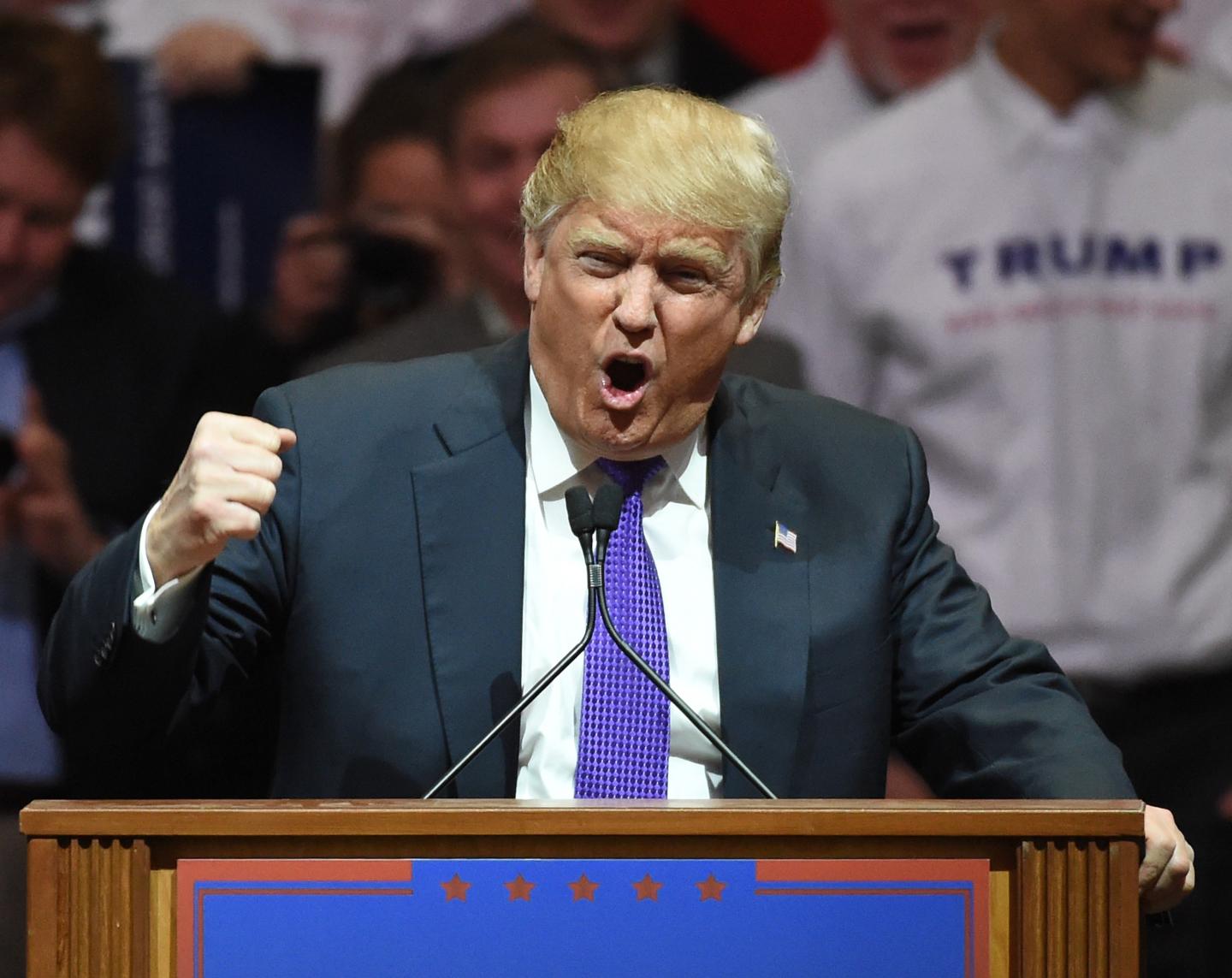
Photograph by Ethan Miller/ Getty Images

As Donald Trump rushes toward the Republican nomination, nervous Republicans and giddy journalists are increasingly evoking the idea of a “brokered convention” to stop his rise. They should place their hopes elsewhere. Not only has a truly brokered convention not happened in the party since 1920, but the logic of the modern nominating system simply renders such a scenario unlikely and ultimately unworkable.

A brokered convention refers to the limited authority that American party conventions have to choose their own nominees, regardless of the way delegates were apportioned in primary elections. Theoretically, if no candidate gets a majority on the first ballot, delegates pledged to vote for Trump can vote for any candidate they wish—Marco Rubio, Ted Cruz, John Kasich, even Mitt Romney or Paul Ryan. By a “brokered” convention, such hopeful prognosticators mean that the process of balloting would be accompanied by behind-the-scenes negotiations between different candidates and established party leaders. Implicit in such a notion is that the party elites would come together to stop Trump, and in doing so find a solution that represents the best interests of the party.

This used to be much more common in American party history. Under the traditional party convention system (from, say, 1832 down to 1972), party nominees had to play a complicated game of appealing to delegate emotions, bargaining among state delegations with no “favorite son” candidate to support, and among party big-wigs, who played the role of brokers between different interests in the party establishment.

But such bargaining shouldn’t be confused with a brokered convention. Martin Van Buren had to negotiate with party leaders to get the nomination in 1836, but he was a sitting vice president, and as such had been securing support long before the convention met. Abraham Lincoln had to work with party favorite William Sumner to get the nomination in 1860, but Lincoln went into the convention as a favorite son of Illinois who had also built a substantial national following and was one of a small pack of second-tier candidates. William McKinley went into the 1896 convention with some major rivals, but defeated them handily in the early days of the convention.

A brokered convention did happen in 1880, when a stalemate between Ulysses S. Grant and James G. Blane resulted in over 300 ballots with no clear winner. James Garfield, sitting as the convention chairman, emerged as a crowd favorite. Garfield had not been considered—not even as a dark horse (a declared candidate seen as having no chance for the nomination)—for the spot until a small faction of the Wisconsin delegation cast their votes for him in appreciation of his moderating effect on the body. In 1920, a deadlocked convention led to the nomination of Warren G. Harding, who had entered the convention as a dark horse, but who had a skilled campaign manager who knew how to bargain.


So even in the glory days of party conventions, many nominees—even unlikely ones—were not the result of a brokered convention. Why are they so rare? Because politicians do not create the circumstances for their own bargains. The convention turned to Garfield because two major blocks were deadlocked, unable to beat one another and unwilling to compromise. It turned to Harding because there were no standout candidates who came to the convention with a clear following, and so choosing among them was a possibility.

But where candidates with a real following—either popular or among party members—entered the fray, politicians were much more constrained. Seward was a controversial choice, but Lincoln was acceptable to many others. McKinley had some scandals in his background, but he had a popular following as a tariff advocate (a key issue for the GOP in those days), and was seen as a moderate voice on currency questions, which threatened to tear the party apart.

The 2016 race does not present the conditions for a brokered convention. Most obviously, today’s conventions are more constrained by the fact that delegates represent popular votes cast by the Republican electorate, not state and local party officials who were selected by state and local conventions, and who were expected to act as trustees for the party (as was the case in the 19th century). Rejecting a popular candidate today—particularly one who has as enthusiastic a following as Trump—means rejecting that candidate’s supporters, who expect that the convention will represent their will.

And Trump will go into the convention with a distinctly impressive record. Even if the remaining candidates manage to win enough votes to block his reaching a majority, he will have the largest voting bloc, facing candidates who together might constitute a majority but who individually have little evidence to point to. To elevate one of them will be to not only select a dark horse, but to select a dark horse the party has explicitly rejected by the metrics of the modern nominating system.

Perhaps they’ll draft Ryan—he’ll be chairing the convention just as Garfield was. But there will be little evidence that he’ll be acceptable to those voters Trump attracted. The risk that such voters would sit out the general election or turn to a third-party candidate is a tremendous one for establishment party candidates.

This gets to a key factor about the party elites who might do the brokering: They are fundamentally risk-averse. As frightened as they might be about down-ticket effects under a Trump nomination, either of these scenarios is terrifying. Many of these elites represent safe states that could hardly be expected to vote Democratic even under an unpopular Trump ticket. But if they can’t mobilize voters, they could lose otherwise safe states.

Again, consider Ryan’s position as speaker of the House. If he is nominated, he’ll come under immediate pressure from any Republicans whose opposition to Ryan’s moderate aspirations for House leadership coincides with a strong Trump movement in their district. And a convention defeat for Ryan by Trump would be a decisive blow. A Romney nomination might not interact with congressional aspirations as much, but seems even less electorally attractive—particularly to conservative Republicans who agree with Trump’s assessment of Romney, even if they don’t want Trump.

The safer calculation is the Chris Christie calculation: Even if Trump is undesirable for a number of reasons, his nomination at this point presents the most stable outcome from the career perspective of politicians. In this scenario, there are fewer unknowns and fewer unpredictable variables. Parties have suffered disastrous defeats at the presidential level and weathered the storm in Congress, as Democrats did in 1968, 1972, 1980, and 1984.

These are politicians we’re talking about. They will not be acting in a vacuum. And their motives to act will not be untinged with self-interest.

Daniel Klinghard is an associate professor of political science at the College of the Holy Cross.

About the Authors
By Daniel Klinghard
See full bioRight Arrow Button Icon
By Bethany Cianciolo
See full bioRight Arrow Button Icon

Latest in Commentary

Finance
Lorem ipsum dolor sit amet, consectetur adipiscing elit, sed do eiusmod tempor incididunt ut labore et dolore magna aliqua. Ut enim ad minim veniam
By Fortune Editors
October 20, 2025
Finance
Lorem ipsum dolor sit amet, consectetur adipiscing elit, sed do eiusmod tempor incididunt ut labore et dolore magna aliqua. Ut enim ad minim veniam
By Fortune Editors
October 20, 2025
Finance
Lorem ipsum dolor sit amet, consectetur adipiscing elit, sed do eiusmod tempor incididunt ut labore et dolore magna aliqua. Ut enim ad minim veniam
By Fortune Editors
October 20, 2025
Finance
Lorem ipsum dolor sit amet, consectetur adipiscing elit, sed do eiusmod tempor incididunt ut labore et dolore magna aliqua. Ut enim ad minim veniam
By Fortune Editors
October 20, 2025
Finance
Lorem ipsum dolor sit amet, consectetur adipiscing elit, sed do eiusmod tempor incididunt ut labore et dolore magna aliqua. Ut enim ad minim veniam
By Fortune Editors
October 20, 2025
Finance
Lorem ipsum dolor sit amet, consectetur adipiscing elit, sed do eiusmod tempor incididunt ut labore et dolore magna aliqua. Ut enim ad minim veniam
By Fortune Editors
October 20, 2025

Most Popular

Finance
Lorem ipsum dolor sit amet, consectetur adipiscing elit, sed do eiusmod tempor incididunt ut labore et dolore magna aliqua. Ut enim ad minim veniam
By Fortune Editors
October 20, 2025
Finance
Lorem ipsum dolor sit amet, consectetur adipiscing elit, sed do eiusmod tempor incididunt ut labore et dolore magna aliqua. Ut enim ad minim veniam
By Fortune Editors
October 20, 2025
Finance
Lorem ipsum dolor sit amet, consectetur adipiscing elit, sed do eiusmod tempor incididunt ut labore et dolore magna aliqua. Ut enim ad minim veniam
By Fortune Editors
October 20, 2025
Finance
Lorem ipsum dolor sit amet, consectetur adipiscing elit, sed do eiusmod tempor incididunt ut labore et dolore magna aliqua. Ut enim ad minim veniam
By Fortune Editors
October 20, 2025
Finance
Lorem ipsum dolor sit amet, consectetur adipiscing elit, sed do eiusmod tempor incididunt ut labore et dolore magna aliqua. Ut enim ad minim veniam
By Fortune Editors
October 20, 2025
Finance
Lorem ipsum dolor sit amet, consectetur adipiscing elit, sed do eiusmod tempor incididunt ut labore et dolore magna aliqua. Ut enim ad minim veniam
By Fortune Editors
October 20, 2025
Fortune Secondary Logo
Rankings
  • 100 Best Companies
  • Fortune 500
  • Global 500
  • Fortune 500 Europe
  • Most Powerful Women
  • World's Most Admired Companies
  • See All Rankings
  • Lists Calendar
Sections
  • Finance
  • Fortune Crypto
  • Features
  • Leadership
  • Health
  • Commentary
  • Success
  • Retail
  • Mpw
  • Tech
  • Lifestyle
  • CEO Initiative
  • Asia
  • Politics
  • Conferences
  • Europe
  • Newsletters
  • Personal Finance
  • Environment
  • Magazine
  • Education
Customer Support
  • Frequently Asked Questions
  • Customer Service Portal
  • Privacy Policy
  • Terms Of Use
  • Single Issues For Purchase
  • International Print
Commercial Services
  • Advertising
  • Fortune Brand Studio
  • Fortune Analytics
  • Fortune Conferences
  • Business Development
  • Group Subscriptions
About Us
  • About Us
  • Press Center
  • Work At Fortune
  • Terms And Conditions
  • Site Map
  • About Us
  • Press Center
  • Work At Fortune
  • Terms And Conditions
  • Site Map
  • Facebook icon
  • Twitter icon
  • LinkedIn icon
  • Instagram icon
  • Pinterest icon

Latest in Commentary

trump
CommentaryWhite House
Trump Accounts have a bigger problem than billionaire stock donations
By Jin Huang and Stephen RollMay 21, 2026
19 hours ago
brigham
CommentaryRailroads
The U.S. freight network is broken by design. One merger could start fixing it
By Brigham A. McCownMay 21, 2026
20 hours ago
Elon Musk sits with his fists together, looking up.
Commentaryspace
SpaceX will be worth trillions, but the space station that made it possible is worth even more — if we don’t squander it
By Tejpaul BhatiaMay 20, 2026
1 day ago
trader
CommentarySoftware
The 50-year-old law that governed every software company just broke. Here’s what replaces it
By Martin Casado and Abhishek NagarajMay 20, 2026
2 days ago
FJ Campbell, MD, is chief medical officer at Ardent Health.
CommentaryHealth
A doctor shortage is coming. AI could be the only realistic fix
By FJ CampbellMay 20, 2026
2 days ago
trump
CommentaryCongress
Milken-Harris Poll: 80% of Americans want AI workforce programs now — and Washington hasn’t delivered
By Karen Kornbluh and Libby RodneyMay 20, 2026
2 days ago

Most Popular

Despite a $500 million net worth, Shaq just finished his fourth degree. He warns graduates: 'Your character will take you further than your resume'
Success
Despite a $500 million net worth, Shaq just finished his fourth degree. He warns graduates: 'Your character will take you further than your resume'
By Preston ForeMay 20, 2026
2 days ago
Bolt CEO says he let go of his entire HR team for creating problems that didn’t exist: ‘Those problems disappeared when I let them go’ 
Workplace Culture
Bolt CEO says he let go of his entire HR team for creating problems that didn’t exist: ‘Those problems disappeared when I let them go’ 
By Preston ForeMay 19, 2026
2 days ago
Jeff Bezos wants the bottom half of earners to pay zero income tax—he says nurses making just $75K should save $12K a year
Success
Jeff Bezos wants the bottom half of earners to pay zero income tax—he says nurses making just $75K should save $12K a year
By Preston ForeMay 21, 2026
15 hours ago
Pay transparency is exposing a bigger problem: Most companies can't explain why they pay what they pay
Workplace Culture
Pay transparency is exposing a bigger problem: Most companies can't explain why they pay what they pay
By Sydney LakeMay 20, 2026
1 day ago
A 'proudly autistic' workplace expert says putting neurodivergent employees in a typical office is like dropping a polar bear in Austin, Texas
Conferences
A 'proudly autistic' workplace expert says putting neurodivergent employees in a typical office is like dropping a polar bear in Austin, Texas
By Tristan BoveMay 20, 2026
1 day ago
Meet a 21-year-old community college student who's going to China as the first American woman welder in the trades Olympics
Future of Work
Meet a 21-year-old community college student who's going to China as the first American woman welder in the trades Olympics
By Mike Householder and The Associated PressMay 17, 2026
5 days ago

© 2026 Fortune Media IP Limited. All Rights Reserved. Use of this site constitutes acceptance of our Terms of Use and Privacy Policy | CA Notice at Collection and Privacy Notice | Do Not Sell/Share My Personal Information
FORTUNE is a trademark of Fortune Media IP Limited, registered in the U.S. and other countries. FORTUNE may receive compensation for some links to products and services on this website. Offers may be subject to change without notice.