• Home
  • Latest
  • Fortune 500
  • Finance
  • Tech
  • Leadership
  • Lifestyle
  • Rankings
  • Multimedia
CommentaryIran

What Iran’s Elections Mean for its Future

By
Ali Vaez
Ali Vaez
Down Arrow Button Icon
By
Ali Vaez
Ali Vaez
Down Arrow Button Icon
March 9, 2016, 3:00 AM ET
IRAN-ECONOMY
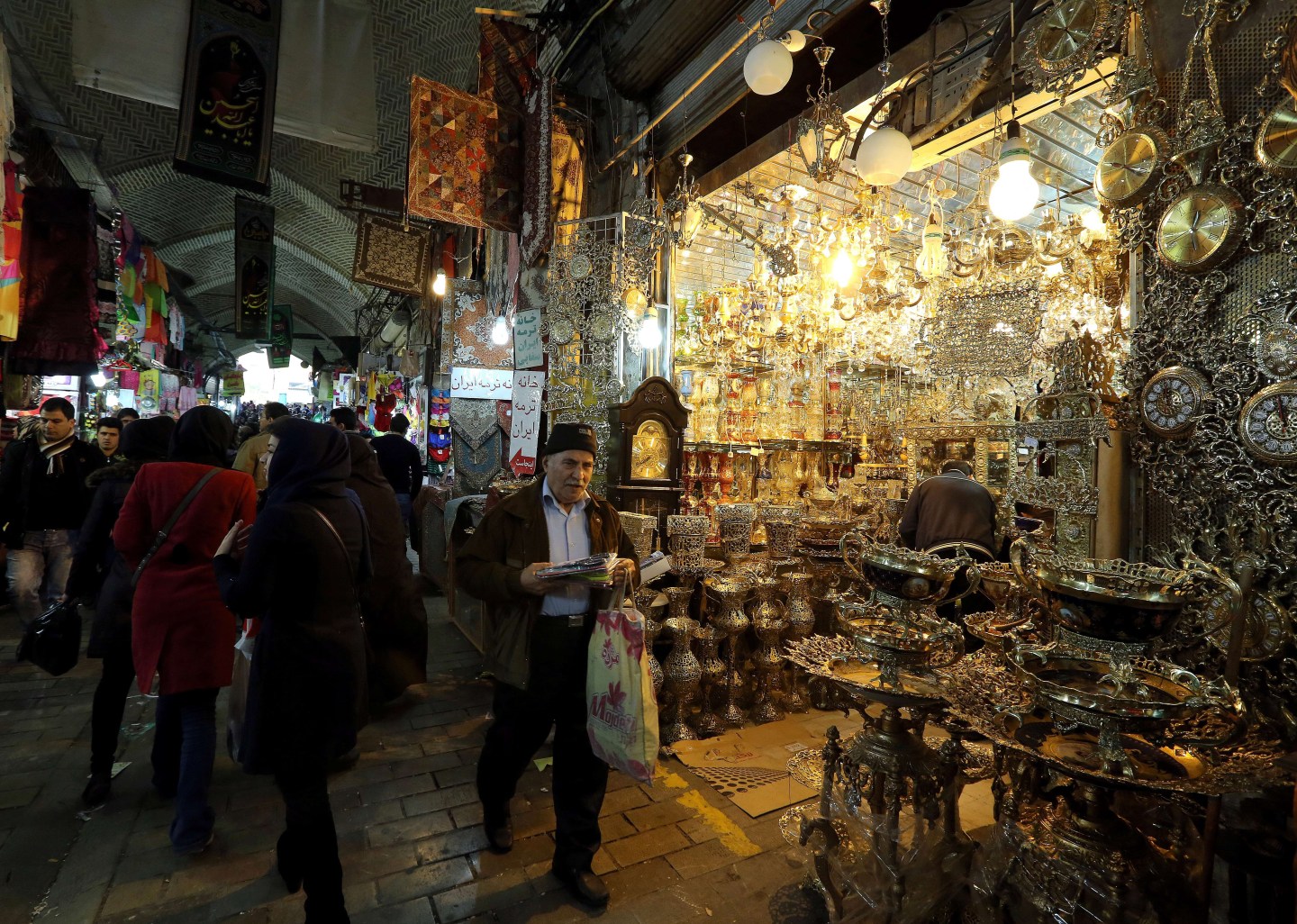
Iranians shop at the main bazaar in Tehran on December 18, 2014. Iran's inflation rate is currently between 17-18 percent, according to President Hassan Rouhani, having been above 40 percent when he took office in 2013. AFP PHOTO/ATTA KENARE (Photo credit should read ATTA KENARE/AFP/Getty Images)Photograph by Atta Kenare — AFP/Getty Images

A review of the main-stream news and analyses surrounding Iran’s recent elections for the parliament and the Assembly of Experts – the body in charge of selecting the Supreme Leader’s successor – leaves the impression that President Hassan Rouhani and his pragmatist allies have scored a major victory that will pave the way for their vision of integrating Iran into the global economy.

If that is what you think, think again.

While the pragmatists (an amalgam of reformists, centrists, and moderate conservatives) did better than expected – especially in a few major cities, like Tehran, where they had a clean sweep of all 30 seats allocated to the capital — it is premature to declare them victors. The parliamentary elections are not over yet. The fate of nearly a quarter of the parliament’s 290 seats will be determined in the run-off elections set for mid-April. While the pragmatists won 83 seats in the first round, versus the conservatives’ 64, it is the second round that will determine the final balance of power. The pragmatists have a more difficult task ahead, as turnout – particularly of their constituents — is usually lower in the second round.

The next parliament’s political composition remains unclear also because of the relatively large number — 74 in the first round — of independent candidates, who have no discernible factional affiliation. These first-time lawmakers usually join one of the political blocs that form after the new parliament convenes. When that happens in May, their choices could tilt the balance of power. Rouhani could use his power of the purse to absorb some of them to a new pragmatists’ bloc, but it is not guaranteed that he would be able to create a powerful majority caucus. Potentially, the independents could split the legislature by creating pragmatist and conservative blocs of equal weight, thus giving rise to a hung parliament that slows down – rather than facilitates – decision making.

Even if the next parliament were decisively under the pragmatists’ control, it would not necessarily work in harmony with the government and other power centers. In Iran’s multipolar political system, policy shifts occur only when there is a high degree of consensus among the political elite. During President Mohammad Khatami’s first term in office, both the legislative and executive branches were in reformist hands, yet their reforms were blocked by the conservative Guardian Council, which vets all legislation. The same alignment occurred during Mahmoud Ahmadinejad’s tenure, but instead of cooperating, the conservative government and parliament were at daggers drawn for most of that time.

The broad Iranian consensus that allowed the country to move on from the nuclear crisis seems to be lacking when it comes to economic policy. The establishment, broadly speaking, has tried to find common ground between two big ideas. One is “Vision 2025,” a roadmap for the country’s economic, political, social and cultural development that aims to make Iran the region’s premier knowledge-based economy within a decade. The other is Supreme Leader Ayatollah Khamenei’s doctrine of “a resistance economy,” which defines a path for increasing domestic production, decreasing reliance on oil revenues, boosting non-oil exports and encouraging private sector-led growth. Finding an agreed policy is also complicated by the way each camp interprets these guidelines differently.

Rouhani and his allies favor economic interdependence with the outside world, believing that it would deter outside coercion. They want to validate their approach before next year’s presidential elections by demonstrating the nuclear accord’s economic dividends. The supreme leader and his conservative allies, however, fear Western economic influence could be a means of infiltration, and that a rapid opening-up could bring about political liberalization that weakens their grip on power. They thus prefer independence and autarky. These competing visions are on a collision course as the lifting of sanctions opens up international business opportunities, and a friendlier parliament can only take Rouhani so far. The Guardian Council, ideologically aligned with Ayatollah Khamenei, can veto parliament’s decisions. A small group of vocal conservative lawmakers could block his initiatives too, by impeaching his ministers.

Finally, vested interests are bound to resist structural economic reform, equally necessary for resuscitating Iran’s ailing economy. A multitude of quasi-governmental companies, mostly affiliated with the country’s unelected power centers, have mushroomed in the past decade. They are likely to try to preserve their privileges by hindering Rouhani’s economic agenda through elected and unelected institutions.

In the past, the Revolutionary Guards has used its security authority to create an unsafe environment for foreign competitors or marshalled its supporters in the parliament to threaten ministers who went after their economic interests with impeachment. The recent arrest of Iranian-American businessman, Siamak Namazi, along with his 80-year old father, has given cold feet to many in the affluent Iranian diaspora who were considering investing in their home country. In the same vein, Rouhani’s attempts to levy an estimated $20 billion dollars of tax on semi-state organizations affiliated with the clerical establishment and Revolutionary Guards has been impeded by the Guardian Council. Smuggling – which costs the state some $25 billion a year – is another plague that the government cannot cure without cooperation from the judiciary and the Revolutionary Guards, both immune to shifting winds of the country’s electoral politics.

The elections have put more wind in Rouhani’s sails, but the journey ahead is anything but clear sailing. There are partisan shoals awaiting him and the pragmatists on virtually every other turn. This means more clashes and tensions in the months ahead, and less opening and reform for the Iranian economy to fully realize its potential.

Ali Vaez is Senior Iran Analyst at International Crisis Group, the independent conflict-prevention organization. He is also a contributor to Foreign Affairs Magazine.


About the Author
By Ali Vaez
See full bioRight Arrow Button Icon

Latest in Commentary

Finance
Lorem ipsum dolor sit amet, consectetur adipiscing elit, sed do eiusmod tempor incididunt ut labore et dolore magna aliqua. Ut enim ad minim veniam
By Fortune Editors
October 20, 2025
Finance
Lorem ipsum dolor sit amet, consectetur adipiscing elit, sed do eiusmod tempor incididunt ut labore et dolore magna aliqua. Ut enim ad minim veniam
By Fortune Editors
October 20, 2025
Finance
Lorem ipsum dolor sit amet, consectetur adipiscing elit, sed do eiusmod tempor incididunt ut labore et dolore magna aliqua. Ut enim ad minim veniam
By Fortune Editors
October 20, 2025
Finance
Lorem ipsum dolor sit amet, consectetur adipiscing elit, sed do eiusmod tempor incididunt ut labore et dolore magna aliqua. Ut enim ad minim veniam
By Fortune Editors
October 20, 2025
Finance
Lorem ipsum dolor sit amet, consectetur adipiscing elit, sed do eiusmod tempor incididunt ut labore et dolore magna aliqua. Ut enim ad minim veniam
By Fortune Editors
October 20, 2025
Finance
Lorem ipsum dolor sit amet, consectetur adipiscing elit, sed do eiusmod tempor incididunt ut labore et dolore magna aliqua. Ut enim ad minim veniam
By Fortune Editors
October 20, 2025

Most Popular

Finance
Lorem ipsum dolor sit amet, consectetur adipiscing elit, sed do eiusmod tempor incididunt ut labore et dolore magna aliqua. Ut enim ad minim veniam
By Fortune Editors
October 20, 2025
Finance
Lorem ipsum dolor sit amet, consectetur adipiscing elit, sed do eiusmod tempor incididunt ut labore et dolore magna aliqua. Ut enim ad minim veniam
By Fortune Editors
October 20, 2025
Finance
Lorem ipsum dolor sit amet, consectetur adipiscing elit, sed do eiusmod tempor incididunt ut labore et dolore magna aliqua. Ut enim ad minim veniam
By Fortune Editors
October 20, 2025
Finance
Lorem ipsum dolor sit amet, consectetur adipiscing elit, sed do eiusmod tempor incididunt ut labore et dolore magna aliqua. Ut enim ad minim veniam
By Fortune Editors
October 20, 2025
Finance
Lorem ipsum dolor sit amet, consectetur adipiscing elit, sed do eiusmod tempor incididunt ut labore et dolore magna aliqua. Ut enim ad minim veniam
By Fortune Editors
October 20, 2025
Finance
Lorem ipsum dolor sit amet, consectetur adipiscing elit, sed do eiusmod tempor incididunt ut labore et dolore magna aliqua. Ut enim ad minim veniam
By Fortune Editors
October 20, 2025
Fortune Secondary Logo
Rankings
  • 100 Best Companies
  • Fortune 500
  • Global 500
  • Fortune 500 Europe
  • Most Powerful Women
  • Future 50
  • World’s Most Admired Companies
  • See All Rankings
Sections
  • Finance
  • Fortune Crypto
  • Features
  • Leadership
  • Health
  • Commentary
  • Success
  • Retail
  • Mpw
  • Tech
  • Lifestyle
  • CEO Initiative
  • Asia
  • Politics
  • Conferences
  • Europe
  • Newsletters
  • Personal Finance
  • Environment
  • Magazine
  • Education
Customer Support
  • Frequently Asked Questions
  • Customer Service Portal
  • Privacy Policy
  • Terms Of Use
  • Single Issues For Purchase
  • International Print
Commercial Services
  • Advertising
  • Fortune Brand Studio
  • Fortune Analytics
  • Fortune Conferences
  • Business Development
  • Group Subscriptions
About Us
  • About Us
  • Editorial Calendar
  • Press Center
  • Work At Fortune
  • Diversity And Inclusion
  • Terms And Conditions
  • Site Map
  • About Us
  • Editorial Calendar
  • Press Center
  • Work At Fortune
  • Diversity And Inclusion
  • Terms And Conditions
  • Site Map
  • Facebook icon
  • Twitter icon
  • LinkedIn icon
  • Instagram icon
  • Pinterest icon

Latest in Commentary

vicente
CommentaryLeadership
Ingersoll Rand CEO: here’s how employee ownership helped drive more than 8x enterprise value growth
By Vicente ReynalApril 11, 2026
7 hours ago
hunt
CommentaryMedia
OpenAI’s TBPN deal shows how talent, media, and influence are collapsing into one
By Jonathan HuntApril 11, 2026
10 hours ago
pandu
CommentaryIndonesia
Danantara CIO: Indonesia can anchor the AI and energy economy—if governance keeps pace
By Pandu SjahrirApril 11, 2026
10 hours ago
assis
CommentaryIBM
The digital sovereignty dilemma is a false choice — here’s how enterprises can have both
By Ana Paula AssisApril 9, 2026
2 days ago
housing
CommentaryHousing
The housing market has been frozen for 3 years. Here’s why this spring could finally change that
By Jessica LautzApril 8, 2026
3 days ago
curtin
CommentaryInfrastructure
TE Connectivity CEO: the real promise of AI is long-term transformation, not short-term efficiency gains
By Terrence CurtinApril 7, 2026
4 days ago

Most Popular

Scottie Scheffler joined Tiger Woods and Rory McIlroy in golf's $100M club—and donated his entire Ryder Cup stipend to charity
Success
Scottie Scheffler joined Tiger Woods and Rory McIlroy in golf's $100M club—and donated his entire Ryder Cup stipend to charity
By Fortune EditorsApril 10, 2026
1 day ago
The Navy confirmed an ‘abundant amount’ of Uncrustables when the Artemis II crew lands. Smucker’s just offered them a lifetime supply
Politics
The Navy confirmed an ‘abundant amount’ of Uncrustables when the Artemis II crew lands. Smucker’s just offered them a lifetime supply
By Fortune EditorsApril 10, 2026
21 hours ago
Mark Cuban admits he made a mistake letting go of the Mavericks: 'I don't regret selling. I regret who I sold to'
Investing
Mark Cuban admits he made a mistake letting go of the Mavericks: 'I don't regret selling. I regret who I sold to'
By Fortune EditorsApril 9, 2026
2 days ago
Schools across America are quietly admitting that screens in classrooms made students worse off and are reversing years of tech-first policies
Innovation
Schools across America are quietly admitting that screens in classrooms made students worse off and are reversing years of tech-first policies
By Fortune EditorsApril 10, 2026
1 day ago
The 'affordability economy' has created a housing market nobody predicted: Prices collapsing in the Sun Belt, soaring in the Rust Belt
Real Estate
The 'affordability economy' has created a housing market nobody predicted: Prices collapsing in the Sun Belt, soaring in the Rust Belt
By Fortune EditorsApril 11, 2026
11 hours ago
The U.S. government is spending $88 billion a month in interest on national debt—equal to spending on defense and education combined
Economy
The U.S. government is spending $88 billion a month in interest on national debt—equal to spending on defense and education combined
By Fortune EditorsApril 9, 2026
2 days ago

© 2026 Fortune Media IP Limited. All Rights Reserved. Use of this site constitutes acceptance of our Terms of Use and Privacy Policy | CA Notice at Collection and Privacy Notice | Do Not Sell/Share My Personal Information
FORTUNE is a trademark of Fortune Media IP Limited, registered in the U.S. and other countries. FORTUNE may receive compensation for some links to products and services on this website. Offers may be subject to change without notice.