• Home
  • News
  • Fortune 500
  • Tech
  • Finance
  • Leadership
  • Lifestyle
  • Rankings
  • Multimedia
Leadershipdiplomacy

Why Is President Obama Hosting a Get-Together of Asian Autocrats?

By
TIME
TIME
Down Arrow Button Icon
By
TIME
TIME
Down Arrow Button Icon
February 12, 2016, 6:20 AM ET
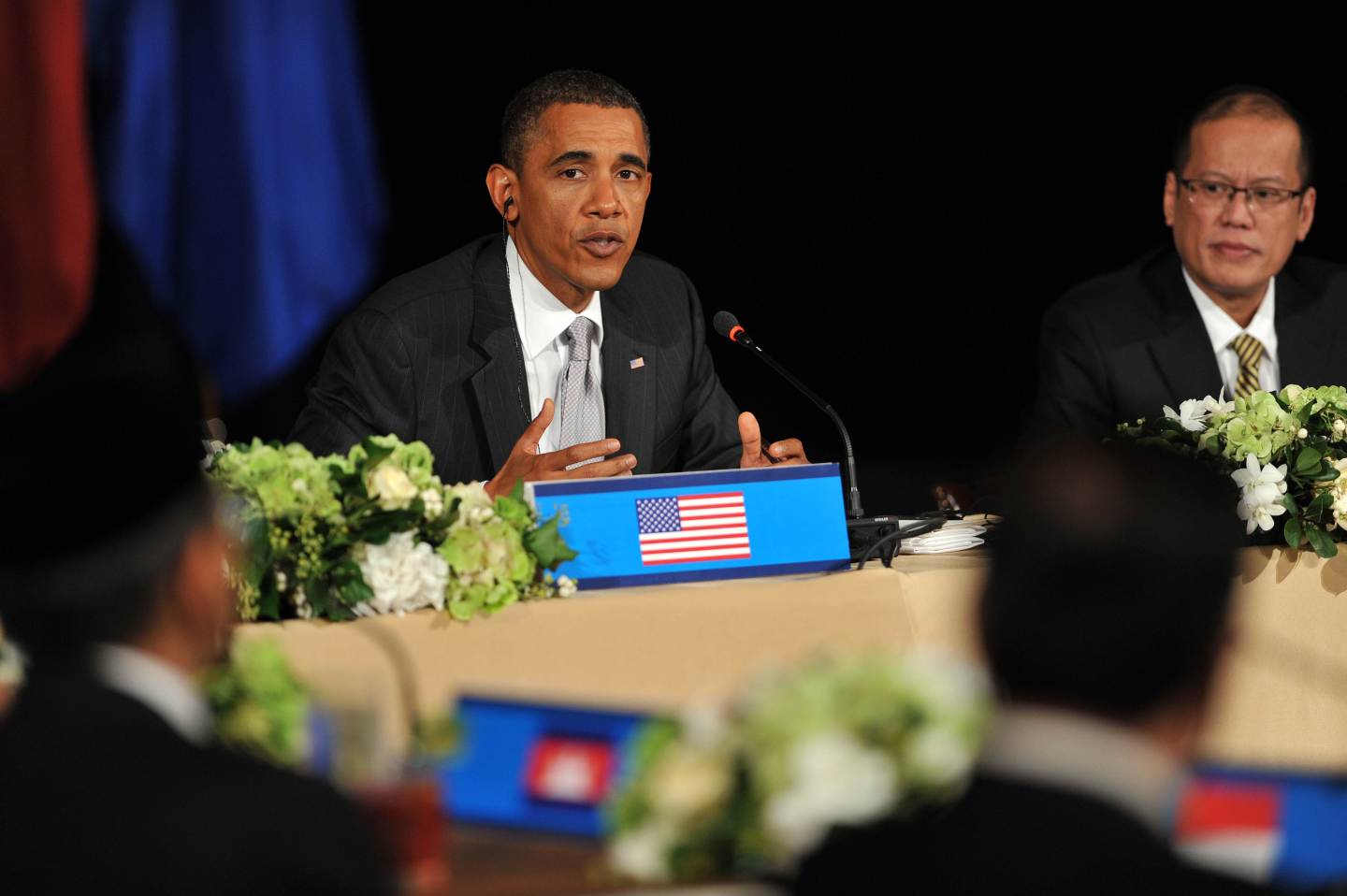
US President Barack Obama (C)  attends a
Photography by Tim Sloan—AFP/Getty Images

This article is published in partnership with Time.com. The original version can be found here.

By Simon Lewis

When President Barack Obama hosted his new Chinese counterpart Xi Jinping at the Sunnylands estate at Rancho Mirage, Calif., in June 2013, the hope was that the world’s two most powerful men would forge a friendship.

Dubbed the “shirt-sleeves summit,” it was supposed to mark the start of a new kind of superpower relationship, a move away from Cold War thinking to something warmer. But in a sign that U.S.-China relations are chilly in 2016, Obama returns to Sunnylands on Monday to meet with leaders of the Association of Southeast Asian Nations, or ASEAN, a group that includes antagonistic neighbors involved in tense territorial disputes with China.

Critics say that in trying to gain strategic influence in China’s backyard, the Obama Administration is ignoring and potentially exacerbating a worsening situation for human rights and democracy in the region.

Guests at the two-day summit starting Monday will include Thailand’s military ruler Prayuth Chan-ocha, who has stamped out dissent and has appeared in no rush to hold elections since his junta replaced an elected government in May 2014.

Malaysian Prime Minister Najib Razak arrives with questions still unanswered about almost $700 million that appeared in his bank account. Najib declared the matter finished when the country’s attorney general said the payment was merely a gift from the Saudi Arabian royal family, but critics domestic and foreign are unconvinced. Meanwhile, Najib’s political rival, Anwar Ibrahim, has been in jail for more than a year on a widely questioned sodomy conviction.

Then there’s Cambodian Prime Minister Hun Sen, who has ruled the country since the 1980s but has long been denied the credibility of an official invitation to the U.S. because of his authoritarian tendencies. Opposition leader Sam Rainsy has recently returned to self-imposed exile fleeing defamation charges.

Also in attendance will be leaders from one-party Vietnam, where the press is under state control and critical bloggers have been jailed, and Laos, whose ruling Communist Party denies its people basic freedoms.

The Washington Post has described the summit as “an unseemly parade of dictators,” noting that only Indonesia’s and the Philippines’ leaders were chosen by fair democratic means.

A positive story in the region is Burma, where Aung San Suu Kyi’s opposition won elections in November, ending decades of military rule. (The outgoing President, former general Thein Sein, announced this week that he would not attend the summit). But the bloc also includes the Sultanate of Brunei and Singapore, which has been run by the same party since 1959.

“The risk is that the Sunnylands summit will empower and embolden ASEAN leaders who have been responsible for jailing journalists, cracking down on peaceful protesters, and dismantling democratic institutions after coups,” said John Sifton, Asia advocacy director for Human Rights Watch.

Others argue that the U.S. has to get its hands dirty if it is to retain any influence in Asia as China becomes more assertive. The Chinese government’s island-building campaign in the South China Sea has especially angered the Vietnam and the Philippines, creating opportunities for American alliance building.

The region is also a rare patch of good economic news — together the 10 ASEAN countries would be the world’s seventh largest economy — another reason cited for U.S. engagement.

Aaron Connelly, a researcher at the Lowy Institute for International Policy in Sydney, wrote this week that the U.S. was right to deal with the entirety of ASEAN, an institution that “supports the liberal international order.” He added: “Quiet but firm conversations at the summit could support liberalization on the domestic level, too.”
About the Author
By TIME
See full bioRight Arrow Button Icon

Latest in Leadership

CryptoBinance
Binance has been proudly nomadic for years. A new announcement suggests it’s finally chosen a headquarters
By Ben WeissDecember 7, 2025
4 hours ago
Future of WorkJamie Dimon
Jamie Dimon says even though AI will eliminate some jobs ‘maybe one day we’ll be working less hard but having wonderful lives’
By Jason MaDecember 7, 2025
14 hours ago
business
C-Suitechief executive officer (CEO)
Inside the Fortune 500 CEO pressure cooker: surviving is harder than ever and requires an ‘odd combination’ of traits
By Nick LichtenbergDecember 7, 2025
18 hours ago
Alex Amouyel is the President and CEO of Newman’s Own Foundation
Commentaryphilanthropy
Following in Paul Newman and Yvon Chouinard’s footsteps: There are more ways for leaders to give it away in ‘the Great Boomer Fire Sale’ than ever
By Alex AmouyelDecember 7, 2025
19 hours ago
Hank Green sipping tea
SuccessPersonal Finance
Millionaire YouTuber Hank Green tells Gen Z to rethink their Tesla bets—and shares the portfolio changes he’s making to avoid AI-bubble fallout
By Preston ForeDecember 7, 2025
20 hours ago
MagazineWarren Buffett
Warren Buffett: Business titan and cover star
By Indrani SenDecember 7, 2025
21 hours ago

Most Popular

placeholder alt text
Real Estate
The 'Great Housing Reset' is coming: Income growth will outpace home-price growth in 2026, Redfin forecasts
By Nino PaoliDecember 6, 2025
2 days ago
placeholder alt text
AI
Nvidia CEO says data centers take about 3 years to construct in the U.S., while in China 'they can build a hospital in a weekend'
By Nino PaoliDecember 6, 2025
2 days ago
placeholder alt text
Economy
The most likely solution to the U.S. debt crisis is severe austerity triggered by a fiscal calamity, former White House economic adviser says
By Jason MaDecember 6, 2025
1 day ago
placeholder alt text
Economy
JPMorgan CEO Jamie Dimon says Europe has a 'real problem’
By Katherine Chiglinsky and BloombergDecember 6, 2025
1 day ago
placeholder alt text
Big Tech
Mark Zuckerberg rebranded Facebook for the metaverse. Four years and $70 billion in losses later, he’s moving on
By Eva RoytburgDecember 5, 2025
3 days ago
placeholder alt text
Politics
Supreme Court to reconsider a 90-year-old unanimous ruling that limits presidential power on removing heads of independent agencies
By Mark Sherman and The Associated PressDecember 7, 2025
16 hours ago
Rankings
  • 100 Best Companies
  • Fortune 500
  • Global 500
  • Fortune 500 Europe
  • Most Powerful Women
  • Future 50
  • World’s Most Admired Companies
  • See All Rankings
Sections
  • Finance
  • Leadership
  • Success
  • Tech
  • Asia
  • Europe
  • Environment
  • Fortune Crypto
  • Health
  • Retail
  • Lifestyle
  • Politics
  • Newsletters
  • Magazine
  • Features
  • Commentary
  • Mpw
  • CEO Initiative
  • Conferences
  • Personal Finance
  • Education
Customer Support
  • Frequently Asked Questions
  • Customer Service Portal
  • Privacy Policy
  • Terms Of Use
  • Single Issues For Purchase
  • International Print
Commercial Services
  • Advertising
  • Fortune Brand Studio
  • Fortune Analytics
  • Fortune Conferences
  • Business Development
About Us
  • About Us
  • Editorial Calendar
  • Press Center
  • Work At Fortune
  • Diversity And Inclusion
  • Terms And Conditions
  • Site Map

© 2025 Fortune Media IP Limited. All Rights Reserved. Use of this site constitutes acceptance of our Terms of Use and Privacy Policy | CA Notice at Collection and Privacy Notice | Do Not Sell/Share My Personal Information
FORTUNE is a trademark of Fortune Media IP Limited, registered in the U.S. and other countries. FORTUNE may receive compensation for some links to products and services on this website. Offers may be subject to change without notice.