• Home
  • Latest
  • Fortune 500
  • Finance
  • Tech
  • Leadership
  • Lifestyle
  • Rankings
  • Multimedia
CommentaryZika Virus

Why the Zika Virus Doesn’t Have to Destroy Brazil’s Economy

By
Aditya Bhattacharji
Aditya Bhattacharji
and
Cameron Combs
Cameron Combs
Down Arrow Button Icon
By
Aditya Bhattacharji
Aditya Bhattacharji
and
Cameron Combs
Cameron Combs
Down Arrow Button Icon
January 28, 2016, 1:00 PM ET
BRAZIL-RIO-OLY-2016-ZIKA-CARNIVAL
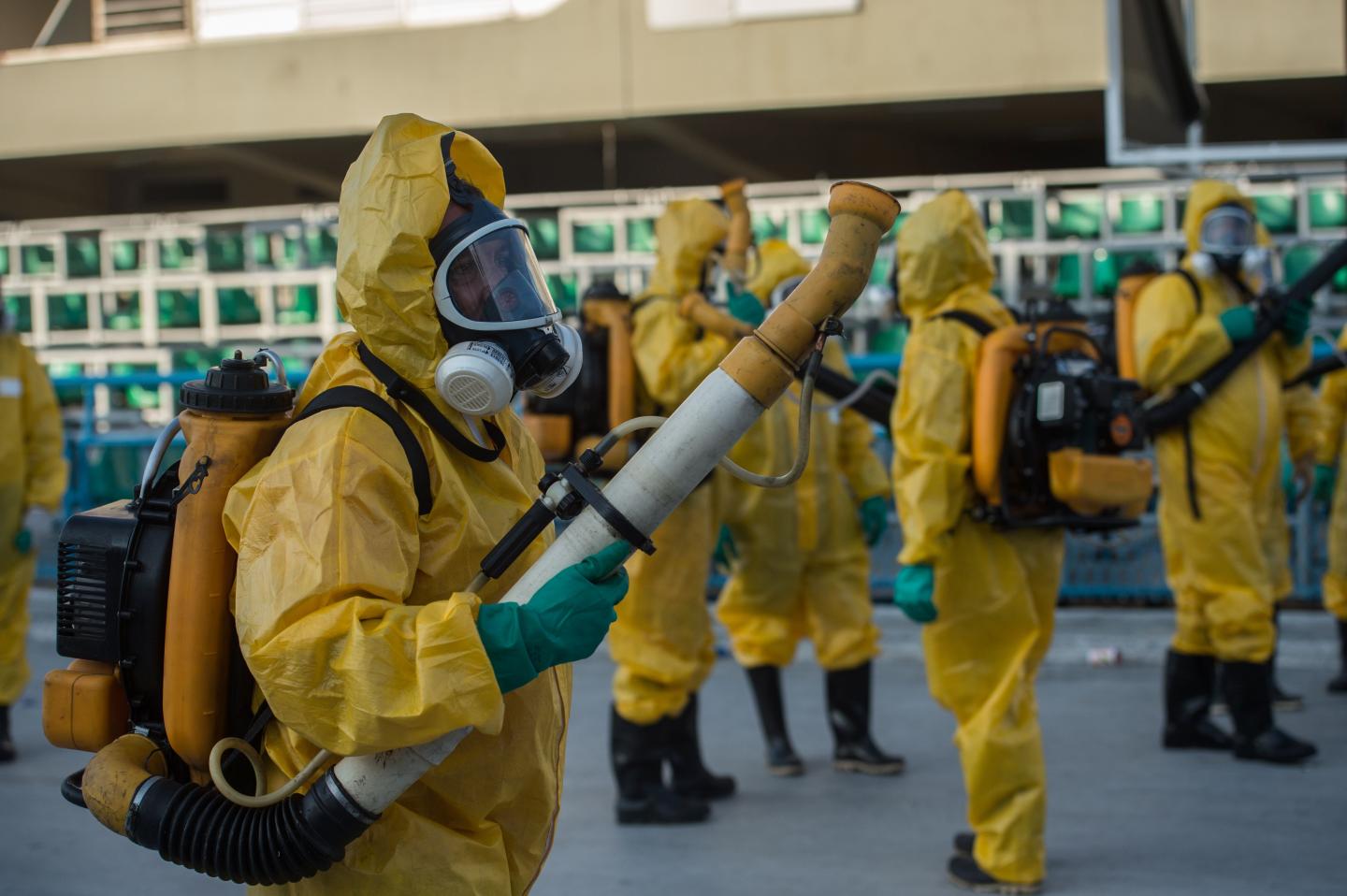
Municipal agents spray anti Zika mosquitos chimical product at the sambadrome in Rio de Janeiro, on january 25, 2016. Brazil is mobilizing more than 200,000 troops to go "house to house" in the battle against Zika-carrying mosquitoes, blamed for causing horrific birth defects in a major regional health scare, a report said Monday. / AFP / CHRISTOPHE SIMON (Photo credit should read CHRISTOPHE SIMON/AFP/Getty Images)Photograph by Christophe Simon — AFP/Getty Images

With the devastating consequences of Ebola and the Middle East Respiratory Syndrome (MERS) still fresh in the public psyche, concern is mounting globally over the potential political, social, and economic impact of Zika virus. The implications are particularly alarming for Brazil, where authorities are grappling with the world’s highest burden of Zika cases (more than one million so far) amidst the country’s most challenging political and economic climate in decades. As scientists labor to learn more about Zika itself, it is worth taking stock of how this might play out in Latin America’s largest economy.

Clearly, public health officials have limited control over the virus. Brazil’s own experience mirrors the global one with mosquito-borne diseases – they tend to become endemic. But there is some positive news: Zika is milder than the diseases it most closely resembles—dengue and chikungunya. Roughly three quarters of those infected simply develop flu-like symptoms, which last about one week, while the remainder are asymptomatic (though speculation abounds that there may be congenital effects from the infection, which if true, would have meaningful long-term economic and social consequences).This suggests that the potential for Zika-related social and economic dislocation will be less than that from its mosquito-borne counterparts, and that the associated workplace absenteeism and barriers to productivity should be bounded.

See also: Here’s What You Need to Know About the Zika Virus

However, with past as prologue, the short-term impact will be pronounced. Although Zika has primarily hit relatively poor and underdeveloped northeast Brazil, its appearance in prosperous hubs such as Rio de Janeiro and Sao Paulo will likely drive down domestic consumption and tourism. Indeed, a key difference in this case, compared to illnesses like Ebola and MERS, is that Zika does not appear to be transmissible person to person. Therefore, whatever negative effects there might be on retail, indoor entertainment, and on workplace and school attendance will likely be short-lived, as the climate of fear associated with an unfamiliar threat subsides. Brazil’s impending winter will also help, as falling temperatures impede the spread of mosquito-borne diseases during the country’s colder, drier months.

Tourism, however, will take longer to rebound, as it did after the MERS outbreak in South Korea last year, and the Severe Acute Respiratory Syndrome epidemic in the early 2000s. This could be particularly problematic given the upcoming Carnival celebration in February and the 2016 Olympic Games in August, events that are significant not only for the revenues and reputational benefits they might confer to Brazil’s ailing economy, but also for their potential to exacerbate Zika’s foothold in the country—as any mass gathering can.

Brazilian officials are in an exceedingly difficult and unenviable situation. The current health minister, Marcelo Castro, a political appointee with only four months on the job, appears to lack the technical credentials to steer the country’s epidemiological response (though the problem admittedly predates his tenure). Perhaps more disconcerting, however, is the tone of his public statements on the matter, which have been aptly categorized by a senior World Health Organization (WHO) official as “fatalistic.” If there is anything to be learned from the tragedies that unfolded in West Africa during the Ebola outbreak, it is that consistent, constructive risk communication is vital to managing public health emergencies. The Rousseff administration likely recognizes this, and will probably repackage its messaging in short order.

Brazil’s institutional capacity to manage outbreaks is promising, particularly relative its Latin American peers. The government has a number of credible institutions, such as the Oswaldo Cruz Foundation, working on characterizing Zika and its epidemiology. Moreover, a robust community health network—under the aegis of the Family Health Strategy—is capable of sharing guidance on behavioral changes that can temper the spread of Zika at the community level. Still, widespread containment efforts could be hamstrung by the government’s acute fiscal constraints—particularly if a linkage is established between Zika and congenital defects, and if the government needs to double down on developing and/or deploying both preventive and therapeutic interventions.

Regional and international bodies will have a hand in Brazil’s outcome, too. To wit: in the 1950s, Brazil successfully eradicated the mosquito that carries Zika, dengue, and chikungunya, only for the mosquito to reemerge, presumably due to inbound travel from neighboring countries. While technical assistance from the U.S. and the EU will carry some benefits, one global actor has been conspicuously quiet for the most part: the WHO. Specifically, members of the global health community are rightly puzzled as to why the multilateral agency took so long convene an emergency committee to address Zika, as the virus is poised to spread throughout the Americas. Doing so would not only help marshal resources, but also set the tone for the development of best practices for managing the virus, including those associated with trade and travel restrictions. In the absence of such guidance, countries are more likely to unilaterally impose commercial restrictions, such as advising against travel to Brazil during the summer Olympics. The attendant patchwork of approaches to reining in Zika would undoubtedly spell trouble for Brazil as it strives to stabilize its economy.

Aditya Bhattacharji is a global health analyst and Cameron Combs is a Latin America researcher at Eurasia Group.

About the Authors
By Aditya Bhattacharji
See full bioRight Arrow Button Icon
By Cameron Combs
See full bioRight Arrow Button Icon

Latest in Commentary

Finance
Lorem ipsum dolor sit amet, consectetur adipiscing elit, sed do eiusmod tempor incididunt ut labore et dolore magna aliqua. Ut enim ad minim veniam
By Fortune Editors
October 20, 2025
Finance
Lorem ipsum dolor sit amet, consectetur adipiscing elit, sed do eiusmod tempor incididunt ut labore et dolore magna aliqua. Ut enim ad minim veniam
By Fortune Editors
October 20, 2025
Finance
Lorem ipsum dolor sit amet, consectetur adipiscing elit, sed do eiusmod tempor incididunt ut labore et dolore magna aliqua. Ut enim ad minim veniam
By Fortune Editors
October 20, 2025
Finance
Lorem ipsum dolor sit amet, consectetur adipiscing elit, sed do eiusmod tempor incididunt ut labore et dolore magna aliqua. Ut enim ad minim veniam
By Fortune Editors
October 20, 2025
Finance
Lorem ipsum dolor sit amet, consectetur adipiscing elit, sed do eiusmod tempor incididunt ut labore et dolore magna aliqua. Ut enim ad minim veniam
By Fortune Editors
October 20, 2025
Finance
Lorem ipsum dolor sit amet, consectetur adipiscing elit, sed do eiusmod tempor incididunt ut labore et dolore magna aliqua. Ut enim ad minim veniam
By Fortune Editors
October 20, 2025

Most Popular

Finance
Lorem ipsum dolor sit amet, consectetur adipiscing elit, sed do eiusmod tempor incididunt ut labore et dolore magna aliqua. Ut enim ad minim veniam
By Fortune Editors
October 20, 2025
Finance
Lorem ipsum dolor sit amet, consectetur adipiscing elit, sed do eiusmod tempor incididunt ut labore et dolore magna aliqua. Ut enim ad minim veniam
By Fortune Editors
October 20, 2025
Finance
Lorem ipsum dolor sit amet, consectetur adipiscing elit, sed do eiusmod tempor incididunt ut labore et dolore magna aliqua. Ut enim ad minim veniam
By Fortune Editors
October 20, 2025
Finance
Lorem ipsum dolor sit amet, consectetur adipiscing elit, sed do eiusmod tempor incididunt ut labore et dolore magna aliqua. Ut enim ad minim veniam
By Fortune Editors
October 20, 2025
Finance
Lorem ipsum dolor sit amet, consectetur adipiscing elit, sed do eiusmod tempor incididunt ut labore et dolore magna aliqua. Ut enim ad minim veniam
By Fortune Editors
October 20, 2025
Finance
Lorem ipsum dolor sit amet, consectetur adipiscing elit, sed do eiusmod tempor incididunt ut labore et dolore magna aliqua. Ut enim ad minim veniam
By Fortune Editors
October 20, 2025
Fortune Secondary Logo
Rankings
  • 100 Best Companies
  • Fortune 500
  • Global 500
  • Fortune 500 Europe
  • Most Powerful Women
  • World's Most Admired Companies
  • See All Rankings
  • Lists Calendar
Sections
  • Finance
  • Fortune Crypto
  • Features
  • Leadership
  • Health
  • Commentary
  • Success
  • Retail
  • Mpw
  • Tech
  • Lifestyle
  • CEO Initiative
  • Asia
  • Politics
  • Conferences
  • Europe
  • Newsletters
  • Personal Finance
  • Environment
  • Magazine
  • Education
Customer Support
  • Frequently Asked Questions
  • Customer Service Portal
  • Privacy Policy
  • Terms Of Use
  • Single Issues For Purchase
  • International Print
Commercial Services
  • Advertising
  • Fortune Brand Studio
  • Fortune Analytics
  • Fortune Conferences
  • Business Development
  • Group Subscriptions
About Us
  • About Us
  • Press Center
  • Work At Fortune
  • Terms And Conditions
  • Site Map
  • About Us
  • Press Center
  • Work At Fortune
  • Terms And Conditions
  • Site Map
  • Facebook icon
  • Twitter icon
  • LinkedIn icon
  • Instagram icon
  • Pinterest icon

Latest in Commentary

mackenzie
Commentaryphilanthropy
Stop donating to Harvard and the Ivy League. There’s a better option that MacKenzie Scott already figured out
By Ed Smith-LewisMay 2, 2026
1 hour ago
drinks
CommentaryFood and drink
We need a new way of thinking about drinking: Time to replace the ‘standard drink’ with advice people can actually use
By Justin KissingerMay 2, 2026
1 hour ago
pakistan
CommentaryIran
Asia is being hammered by the Iran conflict’s economic fallout. The U.S. has the playbook to help—and every reason to
By Wendy Cutler and Jane MellsopMay 2, 2026
2 hours ago
francis
CommentaryFlorida
Former Miami Mayor Francis Suarez: Why I’m joining Stephen Ross and Ken Griffin in betting big on ambitious business leaders
By Francis SuarezMay 1, 2026
20 hours ago
valerie
CommentaryLayoffs
Tesla’s former HR chief: the AI layoff panic Is built on a false premise—here’s what most workers need to know
By Valerie Capers WorkmanMay 1, 2026
21 hours ago
tamas
CommentaryPolymarket
SEON CEO: Prediction markets can forecast the future. Can they survive their own manipulation problem?
By Tamas KadarMay 1, 2026
1 day ago

Most Popular

Scott Bessent on financial literacy: 'it drives me crazy' to see young men in blue-collar construction jobs playing the lottery
Personal Finance
Scott Bessent on financial literacy: 'it drives me crazy' to see young men in blue-collar construction jobs playing the lottery
By Fatima Hussein and The Associated PressMay 1, 2026
21 hours ago
China dominates the world's lithium supply. The U.S. just found 328 years' worth in its own backyard
North America
China dominates the world's lithium supply. The U.S. just found 328 years' worth in its own backyard
By Jake AngeloApril 30, 2026
2 days ago
The U.S. economy is booming — just not where 50 million Americans live
Commentary
The U.S. economy is booming — just not where 50 million Americans live
By Derek KilmerMay 1, 2026
1 day ago
Current price of oil as of May 1, 2026
Personal Finance
Current price of oil as of May 1, 2026
By Joseph HostetlerMay 1, 2026
22 hours ago
Apple cofounder Ronald Wayne—whose stake would be worth up to $400 billion had he not sold it in 1976—says that at 91, he has no regrets
Success
Apple cofounder Ronald Wayne—whose stake would be worth up to $400 billion had he not sold it in 1976—says that at 91, he has no regrets
By Preston ForeApril 27, 2026
5 days ago
A Chick-fil-A worker got fired and then showed up behind the register to allegedly refund himself over $80,000 in mac and cheese
Law
A Chick-fil-A worker got fired and then showed up behind the register to allegedly refund himself over $80,000 in mac and cheese
By Catherina GioinoMay 1, 2026
17 hours ago

© 2026 Fortune Media IP Limited. All Rights Reserved. Use of this site constitutes acceptance of our Terms of Use and Privacy Policy | CA Notice at Collection and Privacy Notice | Do Not Sell/Share My Personal Information
FORTUNE is a trademark of Fortune Media IP Limited, registered in the U.S. and other countries. FORTUNE may receive compensation for some links to products and services on this website. Offers may be subject to change without notice.