• Home
  • Latest
  • Fortune 500
  • Finance
  • Tech
  • Leadership
  • Lifestyle
  • Rankings
  • Multimedia
LeadershipSpain

Spain’s Latest Secession Problem Is All About Rioja Wine

By
Ian Mount
Ian Mount
Madrid-based Editor
Down Arrow Button Icon
By
Ian Mount
Ian Mount
Madrid-based Editor
Down Arrow Button Icon
January 26, 2016, 8:00 AM ET
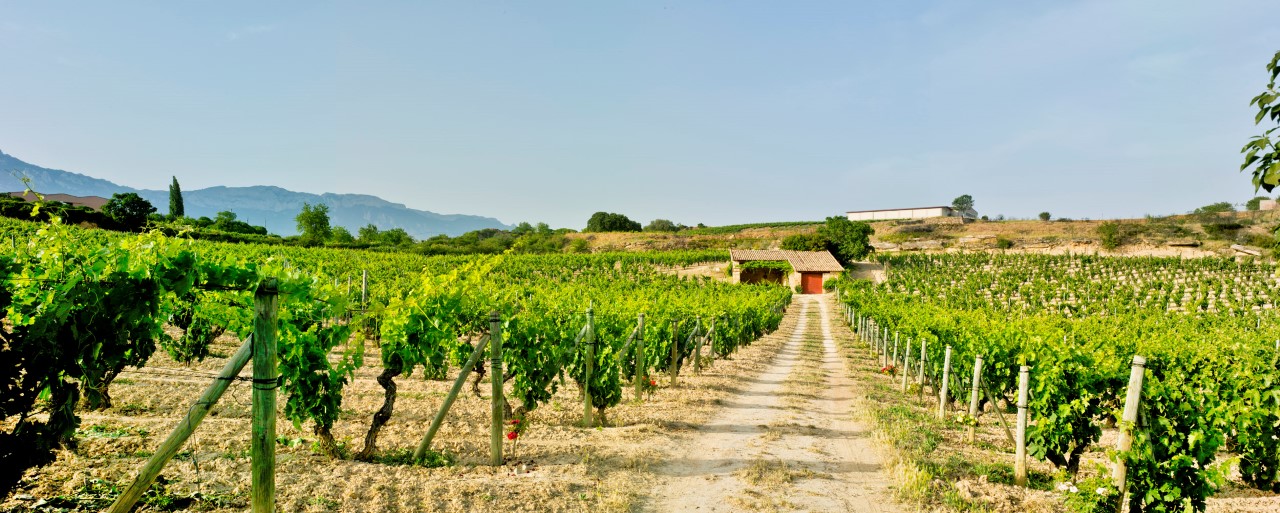
The El Pisón vineyard at Bodegas y Viñedos Artadi in Spain's Rioja wine region.
The El Pisón vineyard at Bodegas y Viñedos Artadi in Spain's Rioja wine region.Photo by David Frutos—BIS Images

It was quite literally una muerte anunciada—a death foretold.

At the end of December 2014, top Spanish winemaker Juan Carlos López de Lacalle was so fed up with the wine regulator in his region of DOC Rioja that he said he would discontinue the membership of his 30-year-old winery, Bodegas y Viñedos Artadi, if things didn’t improve. He was tired of being told that he couldn’t specify which vineyard plot produced the grapes on his wines’ labels. Instead, he could only specify a generic region. He’d already begun to rebel, in fact, labeling some of his wines with everything but Rioja (Laguardia, Álava, España).

“You have to answer the demands of the elitist market, which demands above all else personality and character from wine,” says the bookish but intense López de Lacalle, 59. “If we can’t do this in Spain, if we can’t put character and personality and identity in the great wines the country can produce, we’re on the wrong path.”

Though his winery is small—it brings in €3.6 million in annual sales (about $3.9 million)—López de Lacalle’s threat was no small matter. His Viña El Pisón, first produced in 1990, was one of Rioja’s first “single vineyard” wines (using grapes from one vineyard), and the 2004 vintage received a perfect 100-point ranking from wine guru Robert Parker. Artadi was also named 2014 winery of the year by Spanish wine guide Guía Peñín.

And so, when López de Lacalle followed through with his threat in December 2015 and quit the DOC Rioja, he uncorked an argument that bears an eery similarity to Spain’s other great separatist dispute: the one between the secession-minded parliament in Catalonia and the national government in Madrid.

The winery union in Artadi’s zone estimated that 60 wineries might follow López de Lacalle. The DOC Rioja regulatory board put out a pained statement, claiming that López de Lacalle hadn’t fully explained how he wanted his grievances to be addressed. And Spain’s largest daily published a story titled, “The Rioja Wine War.”

Unlike France, most of Spain’s wine regions only allow for broad geographic designations. This is a reflection of the local industry, which is dominated by large wineries that make blends with fruit bought from various grape growers across a region, not by small-production wineries that make wine from one or two local vineyards they often own. Today, 85% of the vineyard land in the DOC Rioja, which spreads across the communities of La Rioja, Navarra, and Basque Country in Northern Spain, is owned by growers, not wineries, says José Luis Benítez, who heads Grupo Rioja, a winery trade association whose members sell 75% of the region’s wine by value.


For blenders who buy grapes from multiple growers, it makes sense to promote their brands with a classification system like Spain’s, which notes the generic provenance of the grapes and ranks wines by how long they’ve been aged. A system that touted specific vineyards would shift power away from the blender.

But in today’s “locavore” consumer market, single vineyard wines have gained cachet because wine buyers want to know the wine’s terroir—that is, the soil makeup and grape variety, as well as the orientation and history of the vineyard the wine came from. And customers are willing to pay more for that, a sensitive issue at a time when Spain’s winemakers are looking to raise prices. A number of small wineries with younger winemakers have opened in Rioja in recent years, and they, like López de Lacalle, have begun to complain that the unique value of their local products is being squandered by regulations designed for large blenders.

“The way the laws are currently framed, they’re not encouraging younger people to invest in the region,” says Tim Atkin, a Master of Wine who covers Rioja as a wine judge and journalist. “They’re preserving the status quo, which is oceans of Rioja sold on supermarket shelves.”

Atkin was one of 150 wine industry professionals who in recent weeks signed a manifesto demanding that Spain’s wine regulatory bodies pay attention to terroir and modify the classification system so specific vineyards can be labeled.

The movement is beginning to lead to change. José Luis Lapuente, the CEO of the Rioja regulatory body, says that his board has debated modifications to the classification system over the last four months. The board is considering four proposals, Lapuente says, and Benítez of Grupo Rioja—the largest Rioja winery trade group—says his group will file another in several weeks.

“One has to evolve or die,” Benítez says.

Benítez says the Grupo Rioja proposal will likely allow wine labels to specify vineyards that meet certain requirements, such as age minimums (20-30 years), the use of manual harvesting, and maximum production levels.

“We want it to show that a wine is not just of a certain vineyard, but that it’s singular, high quality wine,” Benítez says.

While some big Rioja wineries already produce single vineyard wines, the region has had great success from high-end multi-vineyard blends—Cune’s Rioja Imperial Gran Reserva 2004 was named Wine Spectator’s Wine of the Year for 2013—and it also does quite well selling lower-end wines. For established Rioja wineries, a new classification should improve, not replace, the current one.

“They just don’t want it to be that the new system makes crianza [a lower level wine with short aging] worthless if supermarkets sell millions of bottles of crianza,” says Benítez. “Do we have to destroy the current system to build another one? Hombre, I don’t think so.”

[fortune-brightcove videoid=4449032689001]


Benítez says it will take time to put together the votes the DOC Rioja requires to pass a new system, but he expects one to be done by the end of the year. For López de Lacalle, whatever the date, some kind of change is inevitable.

“This is an irreversible journey toward personalization, identity, toward wines linked to place, to the land,” he says. “It could take a year or a generation or five generations. I don’t know. But it’s unstoppable.”


About the Author
By Ian MountMadrid-based Editor
LinkedIn icon

Ian Mount is a Madrid-based editor at Fortune.

See full bioRight Arrow Button Icon

Latest in Leadership

Finance
Lorem ipsum dolor sit amet, consectetur adipiscing elit, sed do eiusmod tempor incididunt ut labore et dolore magna aliqua. Ut enim ad minim veniam
By Fortune Editors
October 20, 2025
Finance
Lorem ipsum dolor sit amet, consectetur adipiscing elit, sed do eiusmod tempor incididunt ut labore et dolore magna aliqua. Ut enim ad minim veniam
By Fortune Editors
October 20, 2025
Finance
Lorem ipsum dolor sit amet, consectetur adipiscing elit, sed do eiusmod tempor incididunt ut labore et dolore magna aliqua. Ut enim ad minim veniam
By Fortune Editors
October 20, 2025
Finance
Lorem ipsum dolor sit amet, consectetur adipiscing elit, sed do eiusmod tempor incididunt ut labore et dolore magna aliqua. Ut enim ad minim veniam
By Fortune Editors
October 20, 2025
Finance
Lorem ipsum dolor sit amet, consectetur adipiscing elit, sed do eiusmod tempor incididunt ut labore et dolore magna aliqua. Ut enim ad minim veniam
By Fortune Editors
October 20, 2025
Finance
Lorem ipsum dolor sit amet, consectetur adipiscing elit, sed do eiusmod tempor incididunt ut labore et dolore magna aliqua. Ut enim ad minim veniam
By Fortune Editors
October 20, 2025

Most Popular

Finance
Lorem ipsum dolor sit amet, consectetur adipiscing elit, sed do eiusmod tempor incididunt ut labore et dolore magna aliqua. Ut enim ad minim veniam
By Fortune Editors
October 20, 2025
Finance
Lorem ipsum dolor sit amet, consectetur adipiscing elit, sed do eiusmod tempor incididunt ut labore et dolore magna aliqua. Ut enim ad minim veniam
By Fortune Editors
October 20, 2025
Finance
Lorem ipsum dolor sit amet, consectetur adipiscing elit, sed do eiusmod tempor incididunt ut labore et dolore magna aliqua. Ut enim ad minim veniam
By Fortune Editors
October 20, 2025
Finance
Lorem ipsum dolor sit amet, consectetur adipiscing elit, sed do eiusmod tempor incididunt ut labore et dolore magna aliqua. Ut enim ad minim veniam
By Fortune Editors
October 20, 2025
Finance
Lorem ipsum dolor sit amet, consectetur adipiscing elit, sed do eiusmod tempor incididunt ut labore et dolore magna aliqua. Ut enim ad minim veniam
By Fortune Editors
October 20, 2025
Finance
Lorem ipsum dolor sit amet, consectetur adipiscing elit, sed do eiusmod tempor incididunt ut labore et dolore magna aliqua. Ut enim ad minim veniam
By Fortune Editors
October 20, 2025
Fortune Secondary Logo
Rankings
  • 100 Best Companies
  • Fortune 500
  • Global 500
  • Fortune 500 Europe
  • Most Powerful Women
  • Future 50
  • World’s Most Admired Companies
  • See All Rankings
Sections
  • Finance
  • Fortune Crypto
  • Features
  • Leadership
  • Health
  • Commentary
  • Success
  • Retail
  • Mpw
  • Tech
  • Lifestyle
  • CEO Initiative
  • Asia
  • Politics
  • Conferences
  • Europe
  • Newsletters
  • Personal Finance
  • Environment
  • Magazine
  • Education
Customer Support
  • Frequently Asked Questions
  • Customer Service Portal
  • Privacy Policy
  • Terms Of Use
  • Single Issues For Purchase
  • International Print
Commercial Services
  • Advertising
  • Fortune Brand Studio
  • Fortune Analytics
  • Fortune Conferences
  • Business Development
  • Group Subscriptions
About Us
  • About Us
  • Editorial Calendar
  • Press Center
  • Work At Fortune
  • Diversity And Inclusion
  • Terms And Conditions
  • Site Map
  • About Us
  • Editorial Calendar
  • Press Center
  • Work At Fortune
  • Diversity And Inclusion
  • Terms And Conditions
  • Site Map
  • Facebook icon
  • Twitter icon
  • LinkedIn icon
  • Instagram icon
  • Pinterest icon

Latest in Leadership

Brian Niccol speaks and gestures in front of a blue and green background.
C-SuiteStarbucks
Starbucks CEO admits the chain ‘ran like a manufacturing facility’
By Sasha RogelbergMarch 23, 2026
7 hours ago
trump
C-SuiteBook Excerpt
I’ve known Trump for 25 Years and advised 5 presidents. Here’s the playbook he’s been running—and why underestimating him is a mistake
By Jeffrey Sonnenfeld and Steven TianMarch 23, 2026
9 hours ago
students take notes in a lecture hall
SuccessColleges and Universities
High Point University has turned ‘life skills’ into a magnet for the Wall Street elite with a 99.2% job placement rate
By Preston ForeMarch 23, 2026
11 hours ago
Warren Buffett with Creighton basketball temporary tattoos on his face
C-SuiteNCAA March Madness
Kalshi takes a page from Warren Buffett’s March Madness playbook by offering $1 billion for a perfect bracket
By Jacqueline MunisMarch 23, 2026
11 hours ago
C-SuiteNCAA March Madness
Meet the billionaires bankrolling March Madness Sweet 16 schools—from the Dallas Cowboys owner to Carlyle Group’s founder
By Sydney LakeMarch 23, 2026
12 hours ago
woman in blue button down looking at a piece of paper
Future of WorkHiring
‘AI killed the cover letter.’ This Wharton economist says the hiring ritual’s days are numbered
By Catherina GioinoMarch 23, 2026
12 hours ago

© 2026 Fortune Media IP Limited. All Rights Reserved. Use of this site constitutes acceptance of our Terms of Use and Privacy Policy | CA Notice at Collection and Privacy Notice | Do Not Sell/Share My Personal Information
FORTUNE is a trademark of Fortune Media IP Limited, registered in the U.S. and other countries. FORTUNE may receive compensation for some links to products and services on this website. Offers may be subject to change without notice.