• Home
  • News
  • Fortune 500
  • Tech
  • Finance
  • Leadership
  • Lifestyle
  • Rankings
  • Multimedia
Commentarythanksgiving

Why Turkeys Are so Cheap Around Thanksgiving

By
Jay L. Zagorsky
Jay L. Zagorsky
and
Bethany Cianciolo
Bethany Cianciolo
Down Arrow Button Icon
By
Jay L. Zagorsky
Jay L. Zagorsky
and
Bethany Cianciolo
Bethany Cianciolo
Down Arrow Button Icon
November 26, 2015, 9:00 AM ET
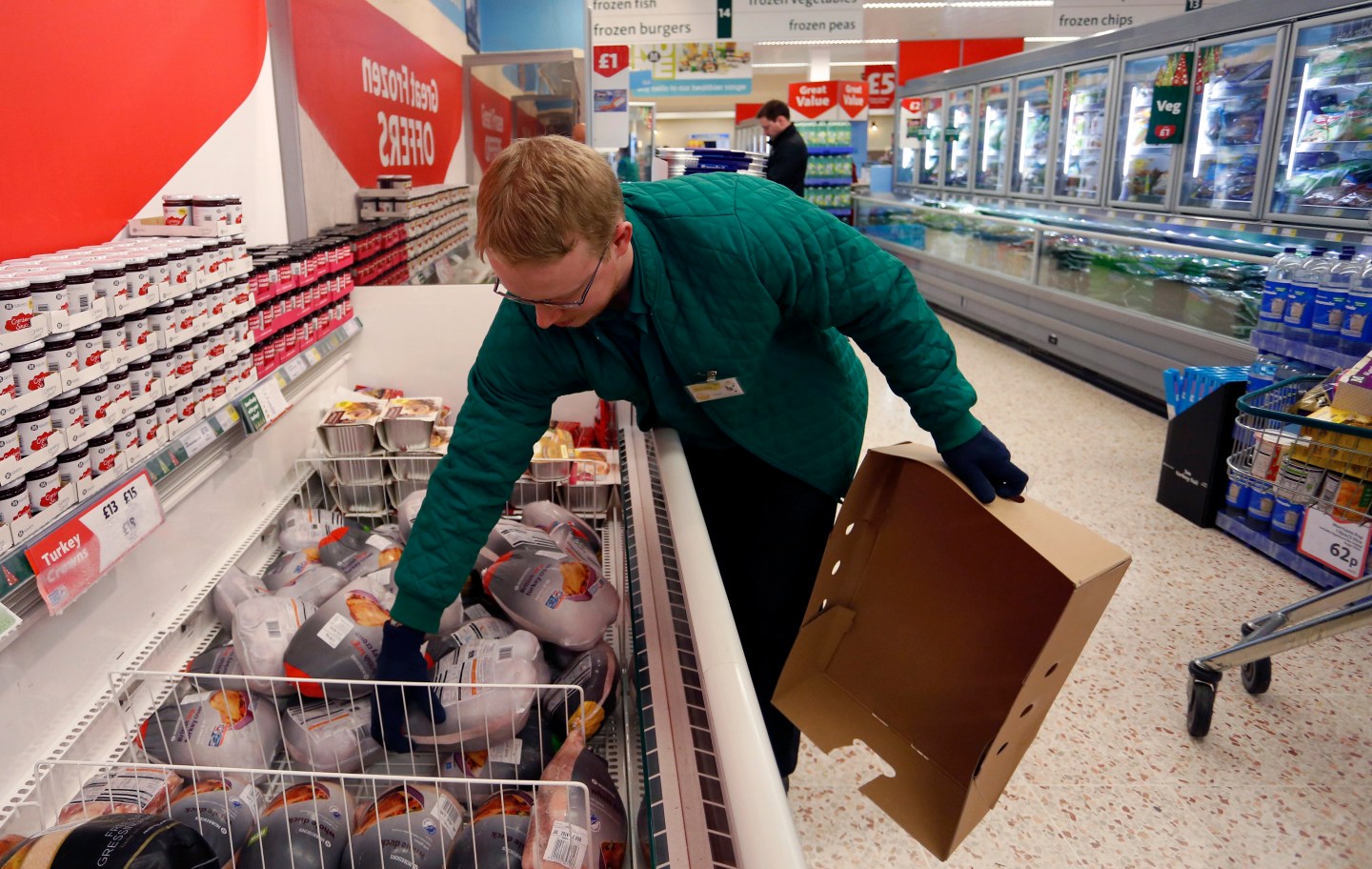
Christmas Shoppers Inside A Morrisons Supermarket
An employee restocks a freezer with frozen turkeys inside a Morrisons supermarket, operated by William Morrisons Supermarkets Plc, in Chadderton, U.K., on Monday, Dec. 17, 2012. The British Christmas is the biggest epicurean occasion of the year, with households spending a total of 4 billion pounds on food in the final week before Dec. 25. Photographer: Paul Thomas/Bloomberg via Getty ImagesPhotography by Paul Thomas — Bloomberg via Getty Images

Thanksgiving is a great U.S. holiday during which people consume huge quantities of turkey, stuffing, cranberry sauce, and pie.

One of the stranger things about this holiday, however, is that a few days before everyone starts cooking, whole turkeys are suddenly discounted by supermarkets and grocery stores (see examples here or here).

And this happens every holiday season: The price falls just before Thanksgiving and stays low until Christmas. For example, November 2014’s price per pound for turkey was almost 20% lower than the price the previous March.

Why does the price come down at the one time of the year when demand for the product spikes the most—before a holiday that’s literally dubbed “Turkey Day”?

The turkey demand curve

Most people expect turkey prices to rise because many more people are buying the birds. My family is an example of this buying phenomenon, since we almost never eat turkey except at Thanksgiving.

In general, when there is a fixed quantity of something to sell and demand for the product spikes, prices rise. This is why a dozen long-stem red roses typically cost a lot more on Valentine’s Day than at other times of the year.

In more formal economic language, the demand curve for turkeys shifts outward at Thanksgiving, which means people at this time of year are interested in buying more of these birds regardless of the price. Even the most casual shopper in food stores this week can observe this increase or shift in demand as more people are buying turkeys to cook.

However, each Thanksgiving the price of turkeys doesn’t rise. Instead, it falls during the holiday period as many stores advertise special low turkey prices, and over time turkey prices have generally fallen (see graphs here). Not only do supermarkets that sell turkeys year-round make the bird a featured item, but some food stores and warehouse stores that don’t typically sell whole turkeys offer them for a limited period of time to customers. This means not only does demand for turkeys increase, but the supply of turkey increases too. This boost in supply drives prices downward.

Food stores are not upset that the price of turkey falls at this time of the year because they are interested in maximizing profits—not in maximizing the revenue they get from selling each bird.

Turkeys are not very profitable items, even at full price. Stores, however, know that people coming in to buy turkeys are likely to purchase other items, too, such as seasonings, disposable roasting pans, and soda. The other items are where stores make their money, since the profit margins on these items are much higher than on frozen turkeys.

Why does the turkey supply skyrocket?

Because of the desire to attract people to stores, the supply of turkeys needs to skyrocket just before the holiday so that freezer cases overflow with the birds.

How does this dramatic increase in supply happen? It occurs because turkeys are slaughtered continuously throughout the year and then put into cold storage.

U.S. Department of Agriculture data shows—in millions of pounds—the amount of turkey in wholesale freezers since 2010. Turkey stocks slowly build up each year until they reach a peak in September. Between September and December, turkey stocks plummet as stores purchase them and put them on sale. Then farmers, processors, and wholesalers slowly rebuild their stocks for the next year’s holiday.

The 500 to 600 million pounds of turkey in cold storage by the end of each summer means there are almost two pounds of turkey for every man, woman, and child in the U.S. waiting to be released each holiday season. That figure doesn’t include live turkeys, which some people prefer, and also doesn’t take into account vegetarians (about 3% of the population), newborns who are not eating solid food (about 1%), and people like my brother-in-law and me who don’t like eating turkey at any time of the year.

What does this mean for the typical consumer?

The National Turkey Federation, the organization whose goal is to get the country to eat more turkey, estimates that 88% of Americans will eat turkey on Thanksgiving. If buying turkey is on your holiday or regular shopping list, then from now to Christmas is the time to stock up, when prices are cheap. Otherwise, eating turkey at other times of the year means your wallet will get plucked for more money.

For those of you eating turkey during this holiday, enjoy. My brother-in-law and I will be happily ensconced at the end of the table feasting on lamb and, while not eating turkey, appreciating and giving thanks for a day to be with friends and family.

Jay L. Zagorsky is an economist and research scientist at Ohio State University. This piece was originally published on The Conversation.

About the Authors
By Jay L. Zagorsky
See full bioRight Arrow Button Icon
By Bethany Cianciolo
See full bioRight Arrow Button Icon

Latest in Commentary

Alex Amouyel is the President and CEO of Newman’s Own Foundation
Commentaryphilanthropy
Following in Paul Newman and Yvon Chouinard’s footsteps: There are more ways for leaders to give it away in ‘the Great Boomer Fire Sale’ than ever
By Alex AmouyelDecember 7, 2025
17 hours ago
Amit Walia
CommentaryM&A
Why the timing was right for Salesforce’s $8 billion acquisition of Informatica — and for the opportunities ahead
By Amit WaliaDecember 6, 2025
2 days ago
Steve Milton is the CEO of Chain, a culinary-led pop-culture experience company founded by B.J. Novak and backed by Studio Ramsay Global.
CommentaryFood and drink
Affordability isn’t enough. Fast-casual restaurants need a fandom-first approach
By Steve MiltonDecember 5, 2025
3 days ago
Paul Atkins
CommentaryCorporate Governance
Turning public companies into private companies: the SEC’s retreat from transparency and accountability
By Andrew BeharDecember 5, 2025
3 days ago
Matt Rogers
CommentaryInfrastructure
I built the first iPhone with Steve Jobs. The AI industry is at risk of repeating an early smartphone mistake
By Matt RogersDecember 4, 2025
4 days ago
Jerome Powell
CommentaryFederal Reserve
Fed officials like the mystique of being seen as financial technocrats, but it’s time to demystify the central bank
By Alexander William SalterDecember 4, 2025
4 days ago

Most Popular

placeholder alt text
Real Estate
The 'Great Housing Reset' is coming: Income growth will outpace home-price growth in 2026, Redfin forecasts
By Nino PaoliDecember 6, 2025
2 days ago
placeholder alt text
AI
Nvidia CEO says data centers take about 3 years to construct in the U.S., while in China 'they can build a hospital in a weekend'
By Nino PaoliDecember 6, 2025
1 day ago
placeholder alt text
Economy
The most likely solution to the U.S. debt crisis is severe austerity triggered by a fiscal calamity, former White House economic adviser says
By Jason MaDecember 6, 2025
1 day ago
placeholder alt text
Big Tech
Mark Zuckerberg rebranded Facebook for the metaverse. Four years and $70 billion in losses later, he’s moving on
By Eva RoytburgDecember 5, 2025
2 days ago
placeholder alt text
Economy
JPMorgan CEO Jamie Dimon says Europe has a 'real problem’
By Katherine Chiglinsky and BloombergDecember 6, 2025
1 day ago
placeholder alt text
Uncategorized
Transforming customer support through intelligent AI operations
By Lauren ChomiukNovember 26, 2025
11 days ago
Rankings
  • 100 Best Companies
  • Fortune 500
  • Global 500
  • Fortune 500 Europe
  • Most Powerful Women
  • Future 50
  • World’s Most Admired Companies
  • See All Rankings
Sections
  • Finance
  • Leadership
  • Success
  • Tech
  • Asia
  • Europe
  • Environment
  • Fortune Crypto
  • Health
  • Retail
  • Lifestyle
  • Politics
  • Newsletters
  • Magazine
  • Features
  • Commentary
  • Mpw
  • CEO Initiative
  • Conferences
  • Personal Finance
  • Education
Customer Support
  • Frequently Asked Questions
  • Customer Service Portal
  • Privacy Policy
  • Terms Of Use
  • Single Issues For Purchase
  • International Print
Commercial Services
  • Advertising
  • Fortune Brand Studio
  • Fortune Analytics
  • Fortune Conferences
  • Business Development
About Us
  • About Us
  • Editorial Calendar
  • Press Center
  • Work At Fortune
  • Diversity And Inclusion
  • Terms And Conditions
  • Site Map

© 2025 Fortune Media IP Limited. All Rights Reserved. Use of this site constitutes acceptance of our Terms of Use and Privacy Policy | CA Notice at Collection and Privacy Notice | Do Not Sell/Share My Personal Information
FORTUNE is a trademark of Fortune Media IP Limited, registered in the U.S. and other countries. FORTUNE may receive compensation for some links to products and services on this website. Offers may be subject to change without notice.










