• Home
  • Latest
  • Fortune 500
  • Finance
  • Tech
  • Leadership
  • Lifestyle
  • Rankings
  • Multimedia
CommentaryGlobal Climate Summit

Bad Credit is Making Global Warming Worse

By
Ion Yadigaroglu
Ion Yadigaroglu
Down Arrow Button Icon
By
Ion Yadigaroglu
Ion Yadigaroglu
Down Arrow Button Icon
November 19, 2015, 11:18 AM ET
INDIA-ECONOMY
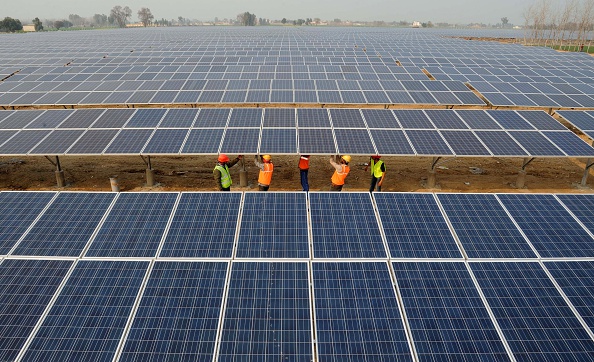
Indian workers construct part of the France-India Solar Direct Punjab Solar Park project in Muradwala, some 30kms from Fazilka on February 6, 2015. The French hosts of a UN climate summit later in 2015 insisted February 6 that combatting global warming would not undermine efforts to fight poverty as they lobbied for India's support in cutting emissions. AFP PHOTO/NARINDER NANU (Photo credit should read NARINDER NANU/AFP/Getty Images)Photograph by Narinder Nanu — AFP/Getty Images

Bad credit now threatens the international effort to limit carbon emissions.

At the Paris climate conference next month, policymakers will pledge massive rollouts of wind and solar. But the issue of financing is mostly addressed as an afterthought. You can’t end global warming by decree; you need money, lots of it. If renewable energy is to grow on a scale anywhere close to what’s required, rich countries need to guarantee solar and wind bonds in the developing world. It is in the developing world where most of the additional carbon released into the atmosphere will come from.

Renewables are particularly impacted by bad credit as all the costs for building the project must be paid upfront. There is no fuel that can be bought as you go. And unlike, say, an aluminum smelter or a new refinery, there is no product to export which can earn global revenues. Nearly every dollar spent is spent on day one by global investors and needs to be paid back in local currency. This makes the financing challenge truly astronomical.

Bad credit is due to high sovereign debts and currency fluctuations and also poor governance, lack of contract enforcement, limitations on capital repatriation, political uncertainty and more. The global investors who have large amounts of money to spend naturally want a very high return for an IOU in places like India – where there’s great uncertainty as to what they’ll exactly get back. Financing costs in many developing countries are 2 to 3 times what they are in the U.S. or Europe, and so renewable power is 2 to 3 times as expensive. Corporate and institutional investors routinely get loans for U.S. projects at 5% interest. In India the rates are 10 to 14%. As a result, China, the one economy that is both developing and enjoys good credit, has the largest number of solar and wind plants, followed by the United States, Germany and Japan.

The best way to fix bad credit would be to resolve the underlying issues: improve sovereign balance sheets and tame currency fluctuations, and also tackle poor governance and contract enforcement and other issues. But these reforms take time, and we don’t have time to address carbon emissions. As it is for individuals, the shortcut to good credit is to find a guarantor. We should not do this for all things that emerging countries may wish to buy, but we should do it for clean energy. Climate change is affecting us all, and so it is in our own self-interest to fix their credit.

There are clear precedents for mutualizing credit. The European Union mutualized over 2 trillion euros of sovereign debt during the financial crisis. With Germany and others guaranteeing the bill, the cost of sovereign debt became several times more manageable. As a result, the financially weaker nations may actually pay back their debts. Although insufficient on its own, international contract enforcement would also help. Precedents include the World Trade Organization’s dispute settlement body and the recent Trans-Pacific Partnership investor-state dispute resolution mechanism. The purpose is not to guarantee investment returns, just to remove the wild card from the deck.

The other ingredients are already in place. Technological progress over the past decade, from solar panel efficiency to energy storage, has vastly reduced the cost of renewable energy. Political will, as demonstrated by the commitments made ahead of the Paris conference, is strong. Capital to invest is also plentiful globally. Pension and sovereign wealth funds, insurance companies and corporations collectively hold trillions of dollars of long-dated funds that could be allocated and deployed to solid projects around the world.

There are pitfalls and moral hazards, but done the right way, extending good credit for renewables would cause financing costs to plummet. And developing nations would be likely to pay back these debts, with (low) interest. Extending good credit via globally guaranteed solar and wind bonds should be a primary goal of the Paris climate talks. If countries like India could benefit from credit costs similar to the United States or Western Europe, magic would happen for renewables.

Ion Yadigaroglu is managing principal of Capricorn Investment Group, an investment firm founded to demonstrate investment potentials linked to global social problems.


About the Author
By Ion Yadigaroglu
See full bioRight Arrow Button Icon

Latest in Commentary

Finance
Lorem ipsum dolor sit amet, consectetur adipiscing elit, sed do eiusmod tempor incididunt ut labore et dolore magna aliqua. Ut enim ad minim veniam
By Fortune Editors
October 20, 2025
Finance
Lorem ipsum dolor sit amet, consectetur adipiscing elit, sed do eiusmod tempor incididunt ut labore et dolore magna aliqua. Ut enim ad minim veniam
By Fortune Editors
October 20, 2025
Finance
Lorem ipsum dolor sit amet, consectetur adipiscing elit, sed do eiusmod tempor incididunt ut labore et dolore magna aliqua. Ut enim ad minim veniam
By Fortune Editors
October 20, 2025
Finance
Lorem ipsum dolor sit amet, consectetur adipiscing elit, sed do eiusmod tempor incididunt ut labore et dolore magna aliqua. Ut enim ad minim veniam
By Fortune Editors
October 20, 2025
Finance
Lorem ipsum dolor sit amet, consectetur adipiscing elit, sed do eiusmod tempor incididunt ut labore et dolore magna aliqua. Ut enim ad minim veniam
By Fortune Editors
October 20, 2025
Finance
Lorem ipsum dolor sit amet, consectetur adipiscing elit, sed do eiusmod tempor incididunt ut labore et dolore magna aliqua. Ut enim ad minim veniam
By Fortune Editors
October 20, 2025

Most Popular

Finance
Lorem ipsum dolor sit amet, consectetur adipiscing elit, sed do eiusmod tempor incididunt ut labore et dolore magna aliqua. Ut enim ad minim veniam
By Fortune Editors
October 20, 2025
Finance
Lorem ipsum dolor sit amet, consectetur adipiscing elit, sed do eiusmod tempor incididunt ut labore et dolore magna aliqua. Ut enim ad minim veniam
By Fortune Editors
October 20, 2025
Finance
Lorem ipsum dolor sit amet, consectetur adipiscing elit, sed do eiusmod tempor incididunt ut labore et dolore magna aliqua. Ut enim ad minim veniam
By Fortune Editors
October 20, 2025
Finance
Lorem ipsum dolor sit amet, consectetur adipiscing elit, sed do eiusmod tempor incididunt ut labore et dolore magna aliqua. Ut enim ad minim veniam
By Fortune Editors
October 20, 2025
Finance
Lorem ipsum dolor sit amet, consectetur adipiscing elit, sed do eiusmod tempor incididunt ut labore et dolore magna aliqua. Ut enim ad minim veniam
By Fortune Editors
October 20, 2025
Finance
Lorem ipsum dolor sit amet, consectetur adipiscing elit, sed do eiusmod tempor incididunt ut labore et dolore magna aliqua. Ut enim ad minim veniam
By Fortune Editors
October 20, 2025
Fortune Secondary Logo
Rankings
  • 100 Best Companies
  • Fortune 500
  • Global 500
  • Fortune 500 Europe
  • Most Powerful Women
  • Future 50
  • World’s Most Admired Companies
  • See All Rankings
Sections
  • Finance
  • Fortune Crypto
  • Features
  • Leadership
  • Health
  • Commentary
  • Success
  • Retail
  • Mpw
  • Tech
  • Lifestyle
  • CEO Initiative
  • Asia
  • Politics
  • Conferences
  • Europe
  • Newsletters
  • Personal Finance
  • Environment
  • Magazine
  • Education
Customer Support
  • Frequently Asked Questions
  • Customer Service Portal
  • Privacy Policy
  • Terms Of Use
  • Single Issues For Purchase
  • International Print
Commercial Services
  • Advertising
  • Fortune Brand Studio
  • Fortune Analytics
  • Fortune Conferences
  • Business Development
  • Group Subscriptions
About Us
  • About Us
  • Editorial Calendar
  • Press Center
  • Work At Fortune
  • Diversity And Inclusion
  • Terms And Conditions
  • Site Map
Fortune Secondary Logo
  • About Us
  • Editorial Calendar
  • Press Center
  • Work At Fortune
  • Diversity And Inclusion
  • Terms And Conditions
  • Site Map
  • Facebook icon
  • Twitter icon
  • LinkedIn icon
  • Instagram icon
  • Pinterest icon

Latest in Commentary

hyams
CommentaryHBCUs
AI is the most important civil and human rights issue of our time — HBCUs need to be in the driver’s seat
By Chris Hyams and Meme StylesMarch 11, 2026
8 hours ago
tax
CommentaryTaxes
How the ultrawealthy use smartphone apps to avoid millions in taxes
By Jose AtilesMarch 11, 2026
8 hours ago
tired
CommentaryProductivity
AI can double output. Human biology can’t
By Scott HutchesonMarch 10, 2026
1 day ago
sharma
CommentaryRisk
The AI risk that few organizations are governing
By Raj SharmaMarch 10, 2026
1 day ago
trump
CommentaryOil
Something will cause inflation to go up this year, but it’s not oil
By Steve H. Hanke and John GreenwoodMarch 9, 2026
2 days ago
Commentaryphilanthropy
Asia’s family offices and corporations must step up to replace a cash-strapped UN and fill the SDG funding gap
By Naina Subberwal BatraMarch 8, 2026
3 days ago

Most Popular

placeholder alt text
Economy
'This cannot be sustainable': The U.S. borrowed $50 billion a week for the past five months, the CBO says
By Eleanor PringleMarch 10, 2026
1 day ago
placeholder alt text
Future of Work
Shark Tank's Kevin O'Leary doesn't care if you work from your basement. He just wants to know if you can ‘execute’
By Marco Quiroz-GutierrezMarch 10, 2026
2 days ago
placeholder alt text
Big Tech
Big tech has defeated everything for 30 years, but for the first time faces something it can't control: a jury
By Carolina Rossini and The ConversationMarch 10, 2026
22 hours ago
placeholder alt text
Politics
Washington state wants to keep employers from microchipping workers, before anyone even gets the idea
By Catherina GioinoMarch 10, 2026
23 hours ago
placeholder alt text
Real Estate
Billionaires Elon Musk and Mark Zuckerberg used mortgages to buy multimillion-dollar mansions. Here’s why that’s a savvy financial decision
By Sydney LakeMarch 9, 2026
2 days ago
placeholder alt text
Economy
Trump's immigration crackdown is backfiring by hurting the U.S.-born workers it was meant to help, data shows
By Sasha RogelbergMarch 10, 2026
24 hours ago

© 2026 Fortune Media IP Limited. All Rights Reserved. Use of this site constitutes acceptance of our Terms of Use and Privacy Policy | CA Notice at Collection and Privacy Notice | Do Not Sell/Share My Personal Information
FORTUNE is a trademark of Fortune Media IP Limited, registered in the U.S. and other countries. FORTUNE may receive compensation for some links to products and services on this website. Offers may be subject to change without notice.